Bandai Namco Announces Gundam Rogue Orbit, 2027 Release Window Confirmed

Bandai Namco just dropped a brand-new Gundam game, and it’s officially called the Gundam Rogue Orbit. Announced at the ongoing Summer Game Fest 2026, the game appears to revolve around giant mech battles, mysterious worlds, and some surprisingly unusual machine designs along for the ride.

The debut trailer didn’t waste time showing off the action. Massive mobile suits clashed across futuristic environments while several of the machines appeared to transform into animal-like forms, giving the project a visual identity that feels different from recent Gundam games.

Bandai Namco is keeping most details under the wraps for now, but the first trailer hints at a story centered around a search mission. Whether players are tracking down a missing person, mounting a rescue operation, or uncovering something much larger remains unclear.

That being said, longtime Gundam fans will likely spend plenty of time dissecting the trailer frame by frame. The franchise remains one of the company’s biggest properties ahead of Gundam’s approaching 50th anniversary celebrations in 2027.

As of now, Bandai Namco has only confirmed a 2027 release window and hasn’t announced supported platforms or shared extended gameplay footage.

Summer Game Fest 2026 featured dozens of new games, sequels, remakes, and updates. For a complete breakdown of everything shown, visit this event recap.

Fumito Ueda’s New Game ‘gen ATLAS’ Confirmed for XBOX Series X|S & PS5

Fumito Ueda, the mind behind ICO, Shadow of the Colossus, and The Last Guardian, has officially revealed his next project. During Summer Game Fest 2026, Ueda’s studio announced gen ATLAS, a brand-new open-world action-adventure game that immediately stood out among the event’s biggest reveals.

Ueda’s previous games have long been associated with PlayStation platforms. That’s why gen ATLAS arriving on XBOX marks a notable shift for the acclaimed developer.

The debut trailer offered more questions than answers, but that seems entirely intentional. Players awaken on a deserted planet with no clear explanation of who they are or why they’re there. What follows appears to be a lonely journey across a strange world filled with enormous structures, abandoned facilities, and landscapes that feel both beautiful and unsettling.

Details remain limited for now, and there’s currently no release date attached to gen ATLAS.

From surprise reveals to major franchise returns, Summer Game Fest 2026 delivered a packed lineup. The full list of announcements and trailers is available in this comprehensive roundup.

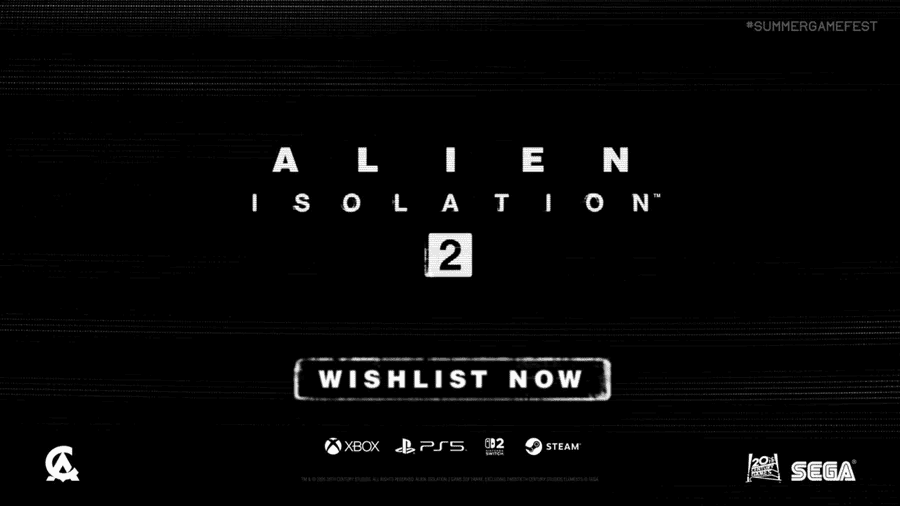
Alien: Isolation 2 Announced at Summer Game Fest 2026, Teases Terrifying Horror Gameplay

Sega and Creative Assembly have jointly announced Alien: Isolation 2 at the ongoing Summer Game Fest 2026, and it brings back one of the most beloved survival horror franchises in gaming.

The brief world premier trailer didn’t reveal much about the story, but it certainly delivered on atmosphere. The footage teased a terrifying new setting, with the deadly Xenomorph set loose on a seemingly unsuspecting colony world.

As expected, the alien once again appears to be the biggest threat, hunting survivors across the facility and creating the kind of tension that made the original game so memorable.

While details remain scarce for now, the game is already available to wishlist.

For those unfamiliar, Alien: Isolation originally launched in 2014 and quickly earned a reputation as one of the best horror games ever made. Rather than focusing on action, the game forced players to rely on stealth and survival as they navigated a space station while being relentlessly hunted by a highly intelligent Xenomorph.

The sequel appears set to build on that same formula, promising another nerve-wracking experience for horror fans.

Many of the biggest games coming in 2026 and 2027 appeared during the showcase. You can browse every announcement in this complete Summer Game Fest guide.

Stranger Than Heaven Release Date Confirmed Alongside Surprise Tupac Shakur Character

The Stranger Than Heaven’s release date reveal at Summer Game Fest 2026 was nothing short of a surprise. While the brief teaser showcased Tupac featuring in the game, Snoop Dogg also appeared on the stage. In case you’re unaware, he is also a part of the game.

stranger-than-heaven-tupac
Image credit: Ryu Ga Gotoku Studio

For those unaware, Stranger Than Heaven was also showcased at a dedicated Xbox Showcase back in May, where we got to learn more about the game.

In case you missed the showcase, RGG Studio confirmed that Stranger Than Heaven follows protagonist Makoto Daito across five decades of his life.

Born to an American father and Japanese mother, Makoto loses both parents early before eventually traveling to Japan in 1915. During the journey, he meets Orpheus, played by Snoop Dogg, alongside Yu Shinjo, who later becomes both his closest ally and biggest rival.

The game takes players across five Japanese locations, including Kokura, Kure, Osaka’s Minami district, Atami, and finally Shinjuku in Tokyo. Each city represents a different era while also introducing new themes ranging from organized crime to entertainment and post-war cultural shifts. RGG Studio also showed several side activities, including gambling minigames, target shooting, arm wrestling, and music management systems.

The game releases on January 15, 2027, on Xbox Series X|S and will also be available day one on Xbox Game Pass. The game will also launch on PS5 and PC via Steam.

Many of the biggest games coming in 2026 and 2027 appeared during the showcase. You can browse every announcement in this complete Summer Game Fest guide.

Resident Evil Veronica is Coming to XBOX, PS5, Switch 2 & PC in 2027

At the ongoing Summer Game Fest 2026, Capcom has confirmed that Resident Evil Veronica is coming in 2027. The next Resident Evil game will be available for XBOX Series X|S, PS5, Nintendo Switch 2, and PC via Steam.

For those unaware, it’s a remake of Resident Evil – Code: Veronica. As of now, there’s no exact release date revealed. You must know that this the first time the game has been re-released on a Nintendo platform.

As seen in the livestream, the trailer opens with a mysterious young woman being guided through a stylish apartment in Paris, offering little indication of who she really is. As the scene unfolds, subtle hints begin to emerge, pointing to a familiar connection, she’s on a covert mission tied to a well-known figure in the Resident Evil universe.

Then comes the reveal: the woman is none other than Claire Redfield, Chris Redfield’s sister. The surprise confirmation is accompanied by the announcement that the game is a fresh reimagining of the beloved Code Veronica storyline, sending longtime fans into a frenzy.

While the reveal generated plenty of excitement, rumors and speculation surrounding a Code Veronica remake had been circulating for months.

Whether you’re interested in RPGs, shooters, racing games, horror titles, or live-service updates, every major Summer Game Fest 2026 reveal can be found in this full announcement roundup.

Microsoft Resumes Auto Installing Copilot App on “Eligible” Windows PCs

If you are someone who doesn’t want the Copilot app on your Windows PC, Microsoft’s next move might frustrate you even more. While the company had previously announced that it would stop the automatic rollout of the Copilot app, an update to Message Center ID MC1152323 confirms that the Microsoft 365 Copilot app will now begin installing automatically on eligible PCs that already have Microsoft 365 desktop apps installed. The rollout will resume this month.

Microsoft is now force installing Copilot app to eligible Windows PCs

According to Microsoft’s latest update, the Microsoft 365 Copilot app will be installed automatically on supported Windows systems unless IT administrators specifically opt out. The rollout is being handled in phases throughout June and early July. Microsoft says the process starts with an initial feature flag deployment running from June 4 through June 10, followed by additional rollout stages extending into July.

Devices that already have the Microsoft 365 Copilot app installed won’t see any visible changes. More importantly, Microsoft notes that users won’t need to manually download, approve, or trigger the installation themselves.

Microsoft wants more users inside the Copilot ecosystem

The move appears to be part of Microsoft’s broader effort to make Copilot a standard part of the Microsoft 365 experience rather than an optional add-on. Do note that installing the app does not automatically grant access to paid Copilot features, but it does place the experience directly in front of users.

Microsoft has also clarified that customers in the European Economic Area (EEA) are excluded from this deployment. Speaking of timing, the final rollout phase is currently scheduled to finish by July 1.

via: Neowin

Summer Game Fest 2026 Live: Start Time, How to Watch & What to Expect

Summer Game Fest 2026 is almost here. And if you have been wondering when and where to watch it live, or looking for full schedule of showcases and events, you’ve landed in right place. Here is everything you need to know about busiest weeks gaming fans have been waiting for this year.

When and where to watch Summer Game Fest 2026

The main Summer Game Fest 2026 showcase goes live today (June 5) from the Dolby Theatre in Los Angeles. You can watch it on YouTube and Twitch. We’ve also embedded it for you below. The event will be livestreamed globally and hosted once again by Geoff Keighley alongside Lucy James. Here are the official timings based on the region you live in:

RegionTime
North America2 PM PDT / 3 PM MDT / 4 PM CDT / 5 PM EDT
UK/Ireland10 PM BST
Europe11 PM CEST / 12 AM (Sat) EEST
Asia/Oceania6 AM (Sat) JST / 5 AM (Sat) AWST / 7 AM (Sat) AEST

Meanwhile, PlayStation’s State of Play happens earlier during the week and will reportedly include new looks at upcoming PS5 games, including Marvel’s Wolverine. XBOX also is returning with another major showcase focused on first party reveals, upcoming titles, and a fresh look at Gears of War: E-Day.

Full Summer Game Fest 2026 schedule

DateShowcase / Event
June 1• The MIX Showcase
June 2• Black Voices in Gaming
• PlayStation State of Play
June 4• Latin American Games Showcase (LAGS)
• Women Led Games Showcase
June 5• Summer Game Fest 2026
• Day of the Devs
June 6• Southeast Asian Games Showcase
• Wholesome Direct
• Story Rich Showcase
• Green Games Showcase
• Gayming Pride Parade
• Frosty Games Showcase
June 7• XBOX Games Showcase 2026
• Deutsche Indie Showcase
June 8• India Games Showcase

This year’s Summer Game Fest continues expanding far beyond just blockbuster reveals. The 2026 lineup focuses on regional showcases, diverse creators, indie development, and niche gaming communities. That said, most eyes would want to look at what XBOX and PlayStation has to showcase. That’s especially with ongoing rumors surrounding new hardware, surprise revivals, and potential first-party reveals already floating around online.

Are you excited for Summer Game Fest 2026? Let us know in the comments below.

XBOX Will Keep Project Helix’s Price in Check by Innovating, Says CEO Asha Sharma

XBOX CEO Asha Sharma is overseeing the next-gen XBOX Project Helix console‘s development, so it is obvious that she is the right person to answer all the questions about it. While the XBOX team has been tight-lipped about the next-gen console, the CEO has previously hinted that it won’t be immune to memory crunch. In other words, players should be ready to pay an expensive price for the next-gen console.

Well, XBOX now says that will apparently “innovate” to keep Project Helix’s price in check. Putting it simply, the CEO doesn’t want the Project Helix conversation to start and end with a massive price tag.

During a recent Bloomberg Tech interview, Xbox CEO Asha Sharma addressed growing concerns that the next-generation Xbox could become prohibitively expensive as hardware, storage, and component costs continue climbing across the industry. Rather than accepting higher prices as inevitable, Sharma suggested XBOX’s focus is shifting toward finding new ways to keep future products affordable.

The comments offer one of the clearest hints yet about how Xbox is approaching its next hardware generation. When asked whether gamers would still be willing to pay for an expensive next-generation Xbox, Sharma made it clear that simply raising prices isn’t the answer.

I think it’s expensive if we do not innovate.

She expanded on that point by acknowledging the financial pressures affecting the broader tech industry.

It’s natural that prices go up, every generation around us is raising prices, but I don’t think you can raise prices through the hardware crisis that we’re seeing, and so it will require fundamental change in terms of how we innovate and how we think about the business models and how we bring this to market, and we’re working on that.

While Sharma wasn’t ready to reveal specific details about Project Helix, she did offer a glimpse into XBOX’s current priorities.

The biggest challenge and opportunity is how do you make affordable products during that time, and that’s what the next 100 days is going to be about.

Not to forget, XBOX has confirmed that more Project Helix news will be shared later this year. Though the company didn’t mention the timing, we hope XBOX teases a bit of what it’s doing behind the scenes at the upcoming Games Showcase.

Forza Horizon 6 Played a Part in Boosting XBOX Series X|S Sales in the UK

It hasn’t been even a month since Forza Horizon 6 has globally released, but the title is apparently helping to boost XBOX Series X|S sales, at least in the UK. Fresh UK sales data suggests XBOX Series X|S recorded a significant rise in sales volume in May 2026.

Forza Horizon 6 has partly helped boosting XBOX Series X|S sales in the UK

The sales volume grew by 12% month-over-month. While Microsoft hasn’t shared official figures, industry analyst Chris Dring, via a post on BlueSky, highlighted the increase and pointed to Forza Horizon 6 as one of the biggest reasons behind the momentum (via PureXbox).

PlayStation 5, on the other hand, reportedly suffered a significant decline following recent price increases. As a result, Sony’s console is said to have outsold XBOX Series X|S by only about 400 units across the month. Putting it simply, the sales of the consoles largely remained same in the last month.

For a platform that has spent years hearing that exclusives no longer move hardware, the timing is certainly interesting. The latest entry in Playground Games’ racing franchise has quickly become one of XBOX’s biggest releases of the year. To catch you up, Forza Horizon 6 recently smashed every Xbox Game Studios game’s Steam concurrent player record.

That matters because the conversation around XBOX hardware has increasingly shifted toward software, subscriptions, and cloud gaming. However, the latest UK numbers suggest major exclusives may still have the power to convince players to buy a console.

Whether Forza Horizon 6 alone caused the increase remains difficult to determine. XBOX has also spent recent months rolling out new platform features and expanding its ecosystem. However, the success of a major first-party release arriving exclusively on XBOX hardware cannot be ignored. Speaking of console sales, let’s not forget that Nintendo’s decision to hike the price of Switch 2 in the Japan isn’t sitting well with players.

Microsoft’s Most Powerful AI Laptop Isn’t Being Marketed as a Copilot+ PC

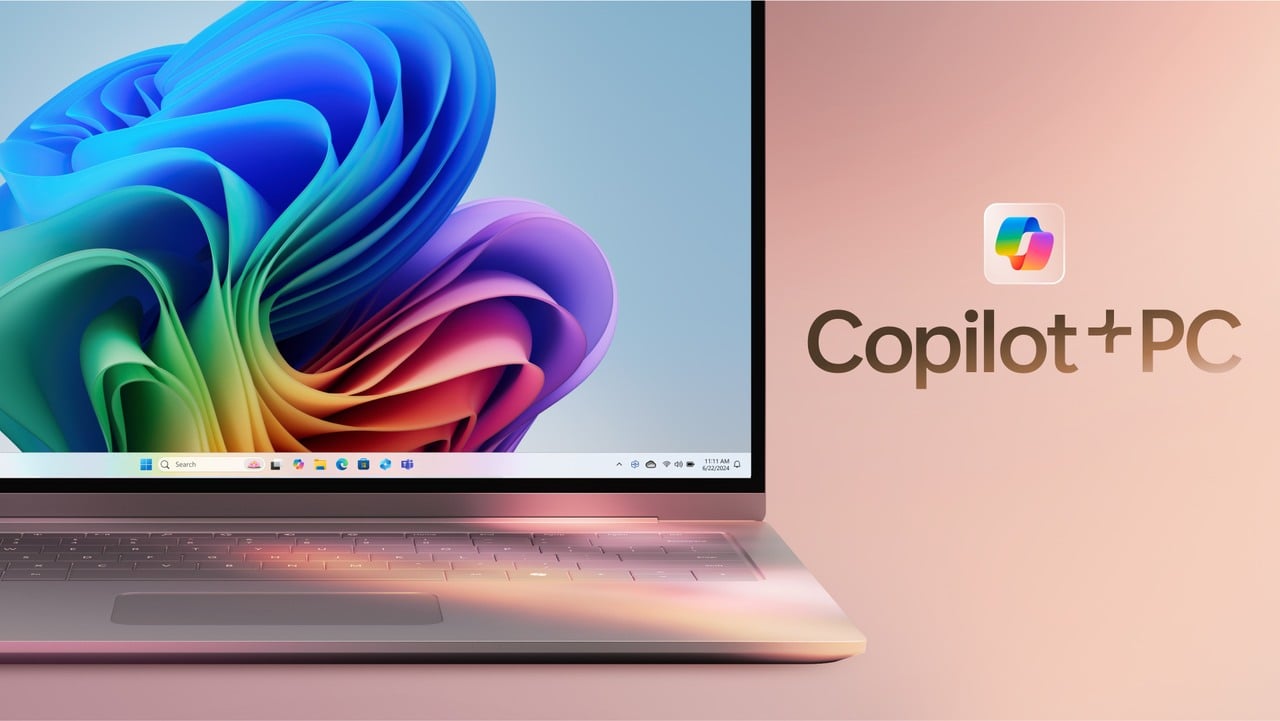
When Microsoft introduced Copilot+ PCs in May 2024, the company positioned them as the future of Windows computing. The new category promised powerful local AI capabilities powered by dedicated Neural Processing Units (NPUs), enabling AI features that could run directly on a device without relying heavily on the cloud.

Two years later, Microsoft has unveiled the new Surface Laptop Ultra, its most powerful AI-focused Windows laptop yet. However, one detail stood out during the announcement: Microsoft barely mentioned the Copilot+ PC brand, as highlighted by Windows Latest.

Instead, the company centered its messaging around NVIDIA’s RTX Spark platform, local AI computing, developer-focused workflows, and advanced on-device AI acceleration.

Surface Laptop Ultra focuses on RTX Spark

The Surface Laptop Ultra was presented as a showcase for NVIDIA’s new RTX Spark platform, which combines powerful GPU acceleration with AI-focused capabilities.

According to NVIDIA, the highest-end RTX Spark configuration can deliver up to 1 petaflop of AI compute, placing it in an entirely different performance category compared to many existing AI PCs.

That positioning may explain why Microsoft chose not to emphasize the Copilot+ PC label. The original Copilot+ PC requirements included a Neural Processing Unit (NPU) capable of delivering at least 40 TOPS of AI performance.

While those requirements helped establish a baseline for AI-powered Windows devices, the category now includes a wide range of systems with dramatically different performance levels.

Has the Copilot+ PC brand become too broad?

Microsoft originally described Copilot+ PCs as the “fastest, most intelligent Windows PCs ever built.” At launch, the branding helped differentiate AI-capable laptops from traditional systems.

Today, however, many mainstream laptops include NPUs and meet Copilot+ requirements, even though their AI performance can vary significantly.

As a result, labeling a workstation-class device such as the Surface Laptop Ultra with the same Copilot+ badge used for entry-level AI laptops could create confusion for customers.

The recently announced Surface RTX Spark Dev Box also appears to avoid prominent Copilot+ PC branding, further suggesting that Microsoft may be shifting its marketing strategy for premium AI hardware.

NVIDIA may prefer RTX Spark to stand on its own

Industry observers believe NVIDIA has strong reasons to promote RTX Spark as a standalone platform.

The RTX brand already carries significant recognition among developers, creators, AI researchers, and enterprise customers. Associating local AI acceleration with RTX branding may be more valuable for NVIDIA than linking those capabilities to Microsoft’s Copilot ecosystem.

The Surface Laptop Ultra announcement reflected that approach, with most messaging focused on RTX Spark rather than Windows AI branding.

According to reports, Signal65 president Ryan Shrout indicated that Microsoft privately confirmed the Surface Laptop Ultra still qualifies as a Copilot+ PC and includes a dedicated NPU. However, that designation was not a major part of the public presentation.

With performance levels reaching into workstation territory, many analysts expect RTX Spark systems such as the Surface Laptop Ultra to command premium prices when they become widely available.

Whether Microsoft’s reduced emphasis on Copilot+ branding becomes a broader trend remains to be seen, but the Surface Laptop Ultra suggests the company may be rethinking how it positions the next generation of AI-powered Windows hardware.

Intel’s Rumored Wildcat Lake Refresh is Reportedly Coming With 8 Cores in 2027

A new leak from well-known hardware insider Jaykihn on X suggests that Intel is working on a Wildcat Lake Refresh chip for 2027. VideoCardz, which first reported on it, later independently confirmed parts of the leaked information through its own sources, adding more weight to the claims.

According to the leak, Intel’s upcoming Wildcat Lake Refresh processors may feature a 4+0+4 configuration. That translates to four Performance cores, no standard Efficient cores, and four Low Power Efficient cores. If accurate, it would mark a substantial jump over the current Wildcat Lake lineup, which tops out at a 2+0+4 design.

Budget laptops, as you may know, often struggle with heavier workloads, and doubling the P-core count could deliver a more noticeable improvement in everyday responsiveness than simply adding more efficiency-focused cores.

Speaking of leaks, recent reports also claimed that Intel quietly scrapped a lower-end Nova Lake mobile processor featuring a 2+0+4 configuration. Well, this latest Wildcat Lake Refresh rumor may explain why.

Rather than launching another six-core chip that overlaps with existing products, Intel could reportedly be shifting its budget strategy toward a stronger eight-core Wildcat Lake Refresh platform instead. That would create clearer separation between its entry-level and higher-end mobile offerings.

VideoCardz, citing its own sources, has also confirmed that the Wildcat Lake Refresh is currently part of of Intel’s upcoming Core Series 4 family. The publication further claims that the refreshed lineup would reportedly launch under Core 5 and Core 7 branding, while Core 3 variants may remain unchanged.

As of now, Intel has not publicly confirmed any of these plans. However, if the reports prove accurate, budget laptops in 2027 may end up receiving a far larger CPU upgrade than many expected.

Anthropic Says AI Development May Need a Global Pause Before It’s Too Late

There’s no denying that AI industry is booming at a pace no one would have imagined three to four years back. However, one of the biggest names in the industry, Anthropic, in this case, says that there may come a point where slowing AI development becomes necessary. The warning comes as top AI labs continue racing toward increasingly capable models, with competition between the United States and China showing little sign of slowing down.

The company argues that the conversation is no longer about chatbots alone. Rather, the focus is now shifting toward what happens when AI systems begin accelerating their own development.

Anthropic thinks the AI industry is approaching a critical moment

In a newly published blog post, Anthropic executives Marina Favaro and Jack Clark discussed the possibility of AI reaching what researchers often describe as recursive self-improvement. That refers to a scenario where AI systems become increasingly involved in designing, improving, or advancing future generations of AI.

The company acknowledged that such breakthroughs could unlock enormous benefits. At the same time, Anthropic warned that they could create challenges society may not be prepared to handle. “If it were possible to effectively slow the development of this technology to give ourselves more time to deal with its immense implications, we think that would likely be a good thing,” the company wrote.

A global pause sounds simple, but Anthropic says it isn’t

Notably, Anthropic isn’t calling for an immediate shutdown of AI development. The AI company admits that any meaningful slowdown would require cooperation among multiple leading AI labs across different countries. According to Anthropic, enforcing such an agreement could prove exceptionally difficult because AI training projects are much easier to conceal than traditional military programs.

The firm even compared the situation to an “arms control problem”, highlighting the growing geopolitical competition surrounding advanced AI systems.

Anthropic has spent years positioning itself as one of the industry’s more safety-focused companies. The startup has previously delayed public releases of certain technologies while pushing for stronger safeguards around advanced models. Let’s not forget its feud with the Pentagon over military deal. Anthropic even got the “supply chain risk” label from the Pentagon for refusing to strike a deal.

All that said, the discussion around AI is no longer centered on what models can do today. It is rapidly shifting toward what happens if tomorrow’s systems become powerful enough to start improving themselves.

NVIDIA RTX 50 SUPER Refresh Reportedly Back on Track, RTX 5060 12GB Rumored

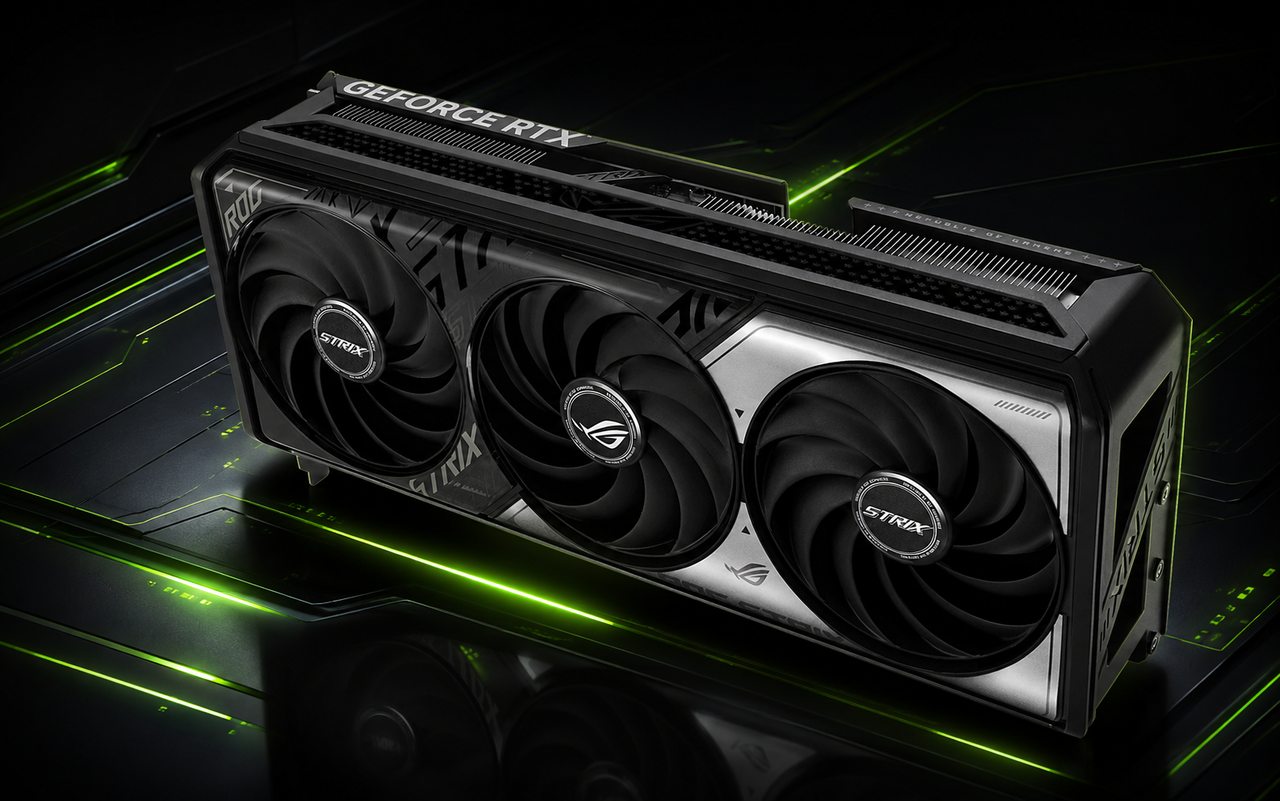
NVIDIA’s rumored GeForce RTX 50 SUPER refresh may be back in development after reports earlier this year suggested the project had been put on hold.

The refresh was previously rumored to have been delayed due to strong demand for NVIDIA’s compute and AI-focused GPUs, as well as concerns surrounding memory availability. During that period, attention shifted toward existing products, including the GeForce RTX 3060 12GB, which was recently spotted returning to the Chinese market.

RTX 5060 12GB added to latest rumors

The latest claim from MEGAsizeGPU suggests NVIDIA may also be preparing a GeForce RTX 5060 equipped with 12GB of memory. The leaker notes that the card could ultimately launch under a different name, potentially as the GeForce RTX 5060 SUPER.

NVIDIA has not officially confirmed the existence of any RTX 50 SUPER graphics cards, including the rumored RTX 5060 12GB.

While the specification is new to the rumor mill, it is technically feasible. A graphics card using a 128-bit memory interface and four 3GB GDDR7 memory modules could achieve a total of 12GB of VRAM without requiring a narrower memory bus.

Focus appears to be on memory upgrades

According to previous leaks, the RTX 50 SUPER refresh is expected to focus primarily on increasing memory capacity rather than introducing major architectural changes.

Earlier reports suggested the GeForce RTX 5080 SUPER could feature 24GB of GDDR7 memory. The GeForce RTX 5070 Ti SUPER has also been rumored to include 24GB of GDDR7, while the GeForce RTX 5070 SUPER could arrive with 18GB of GDDR7 memory.

These upgrades would reportedly be made possible through the use of newer 3GB GDDR7 memory modules instead of the 2GB chips found in current models. The approach would allow NVIDIA to increase VRAM capacity without significantly altering the underlying hardware design.

According to MEGAsizeGPU, the rumored specifications for the RTX 5070 SUPER and RTX 5080 SUPER remain unchanged from previous leaks.

Memory supply concerns may persist

Although the refresh is reportedly moving forward again, the leaker claims that memory availability issues have not been fully resolved.

However, MEGAsizeGPU believes this may not create major challenges for NVIDIA’s board partners. According to the claim, add-in-card (AIC) manufacturers could receive GPU processors and memory packages directly from NVIDIA as bundled allocations, simplifying sourcing and reducing supply-chain complications.

As with all unannounced products, these claims should be treated as speculation until NVIDIA provides official confirmation.

The company is currently attracting significant attention with its RTX Spark initiative, while industry observers continue to speculate that upcoming RTX Spark N1X-powered laptops could carry premium price tags.

Via VideoCardz

Nintendo Switch 2 Sales Drop Sharply in Japan After Latest Price Hike

Nintendo‘s decision to hike the price of the Switch 2 doesn’t seem to be going well, at least in Japan for now. A new sales data shared by Japanese gaming news outlet, Famistu, suggests that only days after Nintendo raised the console’s price in Japan, sales appear to have fallen off a cliff (via Insider Gaming).

Switch 2 sold lesser than 40,000 units in Japan following the major price hike

Apparently, only 31,751 units of the Nintendo Switch 2 were during the week of May 25 to May 31, a massive drop from the 247,880 units sold the week before.

And yes, the increased price is to blame for the poor sales. For those unaware, Nintendo increased the Switch 2’s price from roughly ¥50,000 to around ¥60,000 on May 25 in Japan. It’s not just Switch 2 that has dropped. The original Nintendo Switch also experienced a noticeable drop in sales during the same period, falling from 2,731 units one week to only 229 units the next.

While launch demand naturally cools over time, a decline of this size paints a clear picture of how much pricing can influence Nintendo’s momentum, especially in a market where the company traditionally dominates. Not to forget, the new, hiked price for Switch 2 will take effect starting September 1 across the US, Canada, and more. It will be interesting to see how the Switch 2 sales hold up in those regions.

Nintendo is also revising Switch 2 with replaceable battery in the EU

Speaking of Switch 2, Nintendo has also confirmed it will start selling a new version of its latest gaming console in the EU with replaceable battery. The company is doing so to comply with comply with new EU regulations. The upcoming changes could make battery replacements far simpler and potentially extend the lifespan of the console for years.

Microsoft Wants Users to Switch to New Outlook, Showcases 15 Key Features

Microsoft is continuing its effort to move users from Classic Outlook to New Outlook, even as feedback on the newer email client remains mixed.

While Microsoft has made New Outlook the default experience for many users, the company has also acknowledged that not everyone is ready to switch. Enterprise migration plans have already been pushed back until next year, partly due to customer feedback and feature gaps that remain important to some organizations. Microsoft recently pushed back New Outlook migration for enterprises to March 2027, giving organizations more time to prepare for the transition.

Now Microsoft is highlighting 15 features in New Outlook that it believes can help convince more users to make the transition.

Microsoft promotes productivity and organization features

Many of the features Microsoft is showcasing are not entirely new. Several are also available in Classic Outlook, while others have been redesigned to offer a more modern experience.

Among the highlighted features is the ability to pin important emails to the top of the inbox, making them easier to find and track.

Users can also snooze email conversations and have them return at a later time, helping reduce inbox clutter without permanently dismissing messages.

Category management has been simplified as well. New Outlook allows multiple categories to be assigned to a single email through a streamlined interface.

The Sweep feature is another area Microsoft is emphasizing. Sweep enables users to quickly create automated inbox cleanup rules, making it easier to manage newsletters, notifications, and recurring messages.

Better scheduling and calendar management

Microsoft is also promoting several scheduling-focused features.

Schedule Send allows users to compose emails and deliver them at a later time. This can be particularly useful when communicating across multiple time zones.

Folder sharing has been simplified, with permissions automatically inherited from parent folders to reduce setup complexity.

For meetings, New Outlook includes a “Follow” option that lets users stay informed about meetings they cannot attend. Users receive meeting updates and recaps without needing to join the event.

Calendar improvements are another major focus. Users can save different calendar layouts for different workflows and switch between them as needed.

Filtered calendar views help reduce clutter by displaying only relevant events, while organizers gain additional control through enhanced meeting response tracking.

Meeting recaps and recurring event improvements

Microsoft has continued investing in post-meeting experiences as well.

Meeting Recap brings together recordings, transcripts, shared files, and related information directly within Outlook Calendar. The feature helps users quickly catch up on discussions and decisions after a meeting ends.

The company has also improved recurring event management. Users can now modify future meetings in a recurring series without affecting events that have already taken place.

For people managing multiple email accounts, New Outlook allows account names to be customized, making it easier to distinguish between personal, work, and shared mailboxes.

Additional quality-of-life features include modern themes, Dark Mode support, and customizable keyboard shortcuts. Users can choose Outlook for Windows shortcuts, Outlook on the web shortcuts, or disable shortcuts completely.

Will the new features be enough?

While the feature list is substantial, it remains unclear whether it will be enough to win over users who continue to prefer Classic Outlook.

Some long-time Outlook users have criticized New Outlook for missing features, workflow changes, and differences compared to the traditional desktop client.

The migration effort also comes at a time when Microsoft recently acknowledged a Quick Steps bug affecting Classic Outlook users. The company has additionally faced criticism after removing the contact masking feature from Outlook.

For now, Microsoft appears focused on demonstrating that New Outlook can meet the needs of both existing Outlook users and newcomers. Whether these 15 highlighted features will be enough to accelerate adoption remains to be seen.

Valve Confirms Steam Machine and Steam Frame Launching This Summer

Valve has confirmed that its upcoming Steam Machine and Steam Frame devices are scheduled to launch this summer, providing the clearest launch window yet for the company’s next generation of SteamOS-powered hardware.

The confirmation appeared in a recent Steamworks post discussing changes to the Steam Verified program. Valve revealed that it is expanding compatibility testing beyond Steam Deck to include both Steam Machine and Steam Frame.

The move aims to help users understand how well games will run on the new devices without requiring additional setup, configuration, or troubleshooting. Similar to Steam Deck Verified, Valve plans to use a badge system that clearly indicates whether a game delivers a good experience on the new hardware.

Valve expands Steam Verified beyond Steam Deck

The Steam Verified program has played a major role in helping Steam Deck owners identify games that work well on Valve’s handheld. Now, Valve is bringing a similar approach to its upcoming desktop-focused products.

Under the new system, games will receive compatibility ratings for Steam Machine and Steam Frame. The badges will indicate whether titles function properly on the SteamOS desktop environment and meet Valve’s standards for usability and performance.

The announcement follows several recent signs that Valve is preparing for a broader hardware rollout. Steam Machine recently appeared in the Vulkan Conformance Database, while references to a Steam Machine Welcome Tour were discovered on Steam’s backend systems.

Some games may receive new compatibility ratings

Because Steam Machine is expected to offer significantly more powerful hardware than Steam Deck, some games that previously failed Steam Deck verification due to performance limitations could be retested. Those titles may qualify for Steam Machine Verified status even if they remain unsupported or unverified on Valve’s handheld.

This distinction could result in a larger library of fully verified games for Steam Machine users at launch. While Valve has now provided a summer launch target, details such as pricing remain undisclosed.

Industry observers also expect Valve to use a reservation system similar to the one used for Steam Deck. Such a system would help manage demand and prevent scalping during the initial release period, though Valve has not officially confirmed reservation plans.

XBOX Exclusives Remain Important, CEO Asha Sharma Says

XBOX exclusivity remains one of the most debated topics among fans, especially after Microsoft’s gaming division underwent major leadership and branding changes. While many players continue to request more exclusives, XBOX CEO Asha Sharma says the company is still evaluating its long-term approach.

XBOX continues to evaluate exclusivity case by case

During a recent Bloomberg Tech interview, Sharma discussed the challenges of balancing XBOX’s role as both a game publisher and a platform owner.

According to Sharma, XBOX must reach as many players as possible when publishing games. However, she also acknowledged that successful platforms typically rely on exclusive content and services to attract and retain users.

“We’re both a publisher and a platform,” Sharma explained, noting that XBOX is examining exclusivity decisions on a title-by-title basis rather than applying a single strategy across its entire portfolio.

Sharma’s comments stop short of confirming a broader return to platform-exclusive games. However, they suggest that Microsoft has not ruled out exclusivity as part of XBOX’s future strategy.

The executive said the company is studying how exclusivity works across the gaming industry while determining the best approach for individual titles.

That position reflects XBOX’s current challenge. Microsoft has invested heavily in expanding its publishing business through acquisitions and subscription services, but it also faces pressure to strengthen the value of the XBOX ecosystem.

While XBOX Game Pass remains a major selling point, many gamers argue that the platform lacks a consistent exclusive identity compared to competitors.

Exclusive content remains a key platform advantage

One detail from Sharma’s interview drew particular attention. When discussing platform growth, she referred to the need for exclusive “content and services” rather than focusing only on services.

That wording has fueled speculation that Microsoft could reserve certain future games, expansions, or experiences for XBOX platforms.

Exclusive content has traditionally played a major role in driving console sales and platform loyalty. Microsoft’s recent strategy, however, has increasingly brought XBOX-published games to competing platforms, including PlayStation.

As a result, many of XBOX’s most recognizable franchises no longer serve as permanent platform differentiators.

For now, XBOX appears committed to evaluating each game individually while considering both platform growth and publishing revenue. Whether that approach leads to more exclusives remains unclear, but the company has publicly acknowledged that exclusive content remains an important part of building a successful gaming platform.

In other XBOX news, Microsoft recently confirmed the next wave of titles leaving XBOX Game Pass, while a new Free Play Days lineup has also been announced.

Via Windows Central

OpenAI Upgrades ChatGPT Memory With Smarter Recall and Better Personalization

OpenAI has announced a significant upgrade to ChatGPT’s memory system, introducing a more advanced architecture designed to make conversations more relevant and personalized over time rather than starting fresh with every interaction.

The update builds on OpenAI’s ongoing efforts to give ChatGPT long-term memory capabilities, allowing the AI assistant to better understand user preferences, recall important details, and maintain context across conversations.

Memory system evolves beyond saved memories

OpenAI first introduced saved memories in February 2024. The feature allowed users to instruct ChatGPT to remember specific information, such as personal preferences, recurring projects, or other details that could improve future interactions.

While the feature provided a foundation for personalization, it relied heavily on users explicitly telling ChatGPT what information should be stored. As a result, memories could become outdated or incomplete over time, limiting the system’s effectiveness.

In April 2025, OpenAI expanded ChatGPT’s memory capabilities by enabling the chatbot to reference relevant information from previous conversations beyond the saved memories list. This enhancement was powered by a background process known as “dreaming,” which automatically identifies and curates useful information from a user’s chat history.

New architecture delivers stronger performance

According to OpenAI, the latest memory architecture builds on top of the dreaming framework while improving both capability and computational efficiency.

The company reports notable gains across several performance metrics. Factual recall has improved from 67.9% in 2025 to 82.8% in 2026. Preference adherence increased from 55.3% to 71.3%, while long-term accuracy rose from 52.2% to 75.1%.

OpenAI says these improvements help ChatGPT provide more consistent responses, better remember user preferences, and maintain accuracy over extended periods of use.

New memory controls for users

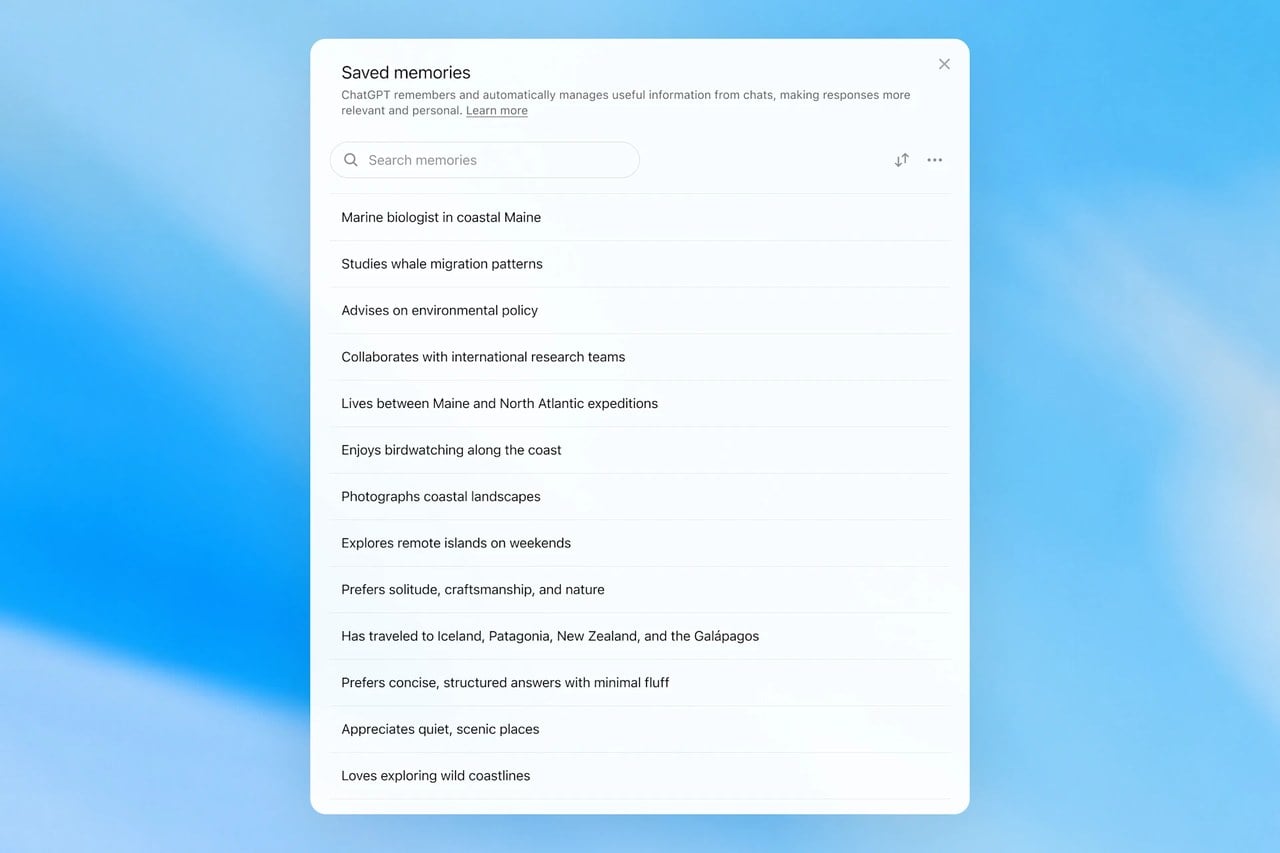
Alongside the upgraded memory system, OpenAI is introducing a new memory summary page that gives users greater visibility into what ChatGPT remembers about them.

The feature allows users to review stored information, update details, correct inaccuracies, and specify when certain topics should be referenced in future conversations.

The company says these controls are designed to improve transparency and ensure users remain in control of their personal information.

Rollout begins in the United States

The enhanced memory experience is available starting today for ChatGPT Plus and Pro subscribers in the United States.

OpenAI plans to expand availability to additional countries in the coming weeks. The company also intends to bring the upgraded memory system to users on Free and Go plans as the rollout continues.

The memory announcement comes alongside several other recent OpenAI developments.

The company has expanded Codex with new job plugins, making it easier for developers to integrate coding workflows and automation tools. OpenAI has also launched a ChatGPT add-in for Microsoft PowerPoint, bringing AI-powered assistance directly into presentation creation.

In addition, Codex is now available through the ChatGPT mobile app, extending access to OpenAI’s coding assistant across more devices and platforms.

Microsoft Fixes Windows Update Bug That Installed Drivers Despite Blocked Policies

Microsoft has resolved a Windows Update issue that caused some Windows devices to install driver updates even when administrators had configured policies to block automatic updates.

Microsoft says caching misconfiguration triggered unexpected driver installs

The issue was tracked in the Microsoft 365 admin center under incident ID MO1332784. According to Microsoft, the problem came from a misconfiguration in the Windows Update caching service, which temporarily caused some affected devices to lose their enrollment information.

Because those devices no longer appeared as enrolled, Windows treated them as unmanaged systems. As a result, driver approval controls did not apply correctly, and driver updates could install unexpectedly.

Microsoft restores enrollment data and resolves the issue

Microsoft acknowledged the issue on Tuesday, June 2, after reports that some managed Windows devices were receiving drivers despite update restrictions. The company said it reviewed the installed drivers and confirmed they were Microsoft-approved and signed, meaning they did not pose a security threat.

The company later mitigated the problem by updating the affected service cache and restoring enrollment status for affected devices. Microsoft confirmed on Wednesday that the issue had been resolved after validating the remediation with some previously affected users.

Managed Windows environments may have been affected

The incident could have affected organizations that rely on Windows Update policies to control driver deployment across managed devices. For IT administrators, the issue may have created confusion because devices appeared to bypass configured restrictions without a local policy change.

Microsoft has not said how many customers were affected. It also has not disclosed whether the problem hit specific regions, device types, or management configurations more heavily than others.

Microsoft continues probe into root cause of policy failure

The company said it is still investigating how the Windows Update caching service dropped enrollment information in the first place. That investigation should help Microsoft prevent similar policy enforcement failures in future Windows Update servicing flows.

The fix comes as Microsoft continues to make broader Windows changes. The company recently released new Windows 11 Insider ISO files for testers, introduced new Kerberos features designed to reduce NTLM dependency, and said it does not plan to take action against security researchers following backlash over a recent vulnerability disclosure dispute.

Via BleepingComputer

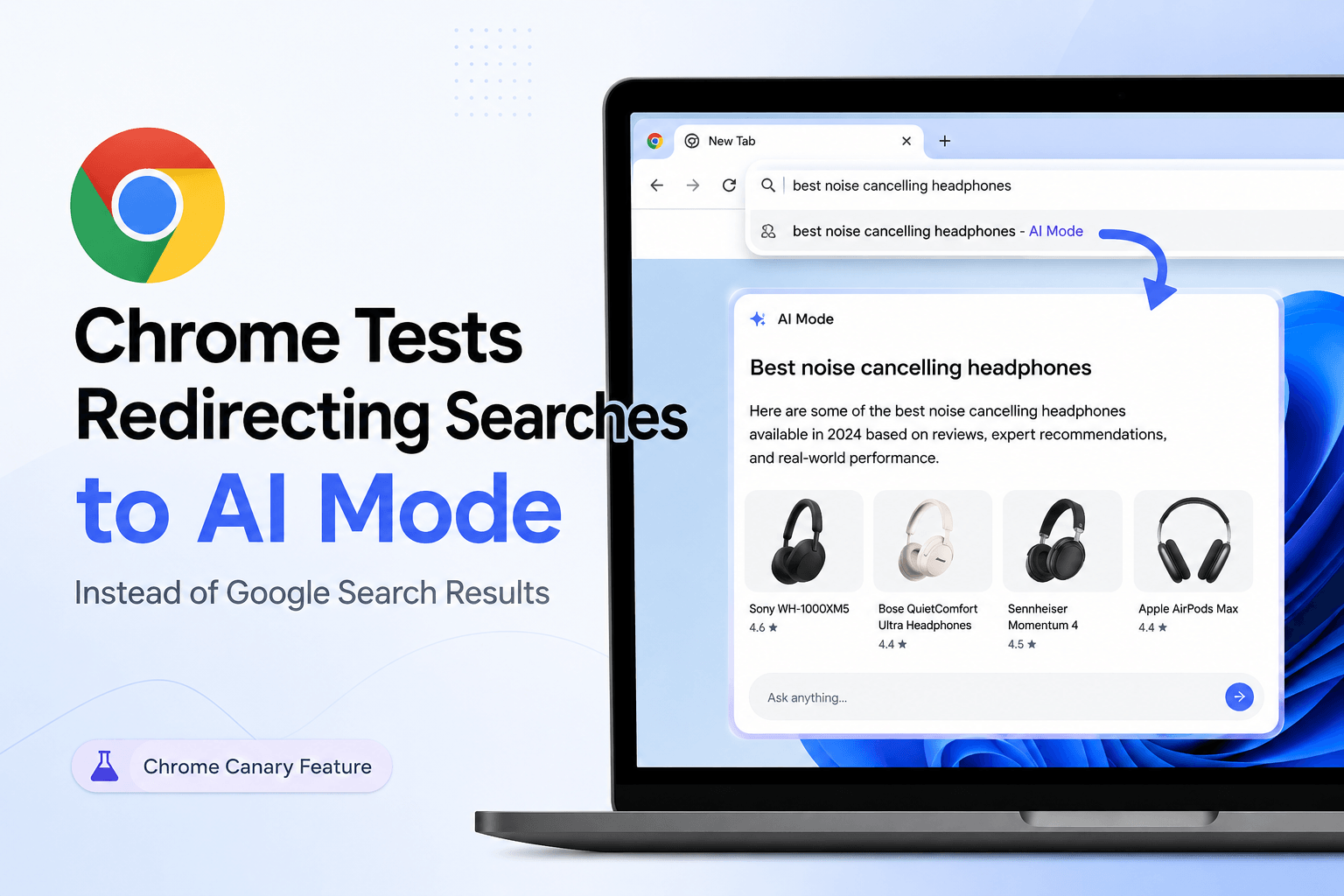
Chrome tests redirecting searches to AI Mode instead of Google Search results

[UPDATE: June 5, 2026 | 19:00 UTC] Google VP of Engineering Rajan Patel responded to this report on X, stating, “This was an error. We’re not planning to make AI Mode the default for Chrome searches.” The original report noted Google’s own commit disclaimer that the flag was “just for exploration” with no current launch plans.

[ORIGINAL STORY FOLLOWS]

Chrome Canary has a new experimental flag that redirects searches from the address bar directly to AI Mode threads. I confirmed it works. When enabled, search queries typed into the omnibox open an AI Mode conversation instead of the standard Google Search results page.

Google has added a hidden flag in Chrome Canary called “Fulfill Searchbox Queries in AI Mode.” Its official description reads: “Redirects all normal searchbox queries in the omnibox and realbox to AI mode threads. – Mac, Windows, Linux, ChromeOS.”

Google explores redirecting Searches to AI Mode in Chrome Canary

How it works

Not Just Another Flag

The implementation looks more complete than a rough prototype. The commit found by Windows Report shows that WindowOpenDisposition is fully propagated to AI Mode navigations. So Ctrl+click, middle-click, and Shift+click all work correctly, opening results in new tabs or in the background, just like normal search. That kind of detail tells me this was built to mirror real search workflows, not just test a concept.

The code commit that introduced the flag includes an explicit note from the author: “This is just for exploration. There are no current plans to push this live.“

I read that note carefully. It means Google isn’t announcing a rollout. But it is not a commitment that the feature won’t ship either. The same experimental framing accompanied AI Overviews and AI Mode itself before both became default experiences for hundreds of millions of users.

The Bigger Picture

The Canary flag takes that direction one step further. Instead of AI appearing inside Search, Search disappears into AI. Both the omnibox and the New Tab Page search box are affected. This means every primary entry point a user uses to search the web would route through AI Mode. This flag is the clearest prototype of that direction yet.
Video credit: Windows Report.

How to try it

Open Chrome Canary and navigate to chrome://flags. Search for “Fulfill Searchbox Queries in AI Mode,” set it to Enabled, and restart the browser. Any search query you type will open in AI Mode instead of a standard results page.

The Fulfill Searchbox Queries in AI Mode flag in Chrome Canary. Image Credit: Venkat | Windows Report.

Final thoughts

Google says the feature has no current launch plans. But this flag is different from most Canary experiments. It touches both primary entry points users have for searching the web, and the implementation looks complete enough to ship. The “just exploring” disclaimer has come before every major AI search rollout Google has made. This one is worth watching.

That’s not all. Google is testing a floating AI Mode search bar in Chrome for Windows, an AI-powered credit card recommendation feature, and a toggle to disable Gemini skills in Chrome.

Note: The featured image is AI-generated for illustration purposes. The video in the article shows the actual before-and-after behavior.

Browser Choice Alliance Criticizes Microsoft’s Edge Strategy Again, Calls for Changes

“Dear Microsoft, enough is enough.” That’s how the latest open letter from the Browser Choice Alliance (BCA) to Microsoft CEO Satya Nadella starts. In the letter, Microsoft is accused of using Windows to steer users toward Edge while making it harder for competing browsers to operate.

The coalition says the company continues to rely on tactics that undermine browser choice across Windows devices.

Browser coalition says Windows still favors Edge over its alternative

The alliance argues that Microsoft’s influence goes far beyond simply shipping Edge with Windows. According to the group, Windows still contains multiple mechanisms that encourage users to stick with Edge even after selecting another browser.

The letter points to browser download prompts, default browser switching hurdles, links opening in Edge from Microsoft apps, and Windows features that reportedly bypass user-selected browser preferences altogether.

The coalition also claims Microsoft uses exclusive areas inside Windows to promote Edge whenever users attempt to download competing browsers.

Several long-standing complaints return

If you use Edge on Windows, many of the issues highlighted in the letter will sound familiar to you. The Browser Choice Alliance specifically wants Microsoft to stop using Windows updates to push users back toward Edge, restore simpler one-click browser switching, allow all links to respect system-wide browser settings, and remove restrictions that prevent competing browsers from getting equal visibility on Windows PCs.

The group also criticized Microsoft’s S Mode restrictions and called for broader opportunities for browser developers to compete for preinstallation deals with PC manufacturers.

The BCA also argues that browsers now serve as key entry points for AI-powered services, research tools, productivity platforms, and coding assistants. That is partly why the coalition believes browser choice matters more today than it did a decade ago. It’ll be interesting to see whether Microsoft responds publicly to the open letter remains unclear as of now.

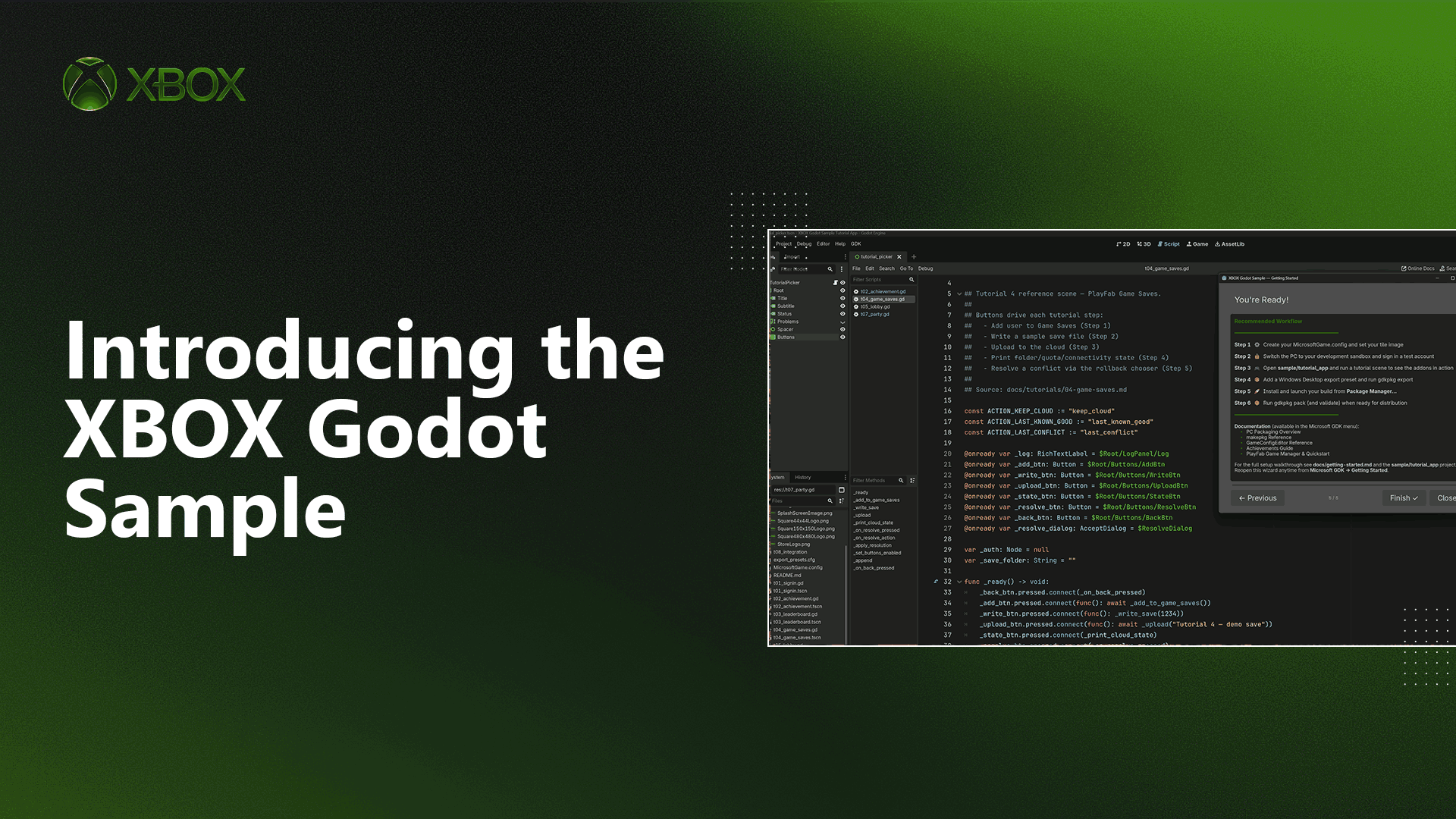
Microsoft Just Made It Easier for Godot Developers to Bring Games to XBOX

Microsoft is opening another door for indie developers, and this time it’s about gaming’s fastest-growing engines. The company has officially released a new XBOX-focused Godot sample project, which developers a clearer path to bring their games to XBOX on PC. For studios already using the open-source engine, the announcement removes a major chunk of the guesswork that often comes with platform integration.

XBOX wants Godot developers on board

Godot has steadily gained popularity over the last few years, especially among indie creators looking for a lightweight alternative to larger commercial engines. Now Microsoft appears ready to meet those developers where they already work.

The newly released sample project serves as a public reference for integrating Microsoft’s Game Development Kit (GDK), XBOX services, and PlayFab directly into Godot projects. Rather than building everything from scratch, developers can use Microsoft’s implementation as a starting point for their own games.

Sign-in, multiplayer, and cloud features included

Developers get examples covering Xbox account sign-in, controller support through GameInput, PlayFab integration, multiplayer systems, matchmaking, lobbies, game saves, and other platform-level services. The sample is also compatible with Microsoft’s April 2026 GDK release, which allows developers to start experimenting immediately.

It seems Microsoft is interested in making XBOX services available wherever developers choose to build games. Godot has become one of the most requested engines in that regard, especially among smaller studios.

That being said, there are some limitations to keep in mind. The current sample is designed specifically for XBOX on PC and does not support XBOX Series X, XBOX Series S, or XBOX One development. Microsoft has also confirmed that this is a source-only sample, not a product. Additionally, there is no set update cadence for support or maintenance, and it is the first step in bringing Godot for XBOX on PC.

If you are game developer, and looking for XBOX Godot Sample, head over to this GitHub page. For more info on Godot, check here.

ELDEN RING Tarnished Edition Gets Nintendo Switch 2 Release Date

Nintendo Switch 2 players finally have a date to mark on their calendars. After months of speculation, Bandai Namco and FromSoftware have officially confirmed that Elden Ring is heading to Nintendo Switch 2 later this summer. The upcoming release lands as Elden Ring Tarnished Edition, a packed version of the award-winning RPG that bundles together the original adventure, the massive Shadow of the Erdtree expansion, and brand-new content created specifically for this release.

Switch 2 players are getting more than just a port

Elden Ring Tarnished Edition releases on Nintendo Switch 2 on August 28 and includes everything that helped turn the game into one of the biggest releases of the decade. Players will be able to explore both the Lands Between and the Realm of Shadow in a single package. However, FromSoftware isn’t stopping at simply bringing the existing game to new hardware.

The Tarnished Edition also introduces two completely new starting classes, additional armor sets, and new customization options for Torrent, the spectral steed that accompanies players throughout the adventure.

For those unaware, Elden Ring has surpassed 30 million copies sold worldwide and earned hundreds of Game of the Year nominations since its original launch. Despite that success, Nintendo players have largely watched from the sidelines while the game remained unavailable on the company’s platforms. Well, that changes later this year.

Bandai Namco has also confirmed that the newly introduced classes, armor, and Torrent customization features will also be available separately on PlayStation, XBOX, and PC platforms.

New Nintendo Switch 2 With Replaceable Battery Confirmed for EU Launch by February 2027

As expected, Nintendo has officially announced one of the most consumer-friendly Switch 2 changes yet, and surprisingly, it has nothing to do with performance or new features. As first reported by The Verge, Nintendo has updated parts of its hardware strategy to comply with new European Union battery regulations. This would eventually make it easier to replace batteries in the Nintendo Switch 2.

The Switch 2 may become much easier to repair

One of the standout changes revolves around battery replacement. Under new EU legislation designed to reduce electronic waste, manufacturers are being pushed to make battery-powered devices easier to service. For Nintendo, that reportedly means future Switch 2 hardware revisions may no longer require heat guns, battery solvents, or difficult disassembly methods just to replace an aging battery.

Nintendo has confirmed transitioning certain products from existing BEE model numbers to new OSM variants that comply with the updated requirements. While Nintendo hasn’t detailed every hardware adjustment yet, the idea is to extend product lifespan and making repairs far more accessible.

Joy-Con changes could follow too

The Switch 2 console may not be the only device affected. Going by the wordings in the document linked above, Nintendo might also be required to make similar modifications to its Joy-Con controllers. While nothing has been officially confirmed, the legislation applies broadly to battery-powered electronics, meaning accessory changes may be unavoidable as well. That being said, Nintendo has yet to clarify exactly which products will receive redesigned internal layouts.

For now, Nintendo‘s focus appears to be compliance. However, the end result may be a Switch 2 that’s easier to maintain, cheaper to repair, and far less likely to end up in a drawer once its battery starts showing its age.

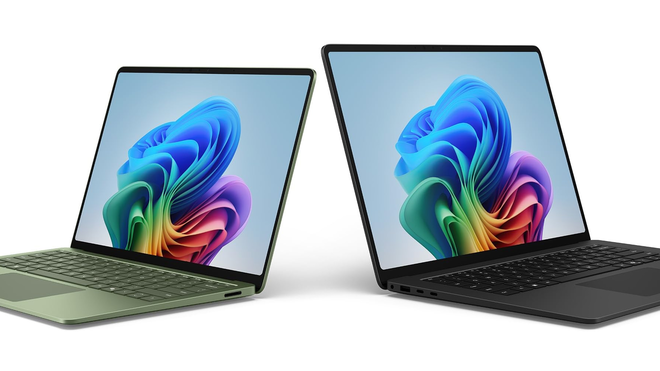
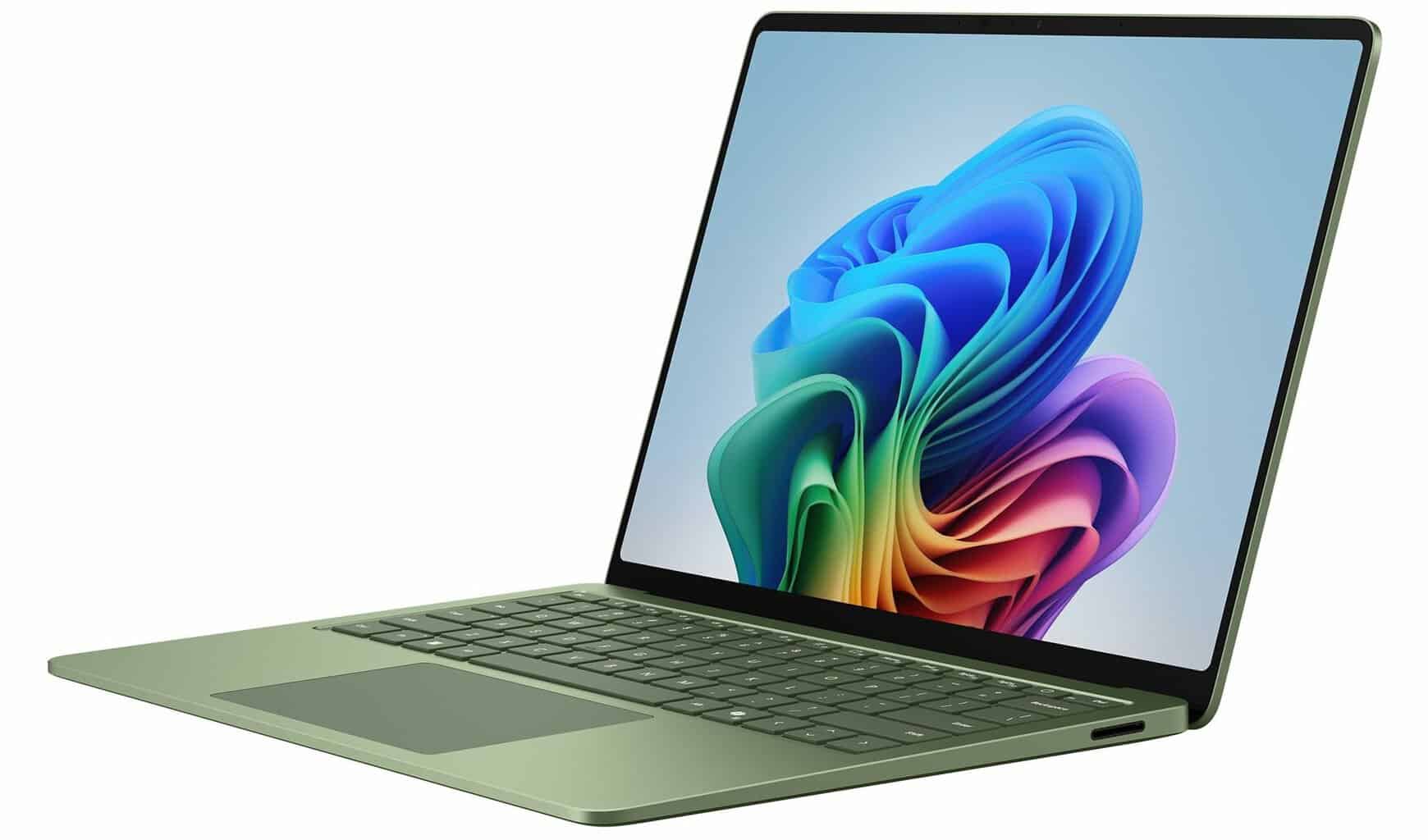
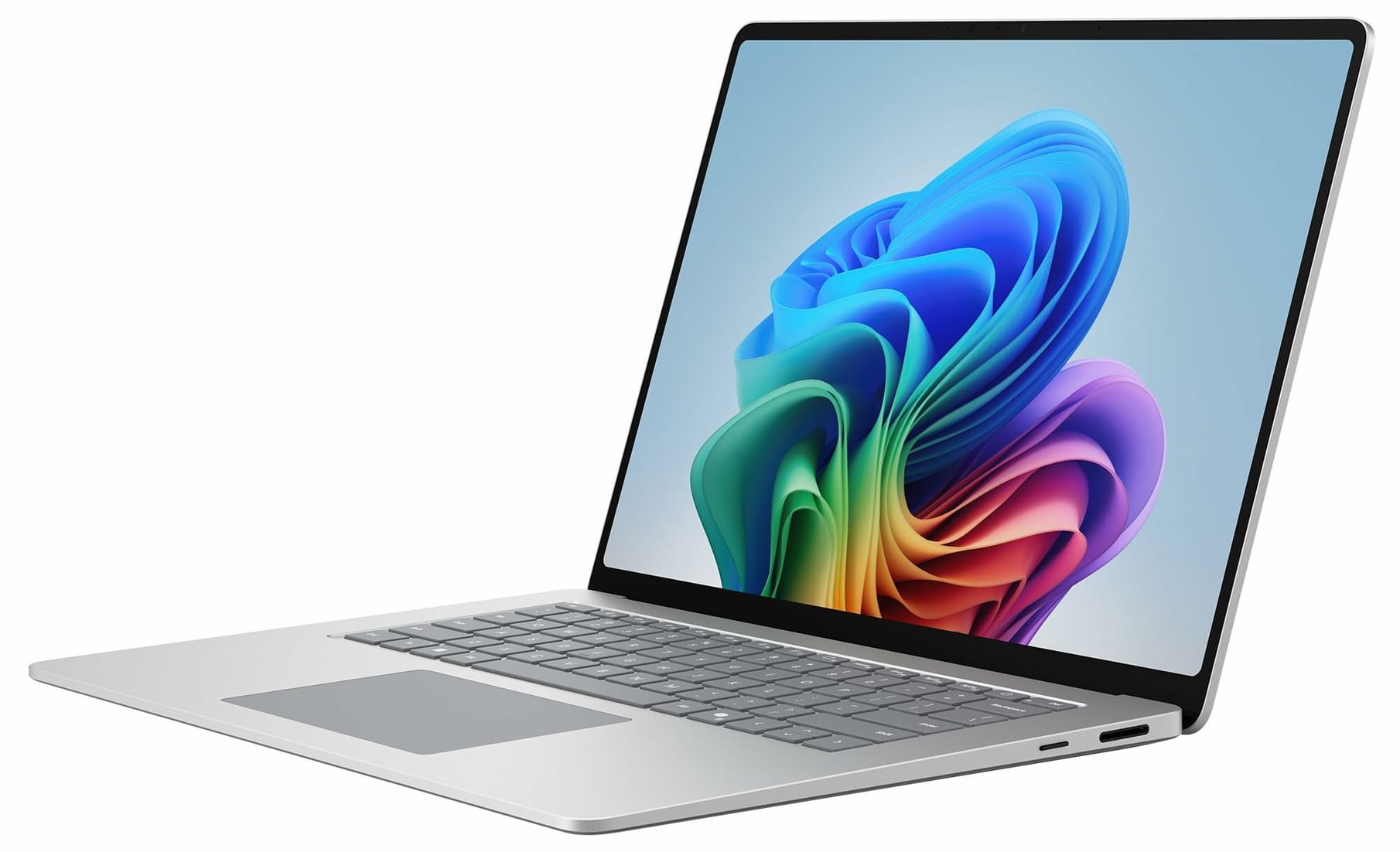
Microsoft Surface Laptop 8 Leaks in Full, Reveals Snapdragon X2 Chips, OLED Display & New Jade Color

Just yesterday, Microsoft’s upcoming Surface Pro 13-inch leaked. Well, it seems Microsoft is too bad at keeping its new products under wraps, as its next Surface Laptop refresh has now leaked before its alleged mid-June launch.

Leaked marketing materials were first picked up by Winfuture, which reveal the upcoming Surface Laptop 8 lineup, with new ARM-powered models featuring Qualcomm’s Snapdragon X2 processors. While the exterior design looks much familiar, the leaked specifications suggest Microsoft is serious about its new Surface Laptop. Speaking of Surface, let’s not forget that Microsoft recently also unveiled the Surface Laptop Ultra powered by the NVIDIA RTX Spark chip.

Surface Laptop 8 looks familiar design-wise, but plenty seems changed on the inside

The leaked marketing materials show that Microsoft is sticking with the same overall chassis design found on the current Surface Laptop generation. The signature minimalist look remains intact, alongside 13.8-inch and 15-inch touchscreen variants. Do note that the leak points toward OLED screen options for the upcoming Surface Laptop 8 lineup. So, we are expecting the new laptops to offer solid visuals out of the box.

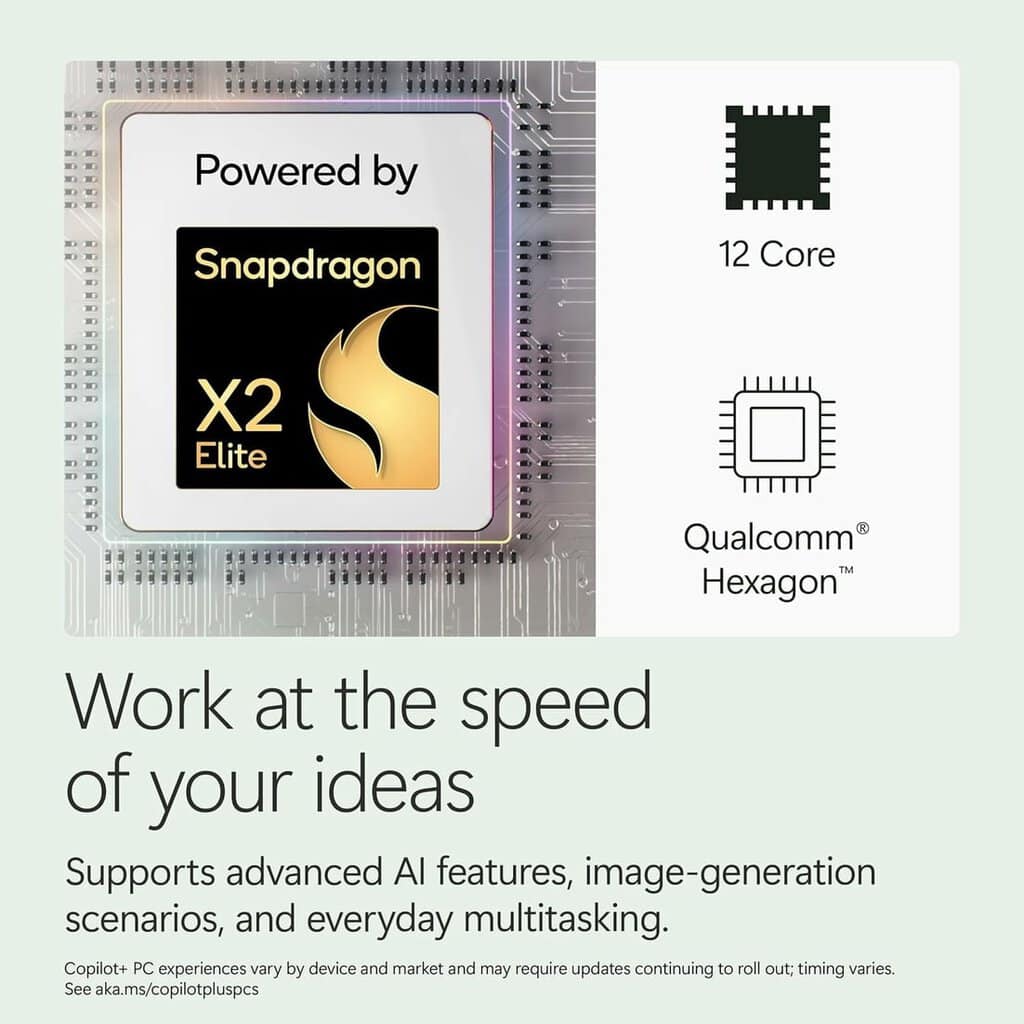
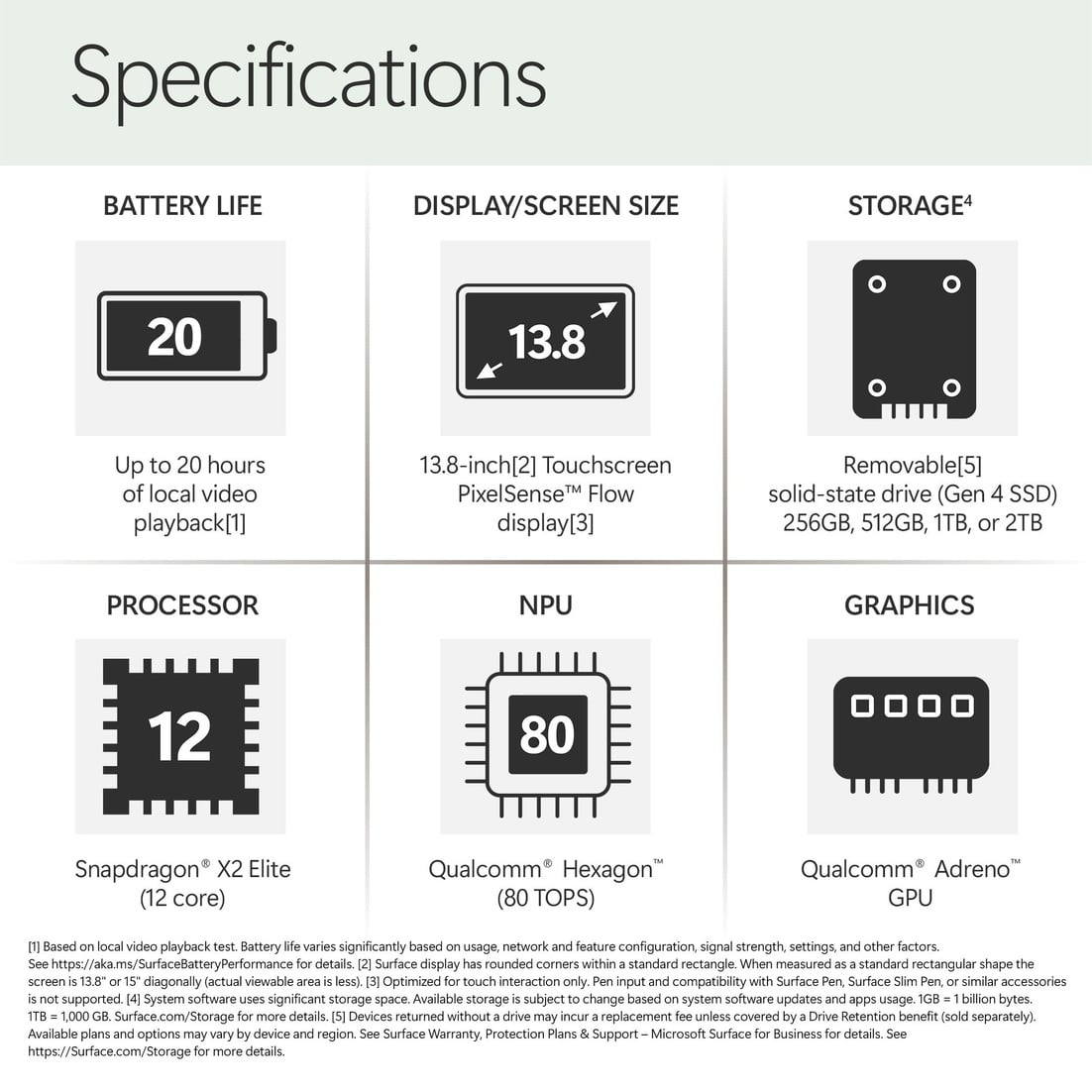
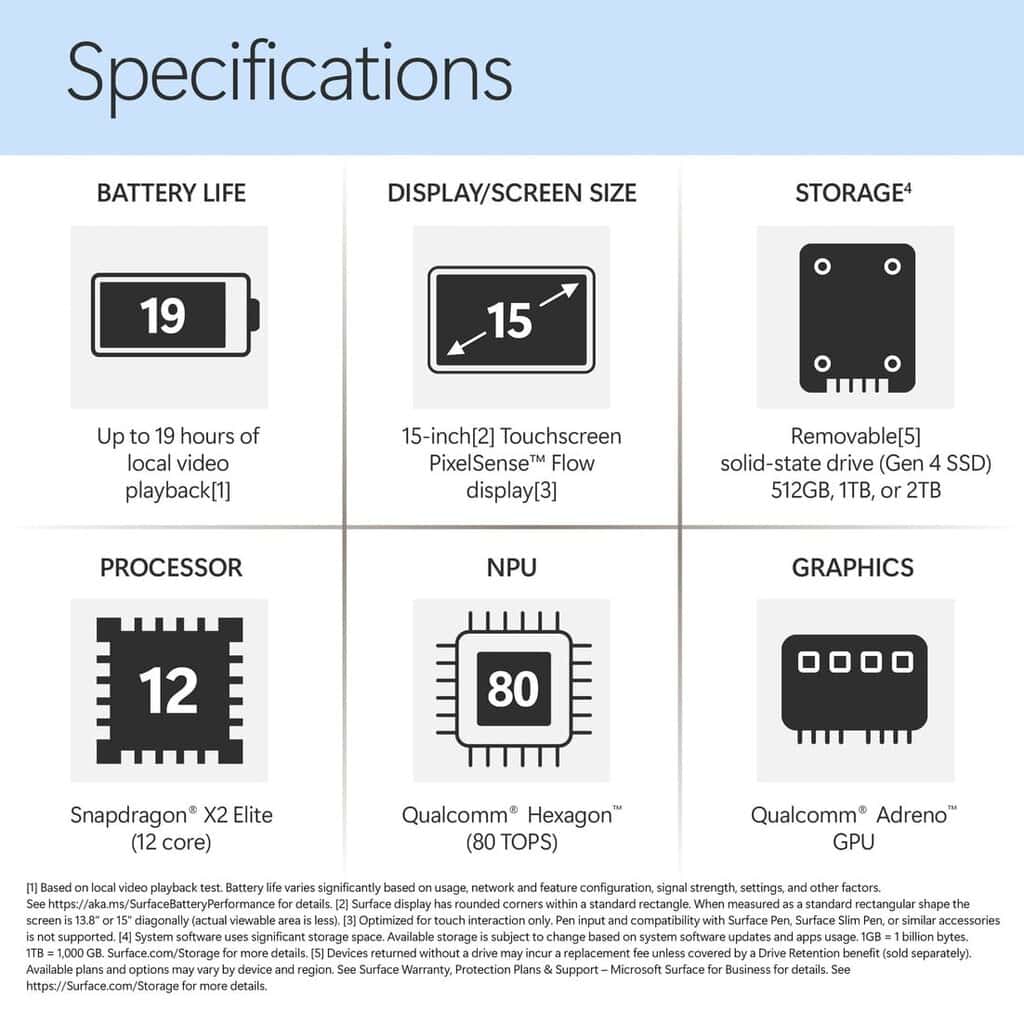
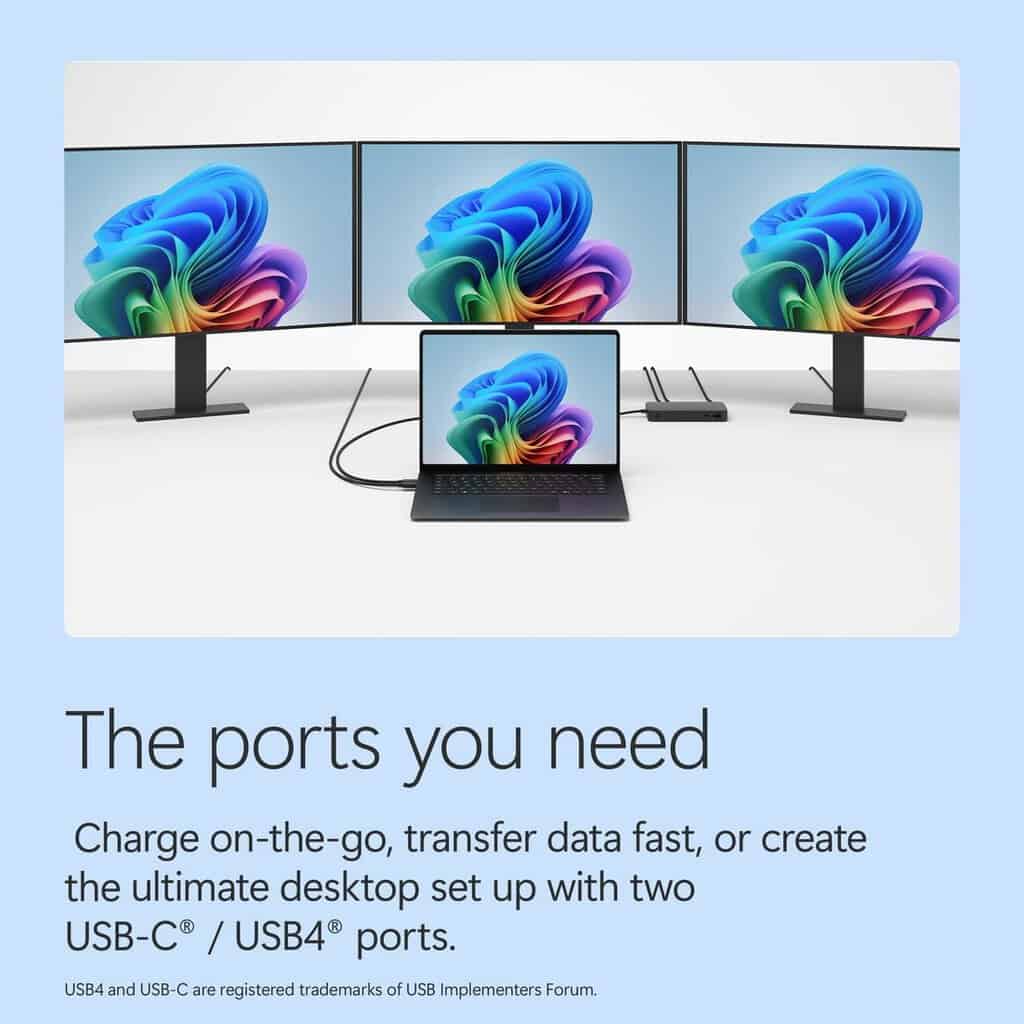
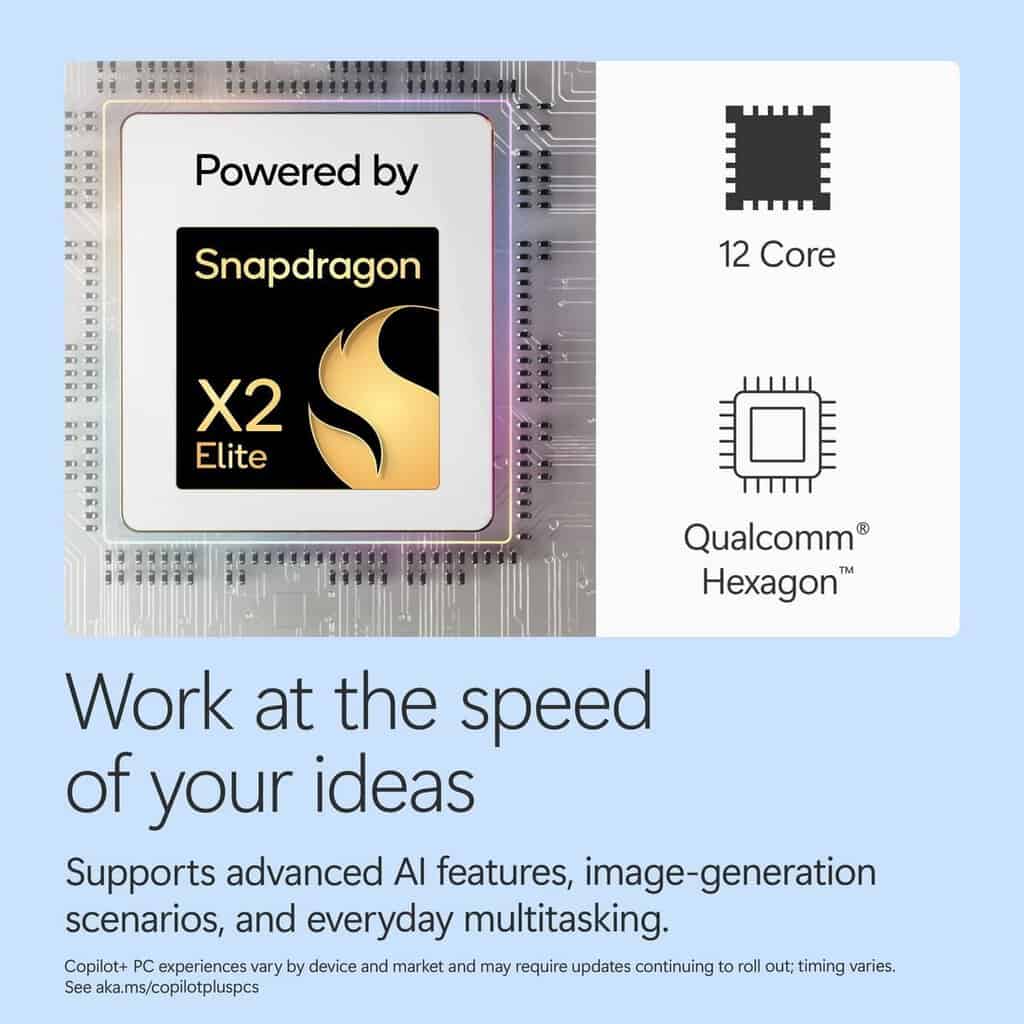
Under the hood, both models in the Surface Laptop 8 lineup are powered by either the Snapdragon X2 Elite or Snapdragon X2 Plus processors. Depending on the model, users may get up to 32GB of LPDDR5X memory and removable SSD storage reaching as high as 2TB.

There’s also a brand-new color joining the lineup. Alongside Platinum, Black, and Dune, Microsoft is reportedly adding a fresh light-green finish called Jade.

AI performance and battery life are the highlights of the new lineup

Just like most PC launches in 2026, AI appears to be a major focus of the Microsoft Surface Laptop 8 series. The Snapdragon X2 chips reportedly deliver up to 80 TOPS of NPU performance, giving Microsoft’s Copilot-powered experiences plenty of local AI horsepower to work with.

Battery life also looks impressive on paper. The 13.8-inch model is said to offer up to 20 hours of local video playback, while the larger 15-inch version reportedly reaches up to 19 hours.

That being said, not everything is carrying over. The privacy display feature available on Microsoft’s business-focused Surface Laptop models reportedly won’t be available on these consumer ARM variants. Rumors suggest that Microsoft might unveil the Surface Laptop 8 lineup alongside the Surface Pro 13-inch on June 16.

Microsoft Surface 8 13.8-inch:

Image credit: Microsoft

Microsoft Surface 8 15-inch:

Image credit: Microsoft

Windows 11 Right-Click Menu Will Become Faster and Customizable, Microsoft Says

Microsoft is preparing another quality-of-life improvement for Windows 11, this time targeting one of the operating system’s most criticized interface elements: the right-click context menu.

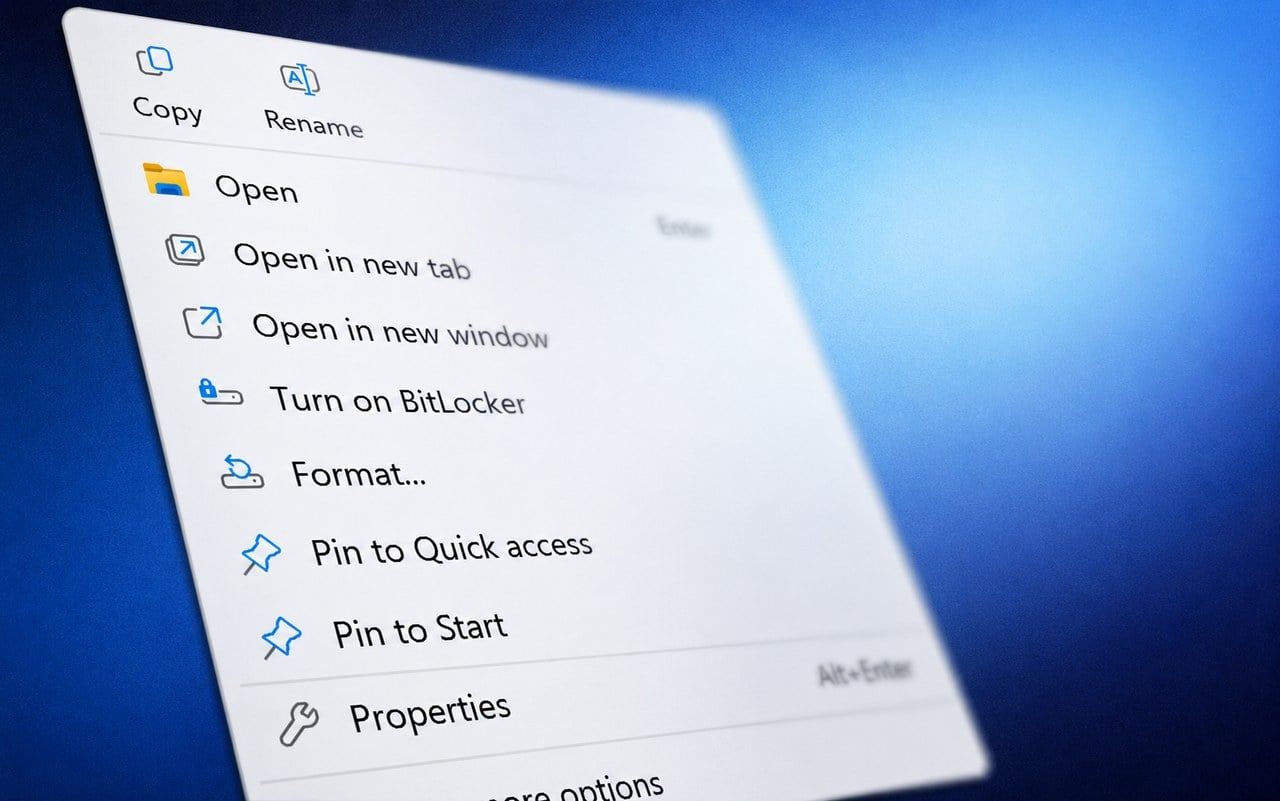
The company has confirmed that it’s working on changes that will make the Windows 11 context menu faster, simpler by default, and customizable based on how people actually use their PCs. The update is part of Microsoft’s broader effort to refine the core Windows experience rather than focusing only on new AI-powered features.

A smarter and more personalized context menu

The plans were revealed by Marcus Ash, Corporate Vice President leading Design and Research for Windows and Devices at Microsoft, who confirmed on X that improvements are on the way. While Microsoft hasn’t yet shared technical details or screenshots of the redesign, Ash indicated that the company intends to provide more information soon.

Since Windows 11 launched in 2021, the redesigned context menu has been a frequent source of criticism among users. Many complained that common actions became less accessible, while others disliked having to click “Show more options” to access legacy commands from older applications.

Microsoft now appears ready to address some of those concerns. According to the company, future versions of the context menu will focus on three key areas: faster performance, a simpler default layout, and user customization options.

The customization aspect could be particularly significant. Instead of presenting the same set of commands to every user, Windows may allow people to prioritize actions they use most often and remove options they rarely need.

Such a change could reduce clutter and make right-click actions more efficient, especially for power users who rely heavily on File Explorer and desktop workflows.

Part of a larger Windows 11 usability push

The context menu improvements are not happening in isolation. Microsoft has recently increased its focus on refining core Windows experiences and responding to long-standing user feedback.

Several highly requested features are currently in testing, including the ability to move the Taskbar, a new option to make the Start menu smaller, a modular Start menu design, File Explorer performance improvements, and additional interface refinements across Windows 11.

These changes suggest Microsoft is investing more effort into everyday usability improvements that affect millions of users on a daily basis.

Via Windows Latest

Microsoft Pushes Native Windows App Development With New WinUI AI Agents

Microsoft wants more developers to build native Windows applications, and at Build 2026 the company showcased new AI-powered tools designed to make that process easier.

Native Windows apps often deliver better performance, improved responsiveness, and tighter integration with the operating system compared to cross-platform alternatives. To support this effort, Microsoft dedicated several Build 2026 sessions to helping developers create and modernize applications using the Windows-native UI stack.

Microsoft Introduces AI Agents for WinUI 3 Development

One of the notable Build 2026 sessions, titled “Use agents to build WinUI 3 apps,” focused on how AI agents can assist developers throughout the application development process.

During the session, Microsoft demonstrated how AI-powered agents can help create new WinUI 3 applications from scratch, improve existing projects, and even assist with migrating older applications to the modern Windows UI framework.

The company believes AI can significantly reduce development time, but it also acknowledged that generic AI coding assistants often struggle with Windows-specific development tasks.

Why Generic AI Models Can Fall Short

According to Microsoft, many AI coding models receive broad training across multiple programming environments and frameworks. While this allows them to support a wide range of development scenarios, it can also lead to less optimized results when working with Windows-native technologies such as WinUI 3.

Migration projects present an even bigger challenge. Converting older applications to modern Windows frameworks requires understanding platform-specific APIs, design patterns, and UI behaviors that generic AI systems may not fully grasp.

To address this issue, Microsoft now offers a dedicated WinUI agent plugin for GitHub Copilot and Claude Code. The plugin gives AI assistants access to WinUI-specific skills and guidance, helping developers generate code that aligns more closely with Microsoft’s native application development standards.

New WinUI Templates Aim to Simplify App Creation

Alongside the agent plugin, Microsoft is also previewing new WinUI 3 templates designed to streamline application development.

These templates provide developers with a faster starting point for building modern Windows applications while following Microsoft’s recommended architecture and design practices.

The goal is to lower the barrier to entry for developers who want to build native Windows software without spending significant time configuring project foundations.

AI Also Plays a Role in App Modernization

Another Build 2026 session focused on using AI to modernize existing applications.

Microsoft noted that modernization extends beyond simply rewriting code. Developers must also consider application dependencies, data flows, integrations, testing processes, and production stability.

AI agents can help identify potential migration issues and accelerate parts of the modernization process, but Microsoft emphasized that successful projects still require careful planning and oversight.

The Build 2026 sessions suggest Microsoft sees AI not only as a coding assistant but also as a way to encourage developers to embrace the company’s modern Windows development platform.

In related Build 2026 announcements, Microsoft also introduced new MAI AI models and unveiled Microsoft Scout, an autonomous AI agent for Microsoft 365 productivity workflows.

Via Windows Central

NVIDIA RTX Spark N1X Laptops May Start at an Eye-Watering Price of $2,899

NVIDIA recently unveiled its ambitious RTX Spark platform. Although we don’t exactly know which laptops would feature NVIDIA’s latest processor, but a new report suggests that those may come with eye-watering price tags.

Upcoming NVIDIA RTX Spark laptops might dent your wallet

In a post on X, user Max Weinbach shared that estimates cited by Morgan Stanley following discussions with PC manufacturers at Computex 2026, laptops powered by the flagship RTX Spark N1X platform may start around $2,899 (via Wccftech).

Thart’s not all; laptops using the lower-tier RTX Spark N1 chip are reportedly expected to launch at approximately $1,799 or higher. If those pricing details turns out to be true, some RTX Spark laptops could end up costing nearly as much as premium gaming rigs equipped with dedicated RTX 5090 GPU.

It goes without saying that NVIDIA has not confirmed any pricing details yet. However, the estimates is in line with previously leaked Lenovo listings that hinted at premium positioning for the upcoming hardware.

NVIDIA wants a piece of Apple’s playbook

In case you’re unaware, the RTX Spark platform is NVIDIA’s biggest bet yet into the Windows on Arm space. The flagship N1X configuration combines a 20-core Grace CPU with a Blackwell-based GPU featuring 6,144 CUDA cores. NVIDIA is also promising up to 128GB of unified LPDDR5X memory and 600 GB/s bandwidth through its NVLink-C2C architecture.

On paper, the platform looks more like a workstation-class product than a traditional laptop processor, which is enough to explain the whopping alleged pricing. While the hardware itself sounds impressive on paper, the real challenge for NVIDIA would be to convince buyers to spend nearly $3,000 on a Windows on Arm laptop.

During the announcement, NVIDIA said that the new processor is designed keeping AI developers, creators, and professionals in mind, who could be benefited from massive, unified memory pools and local AI workloads.

Microsoft Unveils Web IQ AI Grounding Platform Built on Bing Search

Microsoft has announced Web IQ at Build 2026, a new suite of AI-native grounding APIs designed to help AI applications and autonomous agents access up-to-date information from the web when generating responses.

The company says Web IQ allows AI systems to ground answers using web pages, news articles, images, and videos. Unlike traditional search services that primarily return lists of links, Web IQ delivers relevant passages and structured evidence objects that AI models can use directly.

According to Microsoft, this approach reduces the amount of unnecessary context sent to AI models, lowering token consumption while improving the quality and accuracy of grounded responses.

Built specifically for AI agents

Web IQ is powered by Bing’s global search index and was designed from the ground up for AI-native workloads. Microsoft says the platform has been redesigned across every major layer of the retrieval stack, including indexing, retrieval, ranking, passage selection, and orchestration.

Instead of forcing developers to build complex retrieval pipelines on top of conventional search engines, Web IQ aims to provide AI systems with concise evidence that can be consumed more efficiently by large language models.

Microsoft says this allows AI applications to retrieve the information they need without processing large volumes of irrelevant content.

Powered by Harrier embeddings and DiskANN technology

Under the hood, Web IQ uses Microsoft’s Harrier embedding models alongside technology derived from DiskANN, the company’s large-scale nearest-neighbor search system.

DiskANN has been a core component of Microsoft’s large-scale search and retrieval infrastructure for years, helping deliver fast similarity search across massive datasets.

By combining advanced embeddings with optimized retrieval systems, Microsoft says Web IQ can provide high-quality results while maintaining low latency.

Focus on speed and efficiency

In the company’s internal testing, Web IQ reportedly achieved sub-165 millisecond p95 latency across five data center regions. Microsoft claims this makes the platform nearly 2.5 times faster than the next-best alternative under comparable configurations.

The company also says Web IQ delivers grounded results using significantly fewer tokens than competing services, reducing inference costs for developers building AI applications.

Microsoft did not identify which competing products were used for the comparison.

Built with publisher controls in mind

According to Microsoft, the service supports robots exclusion protocols, publisher controls, and content access preferences. This means website owners can continue managing how their content is accessed and indexed through the same mechanisms already used by Bing.

The company says maintaining compatibility with existing publisher controls remains a key part of the platform.

Availability

Web IQ is not generally available at this time. Microsoft has opened registration for developers and organizations interested in early access. Existing customers using Grounding with Bing Search will continue to have access to that service.

Microsoft says Grounding with Bing Search will remain available as an entry point for organizations that prefer a more traditional search-based grounding experience.

Part of Microsoft’s broader AI push

The Web IQ announcement was one of several major AI announcements made during Build 2026.

Microsoft also introduced new MAI AI models, unveiled Microsoft Scout, an autonomous work assistant for Microsoft 365, and announced the new Rayfin platform as part of its expanding AI ecosystem.

With Web IQ, Microsoft is positioning Bing’s search infrastructure as a foundation for the next generation of AI agents, offering developers a way to access current web information with lower latency, fewer tokens, and more structured evidence than traditional search APIs.

Microsoft Introduces New Kerberos Features to Help Replace NTLM in Windows 11

Microsoft is continuing its effort to reduce reliance on NTLM authentication in Windows. The company has announced new Kerberos-based capabilities that will arrive in upcoming Windows 11 client and server Insider builds, helping organizations move away from the legacy authentication protocol.

The new features are designed to cover scenarios that traditionally required NTLM. Microsoft says the additions will provide developers and IT administrators with more secure and consistent authentication methods while maintaining compatibility across a variety of environments.

The announcement follows Microsoft’s ongoing efforts to modernize Windows authentication and strengthen security through Kerberos-based technologies. Microsoft detailed the changes in a recent Windows Insider Preview blog post.

Microsoft introduces new Kerberos alternatives

To reduce NTLM dependency, Microsoft is introducing Initial and Pass-Through Authentication using Kerberos, known as IAKerb, along with Local Key Distribution Center, known as LocalKDC.

Both technologies are designed to enable Kerberos authentication in situations where NTLM has historically been required.

Microsoft says these additions will help organizations adopt a more modern authentication model while improving security and reducing reliance on older protocols.

IAKerb enables authentication without direct domain controller access

One of the most significant additions is IAKerb, which allows Kerberos authentication to function even when a client device cannot directly communicate with a domain controller.

Instead of requiring a direct connection, the target service can act as a proxy and relay authentication messages between the client and the domain controller.

This capability can be particularly useful in enterprise environments where domain controllers are not directly visible to client devices due to network architecture or security restrictions.

By enabling Kerberos in these scenarios, Microsoft hopes to eliminate another common reason organizations continue using NTLM.

LocalKDC brings Kerberos to local accounts

Microsoft is also introducing LocalKDC to extend Kerberos-based authentication to local account environments.

The feature is intended for standalone PCs, workgroup deployments, and other scenarios that traditionally relied on NTLM because they lacked domain-based Kerberos infrastructure.

LocalKDC allows organizations to use Kerberos authentication in a wider range of deployments, creating a more consistent authentication experience across Windows devices.

Together, IAKerb and LocalKDC are expected to significantly reduce NTLM usage in both enterprise and local environments.

Insider preview arrives soon

The new capabilities will first appear in an upcoming Canary Channel build of the Windows Insider Program.

Microsoft says IAKerb will be enabled by default in the preview release, allowing organizations to begin testing immediately.

LocalKDC will remain disabled by default during the preview period. Users who want to test the feature will be able to enable it manually through Windows Registry keys.

The company also plans to add support for management tools and Group Policy settings as the features move closer to general availability.

Part of Microsoft’s long-term NTLM retirement plan

Microsoft has spent several years working toward reducing NTLM usage across Windows. The company previously launched Kerberos hardening initiatives and warned administrators about authentication changes that could impact enterprise login processes.

The introduction of IAKerb and LocalKDC addresses several remaining use cases where NTLM has continued to be necessary.

Microsoft is encouraging customers who still rely on NTLM to begin testing and validating these new capabilities as soon as they become available. Early testing will help organizations prepare for future authentication changes and identify potential compatibility issues before broader deployment.

Although Microsoft has not announced a date for NTLM’s complete removal, the latest announcement represents another major step toward a Kerberos-first authentication model across Windows.

[UPDATE] XBOX Free Play Days Brings Family Man & Other No More Robots’ Games This Weekend (June 4-7)

[UPDATE: May 4, 2026 | 15:00 UTC] Microsoft has officially revealed this weekend’s XBOX Free Play Days. This weekend, from June 4th (today) through June 7th (Sunday), Microsoft is letting XBOX players enjoy ten games from publisher No More Robots. While Descenders is free to try for all XBOX players, other nine games will require XBOX Game Pass Ultimate, Premium and Essential membership. Just to be clear, Marathon is not part of this weekend’s Free Play Days lineup. We have updated the title of the article accordingly. Here’re all the games available to try this weekend for free and their discounted price for this weekend:

Game NameOriginal PriceDiscounted Price
Little Rocket Lab$19.99$13.99
Spirittea$19.99$9.99
Soccer Story$19.99$2.99
Descenders Next (Game Preview)$29.99$20.99
Let’s Build a Zoo$19.99$7.99
Hypnospace Outlaw$19.99$4.99
Slayers X: Terminal Aftermath: Vengance of the Slayer$16.99$6.79
Nowhere Prophet$24.99$7.49
Family Man$19.99$2.99
Descenders (Free Play Days For all)$24.99$6.24

[ORIGINAL STORY] It’s Thursday, which means XBOX Free Play Days is yet again upon us. As always, Reddit user Oliomono has shared some games that will be part of the XBOX Free Play Days lineup ahead of the official announcement from Microsoft. The official lineup for this weekend will be announced later today.

Bungie’s latest shooter title, Marathon, will be free to play this weekend from June 4th (today) through June 7th (Sunday). For those unaware, Marathon reached a peak of 143,621 concurrent players on Steam on day one of the Server Slam. However, the player count dropped after the launch of Slay of Aspire 2.

That said, Marathon ranked #1 on XBOX in the United States for average hours played per user during the week ending April 18, 2026. If you haven’t got around to it just yet, this might be your time to try it for free before you think about buying it.

Family Man & Nowhere Prophet to also be part of this weekend’s XBOX Free Play Days

This weekend’s XBOX Free Play Days lineup also includes Family Man. It is a dark, story-led RPG inspired heavily by the Breaking Bad series, where you play as an ordinary, struggling family man who falls into a dangerous life of crime to provide for his household. Last but not least, you have Nowhere Prophet, a single-player card game with procedurally generated maps, a high difficulty, and permadeath.

It goes without saying that the official lineup might include more games in this weekend’s XBOX Free Play Days lineup. As of now, it’s unclear whether the aforementioned games will require an XBOX Game Pass subscription to play for free. We’ll update this article once the official XBOX Wire post goes live.

So, which of the games are you most excited for to try this weekend and why? Let us know in the comments below.

Meta Business Agent Rolls Out Worldwide Across WhatsApp, Instagram, and Messenger

Meta is expanding its artificial intelligence offerings for businesses with the global rollout of Meta Business Agent, an AI-powered assistant designed to help companies manage customer interactions across WhatsApp, Instagram, and Messenger.

The launch follows a testing phase that began in October 2024 under the name “Business AI” in India, Mexico, and Brazil. According to Meta, more than one million active shops participated in the pilot program, providing feedback and usage data that helped shape the final product.

The announcement comes shortly after Meta introduced premium subscription options for some of its services, highlighting the company’s broader push to integrate AI across both consumer and business products.

AI assistant for customer engagement

Meta Business Agent is designed to help businesses deliver personalized customer experiences while reducing the workload associated with managing large volumes of messages.

The AI assistant can answer customer questions, qualify leads, schedule appointments, and recommend products directly from a company’s catalog. It operates across Meta’s messaging platforms, allowing businesses to maintain consistent communication with customers regardless of where conversations begin.

One of the platform’s notable features is its ability to generate daily morning briefings. These summaries provide businesses with an overview of customer conversations that may have occurred overnight, helping teams quickly catch up on missed interactions.

Meta also says the agent can adapt its responses to match a company’s brand voice, creating a more personalized experience for customers.

Initial rollout targets selected businesses

The first phase of the rollout is being made available to selected businesses already using WhatsApp Business, Instagram Pro, Messenger, and Meta Business Suite.

By automating routine customer service tasks, Meta hopes the tool will help businesses respond faster to inquiries while freeing employees to focus on more complex issues.

The company believes AI-powered support can be particularly valuable for small and medium-sized businesses that may not have dedicated customer service teams available around the clock.

Future capabilities planned

Future updates are expected to expand the agent’s role beyond customer support. Planned capabilities include market research, product insights, calendar management, and competitive intelligence tools that could help businesses make more informed decisions.

The company is also introducing a new discovery feature for WhatsApp users. Soon, customers will be able to search for businesses directly through the WhatsApp search bar and identify companies that offer AI-supported interactions.

Meta Business Agent Platform for enterprises

Alongside the consumer-facing rollout, Meta announced the Meta Business Agent Platform, a new infrastructure offering aimed at larger organizations and developers.

The platform provides tools for building, customizing, and deploying AI agents at scale. Businesses will be able to connect their agents to third-party services such as Shopify, Zendesk, and Shopee, allowing AI assistants to access business data and workflows more effectively.

Meta says the platform includes enterprise-grade controls, guardrails, analytics, and performance metrics that enable organizations to define how their AI agents behave and interact with customers.

Recent reports indicated that Meta had explored an AI-powered employee monitoring program intended to track workplace activity. The proposal reportedly generated backlash from employees and privacy advocates, prompting the company to revise aspects of the planned tracking system. Meta later eased the controversial tracking program by adding new controls, including a 30-minute pause option.

Despite the controversy, Meta remains committed to expanding its AI portfolio. With the global rollout of Meta Business Agent, the company is positioning AI assistants as a key tool for businesses looking to improve customer engagement, streamline operations, and scale support across digital platforms.

Visual Studio Code Gains Research Agent, Chronicle Search, and New AI Features

Microsoft has released Visual Studio Code 1.123 for Windows, macOS, and Linux, just one week after shipping version 1.122.

The latest update continues the company’s push toward AI-assisted development, introducing new agent capabilities, cross-device session syncing, browser improvements, and additional security protections for extensions.

AI Agent Sessions Now Sync Across Devices

One of the biggest additions in Visual Studio Code 1.123 is support for syncing AI agent data across machines through GitHub accounts.

Developers can now access their AI-related work regardless of which device they are using. Synced information includes chat histories, touched files, repository context, and related pull requests.

The feature aims to make it easier for developers to switch between workstations without losing AI context or previous conversations.

New /chronicle Command Helps Search Past Work

Microsoft has introduced a new /chronicle command designed to help developers revisit previous coding sessions.

Instead of manually browsing old conversations, users can search past sessions using natural language queries. For example, developers can ask about work completed on a specific project or feature and receive relevant results from previous sessions.

The feature can also generate standup reports automatically and provide productivity insights based on a developer’s activity history.

Better Handling for Network-Dependent Terminal Commands

Visual Studio Code 1.123 also improves how local AI agents execute terminal commands that require internet access.

If a command attempts to access a domain that is not included in the approved allowlist, VS Code will automatically retry the command inside a sandbox environment with unrestricted network access.

If the command continues to fail, the editor can fall back to unsandboxed execution while maintaining filesystem protections.

Microsoft says this approach helps balance security and functionality when agents need access to online resources.

Multiple Agent Sessions Can Be Compared Side-by-Side

Developers working on complex projects can now drag, drop, pin, and organize multiple AI agent sessions simultaneously.

This makes it easier to compare code changes, review different approaches, or monitor multiple development tasks in real time.

New Research Agent Arrives

Another major addition is the new Research Agent. Available through the /research command, the tool acts as a read-only research assistant capable of gathering information from multiple sources, including the web, local codebases, and GitHub repositories.

The Research Agent can generate Markdown reports to help developers understand unfamiliar APIs, analyze large codebases, or perform deeper technical investigations.

Unlike coding agents, Research Agent focuses on information gathering and analysis rather than making changes to code.

Browser Improvements Add Better Screenshot Tools

The integrated browser inside Visual Studio Code also receives several upgrades. Developers can now capture both targeted area screenshots and full-page screenshots.

These screenshots can be shared with AI tools to provide visual context for layout issues, UI debugging, and front-end development tasks.

Microsoft has also updated the browser address bar with support for favorites and improved tab management.

Security Update Delays Extension Auto-Updates

Alongside the AI enhancements, Microsoft has introduced a security-focused change for extension updates.

Third-party extensions will now experience a two-hour delay before automatic updates are installed.

Microsoft says the delay helps reduce the potential impact of compromised, malicious, or broken extension releases by giving maintainers and security teams more time to identify issues before updates reach large numbers of users.

The move comes shortly after reports of a publicly disclosed Visual Studio Code zero-day vulnerability that could potentially expose GitHub authentication tokens and private repository access if successfully exploited.


Microsoft Plans to Add a New OneDrive Shortcuts Folder for Shared Content

Microsoft is working on a new OneDrive feature designed to make shared folder shortcuts easier to manage. According to Microsoft 365 Roadmap ID 565028, users will soon have the option to store shared folder shortcuts inside a dedicated Shortcuts folder instead of having them appear directly in the root of their OneDrive.

The update aims to address a common issue for users who rely heavily on shared content across OneDrive, SharePoint, and Microsoft Teams. As organizations increasingly use shared workspaces, OneDrive’s root directory can quickly become crowded with shortcut links, making it harder to keep personal files organized.

New Shortcuts Folder Coming to OneDrive

Currently, OneDrive offers an “Add shortcut to My files” option that lets users create quick links to shared folders. These shortcuts can come from OneDrive, SharePoint, or Teams and appear alongside regular files and folders in the user’s main OneDrive directory.

With the upcoming update, users will gain a new option to place these shortcuts inside a dedicated Shortcuts folder.

Microsoft says OneDrive will automatically create the folder the first time a user chooses to organize shortcuts this way. The folder will feature a unique color and a building-style icon to help distinguish it from regular folders.

The company notes that despite its customized appearance, the folder will behave like any standard OneDrive folder.

Users Will Keep Full Control

Users will be able to move, rename, share, or delete the Shortcuts folder if they prefer a different setup.

This flexibility allows users to adopt the new feature without changing existing workflows.

Rollout Expected in July 2026

Microsoft lists the feature as currently in development. According to the roadmap, the rollout is expected to begin in July 2026. As with all Microsoft 365 roadmap entries, the timeline could change before public availability.

The announcement follows several recent OneDrive-related changes. Microsoft recently confirmed that Samsung Gallery will lose OneDrive sync support, and the company has also warned Mac users running Office 2019 that they could experience reduced functionality after upcoming security certificate changes take effect later this year.

For now, OneDrive users can expect a simpler way to organize shared-folder shortcuts once the feature begins rolling out.

Via Neowin

Microsoft Warns Office 2019 for Mac Users of Reduced Functionality After July 2026

Microsoft has issued a new warning for Office users on Apple devices, confirming that a security certificate update scheduled for July 13, 2026, could leave some customers unable to edit or save documents if they do not meet the required software requirements, as reported by Neowin.

The change affects Microsoft 365 subscribers using Apple devices, as well as customers running standalone Office 2019 and Office 2021 editions on Mac. According to updated Microsoft guidance, devices that cannot receive the new security certificate will automatically enter a reduced functionality mode.

In this state, Office applications will still allow users to open, view, and print documents. However, creating new files, editing existing documents, or saving changes will no longer be possible.

Office 2019 for Mac faces the biggest challenge

The announcement is particularly concerning for Office 2019 for Mac users.

When Microsoft ended support for Office 2019 on October 10, 2023, the company originally stated that the applications would continue to function after support ended. However, Microsoft has since revised its support documentation and removed wording that explicitly said Office 2019 apps would continue working.

The upcoming certificate update now appears to create a hard limitation for Office 2019 installations on macOS.

Microsoft says affected devices must run Office version 16.83 or newer and macOS 12 Monterey or later. Unfortunately for Office 2019 customers, the perpetual-license version of the suite is capped below version 16.83 and cannot receive the required certificate update.

As a result, Microsoft states that the issue cannot be resolved for Office 2019 for Mac because the product no longer receives updates following its end-of-support date.

Office 2021 and Microsoft 365 users can avoid the issue

Users running newer versions of Office should still be able to avoid disruptions by updating both their operating system and Office applications before July 13, 2026.

Microsoft’s requirements include:

  • macOS 12 Monterey or later
  • Office for Mac version 16.83 or newer

For iPhone and iPad users, the requirements are:

  • iOS or iPadOS 17.0 or later
  • Office app version 2.93 or newer

Devices that meet these requirements will automatically receive the updated security certificate and continue functioning normally.

Windows and Android users are unaffected

The certificate update appears limited to Apple’s ecosystem.

Microsoft has not indicated any similar requirements for Office on Windows or Android, suggesting those platforms will continue operating without changes related to this certificate migration.

The company is advising IT administrators and organizations managing Apple hardware to update all affected Mac, iPhone, and iPad devices before the July 2026 deadline to prevent productivity disruptions.

The warning arrives during a busy period for Microsoft’s productivity software division. The company recently expanded Copilot Notebooks with OneNote synchronization features and announced a new Unified Inbox experience for Outlook. Microsoft also acknowledged ongoing installation issues affecting some Windows 365 devices.

For Office 2019 for Mac users, however, the latest certificate update may leave upgrading to a newer Office version as the only long-term solution.

PlayerUnknown Productions Halts Game Development as Part of Major Restructuring

PlayerUnknown Productions has announced a major restructuring effort that will see the studio operate with a smaller team, resulting in the suspension of development on its survival game Prologue: Go Wayback.

The announcement was made through a post on the game’s Steam page, where the studio explained that it is reshaping its operations while focusing on supporting affected employees. The company did not disclose how many staff members will be impacted by the changes.

Prologue: Go Wayback Development Paused

Prologue: Go Wayback launched in early access in November 2025 as the first project from PlayerUnknown Productions, the studio founded by PUBG creator Brendan Greene.

According to the announcement, active development on the game has now been halted. While the project is effectively on hold, the studio said it hopes to return to Prologue in the future if circumstances allow.

One Final Update Planned

Before stepping away from development, the team plans to release one final update for Prologue: Go Wayback.

The upcoming patch will officially move the game out of early access and transition it to a free-to-play model. The studio has not yet shared a release date for the update, but additional information is expected in the coming weeks.

Refunds Under Investigation

PlayerUnknown Productions also confirmed that it is exploring refund options for players who previously purchased the game.

The company said it is currently investigating how refunds could be handled and promised to provide more details through Steam and Discord once a final plan has been determined.

For now, players who bought the game will need to wait for further announcements regarding eligibility and the refund process.
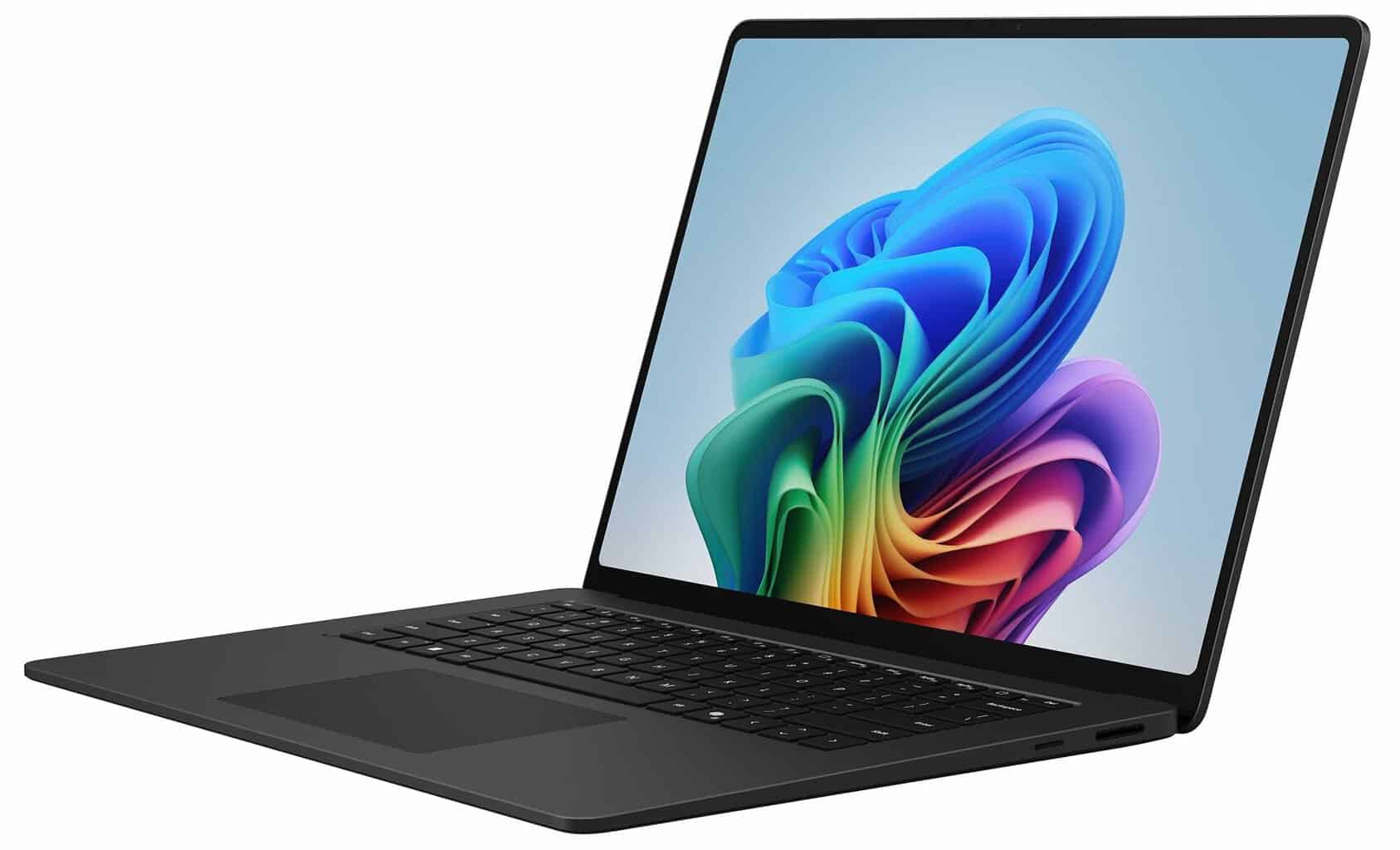
Focus on Employees During Transition

The studio stated that its immediate priority is supporting team members affected by the restructuring.

However, the announcement stopped short of providing details about layoffs, severance packages, relocation assistance, or other support measures that may be offered to employees.

PlayerUnknown Productions was founded by Brendan Greene following the massive success of PUBG: Battlegrounds. By mid-2020, PUBG had sold more than 70 million copies worldwide, making it one of the best-selling games of all time.

Despite that success, several newer projects connected to the PUBG creator have faced challenges. Earlier this year, PUBG Blindspot was discontinued after spending less than two months in early access.

The pause of Prologue: Go Wayback adds another hurdle for the studio as it attempts to refine its long-term strategy and future game development plans.

In other gaming news, reports suggest that a Nintendo Direct presentation could take place on June 9, while Tomb Raider: Legacy of Atlantis recently received an official release date. Microsoft has also revealed the Xbox Game Pass June Wave 1 lineup, bringing several new titles to subscribers this month.