Meta Reportedly Testing AI Shopping Research Tool to Take on ChatGPT and Gemini

AI assistants have changed drastically over time. They don’t just help you with multiple tasks, but also help make shopping decisions these days. Speaking of which, OpenAI introduced a dedicated shopping assistant inside ChatGPT ahead of last year’s Black Friday season.

New AI Shopping Research tool reportedly appears on the Meta AI web platform

Around the same time, Google expanded shopping capabilities within Gemini. Now, it’s Meta, which is reportedly making a deeper push into online shopping. The news comes via Bloomberg, which reported that Meta is quietly testing an AI Shopping Research tool to take on rivals like ChatGPT and Gemini.

Per the report, the feature is currently limited to desktop users who access the Meta AI web platform. Select users can see a new “Shopping research” button inside the query box, hinting at the tool’s experimental status.

Image credit: Bloomberg

When users ask for product recommendations, the shopping research tool generates a carousel of product images, pricing details, and direct links to external e-commerce websites. It also includes short explanations outlining why specific items were suggested.

If the system has access to certain user data, such as gender or location, it can provide personalized recommendations accordingly. That personalization appears to be central to Meta’s broader AI strategy. However, purchases can’t be completed within the interface itself. Users must click through to third-party retailers to finalize transactions. That also means that Meta is positioning the tool as a research assistant rather than a checkout platform.

While still early, Meta’s experiment hints at a future where AI tools become the first stop before consumers even open an online shopping platform.

Samsung Refines HBM4E With 41% Power Efficiency Improvement

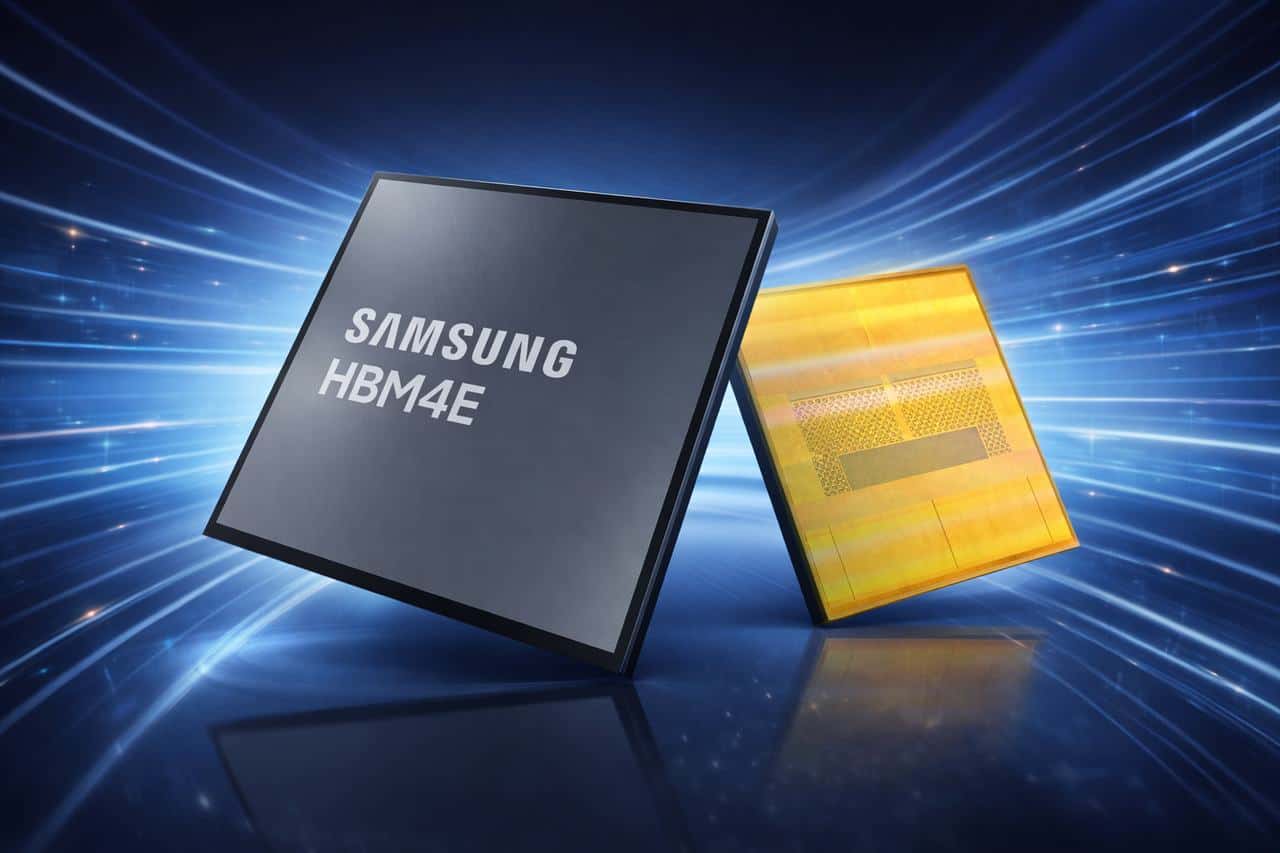
Samsung is redesigning its HBM4E memory power delivery network to tackle rising power and thermal demands in next-generation AI chips, according to TechPowerUp.

The move follows the initial rollout of Samsung’s first commercial HBM4, which operates at 11.7 Gbps with potential scaling up to 13 Gbps. As AI accelerators grow more power-hungry, memory architectures must evolve to maintain stability and efficiency at higher bandwidths.

From HBM4 to HBM4E: More power, more complexity

Transitioning from HBM4 to HBM4E significantly increases the number of power bumps from 13,682 to 14,457 within the same physical footprint.

Denser and thinner wiring raises current density and electrical resistance. As resistance climbs, voltage weakens while traveling through circuits, a phenomenon known as IR drop. The higher resistance also produces additional heat, creating a feedback loop that can affect both performance and long-term reliability.

Power network redesign on the base die

To address these challenges, Samsung reworked the internal power layout of HBM4E.

Engineers segmented the previously centralized MET4 power block on the base die. The large honeycomb-style MET4 structure was divided into four smaller sections to improve distribution efficiency.

Upper metal layers were also split to reduce routing congestion and shorten power delivery paths. By minimizing distance and resistance in these paths, Samsung aimed to stabilize voltage and limit thermal buildup.

Measured improvements

Samsung reports substantial gains with the HBM4E redesign.

The company achieved a 97% reduction in metal circuit defects compared to HBM4. IR drop performance improved by 41%, giving the memory greater voltage headroom for higher operational speeds.

These changes also enhance overall reliability, which becomes increasingly critical as AI accelerators scale toward higher power envelopes and larger memory stacks.

Looking beyond HBM4E: Separating memory and GPU

Samsung is also exploring more radical architectural changes.

One concept under investigation involves physically separating HBM from the GPU using advanced interconnect technologies. Photonic interconnects, based on optical transmission, could enable terabit-per-second data rates, potentially around 1,000 times faster than traditional copper links.

Improvements in substrate wiring may allow HBM and GPU components to sit more than 5 centimeters apart. Greater separation could dramatically improve thermal management in AI accelerator systems, where heat density continues to rise.

Samsung’s HBM4E redesign signals a broader shift in AI hardware engineering, focusing on power efficiency, scalability, and long-term reliability as demand for high-performance AI infrastructure accelerates.

In other developments, SK Hynix and SanDisk have introduced HBF memory, positioning it as a potential alternative to traditional HBM designs.

At the same time, NVIDIA’s upcoming Rubin architecture is widely expected to accelerate demand for HBM4, as next-generation AI GPUs push memory bandwidth and power requirements even further.

Alleged GTA 6 Gameplay Footage Leak Sparks Fresh Buzz as Fans Await Third Trailer

A short gameplay clip from GTA 6 is making the rounds online, just as fans grow restless waiting for Trailer Three. After Rockstar Games dropped the second trailer for GTA 6, the studio has since largely remained silent about the third one. This also means everything related to GTA 6 pops up online immediately and becomes a headline. Well, that’s exactly what happened with the new short gameplay clip.

New, alleged GTA 6 gameplay footage adds to growing hype

The video, originally shared on Instagram, has been posted on Reddit, and it shows a coastal scene featuring a smaller bridge in the foreground and a massive structure stretching across the ocean in the distance. Many believe it mirrors Florida’s Seven Mile Bridge, fitting the game’s Vice City setting.

Despite lasting only seconds, fans quickly analyzed technical details. Some pointed to higher-flying aircraft, suggesting a larger skybox than previous entries. Others noted volumetric cloud rendering and vehicles visible far into the distance across the bridge. Water interaction with bridge pillars also caught attention, hinting at upgraded physics simulation.

However, not everyone is convinced by these details. Many still believe that the circulating gameplay clip resembles assets from the 2022 leak and could be fabricated. Not to forget, yesterday only, GTA 6 title IDs surfaced in the PlayStation database, further fueling speculation around pre-orders.

With Rockstar aiming for a November release, expectations for a third trailer are rising. The studio previously also confirmed that marketing campaigns would kick off starting this summer. If the release window holds, which seems likely, the third trailer could be on the way.

ASRock AM5 BIOS Update Fixes Ryzen 9000 No-POST and Boot Failures

ASRock has rolled out a new BIOS update aimed at addressing widespread Ryzen 9000 boot failures and no-POST issues reported on several AM5 motherboards.

Over the past weeks, users flagged serious instability problems with Ryzen 9000 CPUs running on ASRock boards, prompting the company to release a Beta BIOS based on AMD’s AGESA 1.3.0.0a microcode. The update targets boot failures and CPU-related instability that left some systems unusable.

Ryzen 9000 No-POST Issues Spark Firmware Response

According to Wccftech, multiple owners of AM5 systems reported inconsistent POST behavior, random system freezes, and complete boot failures. In several cases, affected systems displayed a yellow motherboard LED, struggled during memory training, or froze during Windows updates.

Users also described black screen boots and unstable behavior when running dual-channel memory configurations. Clearing CMOS settings failed to resolve the issues for many.

These reports led to concerns about potential Ryzen 9000 CPU failures, especially as some boards refused to POST entirely.

Stable v4.10 BIOS Launches With AGESA 1.3.0.0a

After releasing a Beta BIOS, ASRock introduced a stable BIOS version 4.10 last week. The firmware includes AMD AGESA 1.3.0.0a microcode along with memory optimizations and boot stability improvements.

According to community feedback, the new BIOS resolves no-POST problems for some Ryzen 9000 users.

Tech YouTuber Level1Techs tested the update using an ASRock X870E Taichi motherboard paired with a Ryzen 5 9600X. Before updating, the system reportedly suffered from inconsistent POST behavior and random instability. After installing the updated BIOS, the system booted normally and remained stable during gaming and benchmarking workloads.

BIOS Update May Prevent Boot-Related CPU Issues

ASRock now advises AM5 motherboard owners experiencing boot instability to update to the latest BIOS version.

The update appears to mitigate firmware-level compatibility issues tied to Ryzen 9000 processors. However, a BIOS update cannot repair CPUs that have sustained physical damage. If the processor remains electrically intact, firmware adjustments may restore stability and proper boot behavior.

The situation highlights the importance of early microcode revisions in new CPU launches, especially when paired with evolving platform firmware.

In other news, AMD recently confirmed it will continue supporting Ryzen Z1 Extreme devices despite earlier speculation about driver development ending.

Microsoft Brings Design Refresh and Claude-Powered AI to SharePoint in Major Update

Microsoft is celebrating 25 years of Microsoft SharePoint with a major update centered around AI. The Redmond tech giant has announced an AI-powered solution built inside SharePoint, powered by Anthorpic’s Claude, alongside a redesigned interface and expanded governance controls. The company has confirmed that the rollout begins in tenant-level public preview and will expand in the coming weeks.

AI in SharePoint turns prompts into working solutions

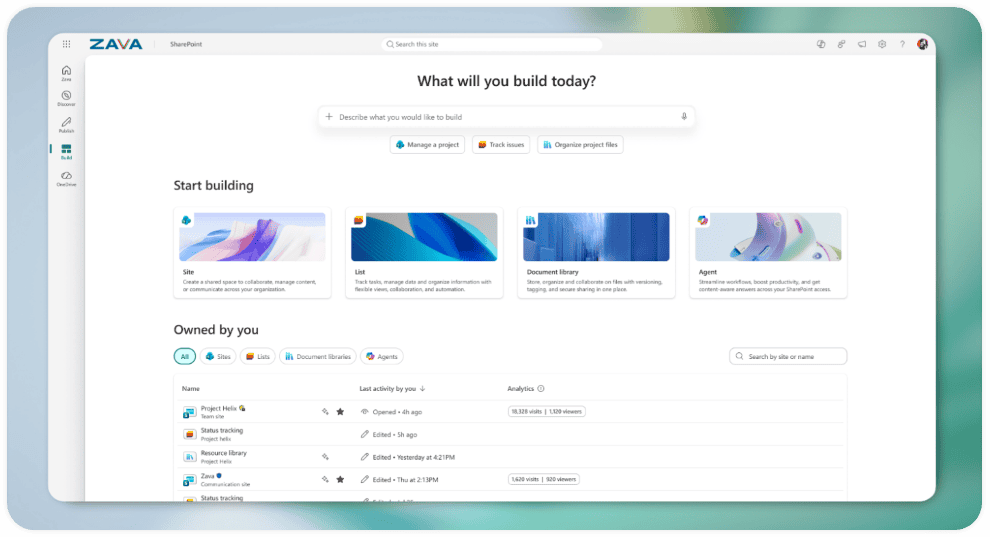
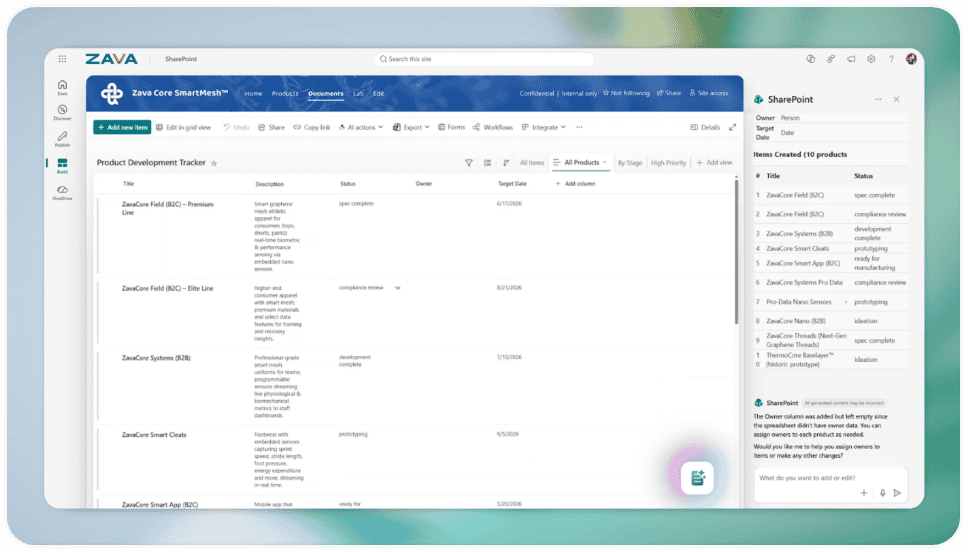
The biggest addition is AI in SharePoint, which allows users to build sites, pages, libraries, and lists using natural language. Users can describe what they need, and SharePoint generates a structured plan. This cuts the hassle of manually configuring layouts and structures. Now, the system asks clear questions before creating anything and improves results through follow-up prompts. It works across both new and existing SharePoint environments.

Image credit: Microsoft

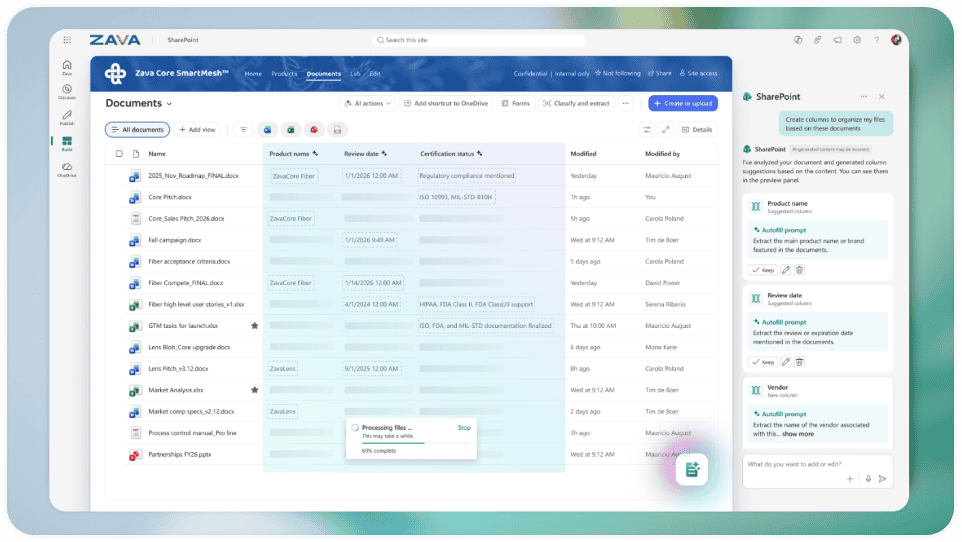
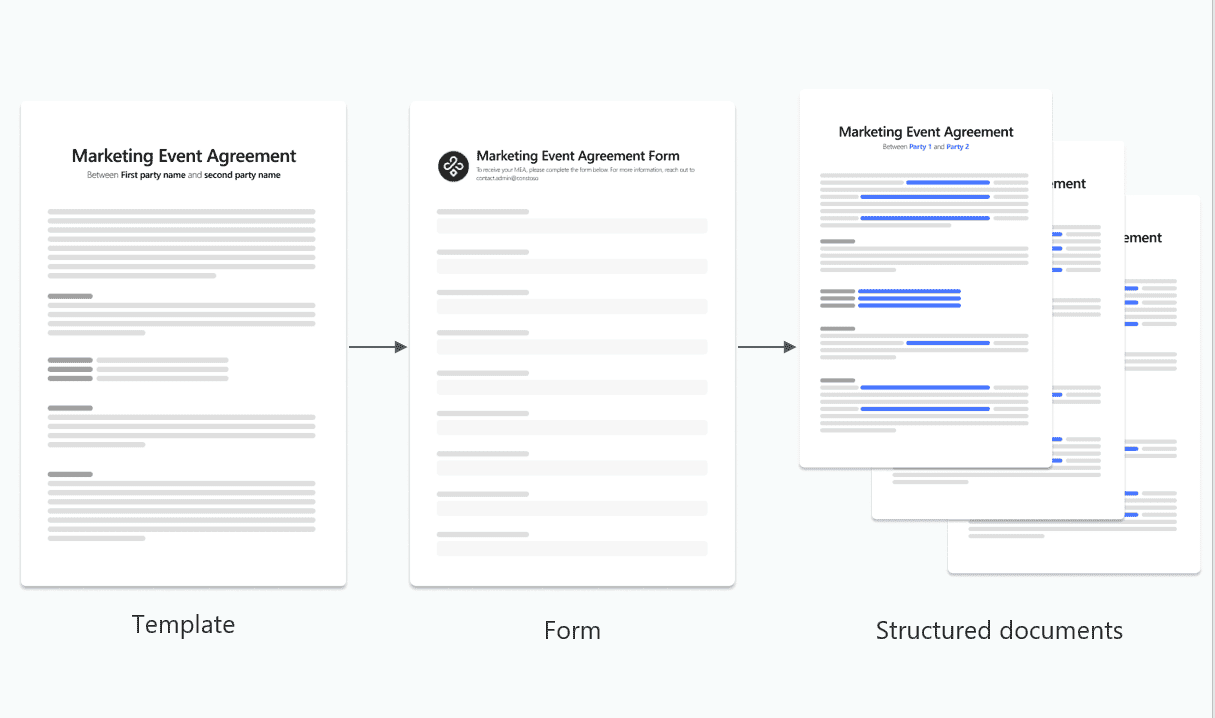
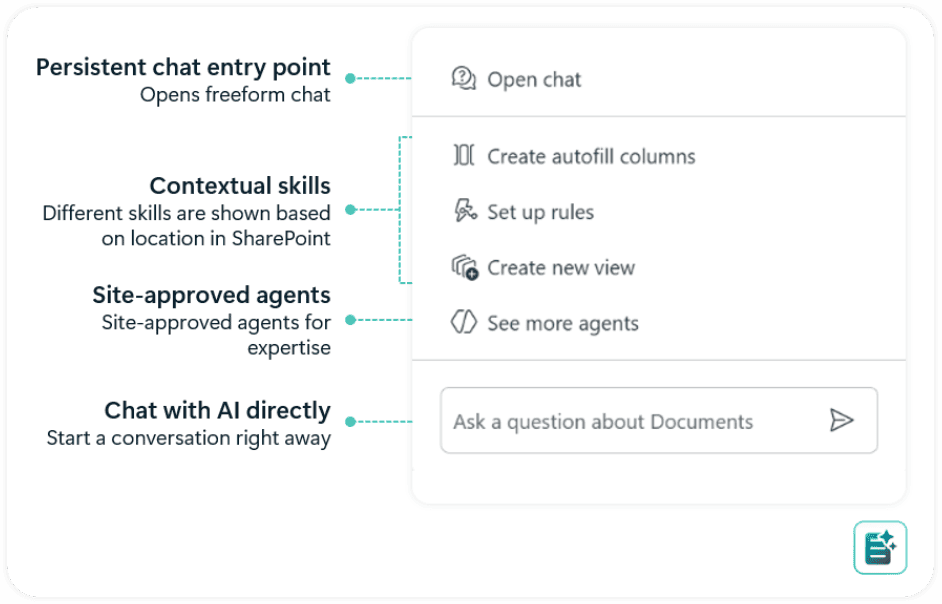
Microsoft has also integrated its previously announced Knowledge Agent directly into the platform. That includes AI-driven metadata tagging, content cleanup, document templating, and contextual Q&A grounded in SharePoint data.

Image credit: Microsoft

A redesigned SharePoint experience

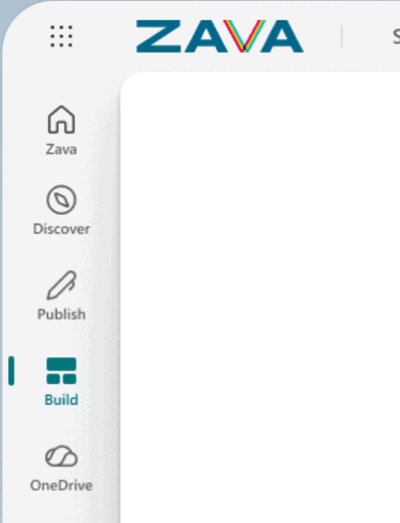
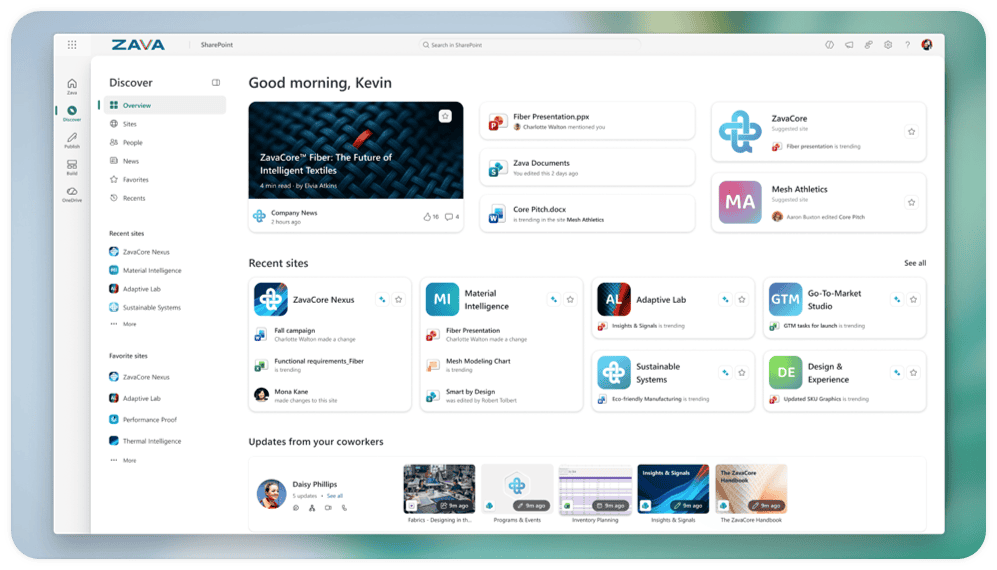
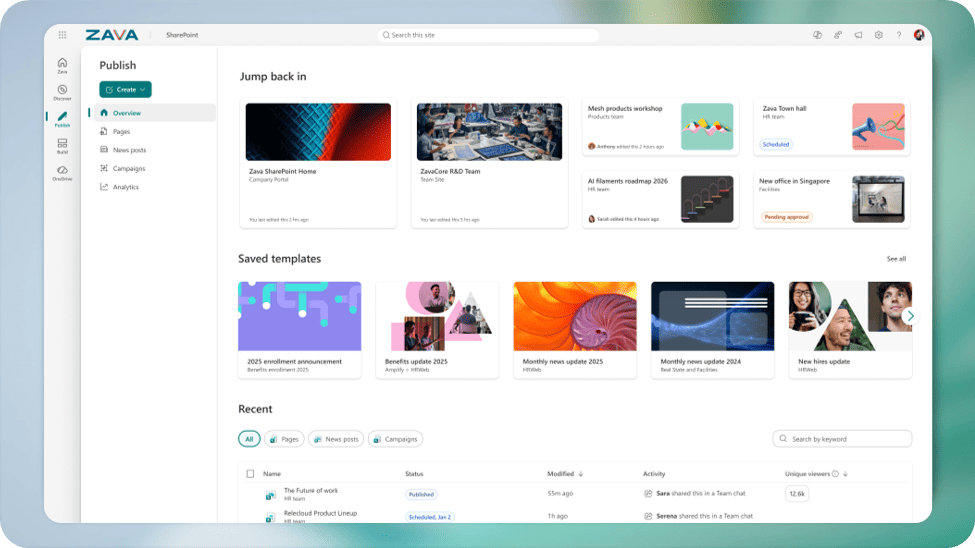
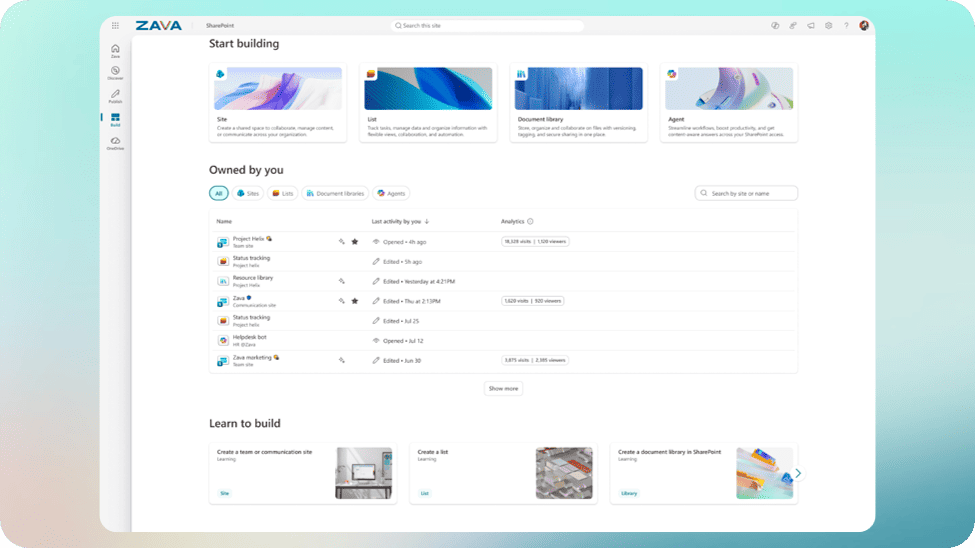
Besides adding AI to the platform, Microsoft is also giving SharePoint a visual refresh built around three core actions, including Discover, Publish, and Build. You’ll now find a new app bar that improves navigation and allows organizations to pin their Home site at the top. Meanwhile, Discover replaces SharePoint Start with a personalized feed. Publish centralizes communications workflows, while Build becomes a unified hub for creating and managing solutions.

Image credit: Microsoft

Governance expands to support Copilot deployments

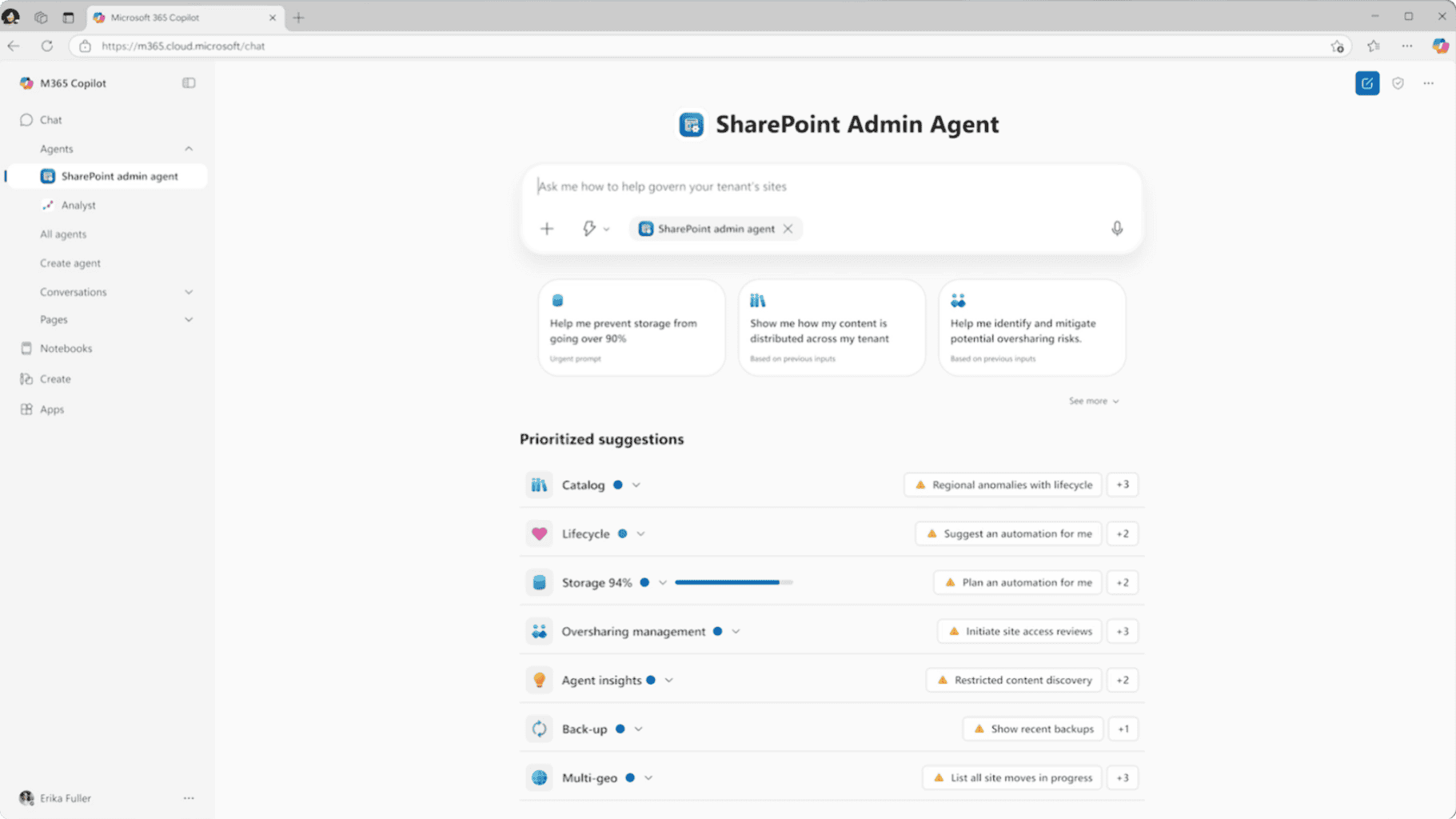
Microsoft is also bolstering administrative controls. The SharePoint Admin Agent now supports natural-language permission analysis, lifecycle management insights, and storage monitoring. Additionally, departmental billing for Microsoft 365 Backup is now generally available, allowing organizations to assign backup costs across teams.

Image: Microsoft

All in all, Microsoft is positioning SharePoint as a smarter, more responsive platform designed to support Copilot and AI workflows inside Microsoft 365.

Fallout: New Vegas Remaster Rumors Return After Iron Galaxy Tease

Rumors about remasters of Fallout: New Vegas and Fallout 3 continue to circulate, but fans may need to wait longer than expected. Recent comments from Todd Howard suggest that any potential projects are not arriving anytime soon.

According to True Achivements, speculation gained fresh momentum after Iron Galaxy Studios shared an image on X showing a Fallout: New Vegas loading screen during an internal meeting. The studio hinted at discussions about “what’s coming up next,” prompting fans to connect the tease to long-standing remaster rumors.

No Official Confirmation on Fallout Remasters Yet

Previous reports claimed that remastered versions of Fallout 3 and New Vegas were in development, but neither Bethesda Game Studios nor Xbox Game Studios has confirmed those claims. No release dates or production announcements have surfaced so far.

The success of The Elder Scrolls IV: Oblivion Remastered in 2025 fueled expectations that Bethesda could revisit other classic RPGs. That project showed strong demand for modernized versions of older titles, strengthening the case for Fallout remasters.

Could Iron Galaxy Be Involved?

Iron Galaxy specializes in remakes, remasters, and ports, making it a plausible candidate for a New Vegas revival. The studio also worked on major releases, including Tony Hawk’s Pro Skater 3 + 4, which launched on Game Pass in 2025.

Some fans believe that Microsoft’s broader remaster strategy could involve multiple external studios. Oblivion Remastered was handled by Virtuos, suggesting that Fallout 3 and New Vegas could follow a similar outsourced development model.

At this stage, there is still no confirmation that either Fallout remaster is actively in production. Iron Galaxy’s post remains speculative, but it has reignited community excitement around a potential return to the Mojave Wasteland.

If a remaster does materialize, it would likely launch on Xbox platforms and arrive on Game Pass at release. Until then, fans will have to wait for an official announcement.

In other news, a Starfield PS5 release is rumored for April 2026.

Capcom Spotlight Showcase Announced for March 5, Featuring Pragmata & More

Capcom recently released Resident Evil Requiem on all major gaming platforms. But the studio isn’t slowing down, as it has announced a new Capcom Spotlight showcase, scheduled to air on Thursday, March 5, at 2 PM PT. The livestream will run for roughly 30 minutes and promises fresh updates on several upcoming releases.

Pragmata returns alongside major Capcom titles at this week’s Spotlight showcase

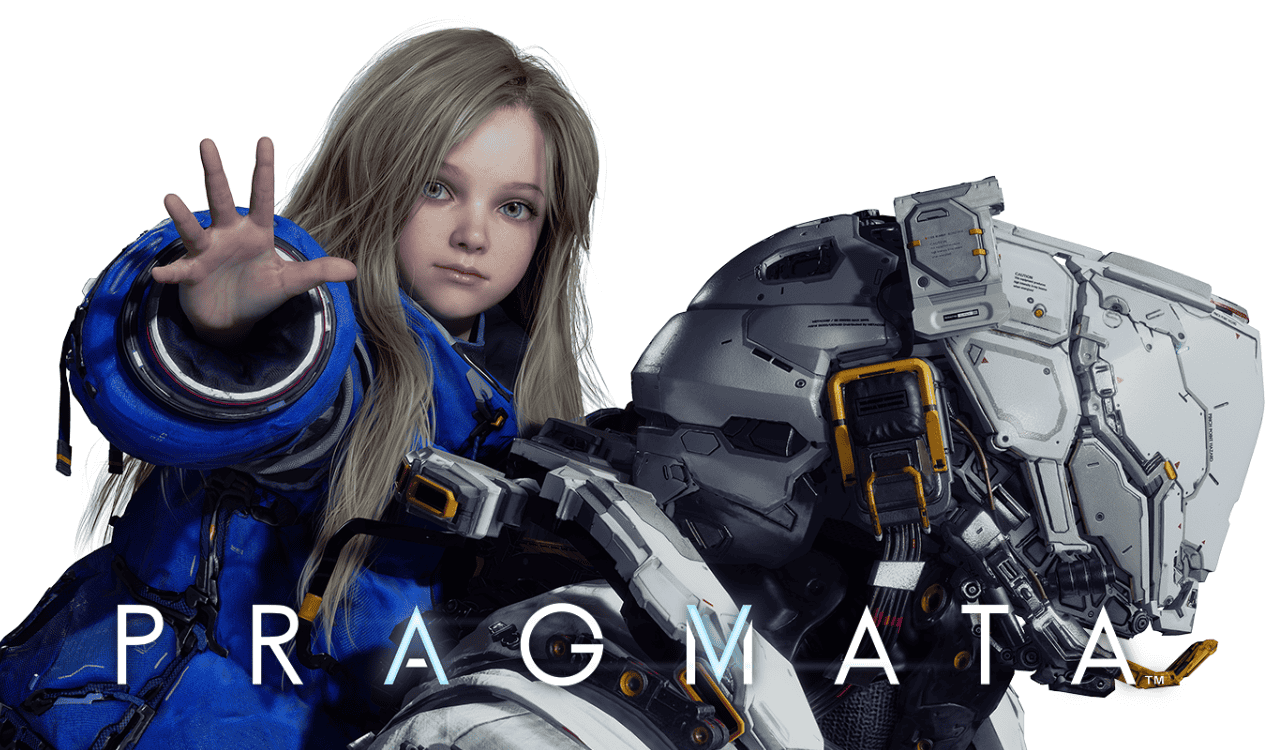
This week’s Capcom Spotlight will offer a fresh look at Pragmata, Monster Hunter Stories 3: Twisted Reflection, Mega Man Star Force Legacy Collection, Mega Man Dual Override, and Street Fighter 6. Among all those, fans are most excited for Pragmata.

For the uninitiated, the title was first revealed back in 2020, with release plans scheduled for 2022. However, that never happened, as it continued slipping through the calendars. After multiple delays, the game is now set to launch on April 24 across PS5, Xbox Series X/S, PC, and Switch 2.

To catch you up, Capcom already has a demo live on Steam, which offers players a better look at its blend of action and puzzle mechanics. So, if you are looking for more of Pragamata, Capcom’s Spotlight event this week is worth watching.

As of now, Capcom hasn’t detailed exactly how much screen time each title will receive. But with a packed lineup and a roughly 30-minute runtime, the March Spotlight is believed to offer quick, focused updates rather than extended gameplay deep dives. You can also livestream the Capcom Spotlight showcase this Thursday from the video embedded below:

Microsoft Unveils New Defender Deployment Onboarding Experience for Enterprises

Microsoft has announced a new onboarding experience for its Defender deployment tool, aiming to simplify large-scale security rollouts across enterprise environments.

According to Neowin, the updated deployment tool streamlines how organizations onboard devices into Microsoft Defender, reducing complexity while improving deployment visibility for IT teams.

New Microsoft Defender Deployment Experience Targets Enterprise IT

The Defender deployment tool enables organizations to automate device onboarding using a single executable (.exe) file. This approach replaces older methods that required multiple scripts and manual configuration, significantly reducing operational overhead.

Microsoft says the tool supports both modern and legacy devices, and it operates across heterogeneous environments rather than being limited to Windows systems. Defender deployment tooling is also available for Linux devices, expanding its reach in mixed enterprise infrastructures.

Transparent, Non-Interactive Onboarding

A key improvement is a transparent, non-interactive onboarding flow designed for large-scale enterprise deployments. Organizations can now roll out Defender packages silently across thousands of endpoints without requiring user input or manual confirmation.

This change allows security teams to standardize onboarding processes and reduce disruptions during mass deployments.

Custom Identifiers and Package Expiry Controls

Microsoft has added support for custom identifiers, giving IT administrators greater control over how deployment packages are tracked and managed. Teams can assign specific naming identifiers and keys to better monitor distribution across different environments.

The company has also introduced configurable package expiration deadlines, which can range from one day up to one year. This flexibility helps organizations enforce tighter security controls and avoid long-lived packages that could present operational risks.

Improved Portal Integration and Device Inventory Guidance

The Defender portal now integrates onboarding and offboarding guidance directly into the device inventory page. Administrators receive contextual instructions within the workflow itself, reducing the need to switch between documentation and management interfaces.

Microsoft has also improved entry points within the portal to streamline navigation during deployment and device management tasks.

Enhanced Telemetry and Monitoring

Telemetry enhancements form another major part of the update. Deployment packages now include additional identifiers that improve traceability and allow administrators to track deployment progress more accurately.

IT teams gain deeper insights into endpoint health status and clearer visibility into errors during onboarding. This should make it easier to identify issues early and resolve them before they affect broader security posture.

Overall, the updated Defender deployment experience centers on transparency, traceability, and scalability, reinforcing Microsoft’s ongoing efforts to modernize enterprise security tooling.

In related developments, Microsoft recently introduced instant access snapshots for Azure Premium storage, replaced certain Teams Designer features with Copilot, and clarified that Windows 11 will continue supporting legacy printer drivers.

Windows 11 Updates Reportedly Still Breaking Wired Internet by Wiping Dot3Svc Folder for Some Users

Microsoft has been clear about one thing. It wants everyone on Windows 11. Practically, it is the best way forward given that Microsoft killed official support for Windows 10 nearly five months ago. However, thousands of users who still want to stay on Windows 10 have the option to enroll in the ESU program so as to receive critical security updates.

Speaking of upgrades, let’s not forget that one Windows 10 user recently shared a frustrating story of their system automatically getting upgraded to Windows 11 while they were away, taking a shower. Given how Microsoft has handled Windows in the past few years, frustration among users is growing louder. Bugs and issues are linked to every other patch update these days. Who can forget the havoc caused by the January Patch Tuesday update, KB5074109?

On one hand, Microsoft is urging users to jump onto the latest Windows version, but it seems the migration isn’t as smooth as users may have thought.

Windows 11 upgrades are reportedly wiping critical network policies

The news comes via Neowin, which, citing a Reddit post from user BadSchpeller, reports that when upgrading from Windows 11 23H2 to 25H2, the update wiped the contents of the Dot3Svc folder. That directory stores policies related to Network Access Control, including IEEE 802.1X authentication for wired connections. In other words, if wiped, Ethernet access stops working on your systems.

The Windows Wired Auto Config service, or dot3svc, manages secure wired authentication. If its configuration disappears, managed networks relying on 802.1X fail to connect. In this case, the system completed the upgrade, then immediately dropped off the network.

As of now, it’s unclear whether a specific update has triggered the problem. However, if you are in the same boat, some users have suggested that the best way to get away with the problem is to connect to a wireless network and run a gpupdate command. For those unaware, this helps restore the missing Group Policy settings and allows wired connections to work normally.

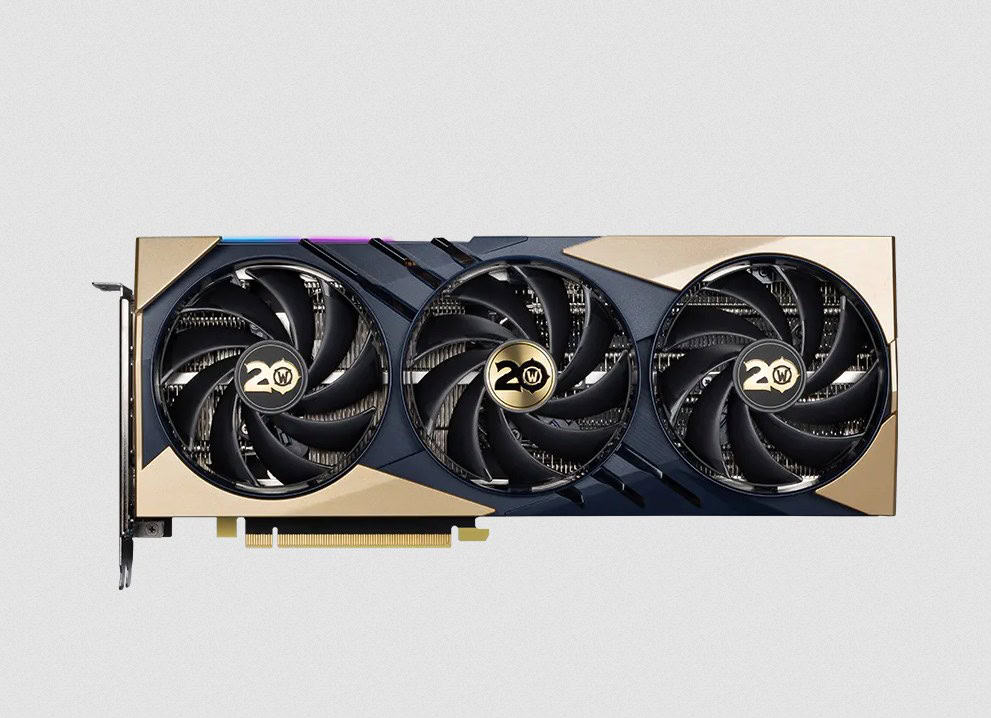
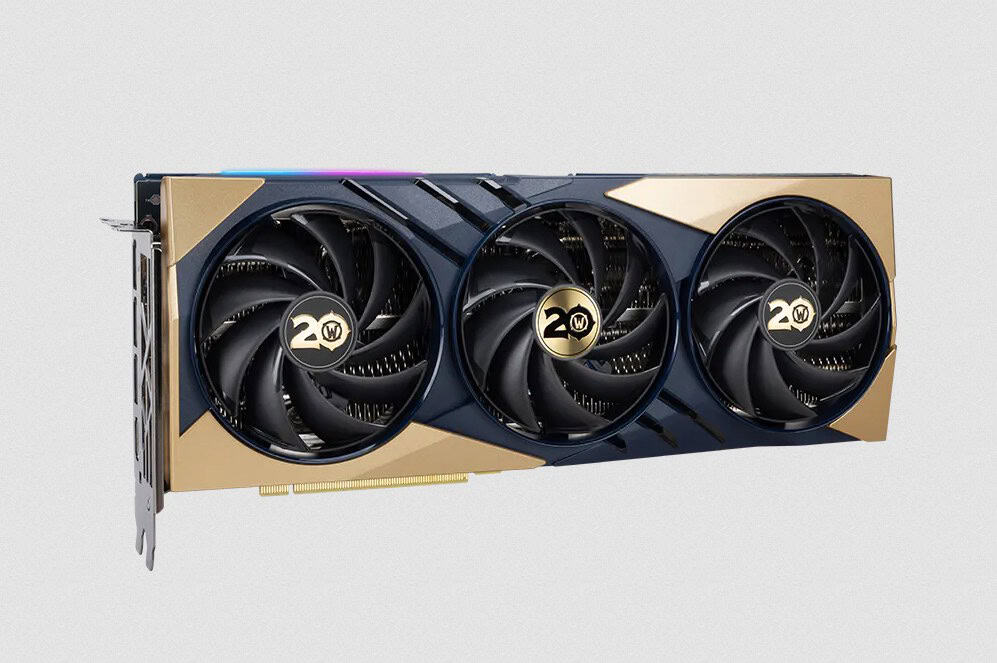
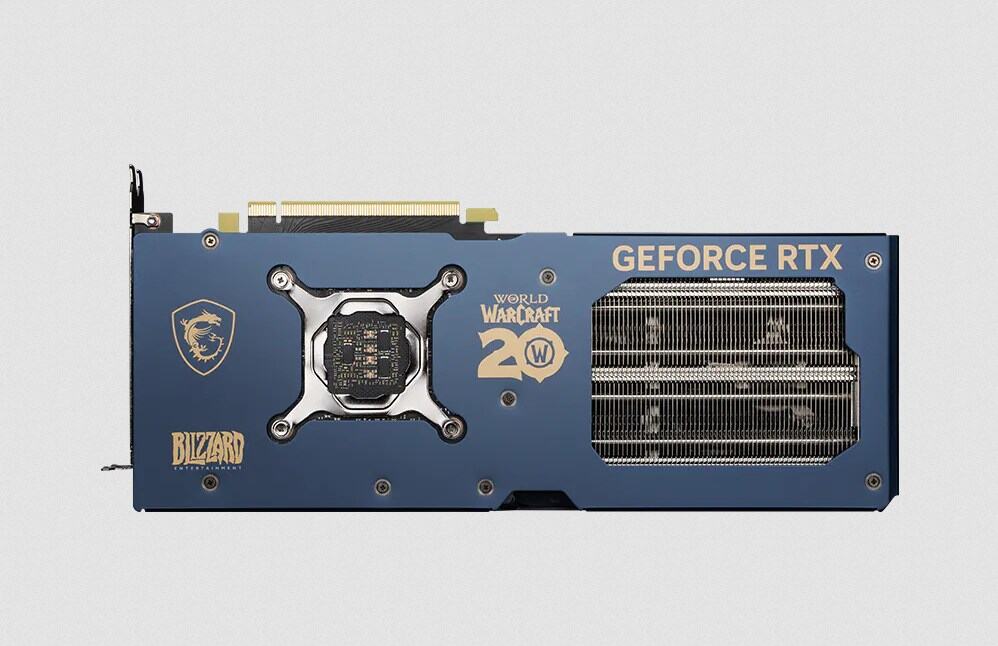
MSI Unveils World of Warcraft: Midnight RTX 5070 Limited Editions

MSI has unveiled a limited edition GeForce RTX 5070 series inspired by World of Warcraft: Midnight, expanding its lineup of themed hardware collaborations.

The company previously released special editions such as the Frieren GeForce GPU and the SPATIUM M571 DLP Gen5 SSD. Now, it is teaming up with Blizzard Entertainment for another gaming-focused launch.

MSI reveals World of Warcraft: Midnight RTX 5070 editions

According to VideoCardz, MSI is introducing two themed GeForce RTX 5070 variants tied to World of Warcraft: Midnight.

The new lineup includes a Light Edition and a Void Edition, both drawing inspiration from Quel’Thalas and the Light versus Void conflict central to the expansion’s theme.

The Light Edition features a brighter, more radiant aesthetic. The Void Edition leans into darker tones with layered lighting effects that highlight the contrast between the two factions.

Identical hardware, themed design

Despite the visual differences, both editions share the same core specifications.

They are powered by the GeForce RTX 5070 GPU with 6,144 CUDA cores and 12GB of GDDR7 memory running at 28 Gbps on a 192-bit memory bus.

The cards feature a 2610 MHz boost clock, with an “Extreme Performance” mode reaching up to 2625 MHz via MSI Center.

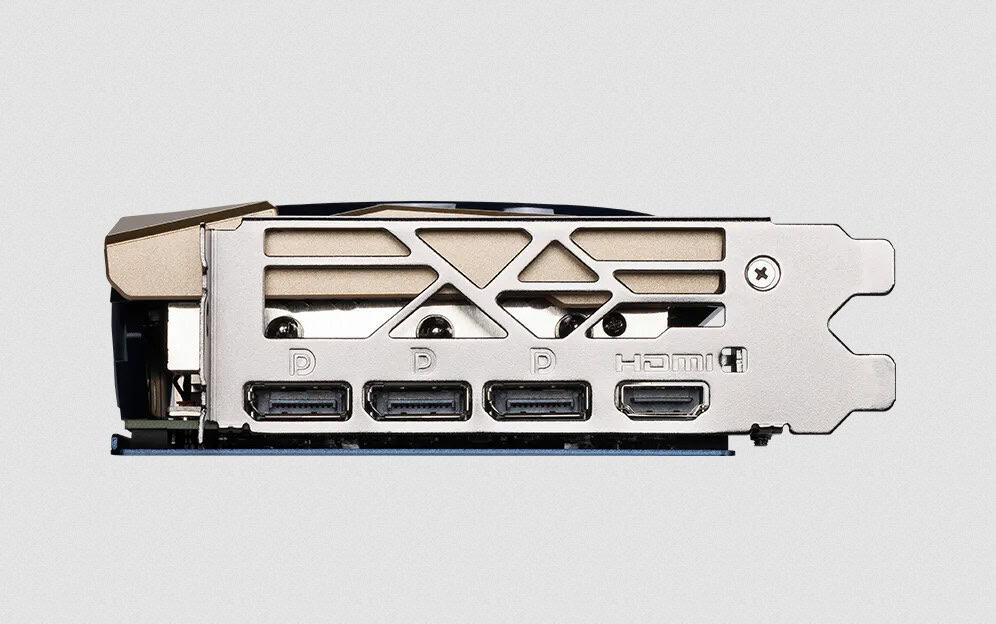
Connectivity includes three DisplayPort 2.1b outputs and one HDMI 2.1b port, ensuring support for high-resolution and high-refresh-rate displays.

TRI FROZR 4 cooling and 250W board power

Both limited edition models use MSI’s TRI FROZR 4 cooling solution and ship with a bundled GPU support stand.

The rated board power is 250W, and the cards use a single 16-pin power connector. MSI recommends a 650W power supply for stable operation.

Availability and pricing

Global availability begins March 2, 2026, though MSI has confirmed that supplies will be limited. Pricing has not yet been announced.

In other GPU-related news, reports have highlighted a rising number of melting connector incidents affecting RTX 50 series cards. Some users have pointed to specific connector designs, including those from MSI, although there’s no official confirmation.

Microsoft Introduces Instant Access Snapshots for Azure Premium SSD v2 and Ultra Disk

Microsoft continues to expand Azure’s capabilities, and its latest storage update focuses on performance and recovery speed. The company has now introduced instant access support for incremental snapshots on Azure Premium SSD v2 (Pv2) and Ultra Disk.

The move comes as Microsoft pushes broader Azure changes, including retiring legacy SQL Server tools in favor of Azure Monitoring and enforcing TLS 1.2 for Azure Blob Storage while dropping older security protocols.

Instant Access Snapshots Arrive for Premium SSD v2 and Ultra Disk

Microsoft describes the new feature as delivering an “industry-leading snapshot experience.” With instant access to incremental snapshots, users can now create and restore snapshots without waiting for a full data copy or disk hydration process.

Previously, incremental snapshots required the entire disk to be copied before a restore could begin. Even after restoration, disks needed full hydration before they could reach peak performance. These steps often introduced delays and extended downtime for production workloads.

With instant access support, snapshots become usable immediately after creation. There is no need for a full base snapshot, and the copy and hydration bottlenecks that once slowed recovery have effectively been removed.

Applications can resume almost instantly after a restore, operating at near-full performance levels.

Key Features and Technical Improvements

The update retains Azure’s incremental storage model, meaning only changes made after a snapshot are stored. This approach helps reduce overall storage consumption and associated costs.

Cross-zonal restore is also supported, allowing organizations to restore disks into a different availability zone within the same region. This improves resilience and flexibility for business-critical workloads.

Microsoft says the feature enables near-instant disk restores with minimal performance degradation, making it suitable for demanding enterprise scenarios.

Practical Use Cases for Enterprises

The new snapshot model offers several practical benefits.

Organizations can perform faster rollbacks before major software upgrades, reducing the risk tied to large deployments. Downtime drops significantly because restored disks no longer require a readiness delay.

Teams can rapidly scale out stateful applications by cloning disks quickly, and they can replicate disks across availability zones to strengthen disaster recovery strategies.

Developers can also spin up secondary development and testing environments much faster. Since snapshots closely mirror production data, test environments stay aligned with live systems.

Availability and Pricing

Instant access incremental snapshots are supported for Premium SSD v2 and Ultra Disk in all Azure regions where these disk types are available.

Microsoft applies a usage-based billing model. Customers pay only for the incremental storage consumed and for each restore operation. Detailed cost breakdowns appear on the Azure Managed Disk Pricing page.

In other news, Microsoft and OpenAI recently clarified details about their partnership following a major investment from Amazon, highlighting ongoing shifts in the broader cloud and AI landscape.

Via Neowin

Anthropic Makes Claude Memory Free to Win Over ChatGPT Users

The OpenAI-Pentagon deal has put a spotlight on responsible AI, and Anthropic is taking advantage of the moment. After refusing to let the U.S. Department of Defense (DoD) use Claude for mass surveillance or fully autonomous weapons, the company was blacklisted and flagged as a supply-chain risk.

Meanwhile, OpenAI, which is facing heat from the public, has promised to amend the Pentagon deal to add ethical guardrails. However, if you are one of those furious about OpenAI’s decision and want to switch from ChatGPT to other alternatives, Claude has offered just another reason to do so.

Claude’s memory import feature is now available for free users

Anthropic has announced that its memory import tool is also available to free Claude users. That’s a solid move from the company to lure ChatGPT and Gemini users. For those wondering what the new feature is all about, it ensures conversations and preferences from other AI platforms can be transferred into Claude. That way, newcomers won’t have to start from scratch.

You can export your data from other AI services using a prompt that Anthropic prepared. For example, ChatGPT users can request a summary of all stored memories and context in a single block, making it easy to copy into Claude. Once imported through the Memory section in Claude’s settings, the information is added to the AI’s memory.

Memory has been available for Claude’s paid plans since October 2025, but free users had no access. With the new feature, free users can now carry over their AI instructions, preferences, and conversation history without signing up for a paid plan.

Anthropic’s risky yet ethical stance now appears to be paying off

Anthropic’s latest move and its ethical stance in the whole Pentagon deal saga seem to be working positively. Claude has surged to the top of the App Store’s free iOS rankings, overtaking ChatGPT. Last month, the company also promised that Claude will be ad-free, while its rival ChatGPT is already testing ads for users subscribed to the Free and Go plans in the U.S. Not to forget, Anthropic also took a jab at OpenAI’s ad move, which Sam Altman rubbished, saying the ad campaign was “dishonest.”

New Google-Themed Phishing Attack Turns Browser Features Into Spyware

A new phishing campaign is abusing Google branding and Progressive Web Apps to steal sensitive data. Attackers have been tricking users into installing a malicious web app that acts like spyware.

According to BleepingComputer, the campaign uses a fake Google Account security website hosted on the domain google-prism[.]com. The site mimics a legitimate security check and guides victims through a four-step “protection” process.

Fake Google security site pushes malicious PWA

The phishing page pretends to run a Google security verification. Instead, it asks users to grant risky permissions and install a web-based app.

In some cases, victims are also urged to install a companion Android APK described as a “critical security update.” The attackers rely entirely on social engineering, as no software vulnerability is exploited.

What the malicious web app can do

The installed Progressive Web App (PWA) leverages legitimate browser features to carry out malicious activity. It can intercept one-time passcodes through the WebOTP API, harvest cryptocurrency wallet addresses, exfiltrate contacts and clipboard data, track real-time GPS location, function as a network proxy, and even perform internal port scanning on the victim’s local network.

The app checks a remote /api/heartbeat endpoint every 30 seconds to receive attacker commands. It also abuses push notifications to lure victims back into reopening it.

A service worker enables background activity, while a WebSocket relay allows attackers to route HTTP requests through the victim’s browser as if they were inside the local network.

On Chromium-based browsers, the malware can persist using Periodic Background Sync. Even without the Android app, the PWA alone can steal sensitive data and proxy traffic.

Android APK escalates the attack

If victims proceed to install the Android APK, the threat level increases significantly. The app reportedly asks for 33 high-risk permissions, granting it access to SMS messages, call logs, the microphone, contacts, and powerful accessibility services that can control on-screen activity.

It includes a custom keyboard for keystroke capture, a notification listener, credential interception services, and overlay attack components.

The malware registers as a device administrator, sets a boot receiver, and schedules alarms to maintain persistence and hinder removal.

Why is this attack especially dangerous

The campaign does not rely on software exploits. Victims grant permissions willingly, believing they are completing a legitimate Google security check.

Firefox and Safari limit many advanced browser capabilities, but push notifications can still function. On Chromium-based browsers, the attack surface is broader due to advanced PWA features.

Security researchers warn that this technique shows how legitimate browser APIs can be weaponized for full credential theft and network abuse.

How to stay safe

Google does not perform security checks through random pop-ups or require additional app installations.

Legitimate account security tools are only available at myaccount.google.com. If infected users are advised to do the following:

  • Remove suspicious apps named “Security Check” or “System Service” (com.device.sync)
  • Revoke device administrator access before uninstalling
  • Remove the malicious web app from the installed browser apps
  • Revoke notification permissions from unknown sites

The campaign highlights how modern browser features can be turned into powerful attack tools through deception alone.

Google is currently testing Gemini anti-scam protection in Chrome, which could help curb similar phishing threats in the future.

At the same time, security researchers have shown that exposed Google API keys can be abused to gain unauthorized access to Gemini AI, and separate reports indicate that attackers have already weaponized Gemini for cyberattacks, fueling broader concerns about AI-driven abuse.

Florida-Based Software Distributor Jailed 22 Months for Trafficking Microsoft COA Labels

When software authentication labels are abused, the consequences can be severe, as one Florida distributor just learned. Heidi Richards, 52, of Brandon, has been sentenced to 22 months in federal prison and ordered to pay a $50,000 fine after a jury found her guilty of conspiring to traffic in illicit Microsoft Certificate of Authenticity (COA) labels (via Bleeping Computer).

How the scheme worked and what it means for software security

Richards, operating under the name Trinity Software Distribution, reportedly paid co-conspirators millions of dollars for thousands of genuine Microsoft COA labels at prices well below the retail cost of the software they were meant to accompany. She and her employees harvested the product key codes from the labels and sold them in bulk to customers, which is strictly prohibited under federal law.

COA labels are important for verifying genuine Microsoft software. They carry security features designed to prevent counterfeiting and are meant to be sold only with the software or hardware they authenticate. Selling the labels separately is illegal and poses a risk to software integrity.

The case was investigated by Homeland Security Investigations’ Kansas City Field Office and prosecuted by Assistant U.S. Attorney Risha Asokan and Trial Attorney Jared Hosid of the Justice Department’s Computer Crime & Intellectual Property Section (CCIPS).

For the uninitiated, CCIPS handles cybercrime cases in collaboration with domestic and international law enforcement agencies. Since 2020, the section has secured convictions of over 180 cybercriminals and obtained court orders for the return of more than $350 million to victims.

The ruling shows the federal government is serious about cracking down on software piracy and cybercrime. Richards’ prison term and fine remind us that even minor components of software licensing, like COA labels, are legally protected.

For consumers and businesses, this is an eyeopening case to be vigilant about purchasing software from unauthorized sellers. What may seem like a harmless shortcut could carry significant legal and financial consequences.

LibreOffice Challenges Microsoft Office Ribbon as Usability Standard

LibreOffice is pushing back against one of Microsoft Office’s strongest selling points: the ribbon interface. In a recent blog post, The Document Foundation argues that many users choose Microsoft Office mainly because of the ribbon, but says that preference may not reflect proven usability advantages.

The ribbon, introduced in Office 2007 and redesigned in 2021, groups commands into large tabbed toolbars. It has influenced other software and even inspired LibreOffice’s own “Tabbed” mode.

“No Proof” the Ribbon Is More Ergonomic

LibreOffice claims there is no objective evidence that ribbon-style interfaces are more efficient or user-friendly. The project argues that the ribbon’s popularity largely stems from Microsoft’s market dominance rather than superior design.

According to LibreOffice, many users evaluate alternative office suites based on how closely they resemble Microsoft Office instead of judging interface quality independently.

Multiple UI Options vs. One Paradigm

LibreOffice highlights its flexibility as a key difference. Users can switch between several layouts, including classic toolbars, compact variants, contextual toolbars, a sidebar-focused view, and a ribbon-style interface.

The project contrasts this with what it describes as a single enforced design approach in Microsoft Office and similar suites.

Broader Differences Beyond Design

Beyond the interface debate, LibreOffice emphasizes open-source access, strong privacy positioning, support for macros in multiple languages, and native Open Document Format (ODF) support.

Meanwhile, Microsoft continues expanding Microsoft 365 with upcoming Agent Mode and Smart Editing features, new DLP protections for Copilot, and an Outlook update designed to eliminate meeting conflicts automatically.

The debate ultimately comes down to user priorities: interface familiarity, ecosystem integration, privacy, or customization.

What do you think? Do you prefer Microsoft Office because of the ribbon interface, or are there other reasons? Let us know in the comments.

Via Neowin

Microsoft Teases Cyberpunk 2077 Could Soon Come to Xbox Game Pass

March 2026 already seems busy for Xbox Game Pass owners, but there’s something quite exciting coming to the service. The official Xbox Game Pass account on X teased a “very cool” addition to the service. An internal message, seen in the screenshot, to ALL STAFF from Melissa McGamePass reads:

“Wake up, social team, we’ve got a new game to add! I know we’ve added a ton of great games already, but you know what? There’s no such thing as too many games on Xbox Game Pass. So many breathtaking worlds to explore… This latest addition is going to be a v good one too. Stay tuned, because we’ve got even more games coming soon.”

Fans speculate that the aforementioned cryptic message points to Cyberpunk 2077 joining Game Pass soon. For the uninitiated, it’s a massive RPG that late last year surpassed 35 million copies sold worldwide. As of now, there’s no official release date. That’s not all; Microsoft hasn’t officially confirmed the game’s arrival on Game Pass.

But the hints are hitting at the perfect time. Game Pass is already scheduled to get big titles like Kingdom Come: Deliverance 2 and Planet of Lana 2 this month, and adding Cyberpunk 2077 would take the value proposition to another level.

Fans on Reddit are suggesting that if Cyberpunk 2077 really drops on Game Pass, it could be one of the biggest additions in years. For now, Microsoft’s tease is all we have. Are you excited for Cyberpunk 2077? Let us know in the comments.

Amazon Warns of Unpredictable Cloud Operations After Middle East Data Center Damage

Amazon Web Services data centers in the Middle East have reportedly been damaged following drone strikes launched from Iran, raising new concerns about the physical security of cloud infrastructure during geopolitical conflicts.

According to Neowin, three AWS facilities in the United Arab Emirates and Bahrain sustained structural damage, disrupting key cloud services across the region.

Drone strikes disrupt AWS operations in the Middle East

The strikes reportedly affected multiple Amazon Web Services sites, impacting core cloud services including EC2, S3, and DynamoDB.

AWS has warned customers that cloud operations in the Middle East are currently unpredictable. Prolonged outages stem not only from explosion-related structural damage but also from secondary water damage after fire suppression systems activated inside the facilities.

Server hardware exposed to both blast shockwaves and water has reportedly suffered significant failures, slowing restoration timelines.

Customers face instability or migration decisions

Organizations operating in affected regions now face a difficult choice: continue running workloads in unstable Middle Eastern regions or migrate operations to safer global regions, potentially increasing latency and costs.

Logistics and e-commerce customers in Israel, Saudi Arabia, Kuwait, Bahrain, and the UAE are reportedly experiencing the most severe disruptions.

Amazon has extended parcel delivery windows in some areas, signaling that the impact may extend beyond cloud infrastructure and into broader supply chain operations.

Cloud infrastructure shows physical vulnerability

The incident underscores a critical reality often overlooked in discussions about cloud computing: data centers remain physical assets vulnerable to real-world threats.

While cloud platforms offer digital redundancy, regional infrastructure concentration can create risk during military or geopolitical escalations.

AWS says it is working to restore services, but recovery efforts may be delayed due to ongoing instability and structural repairs.

Organizations with regional deployments may consider temporarily migrating workloads to alternative AWS regions to reduce operational risk during the conflict.

Broader tech tensions escalate

The development comes amid rising tensions across the tech and defense sectors.

In separate news, federal agencies have reportedly been ordered to stop using Anthropic’s AI models after the company refused certain military-related uses. The Department of War has instead turned to OpenAI, which recently confirmed an agreement allowing its models to operate within classified government networks.

OpenAI has also secured major funding support from Amazon and NVIDIA, further tightening links between AI infrastructure providers and cloud hyperscalers at a time of heightened geopolitical sensitivity.

As the situation unfolds, the attacks highlight how modern conflicts increasingly intersect with digital infrastructure, cloud computing, and AI ecosystems.

OpenAI to Amend Pentagon Deal with Ethical Guardrails After Massive Backlash, Sam Altman Confirms

OpenAI’s recent deal with the U.S. Department of Defense (DoD) has sparked massive backlash from users and privacy advocates alike. Now, it seems CEO Sam Altman is also facing the heat, as he confirmed on X that changes are being made to the deal to include clear anti‑surveillance language and reinforce legal and ethical guardrails.

Altman confirms revision of Pentagon deal to add ethical guardrails after OpenAI faces public scrutiny

Here’s what Sam Altman noted:

“We are going to amend our deal to add this language, in addition to everything else:

  • Consistent with applicable laws, including the Fourth Amendment to the United States Constitution, National Security Act of 1947, FISA Act of 1978, the AI system shall not be intentionally used for domestic surveillance of U.S. persons and nationals.
  • For the avoidance of doubt, the Department understands this limitation to prohibit deliberate tracking, surveillance, or monitoring of U.S. persons or nationals, including through the procurement or use of commercially acquired personal or identifiable information.”

For the uninitiated, the original contract, signed late last week, allowed OpenAI’s tools to be used on classified military networks. The move to amend the Pentagon deal comes at a time when the tech community fears that advanced AI could be used for surveillance or autonomous weapons without sufficient safeguards. Critics have also argued that OpenAI had rushed the announcement without fully explaining how safety protections would work.

Altman also admitted the same in the recent X post, in which he mentioned, “One thing I think I did wrong: we shouldn’t have rushed to get this out on Friday. The issues are super complex, and demand clear communication. We were genuinely trying to de-escalate things and avoid a much worse outcome, but I think it just looked opportunistic and sloppy. Good learning experience for me as we face higher-stakes decisions in the future.”

As of now, financial terms of the Pentagon deal have not been disclosed, and OpenAI did not provide an exact timeline for the updated contract. However, this isn’t the first time the company has adjusted language in high‑stakes agreements. Despite the revisions, debates about the role of AI in defense continue. To catch you up, OpenAI was handed the deal after Anthropic was blacklisted by the Trump Administration for having an ethical stance and refusing to provide unrestricted access of its technology to U.S. DoD.

RTX 5090 Hit With Voltage Restrictions in Latest NVIDIA Driver

NVIDIA has released a new GeForce driver update after pulling a problematic version that caused severe performance drops in Resident Evil Requiem and other games.

NVIDIA Pulls GeForce 595.59 After Major Performance Issues

NVIDIA’s GeForce Game Ready Driver v595.59 launched with optimization for Resident Evil Requiem. Shortly after release, users began reporting serious problems, including broken fan control, reduced clock speeds, and major performance losses.

Testing revealed performance drops of up to 68% in Resident Evil Requiem compared to older drivers. Following widespread complaints, NVIDIA removed v595.59 from its official website and advised users to roll back to v591.86 WHQL.

According to Wccftech, NVIDIA quickly issued a replacement driver, v595.71 WHQL, aimed at resolving the fan control and performance issues.

GeForce 595.71 Fixes Performance, But Adds Voltage Limits

While v595.71 appears to restore normal gaming performance, new reports suggest it introduces voltage restrictions on RTX 50 “Blackwell” GPUs.

YouTube channel Bang4BuckPC Gamer first highlighted that the RTX 5090 no longer exceeds 3 GHz and seems capped below 1V under load. Independent testing confirmed similar behavior.

Under the older v591.86 driver, with manual overclock settings applied (+200 MHz core, +2000 MHz memory, 100% voltage slider), the RTX 5090 reportedly reached:

  • 1.020–1.030V
  • 3015–3030 MHz in FurMark

Under the new v595.71 driver, using identical settings:

  • Voltage drops to around 1.005–1.010V, sometimes hitting 1.00V
  • Clock speeds remain below 3 GHz
  • Even stock configurations show slightly reduced voltage

The data suggests NVIDIA may have implemented an artificial voltage cap in the updated driver.

Possible Safety Concerns Behind the Cap

NVIDIA has not officially explained the voltage limitation. However, speculation points to potential safety concerns surrounding 16-pin power connectors.

Recent reports documented RTX 5090 connector melting incidents during extreme overclocking scenarios. Similar issues were also observed at around 500W power draw in certain cases.

Some users identified a pattern involving MSI connectors that allegedly loosen over time, potentially contributing to power instability. MSI has not issued a public response.

For most gamers running stock settings, performance appears stable with v595.71. Resident Evil Requiem reportedly runs correctly with the fixed driver, and general gaming performance remains unaffected.

The main impact falls on enthusiasts and overclockers, who now face reduced voltage headroom and limited manual tuning potential on RTX 5090 and potentially other Blackwell GPUs.

Xbox Insiders Can Now Test ‘Highlight Reels’ on ROG Xbox Ally X

Xbox is rolling out a new feature for the ROG Xbox Ally X. Starting today, Xbox Insiders can test highlight reels. The feature is available via Game Highlights (Preview) on the game page of the Xbox PC app. This feature automatically captures epic moments, like boss fights or victories, and creates short clips you can share with friends, without leaving your game.

The early preview includes popular titles like Forza Horizon 5, Overwatch, Elden Ring, Fortnite, Among Us, Palworld, and Lies of P. Xbox encourages Insiders to provide feedback directly through the experience, the Xbox Insider Hub, or the reporting tool to help expand supported games and features.

Here’s how to use Game Highlights on ROG Xbox Ally X

To use highlight reels, join the Xbox Insider Program and ensure recording settings are enabled. This can be done via Game Bar, Gaming Copilot, or Windows settings. Gaming Copilot captures clips while you play, and a highlight reel is automatically generated at the end of your session. Clips can then be viewed and shared through Game Highlights (Preview) in the Xbox PC app.

Xbox further thanks the Insider community for feedback, which continues to shape features on the ROG Xbox Ally X. Did you aready test Highlight Reels on Xbox Ally X? What do you think about it? Let us know in the comments below.

Nintendo Announces Indie World Showcase for Tomorrow

Nintendo is kicking off March with a fresh showcase dedicated to indie games. The Nintendo Indie World event is scheduled for March 3, 2026, and will stream live on Nintendo’s YouTube channel at 6 AM PT / 9 AM ET.

The showcase will reportedly run for roughly 15 minutes and focus entirely on games from independent developers. That means no news on first-party Nintendo titles like Zelda or Mario. Rather than that, you can expect updates, trailers, and announcements for the Switch 2 and Switch platforms.

Nintendo holds Indie World events once or twice a year, giving smaller studios a spotlight to reach a global audience. These showcases often highlight unique gameplay ideas, creative storytelling, and surprises from indie teams building for Nintendo’s ecosystem.

For fans of indie gaming, this is the event to see what’s coming to the Switch family. With Switch 2 already in circulation, the event may also hint at how new hardware will handle next-gen indie experiences.

The livestream will be available on Nintendo’s official YouTube channel, so viewers can tune in early and catch every reveal as it drops.

Starfield PS5 Rumor Suggests April 2026 Launch And Big Gameplay Update

Rumors about Starfield coming to PlayStation 5, along with a potential major overhaul, have circulated for months. Now, new reports suggest a possible launch date may finally be in sight.

According to Polish outlet PPE, later corroborated by well-known leaker billbil-kun via Dealabs, Starfield is rumored to launch on PS5 on April 7, 2026. However, Bethesda has not officially confirmed the release.

Starfield Rumor Points to April 7, 2026 PS5 Release Date

If the reports are accurate, the PlayStation 5 version of Starfield will arrive on April 7, 2026. A physical edition is also said to launch alongside the digital release on the same day.

Both standard and special editions are expected to be priced lower than the original Xbox Series X|S release from September 2023. That could make the PS5 version more attractive to new players who skipped the game at launch.

Pre-orders are rumored to begin on March 18, or possibly the evening of March 17, depending on region. An official announcement from Bethesda or Microsoft has yet to appear.

Premium Edition and Shattered Space Expansion

Reports suggest that the Premium Edition will include at least the Shattered Space expansion. Full details about additional bonuses or content remain unclear.

If confirmed, bundling the expansion could position the PS5 version as a more complete package compared to the original launch version.

Major Update Could Launch Alongside PS5 Version

The rumored PlayStation 5 release may coincide with a significant update for the game. Todd Howard previously confirmed that a major Starfield update is in development.

If the patch launches in early April, it would likely roll out across all platforms, including Xbox and PC, not just PS5. The update is rumored to introduce gameplay improvements and broader changes aimed at refining the overall experience.

Such a refreshed release window could help improve public perception of Starfield, which received mixed reactions at launch despite strong sales. However, it remains unlikely that the new version would fully reverse early comparisons to Bethesda classics like The Elder Scrolls V: Skyrim.

For now, all information remains unconfirmed, and Bethesda has not officially announced a PS5 version or detailed the upcoming update.

Via Wccftech

Windows 10 User Claims Microsoft Auto-Installed Windows 11 Without Permission While PC Was Idle

It’s been nearly five months since Microsoft officially ended support for Windows 10. If you aren’t ready to move on, which many users are not, the company offers the option to enroll in the Extended Security Updates (ESU) program to continue receiving important security patches.

That being said, Microsoft has been urging Windows 10 users to upgrade to Windows 11 for better features and enhanced security. It also appears that the company may be automatically upgrading some Windows 10 systems to Windows 11, at least according to one Reddit user who is quite furious at Microsoft.

A Windows 10 user reports unexpected automatic upgrade to Windows 11

Folks over at Neowin spotted a Reddit post from user djseifer, who claims that their system automatically started updating to Windows 11 even though they had not approved it. This reportedly happened when the user went to take a shower, leaving their system on for almost half an hour.

According to the post, Microsoft had been prompting the user to upgrade to Windows 11 for the past month or two, but they had been declining. The user says they were receiving frequent pop-ups asking to install the update, appearing next to the shutdown and restart options.

Although Microsoft is known for nagging Windows 10 users to update, it remains unclear what exactly may have caused the system to begin installing Windows 11, since the process typically requires user approval to start.

The news outlet speculates that an older update linked to the surge in upgrade prompts and notifications might still have been present on the affected system, potentially triggering the installation without clear consent. Not to forget, users have also reported numerous bugs in Windows, so it could have been one of those cases as well.

If you do not want to experience similar issues, the safest approach is to keep the Windows Update toggle turned off.

Ryzen Z1 Extreme Support Rumors Debunked as Lenovo Reaffirms Legion Go Updates

Rumors recently suggested AMD was wrapping up driver development for Ryzen Z1 Extreme CPUs. Those claims sparked concerns among first-generation Lenovo Legion Go owners.

However, new clarifications show the speculation was largely based on vague and region-specific messaging.

Lenovo Confirms Legion Go Is Not Discontinued

According to VideoCardz, reports that Lenovo would drop support for the original Legion Go stemmed from misinterpretations of a Korean support note.

Lenovo US has now officially confirmed that the device has not been discontinued. The company stated it will continue delivering BIOS and driver updates for the Legion Go through October 2029.

Lenovo also explained that it coordinates its driver release cadence with AMD. Updates ship only after Lenovo completes internal validation, which means official packages may arrive later than AMD’s general releases.

This statement suggests the earlier Korean support message was either outdated or incorrectly understood.

Driver Updates Have Historically Lagged

While long-term support remains in place, update frequency has been a common complaint.

The latest AMD graphics driver package listed on Lenovo’s support portal for the Legion Go is dated September 1, 2025. OEM-validated drivers often trail behind desktop-class GPU releases and newer game optimizations.

That delay reflects the standard OEM validation process. Manufacturers test drivers to ensure stability across firmware, BIOS configurations, and custom hardware profiles.

Generic AMD Drivers Remain an Option

Users who want faster performance improvements can install AMD’s universal graphics drivers directly.

Lenovo Korea previously pointed owners toward generic AMD drivers while warning against cross-installing drivers from different Legion Go variants. Installing AMD’s standard drivers may unlock newer optimizations sooner, but it bypasses Lenovo’s validation process.

That approach can introduce compatibility quirks or require manual troubleshooting.

The clarification arrives as Lenovo continues to experiment in the handheld space. After rumors about a foldable gaming device, the company officially showcased the Lenovo Legion Go Fold concept during this year’s MWC summit.

While the foldable model remains a proof-of-concept, it signals that Lenovo has no intention of stepping back from the handheld gaming market anytime soon.

For now, first-generation Legion Go owners can expect official BIOS and driver support to continue for several more years.

[Update: Down Today] Claude AI is Down Right Now, Anthropic Confirms Outage

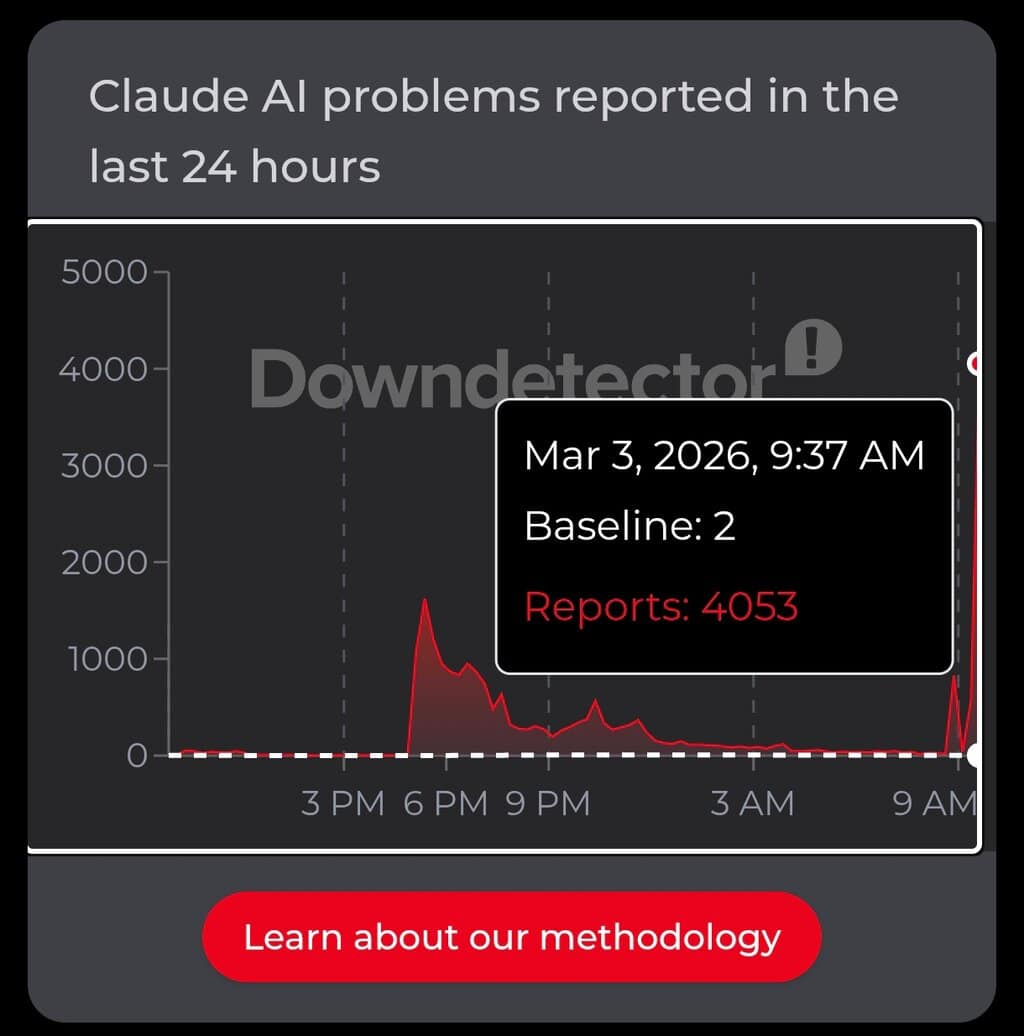
[Update: Mar 03, 2026 – 03:15 UTC] Anthropic has confirmed that Claude AI is down again. The company has marked “Elevated errors in claude.ai”. Over on DownDetector, user reports have spiked yet again. At the time of writing this update, at least 4000 users have reported issues with Claude AI.

Image credit: Downdetector | Timezone shown above: IST

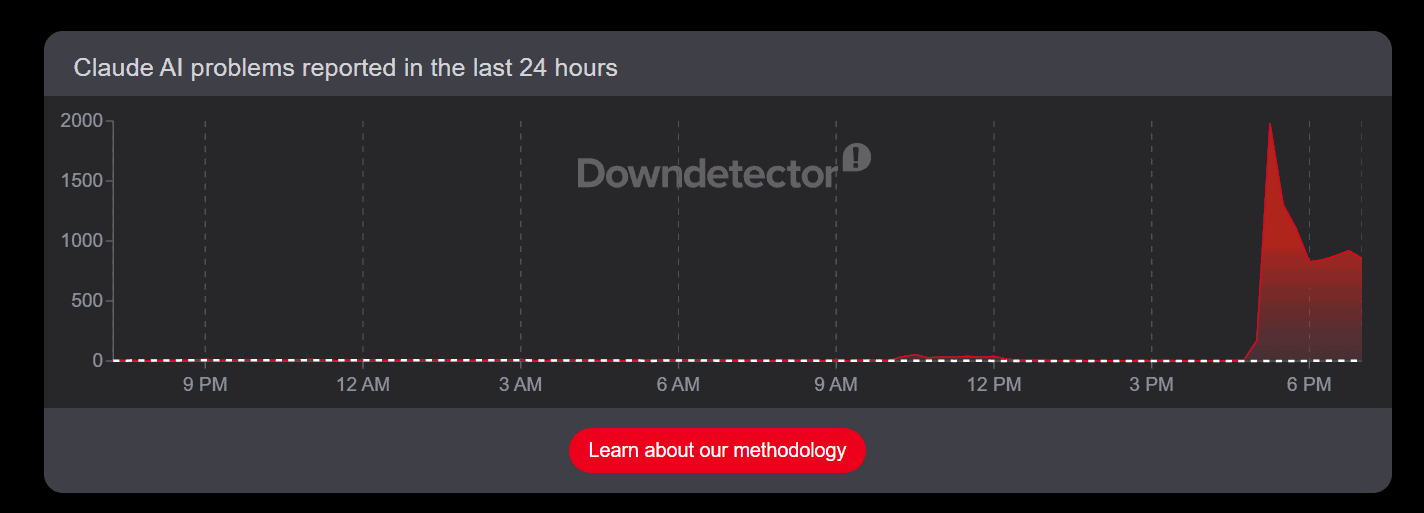
[ORIGINAL STORY] If you’ve been running into issues while using Claude this morning, you’re not alone. As reported by folks at Bleeping Computer, the AI assistant is reportedly down worldwide for many. A couple of hours back, Downdetector also showed a spike in user reports. However, it’s settling a little. At the time of writing this, Downdetector shows nearly 900 user reports, down from nearly 2000.

Image: Downdetector

Over on the Claude status page, Anthropic has confirmed that Claude is currently experiencing elevated errors affecting claude.ai, the console, and Claude Code. The issue appears to have started earlier today, with the company acknowledging the issue at 11:49 UTC on March 2, 2026. According to the official updates, Anthropic initially began investigating reports of service instability before identifying the root cause.

At one point, the company clarified that the Claude API itself was working as intended and that the issues were specifically linked to Claude.ai along with login and logout pathways. However, a later update noted that some API methods were also not functioning properly, suggesting the impact may have been broader than first believed.

By 13:22 UTC, the issue had been officially identified, and a fix was being implemented. As of the latest update at 13:37 UTC, Anthropic says it is still investigating certain API-related problems.

There’s currently no official ETA for full resolution, but a fix is reportedly underway. Users experiencing errors are advised to monitor the Claude status page for further updates.

This is a developing story…

AMD Ryzen AI PRO 400 Series Detailed: Up to 12 Cores, Radeon 890M, 60 TOPS NPU

AMD has officially detailed its Ryzen AI PRO 400 Series mobile processors at MWC 2026, expanding its AI PC strategy into the commercial laptop segment.

According to VideoCardz, the new lineup targets business notebooks and mobile workstations, with the first commercial systems expected to launch in Q2 2026.

Ryzen AI PRO 400 Series Targets Enterprise Copilot+ PCs

AMD positions the Ryzen AI PRO 400 family as a commercial-first platform designed for AI-enabled notebooks. The chips focus on high core counts, strong integrated graphics, and powerful NPUs to support on-device AI workloads in enterprise environments.

Unlike the desktop Ryzen AI 400 lineup, the mobile PRO variants feature higher core counts and more capable integrated GPUs across the stack.

Flagship: Ryzen AI 9 HX PRO 475 and 470

At the top, the Ryzen AI 9 HX PRO 475 and 470 deliver 12 cores and 24 threads.

Both processors boost up to 5.2 GHz with a 2.0 GHz base clock and offer 36 MB of total cache. They integrate Radeon 890M graphics with 16 compute units.

On the AI side, AMD rates the NPU at up to 60 TOPS for the 475 and 55 TOPS for the 470, positioning them for demanding Copilot+ and enterprise AI workloads.

Ryzen AI 9 PRO 465

The Ryzen AI 9 PRO 465 steps down to 10 cores and 20 threads.

It boosts up to 5.0 GHz, runs at a 2.0 GHz base frequency, and includes 34 MB of total cache. This SKU features Radeon 880M graphics with 12 compute units and an NPU rated at up to 50 TOPS.

Ryzen AI 7 PRO 450

The Ryzen AI 7 PRO 450 offers 8 cores and 16 threads.

It reaches up to 5.1 GHz boost speeds and includes 24 MB of cache. Integrated graphics come in the form of Radeon 860M with 8 compute units, targeting balanced performance for mainstream business laptops.

Ryzen AI 5 PRO 440 and 435

In the mid-range, AMD introduces the Ryzen AI 5 PRO 440 and Ryzen AI 5 PRO 435, both featuring 6 cores and 12 threads.

They use Radeon 840M graphics with 4 compute units. Cache differs between models, with 22 MB on the 440 and 14 MB on the 435.

AMD lists up to 50 TOPS of NPU performance for these models, signaling that AI acceleration remains a priority even at lower price tiers.

Built for 2026 AI-Enabled Business Notebooks

The Ryzen AI PRO 400 Series aims squarely at enterprise Copilot+ PCs, combining scalable integrated graphics and strong on-device AI acceleration. AMD highlights the balance between CPU performance, Radeon iGPU capability, and NPU throughput as key differentiators in the commercial space.

Systems powered by these processors are expected to roll out throughout 2026, starting in Q2.

In other industry developments, Intel’s Arc B-Series GPUs reportedly gained up to 90% performance improvement with Microsoft’s Shader Execution Reordering, while Intel continues promoting Xeon 6 SoCs as a foundation for AI-ready 5G infrastructure.

Latest Steam Hardware Survey Shows RTX 5070 Adoption Soaring as 32GB RAM Becomes the New Standard

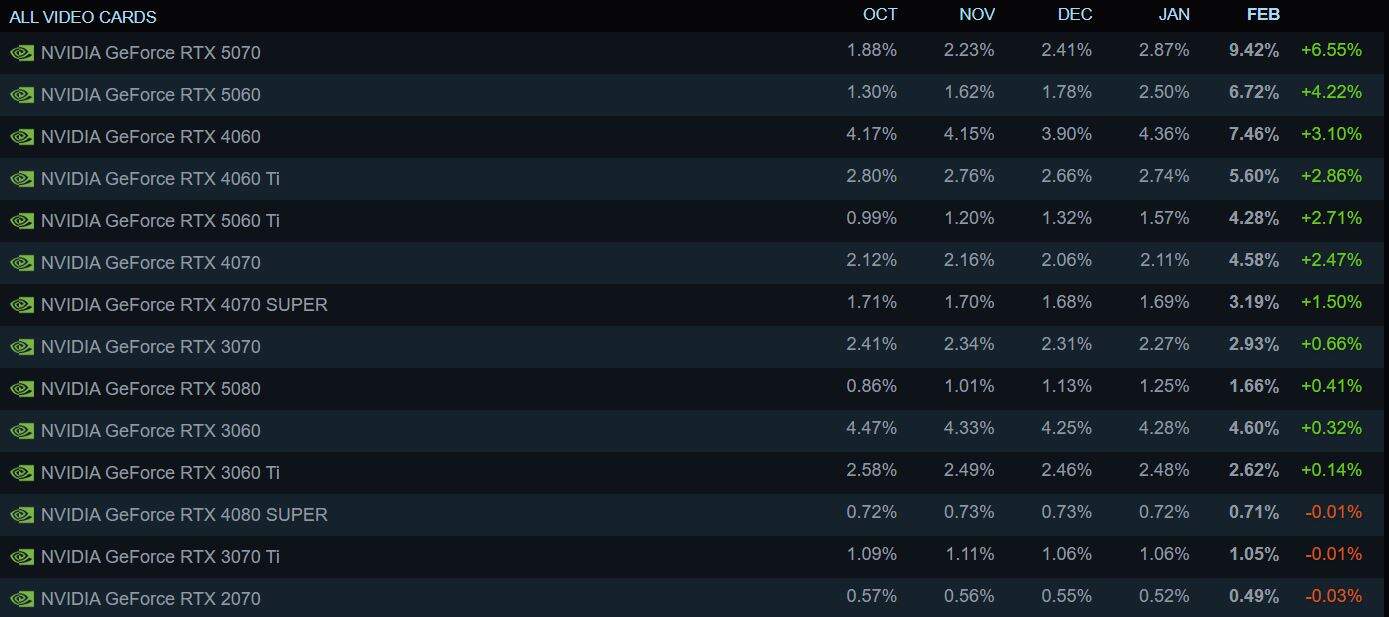
Valve’s latest Steam Hardware Survey suggests the PC market is gradually shifting, with February 2026 shaping up as one of the most volatile months in recent memory. The latest data shows that NVIDIA’s GeForce RTX 5070 has surged in adoption, jumping from just 2.87% share in January to 9.42% in February. That’s a massive 228% month-over-month increase.

That spike has pushed the RTX 4060, which previously held the top spot, down to third place. Meanwhile, the GeForce RTX 5060, NVIDIA’s entry-level Blackwell GPU with 8GB of VRAM, now sits in second. It recorded an impressive 168% monthly increase and currently accounts for 6.72% of surveyed systems.

Image: Valve

Other RTX 50-series cards also posted steady jumps, including the RTX 5080, which climbed from 1.25% to 1.66%. The pricier GeForce RTX 5060 Ti also saw increased adoption. Interestingly, AMD’s RX 9000 series, which recently appeared in the survey, is no longer visible in the latest rankings.

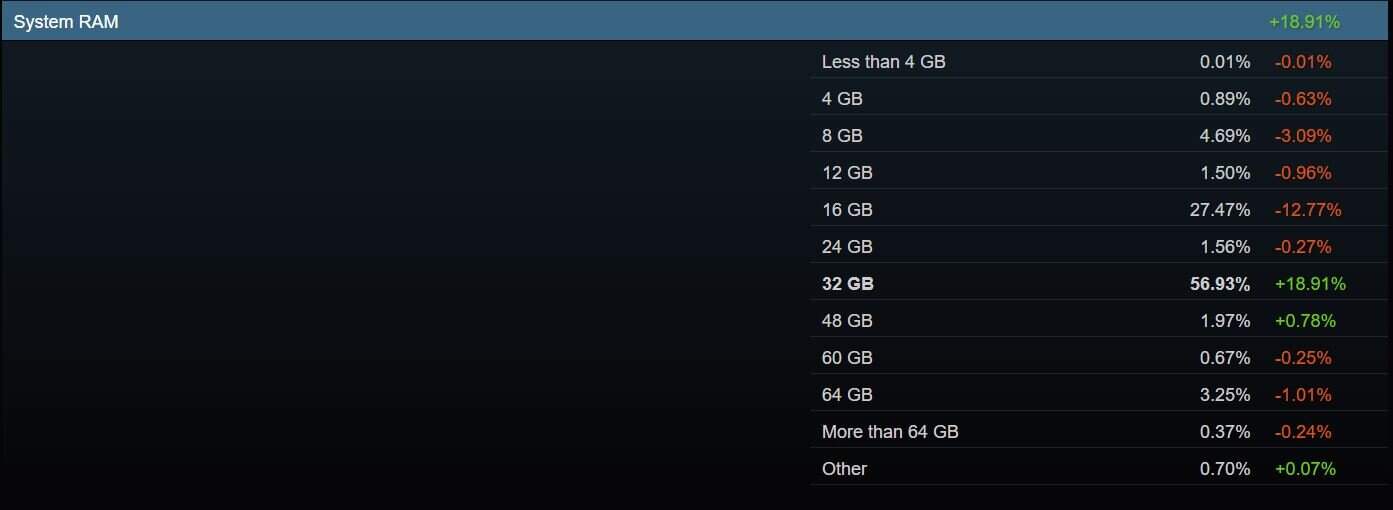
On the memory front, 32GB of system RAM has officially overtaken 16GB as the most common configuration among Steam users. Systems equipped with 32GB now represent 56.93% of participants, marking an 18.91% jump in a single month. Meanwhile, 16GB systems dropped sharply to 27.47%.

Image: Valve

The surge comes amid ongoing concerns about rising DDR5 prices, with 32GB kits currently retailing between $350 and $500, depending on speed and brand. Whether this reflects panic buying or a broader shift toward higher baseline memory remains to be seen. Overall, the latest Steam survey suggests PC gamers are upgrading aggressively.

Xbox Game Pass Adds 39 More “Stream Your Own Game” Cloud Titles in March 2026

Microsoft is constantly updating Xbox Game Pass, with several games leaving the service while new ones join this week. However, that’s only part of the story.

According to TrueAchievements, Microsoft has also rolled out the first Stream Your Own Game update for March 2026, adding 39 new titles to the Xbox Cloud Gaming streaming library and further expanding its cloud-based play options.

39 More Games Join Xbox Cloud Gaming

As you know, Game Pass Ultimate, Premium, and Essential subscribers can stream supported games they already own. The feature lets players launch purchased titles through Xbox Cloud Gaming on compatible devices, without downloading or installing them locally.

Microsoft continues to expand the supported catalog gradually, though not every owned title currently supports streaming.

Notable Additions in March 2026

This wave includes several well-known releases such as Ghostrunner 2, Sniper Ghost Warrior Contracts 2, and Steelrising.

Family-friendly and licensed titles like DreamWorks All-Star Kart Racing, SpongeBob SquarePants: The Cosmic Shake, and The House of the Dead: Remake have also joined the lineup.

The expanded catalog further features Star Ocean The Divine Force, Necromunda: Hired Gun, RollerCoaster Tycoon 3 Complete Edition, and Stranger of Paradise: Final Fantasy Origin.

Classic and remastered entries such as Star Wars: Dark Forces Remaster and Blood: Fresh Supply are now supported as well.

Indie and niche titles, including Chained Echoes, Slay the Princess – The Pristine Cut, and Scars Above, round out the list. Simulation-focused games like AirportSim and Truck Driver: The American Dream are also part of the update.

Here’s the entire list of games:

Ad InfinitumAirportSimAmanda the Adventurer
Are You Smarter Than A 5th Grader?Atari 50: The Anniversary CelebrationBeyond Hanwell
Bleak FaithBlood: Refreshed SupplyBum Simulator
Chained EchoesCroc Legend of the GobbosDreamWorks All-Star Kart Racing
Ghostrunner 2Highway Police SimulatorLethal Honor – Order of the Apocalypse
MXGP 24: The Official GameNecromunda: Hired GunRetroRealms Arcade
RollerCoaster Tycoon 3 Complete EditionScars AboveShe’s Leaving
Slay the Princess – The Pristine CutSniper Ghost Warrior Contracts 2SpongeBob SquarePants: The Cosmic Shake
Star Ocean The Divine ForceStar Trek: ResurgenceStar Wars: Dark Forces Remaster
Steelrising – Standard EditionStranger of Paradise Final Fantasy OriginSurvival: Fountain of Youth – Captain’s Edition
Tetris ForeverThe Expanse: A Telltale SeriesThe House of the Dead: Remake
The Lord of the Rings: GollumThe Walking Dead: DestiniesThief Simulator 2
Tiebreak: Official game of the ATP and WTATruck Driver: The American DreamWanted: Dead

A Broader “Play Anywhere” Strategy

The growing library makes the feature increasingly attractive for handheld and cloud-focused setups, including portable gaming PCs and other lightweight devices.

Rather than limiting cloud access to the rotating Game Pass catalog, Microsoft appears focused on turning Xbox Cloud Gaming into a broader “play your library anywhere” platform.

Reports also suggest Microsoft is exploring ways to further expand the value of Game Pass Ultimate, signaling that additional subscription changes could arrive in the near future.

Ryzen AI 400 Desktop Chips Announced With Up to 50 TOPS NPU

AMD has launched the Ryzen 5 5500X3D in China and expanded its Ryzen AI 400 lineup to AM5 desktops and mobile platforms at MWC 2026.

Together, the announcements show AMD strengthening its position across gaming CPUs, AI PCs, and large-scale data center acceleration.

Ryzen AI 400 Series Comes to AM5 Desktop

According to VideoCardz, at MWC 2026, AMD introduced the Ryzen AI 400 Series and Ryzen AI PRO 400 Series desktop processors, alongside Ryzen AI PRO 400 mobile chips for business laptops and workstations.

The first AM5 desktop systems powered by these chips are expected to arrive from OEMs such as HP and Lenovo in Q2 2026.

The desktop PRO stack includes six SKUs split between 65W “G” models and 35W “GE” variants.

Leading the lineup are the Ryzen AI 7 PRO 450G and 450GE, offering 8 cores and 16 threads with 24MB of total cache. These chips integrate RDNA 3.5 graphics through the Radeon 860M iGPU with 8 compute units and feature an XDNA 2 NPU capable of delivering up to 50 TOPS of AI performance.

Mid-range options include the Ryzen AI 5 PRO 440G and 440GE, which provide 6 cores and 12 threads with 22MB of cache and Radeon 840M graphics featuring 4 compute units.

The Ryzen AI 5 PRO 435G and 435GE also carry 6 cores and 12 threads but reduce cache to 14MB while retaining the same Radeon 840M integrated graphics.

Non-PRO desktop variants largely mirror the same core counts, cache sizes, iGPU configurations, and NPU capabilities. The PRO models focus on added enterprise platform features rather than major hardware differences.

The silicon appears to be based on a Gorgon Point 2, also referred to as Krackan, refresh.

Focused on AI Acceleration, Not Bigger iGPUs

One limitation of the desktop Ryzen AI 400 stack is the absence of a higher-end integrated GPU option.

The lineup tops out at the Radeon 860M with 8 RDNA 3.5 compute units. AMD does not offer a desktop APU featuring the 16-CU Radeon 890M found in higher-end mobile Gorgon Point parts.

There is also no 12-core desktop variant currently listed.

Instead of maximizing graphics performance, AMD positions the Ryzen AI 400 desktop family around AI acceleration and efficiency. With up to 50 TOPS of NPU performance, the chips target AI-enhanced productivity workloads, enterprise deployments, and next-generation AI-powered Windows features.

In parallel with its AI PC expansion, AMD confirmed a new partnership with Meta centered on its AI GPUs.

While specific deployment details remain undisclosed, the agreement reinforces AMD’s efforts to gain ground in the data center AI market. As hyperscalers continue to scale up AI infrastructure, demand for alternative GPU suppliers has intensified.

The timing also coincides with Intel promoting its Xeon 6 SoCs as the foundation for “AI-Ready 5G” infrastructure, underscoring how both chipmakers now anchor major product narratives around artificial intelligence.

Intel Arc B-Series Sees Up to 90% Performance Jump With Microsoft’s Shader Execution Reordering

Microsoft has officially released Shader Execution Reordering (SER) as part of its latest DirectX Raytracing update, claiming a significant performance jump in early demos, including up to 90% higher framerates on Intel Arc B-Series GPUs (via VideoCardz).

SER is now a required feature of Shader Model 6.9 and is integrated into the DirectX Raytracing (DXR) 1.2 specification. The technology allows developers to give the GPU hints about how to reorder ray workloads, improving execution coherence and reducing divergence — a common bottleneck in stochastic raytracing scenarios.

According to Microsoft’s sample testing, an NVIDIA GeForce RTX 4090 showed around a 40% performance uplift when SER was enabled. However, the most striking numbers came from Intel’s Arc B-Series (Battlemage) GPUs, where internal demo results showed up to a 90% framerate increase compared to running without SER.

The improvements were demonstrated using Microsoft’s updated “D3D12RaytracingHelloShaderExecutionReordering” sample, which modifies the original DXR Hello World project. The demo artificially varies ray workloads, allowing SER to group heavier and lighter threads together for better GPU scheduling efficiency.

SER introduces new HLSL primitives such as MaybeReorderThread() and a new HitObject abstraction, which decouples traversal from shading. This gives developers more flexibility in how ray hits are processed and allows sorting work before invoking ClosestHit or Miss shaders.

Image: Microsoft

The feature was first announced at GDC 2025 as part of DXR 1.2. Microsoft also referenced prior demonstrations where combining SER with Opacity Micromaps reduced raytracing costs by roughly one-third in real-world game workloads.

To use SER, developers must target Shader Model 6.9 and use Agility SDK 1.619 or newer. While driver support is mandatory under SM 6.9, actual hardware-level thread reordering depends on device implementation. Developers can query whether a GPU actively performs SER sorting or treats it as a no-op.

Microsoft confirmed that SER includes day-one PIX support for profiling and debugging. NVIDIA has also updated its RTX Path Tracing sample to include a DXR path using SER, offering developers another reference implementation.

These Six Games Are Leaving Xbox Game Pass Mid-March

If you are subscribed to Xbox Game Pass, you will have over 30 games to choose from to play this week. One of the biggest titles, Marathon, is now up for pre-order and will release on March 5.

Besides that, there are plenty of indie hits that you may want to get around this week. While there are plenty of games incoming, Microsoft has also confirmed that it is trimming the Xbox Game Pass library again. This time, on March 15th, six titles will be leaving Xbox Game Pass.

The news comes via PureXbox, which reported that the titles are currently marked as “leaving soon” on the official Xbox mobile app. This time around, the list includes a couple of recognizable names, but nothing that feels like a loss to the service. However, if any of these are sitting in your backlog, now’s the time to jump back in.

Here’s what’s leaving from Xbox Game Pass on March 15, 2026:

As usual, you can grab these titles at a minimum 20% discount before they’re removed. Some may be discounted further depending on ongoing Xbox Store promotions.

Games Coming to Xbox This Week (Mar. 2 to 6): Marathon, Planet of Lana II & More

This week (March 2 to 6) is big for Xbox Game Pass fans. Microsoft’s lineup for this week covers titles from some major franchises. You can enjoy sci-fi shooters to cozy puzzle games and indie experiments in one of the busiest release windows of the month.

The lineup spans Xbox Series X|S, Xbox One, PC, and several Xbox Play Anywhere titles, with a mix of full launches, pre-orders, and Game Pass arrivals. Bungie’s Marathon is among the biggest releases for Xbox fans this week. Meanwhile, the long-awaited Legacy of Kain: Defiance Remastered, and a bunch of small titles will be up for grabs this week as well.

Xbox Game Pass Major Releases This Week (March 2 – )

Game TitleRelease DatePricePre-order/Buy now
Marathon Standard EditionMarch 5$39.99Pre-order
Marathon Deluxe EditionMarch 5$59.99Pre-order
Planet of Lana IIMarch 5—Buy now
Legacy of Kain: Defiance RemasteredMarch 3$24.99Pre-order
Legacy of Kain: Defiance Remastered – DeluxeMarch 3$29.99Pre-order
Scott Pilgrim EXMarch 3—Buy now
Vampire TherapistMarch 5—Buy now
Alex the RabbitMarch 2$4.99Buy now
Cryptical PathMarch 3$14.99Pre-order
Discolored 2March 4$19.99Pre-order
DockedMarch 5$29.99Pre-order
Ultimate General: Civil WarMarch 3$29.99Pre-order
Messy UpMarch 4$6.39Pre-order
A Winding PathMarch 6$5.59Pre-order
Nekomimi Days ~365 Days with You~March 6$22.99Pre-order
Order 13March 6$8.39Pre-order
Risky RoadsMarch 6$4.99Pre-order
Sumerian SixMarch 6$25.49Pre-order

Apart from the aforementioned titles, a host of smaller indie and arcade-style games, including Meowgic Mix, Teeny Tiny Town, Avenue Escape, Cubic Figures, King Slime in Cashtle, Lantern Push, Pixel Into the Galaxy, Aery – The King’s Messenger, Beyond Words, Extra Coin, Slide Viking: Treasure’s Path, Veggie Warfare – Feast of Fury, Fortuna Magus, Jurassic Differences, Mirage 7, Monster Ramp Racing, Trigger Path, and Word Quest Pirates, are also coming to Xbox between March 2 and March 6. Not to forget, a few titles, like Bratz: Rhythm & Style, F1 23, and more, are also leaving Xbox Game Pass in mid-march.

Lenovo Legion Go Fold Concept Unveiled at MWC 2026 With 11.6-Inch Foldable Display

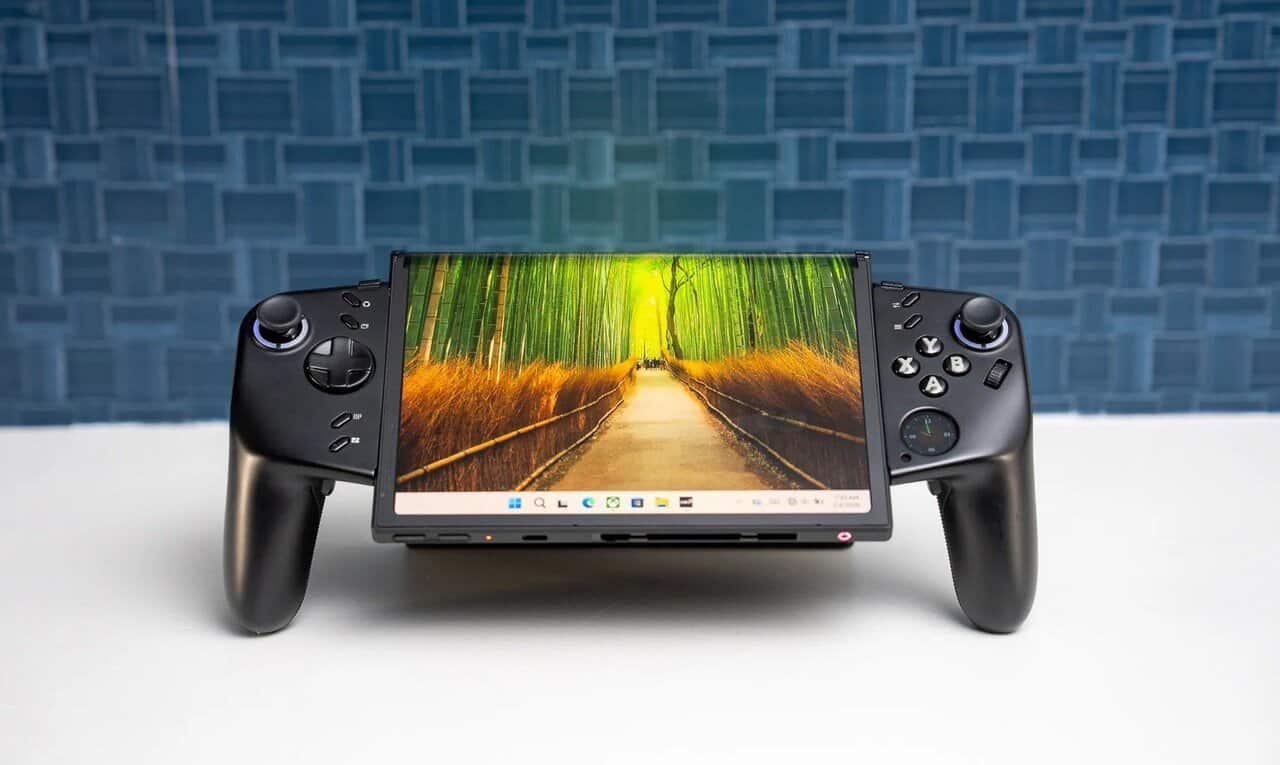
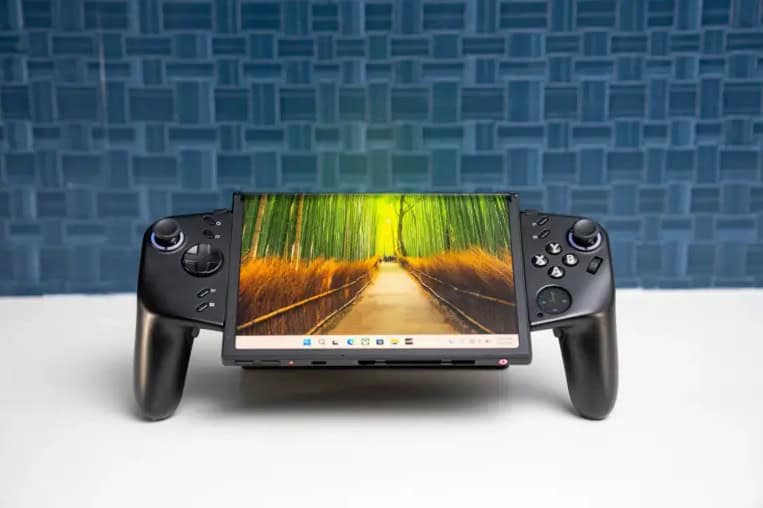
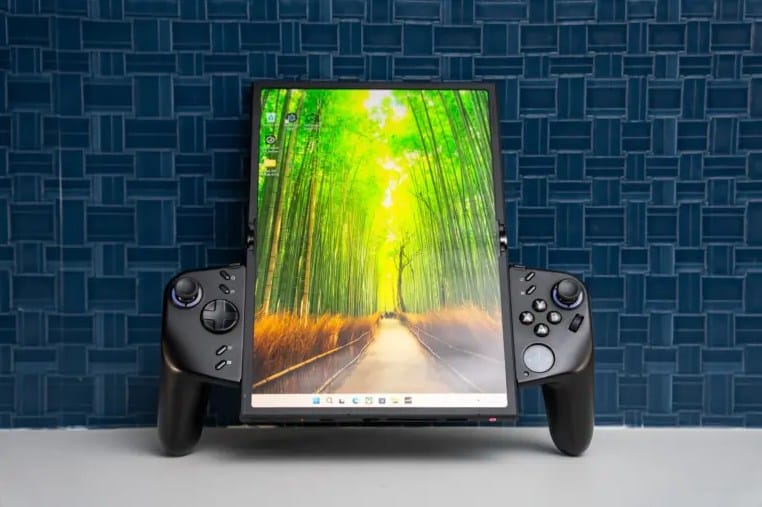
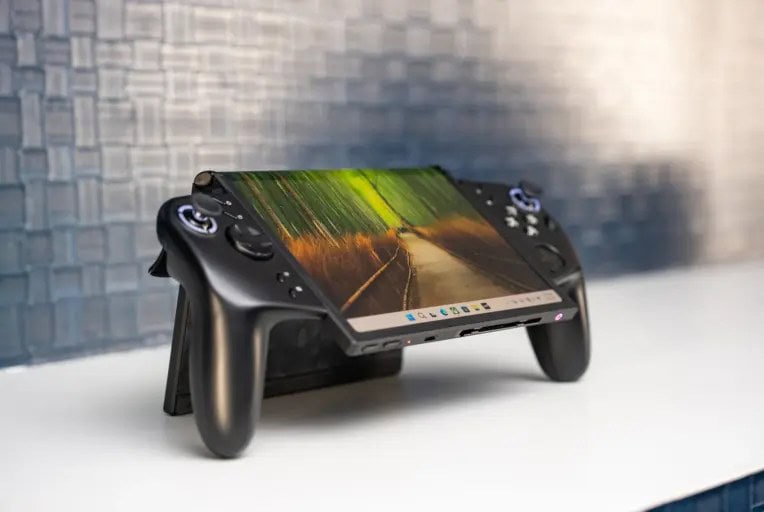
After weeks of rumors surrounding both the Yoga Book Pro 3D and the Legion Go Fold, Lenovo has now officially revealed its foldable gaming handheld at MWC 2026. The Legion Go Fold Concept stands out as one of the event’s most eye-catching prototypes.

According to The Verge, the device remains a proof-of-concept rather than a confirmed retail product. Lenovo has not announced pricing or a release timeline.

A Foldable Display Built for Gaming Flexibility

The Legion Go Fold features a foldable POLED display that expands from 7.7 inches to 11.6 inches. The panel reportedly offers a 2435×1712 resolution, a 165Hz refresh rate, and up to 500 nits of brightness.

Lenovo designed the system to adapt to multiple usage modes.

Standard Handheld Mode uses the 7.7-inch screen with attached controllers. Vertical Split-Screen Mode allows gaming on one half while running another app on the other.

Horizon Full Screen Mode unlocks the full 11.6-inch display for immersive gameplay. Expanded Desktop Mode turns the device into a laptop-style setup with a stand, keyboard, and touchpad.

Intel Core Ultra 7 Inside

Unlike previous Legion Go models powered by AMD silicon, this concept uses an Intel Core Ultra 7 258V processor.

The system pairs the chip with 32GB of LPDDR5x RAM and reportedly 1TB of storage. A 48Whr battery powers the device.

Total weight comes in at about 868 grams, including 638 grams for the tablet and 230 grams for the detachable controllers.

Image credit: The Verge

Modular Controllers With Extra Functionality

The detachable controllers remain central to Lenovo’s adaptability-first design philosophy.

The right controller can function as a vertical mouse for more precise navigation. A built-in mini screen can act as a touchpad, display performance metrics, adjust settings, and support custom hotkeys.

Accessories shown at MWC include a folio-style stand, a keyboard with trackpad, and a grip mount that merges both controllers into a wireless gamepad.

Lenovo describes the Legion Go Fold as an extension of the Legion Go lineup’s flexible approach to portable gaming. However, hardware details and commercialization plans remain unconfirmed.

Beyond gaming, Lenovo also showcased updates to its ThinkPad T-Series lineup, reinforcing its strategy of experimenting across both productivity and entertainment categories.

Via VideoCardz

Featured image credit: The Verge

MICWARE’s Dynamic Share Map Brings City-Scale Digital Twins to Windows

Micware Group has announced the global launch of Dynamic Share Map, a groundbreaking 3D spatial platform that will debut first on Windows before expanding to iOS and Android. The company will showcase the platform’s full capabilities at Mobile World Congress Barcelona 2026, giving Windows users an early look at what city-scale digital twin technology can deliver.

Built for Professional Workloads

Dynamic Share Map represents a significant advancement in spatial computing technology, merging open map data with real-world imagery to create hyper-realistic digital twin cities. The platform aggregates data from multiple sources, including Japan’s “PLATEAU” 3D city model project, OpenStreetMap, and real-time footage from dashcams, and transforms them into seamless, immersive 3D environments.

By launching first on Windows, Micware is targeting the professional users who rely on desktop workstations for complex visualization and analysis tasks. Urban planners, infrastructure managers, and simulation engineers typically work in Windows environments where they can integrate new tools into existing workflows alongside CAD software, GIS applications, and other professional suites.

3D Spatial Image created with Dynamic Share Map

Unlike consumer mapping applications designed for quick glances on mobile screens, Dynamic Share Map targets users who need to analyze, simulate, and interact with urban environments at scale. Urban planners can model disaster scenarios with accurate shadow studies and weather simulations. Infrastructure managers can monitor assets across entire cities without leaving their desks. Autonomous driving developers can test navigation algorithms against continuously updated digital twins that reflect real-world changes captured through edge data.

The Windows version is optimized for these professional applications, taking advantage of the multitasking capabilities that allow users to run complex simulations alongside other productivity tools. For professionals who already spend their days in Windows-based workflows, Dynamic Share Map integrates as a natural extension of their existing toolkit.

Beyond the Hype

While much of the conversation around digital twins focuses on future applications like AR glasses, Dynamic Share Map’s Windows launch grounds the technology in practical, present-day utility. The platform treats every building, road, and sign as an individual object that updates automatically when conditions change. For instance a construction site appears in the digital twin as soon as dashcam footage captures it. For professionals managing real infrastructure, this immediacy translates directly to better decisions.

The tourism and entertainment industries also stand to benefit, with immersive 3D environments that allow virtual destination exploration before travel. But creating and managing these experiences requires the kind of authoring capabilities that a Windows platform provides.

iOS and Android versions are in development for future release, extending the platform’s reach to mobile professionals and consumer markets. But for now, Windows remains the primary platform for users who need the full capability of city-scale digital twins in a professional context.

With Dynamic Share Map’s Windows-first launch strategy, Micware is acknowledging that serious spatial computing starts with the professionals who already call Windows home. The platform arrives at MWC Barcelona positioned at the forefront of digital twin technology, offering Windows users a tool that brings science fiction capabilities to the operating system already running on millions of professional desks worldwide.

Lenovo Expands ThinkPad T-Series with AI and Repairability Upgrades at MWC 2026

At the ongoing Mobile World Congress 2026 in Barcelona, Lenovo has unveiled the refreshed ThinkPad T-Series, which focuses on AI readiness, repairability, and platform flexibility. The 2026 update focuses on improvements for business fleets running Windows 11 Pro.

ThinkPad T14 Gen 7 & T16 Gen 5: Mainstream Workhorses, Modernized

Speaking of the latest T-series, the Lenovo ThinkPad T14 Gen 7 and ThinkPad T16 Gen 5 continue to be the reliable enterprise staples, now with support for LPCAMM2 memory. Both models come with slimmer bezels, updated internal layouts, and enhanced hybrid collaboration features, including an optional 5MP camera with computer vision and vHDR.

Image: Lenovo

These business laptops are performance powerhouses, with options spanning across Intel Core Ultra Series 3 with vPro and AMD Ryzen AI PRO 400 Series processors. Lenovo, in its announcement, has also focused on serviceability. These laptops come with easier bottom-cover access and expanded customer-replaceable components, which reduces downtime and extends lifecycle value.

ThinkPad T14s Gen 7: Lighter, Longer, Enterprise-Ready

The ThinkPad T14s Gen 7 is the lightest T-Series model, weighing roughly 1.1kg. The laptop comes with a new 58Wh high-density battery that supports extended unplugged productivity for mobile professionals. Available across Intel, AMD, and Snapdragon platforms, the T14s Gen 7 gives IT teams flexibility without compromising ThinkPad’s hallmark durability and enterprise standards.

Image: Lenovo

ThinkPad T14s 2-in-1 Gen 2: Convertible with Enterprise DNA

The ThinkPad T14s 2-in-1 Gen 2 extends the lineup with a lighter convertible design and an integrated garaged pen. Built for collaboration and presentation-driven workflows, it maintains the same serviceability and enterprise-grade security focus found across the T-Series.

Image: Lenovo

Across the T-series enterprise portfolio, Lenovo has emphasized repairability, modular components, enhanced audio, and Calm Tech design principles to reduce user fatigue. With AI features now built directly into the latest processor options, the updated T-Series is designed to help businesses handle hybrid work more smoothly while gradually bringing AI into everyday tasks, both this year and in the years ahead.

Pricing and Availability – ThinkPad T-Series (EMEA)

The ThinkPad T14 Gen 7 will be available starting April 2026 with an estimated starting price of €1,399, while the larger ThinkPad T16 Gen 5 is also set for an April 2026 release costing €1,499. Lenovo’s lightest model in the lineup, the ThinkPad T14s Gen 7, will launch in April 2026 with pricing starting at €1,699. The convertible ThinkPad T14s 2-in-1 Gen 2 will follow in May 2026, carrying an estimated starting price of €1,749. Lenovo has further pointed out that this pricing reflects entry-level configurations for the EMEA region and may vary depending on specifications and local market conditions.

Microsoft Widens Rollout of New Windows 11 Battery Icons

Microsoft is widening the rollout of its redesigned colorful battery icons in Windows 11, and more PCs should now see the change. The update arrives through the February 2026 optional update, KB5077241, according to Windows Latest.

The refreshed battery indicator has been in testing since late 2024 and started reaching users gradually in 2025. With KB5077241, Microsoft is pushing the feature to a broader range of devices, although availability still depends on A/B testing and hardware targeting.

Color-Coded Battery Icons Expand to More Windows 11 PCs

The updated battery icon replaces the old white bar with clearer color indicators.

When your device is plugged in, the battery turns green and displays a charging bolt. Once unplugged, the icon returns to white. If the battery level drops to around 30% or Energy Saver activates, the icon switches to orange. At roughly 6% remaining, it turns red to signal a critical level.

Microsoft has also increased the size of the battery bar, making it easier to read at a glance.

Battery Percentage Returns to the Taskbar

Windows 11 users can now show the battery percentage directly on the taskbar.

To enable it, go to Settings > System > Power & Battery and toggle on Battery percentage. This addition restores functionality that many users missed after early Windows 11 builds simplified the taskbar experience.

Start Menu Expansion and Feature Rollout Controls

The February optional update also expands the redesigned Start menu to more devices.

If the new battery icon or Start menu does not appear, users can try enabling the “Get the latest updates” toggle inside Windows Update. Even so, Microsoft continues to rely heavily on staged rollouts and targeted deployment, so not all systems will receive features immediately.

The battery refresh is not the only recent tweak. Windows 11 has also gained Local Group Policy support for GPP Debug Logging, alongside a new “Make Print Screen Key Yieldable” policy that allows third-party apps to override the default Print Screen behavior.

Together, these updates show Microsoft continuing to refine both the visual experience and enterprise-level controls in Windows 11 as the 2026 update cycle progresses.