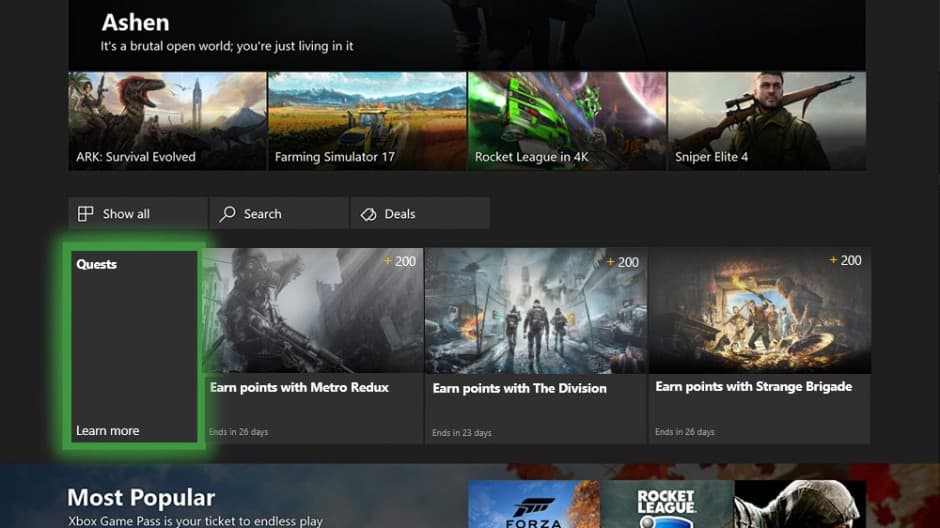
Xbox Game Pass, Microsoft’s Netflix-like video games subscription service is already a great way to try new games on Xbox One, but Microsoft is now leveraging its Microsoft Rewards program to encourage even more discovery. The company has just announced seven Xbox Game Pass quests for January, which will allow gamers to earn Microsoft Rewards points by playing any game in the catalog.
“Members can earn up to 2100 Microsoft Rewards points by playing any game from the Xbox Game Pass catalog. It’s easy to rack up points that you can spend towards your membership or DLC for your favorite games — just play the games you love and watch your rewards grow,” the blog post on Xbox Wire reads.
Three of the seven Xbox Game Pass quests for January will require you to play Tom Clancy’s The Division, Strange Brigade and the two Metro Redux games, but the four other quests can make you earn Microsoft Rewards points by playing any game in the catalog. You can find the full details about the different quests below:
Extraction Expert: Complete two specific extraction achievements in Tom Clancy’s The Division to get up to 200 points. You earn points with each achievement. Complete this before January 31.
Metro Redux: Play Metro 2033 Redux and Metro: Last Light Redux to complete four specific achievements and get up to 200 points. You earn points with each achievement.
Adventurer: Bring out your inner adventurer and get up to 200 points when you complete two specific achievements in Strange Brigade. You earn points with each achievement.
Achievement Hunter: Get points with your first achievement and continue to complete up to 21 achievements in any combination of Xbox Game Pass games to get a maximum of 600 points.
Genre Explorer: Get 300 points when you complete an achievement in three games from different genres.
Play something new: Complete an achievement in a Xbox Game Pass title that was added in December to get 100 points.
Quest Master: Complete all Xbox Game Pass quests to get an additional 500 points.
This kind of synergy is a pretty great way to encourage Xbox gamers to subscribe to Xbox Game Pass and spend more time playing and discovering new games. Since Xbox Game Pass launched back in June 2017, Microsoft has observed that “members increase their total time gaming on Xbox by almost 20% more than before and are also increasing their total number of games played by almost 40%, including titles outside the Xbox Game Pass catalog.”
Unfortunately, Xbox Game Pass quests are restricted to the US for now, but it’s apparently not a limited-time experiment. “We’ll have new quests lined up every month and will unlock the next set of quests on February 4,” the company said today. If you live in the US, you can head to the Xbox Game Pass membership area on your Xbox One console to check out your quests and start earning those Microsoft Rewards points.
Microsoft Teams, the hub for teamwork in Office 365, is getting three new capabilities to help Firstline Workers be more productive, the company announced today. The first new feature is a customizable Teams mobile experience, which will allow IT administrators to enable specific features like location sharing, the ability to record and share audio messages, as well as a “smart camera.”
This customizable Teams mobile experience is available starting today, and this is all about giving Firstline Workers easier access to the tools they really need. “This capability can be used for employees in any role, with the option for IT to create a custom policy or use the newly available Firstline Worker configuration policy template. Employees can further customize their experience by pinning the modules they need most from their module tray to their navigation bar,” explained Emma Williams, Corporate Vice President of Modern Workplace Verticals.
The second new feature that Microsoft announced today is Shifts, a schedule management tool that is now available for all customers. With Shifts, managers will be able to plan shift schedules that team members can access right within the app, with the ability for Firstline Workers to make schedule change requests. The Graph API for Shifts, which will enter public preview this quarter will also allow integrations between Shifts and enterprise scheduling systems.
Lastly, Microsoft Teams is getting a new Praise feature that looks like a mix of LinkedIn recommendations and modern gamifications systems. With this new Praise tool, managers will be able to send praise to employees by using different badges such as “Problem Solver,” “Team Player,” and more, and all badges will be viewable by team members
“Firstline Workers such as retail associates play a key role in representing a company’s brand, but this segment of the workforce experiences some of the highest turnover rates. Taking steps to engage and recognize employees can go a long way to improving their satisfaction and reducing turnover,” explained Williams. This new Praise tool will roll out later this quarter.
This week’s Deals With Gold and Spotlight sales are now online on Microsoft’s Xbox One and Xbox 360 consoles with a massive list of video games being given discounts from just 10% all the way to 85%.
The full list of discounted games can be viewed within the Store section on the Xbox 360 and Xbox One console. Note that the Deals With Gold games require an active Xbox Live Gold description to receive the discount. The individual product pages for each game will mention what sort of discount is available.
An image of a newly discovered Chinese tomb, which bears a remarkable resemblance to Microsoft’s Xbox logo, was posted on Twitter by user, Xbao, earlier this week. The image quickly garnered a lot of attention from gamers and even received a response from the official Xbox account which jokingly replied, “Ah yes, that’s the Xbox 220 BC.”
While such an image could easily be faked, it appears to be authentic and is taken from a CCTV10 video on the Chinese social network, Weibo.
The official description for the video describes it as the unearthing of a mysterious pre-Qin dynasty tomb and the Chinese viewers in the comments also appear to have caught the similarities between it and the Xbox logo with some joking about it being a paid sponsorship.
Amusingly, the official Xbox China Weibo commented with just “…..” which is currently the most-upvoted comment on the video.
Like other PC manufacturers, Dell unveiled a handful of new laptops for consumers and businesses during CES 2019 that included an update to its Latitude line up with a new frost white casing as well as a new XPS 13 housing a quad-core 8th generation Intel processor and two Inspiron 7000’s with Active Pens included and 13-inch and 15-inch display options.
However, Dell may be the only company producing a relatively modular laptop in its Alienware line up in 2019.
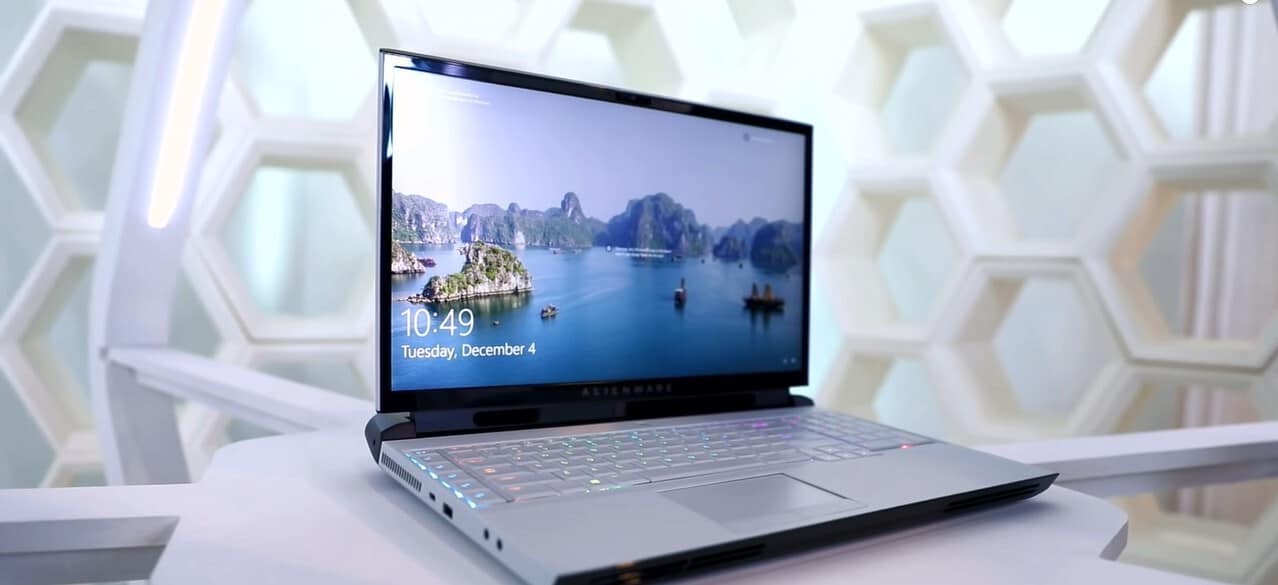
Alongside its Alienware Legend PC for 2019, Dell is introducing the Alienware Area-51m. Described as “the world’s most powerful 17-inch gaming laptop”, when fully tricked out, the 51m is Dell’s flagship gaming laptop with upgradable graphics and processors and holds the title as being the only laptop housing a 9th Generation 8-core desktop processor.
Other 51m features include stock 64GB of memory, 2.5 Gbps Ethernet technology, narrow bezel display, and a significant 50 percent increase in performance due in part to it’s cutting-edge thermal and cooling technology.
The Alienware Area-51m starts at $2,549 and should be going on sale around January 29, 2019.
Dell also announced its Alienware m15 and m17 this year that sport lightweight 17-inch gaming chassis for relative portability. The m15 weighs about 4.76lbs for the m15 and 5.79 for the m17 variants while both house the latest NVIDIA GeForce RTX 20 series GPU, Cryo-Tech Cooling technology and 8th generation Core i5 and i7 option.
The m15 and m17 will be available January 29, 2019, starting at $1,379.99 and $1,649.99 respectively.
Many iPod, iPhone, and iPad users need to transfer files between their Apple devices and Windows. However, iPod users can’t transfer files when the “iPod has been detected but it could not be identified properly” error message pops up.
The full error message states: An iPod has been detected, but could not be identified properly. Please disconnect then reconnect and try again. If problem persists uninstall iTunes then install iTunes again.
The above error message can also pop up for iPhone and iPad users. It is an error message that pops up when iTunes doesn’t detect a connected Apple device. These are some of the various resolutions that can fix iTunes when it doesn’t detect connected devices.
What to do if your iPod has been detected but it could not be identified
1. Connect the iPod With an Alternative USB Cable
Some iPod users might need to replace their iPod USB cables when the “iPod has been detected but it could not be identified properly” error message pops up. So try connecting the iPod to PC with an alternative USB cable if one is available. In addition, connect the iPod to an alternative USB slot.
2. Check That Apple Services are Started
There are a few Apple services that need to be started in Windows for iPod users to transfer files with iTunes. Those services are iPod Service, Bonjour Service, and the Apple Mobile Device Service. This is how users can start those services in Windows 10.
Open Run with the Windows key + X keyboard shortcut.
Input ‘services.msc’ in Run’s Open box, and select the OK option.
Then double-click Apple Mobile Device Service to open the window in the snapshot below.
Select Automatic on the Startup type drop-down menu.
Then click the Start button so that the service’s status is running.
Press the Apply and OK buttons.
Repeat the above steps for the Bonjour and iPod Service.
3. Check for iTunes Updates
The “iPod has been detected but it could not be identified properly” might pop up for users utilizing antiquated iTunes versions. So checking for iTunes updates might fix the issue for some users. To check for updates, click Help > Check for updates within iTunes. Then users can update the iTunes software to the latest version if there is a more updated version.
4. Reinstall iTunes
Reinstalling iTunes is a resolution that numerous users confirm fixes the “iPod has been detected” error message. That will ensure your iTunes software is updated and that you’re not missing any of the other additional components it needs. This is how iTunes users can reinstall that software.
Open the Programs and Features Control Panel applet by entering ‘appwiz.cpl’ in Run and clicking OK.
Then select iTunes and click Uninstall.
Click the Yes button to confirm.
Users should also uninstall Apple Software Update, Bonjour, Apple Application Support, and Apple Mobile Device Support (assuming they’re all installed). The Programs and Features Control Panel applet lists all those components.
Restart Windows after removing iTunes and the other Apple software.
Then open the iTunes page on MS Store, and press the Get button.
Open the downloaded installer for iTunes to add the software to Windows. That will also reinstall Apple Software Update, Bonjour, Apple Application Support, and Apple Mobile Device Support.
Restart your desktop and laptop again after reinstalling iTunes.
5. Fix iTunes With iMyFone TunesFix
The iMyFone TunesFix software for Windows 10, 8, and 7 can fix all manner of iTunes error messages. So this is certainly software worth noting for fixing the “iPod has been detected but it could not be identified properly”error. TunesFix is currently retailing at a discounted price, and iTunes users can click Try it Free on the software’s webpage to try out a demo. This is how iPod users can fix iTunes with iMyFone TunesFix.
Add iMyFone TunesFix to Windows, and then open the software’s window.
The software automatically scans the iTunes installation when users launch it.
The iMyFone TunesFix software might detect some issues after the first scan. If it does, click the Repair button to fix software.
If the initial scan doesn’t detect any errors, click Repair iTunes Connect Issues on the iMyFone TunesFix window.
Then press the Repair button to fix iTunes connect issues.
6. Check the Apple Mobile Device USB Driver is Enabled
The USB driver for Apple Mobile Device USB Driver might not be enabled. To check that, plug the iPod into a laptop’s or desktop’s USB port.
Right-click the Start menu’s button and select Device Manager on the menu that opens.
Then double-click Universal Serial Bus controllers to expand that category.
A down arrow highlights if Apple Mobile Device USB Driver is disabled. Right-click Apple Mobile Device and select Enable if required.
7. Reinstall Apple Mobile Device USB Driver
Reinstalling Apple Mobile Device USB Driver is another potential resolution that some users have confirmed fixes the iPod not recognized error. To do that, connect the iPod with a PC.
Open Device Manager from the Win + X menu.
Double-click Universal Serial Bus controllers to expand its device list.
Then right-click Apple Mobile Device USB Driver and select Uninstalldevice.
Click the Uninstall button to further confirm.
Press the Scan for hardware changes button shown directly below. That option will reinstall the driver for Apple Mobile Device USB Driver.
There’s a good chance that at least one of the above resolutions will fix iTunes when it doesn’t recognize iPod devices. Note that the above resolutions might also fix the same issue for iPhones and iPads.
While not traditionally known as a purveyor of clocks and smart screens, Lenovo is joining the parade of manufacturers who are building out connect experiences through platform flexible digital assistants.
New at CES 2019 are three digital assistants powered Lenovo devices called the Lenovo Smart Clock, Lenovo Smart Tab M10 and P10. The Smart Clock makes use of Google Assistant while the Smart Tab M10 and P10 use Amazon’s Alexa assistant.
Lenovo Smart Clock with the Google Assistant
Price: $79.99 Available: Spring 2019
Similar to Google’s Home Hub, the Lenovo Smart Clock comes with particularly soft fabric-covered exterior and four inch-IPS screen. Lenovo designed the Smart Clock with nightstands in mind as the clock “delivers visual experiences when you wake up, and when you’re ready for sleep.”
In addition to looking a lot like the Google Home Hub, the Smart Clock also operates in a similar fashion with support for Google’s Assistant’s gentle wake-up routine, “Hey Google” voice commands for alarms, music play, and calendar management.
Powering the audio on this tiny bedside device are a full-range 6W speaker and two passive radiators tuned with Dolby’s background noise reduction.
While intended for the nightstand, the Smart Clock can also function as a home hub with hands-free voice support for playing audio across multiple devices in separate rooms with Chromecast.
Lenovo Smart Tab M19 and P10 with Amazon Alexa
Price: M10 $199, P10 $249 Available: January
The Lenovo Smart Tab is as described, an Android tablet that converts from a handheld experience to a Smart Screen via Lenovo’s Smart Dock technology.
Both the M10 and the P10 come with FHD multitouch displays, a Snapdragon 450 processor, up to 4GB of RAM and 32 GB storage capacity.
Additional features include Dolby Atmos support on the tablets as well as Lenovo’s Smart Dock that also houses dual 3-watt full range speakers for music streaming and video watching as well as 3 far-field microphones for better voice recognition.
For $199 US, the M10 offers a max of 3GB of memory, 32GB of storage, a smaller battery at 4850 mAh, and fewer sensors and lower resolution camera options.
However, shelling out an additional $100 for the P10 gets buyers 4GB of memory, 64GB of storage, larger 7000 mAh battery, 4 front facing speakers (instead of 2), higher resolution cameras as well as a fingerprint reader for security.
Lenovo’s accessories development has shown some tremendous growth in 2019 and it’ll be interesting to see how its new products trickle into the home and workspaces of its customers in 2019.
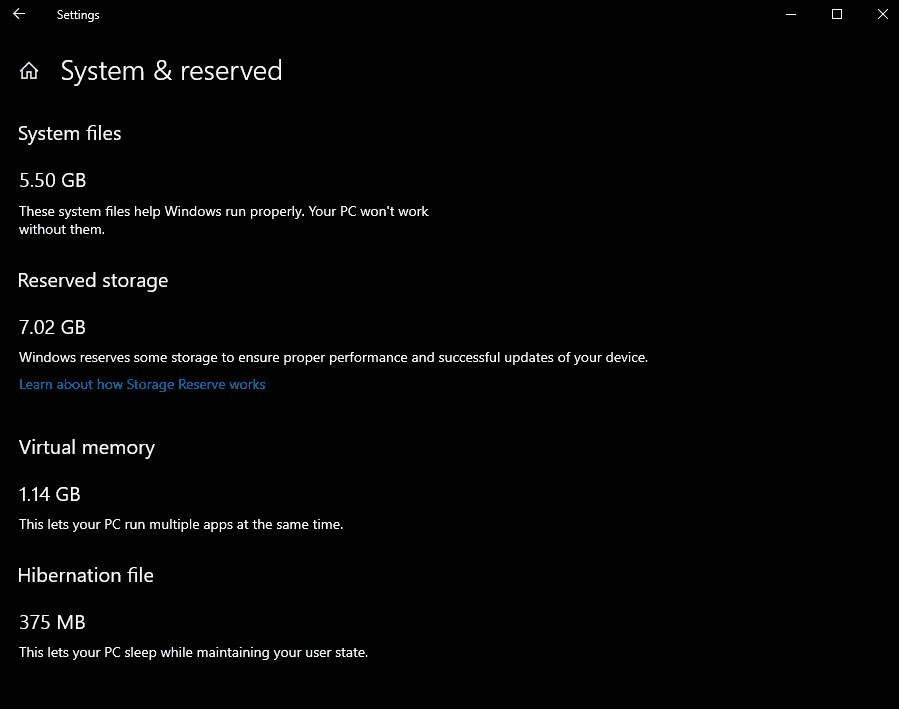
Microsoft has announced an important change regarding Windows 10 and reserved storage yesterday. Starting with the next Windows 10 update, which Microsoft explicitly named “1903” in the blog post (this is a first, to our knowledge), the desktop OS will now reserve disk space for OS updates, apps, temporary files, and caches. For the most part, this is about helping users to install system updates without having first to free up space on their PCs.
“Reserved storage will be introduced automatically on devices that come with version 1903 pre-installed or those where 1903 was clean installed,” wrote Jesse Rajwan, Program Manager at Microsoft. When reserved storage is enabled, it should take around 7GB of disk space, though Microsoft noted that the amount of storage will vary over time depending on optional features and installed languages that users choose..
Here is how the feature will work on Windows 10 version 1903:
Every update temporarily requires some free disk space to download and install. On devices with reserved storage, update will use the reserved space first. When it’s time for an update, the temporary unneeded OS files in the reserved storage will be deleted and update will use the full reserve area. This will enable most PCs to download and install an update without having to free up any of your disk space, even when you have minimal free disk space. If for some reason Windows update needs more space than is reserved, it will automatically use other available free space. If that’s not enough, Windows will guide you through steps to temporarily extend your hard disk with external storage, such as with a USB stick, or how to free up disk space.
If you want to enable Reserved storage on your PC, you’ll need to be running Windows 10 Insider build 18298 or higher. The feature is actually hidden for now, but you can enable it in the Registry Editor and it will light up after you upgrade your PC to the next available build. You can get more details about how to turn on reserved storage by following this quest on the Windows 10 Feedback Hub.
Reserved storage should be a useful feature for most consumers, but it may be somewhat problematic on PCs with just 64GB of storage or less. “Over the last several releases we’ve reduced the size of Windows for most customers,” explained Rajwan. “We may adjust the size of reserved storage in the future based on diagnostic data or feedback,” he added.
Microsoft Planner, the company’s visual tool for organizing team work is now available for US Government cloud customers. The Trello competitor is now included with Microsoft 365 Government GCC and Microsoft 365 Government GCC High, with Microsoft 365 Government DoD coming soon.
“Since Planner first launched, we’ve heard a ton of interest and excitement from US government customers for a tool like Planner. End users in government agencies, from state and local to federal organizations, wanted a simple, intuitive, and collaborative task management tool to help them visually organize their team’s work. IT admins wanted to provide their users with a simple work management solution while still meeting the strict security and compliance requirements of the US government. We’ve been hard at work to make sure Planner would do both,” wrote Eray Chou, PM on the Planner and Project team.
For now, a couple of Planner features including Microsoft Teams integration, SharePoint integration and email notifications aren’t available for US Government customers, but Microsoft plans to add them later this year. “New Planner features will arrive in Microsoft 365 commercial cloud first and in US government cloud offerings shortly thereafter due to increased audit and certification requirements,” explained Chou.
Samsung has arguably gone back to the drawing board for its 2019 lineup of laptops, incorporating diamond cut re-designs and unique textile-patterned chassis.
During CES 2019, Samsung unveiled two new notebooks; a business-oriented Samsung Notebooks 9 Pro and a Gigabit-Wifi enabled Samsung Notebook Flash..
Samsung Notebook 9 Pro
Available: Early 2019
As the title would imply, this is the iteration of the Notebook Pro but brings a new redesign to the product line. With a cool metal exterior making use of diamond-cut edges that leave ridges along the length of the device, the Samsung Notebook 9 is now easier to handle and open in day to day use.
Aside from the aesthetic changes, that include reduced bezels on the screen, customized LED Indicator Bar and a more MacBook like keyboard re-design, the Notebook Pro 9 brings the industry standard 8th Gen Intel Core i7 processor, 8GB of LPDDR3 RAM, 250GB of PCIe NVMe storage, active pen, fingerprint reader all in a 2.84lb package.
Samsung is claiming that the Notebook 9 Pro will get up to 14 hours of battery life running Windows 10 Home, presumably using synthetic benchmarking.
As a 3-in-1 device, Samsung including its Active Pen and additional S-Pen like technology in the Notebook 9 Pro is definitely noteworthy as Samsung’s Active Pen supports up to 4,000 levels of pressure sensitivity, making this device every bit as competent as a Surface Pro or iPad for creative tasks.
Samsung Notebook Flash
Available: Early 2019
Alongside its Pro offering, Samsung is testing the waters of Always Connected PC’s with its Gigabit-Wifi enabled Samsung Notebook Flash.
The new laptop, offered in charcoal grey, is making use of a unique textile-patterned chassis, similar to the Surface Pro Laptops, for its 13.3-inch screen and Samsung ‘typewriter keyboard’.
Unlike other recent PC offerings, the Flash falls short on the grandiose battery claims only sporting 10-hour battery capacity.
The Flash represents Samsungs lower tier offering but still packs plenty of useful everyday necessities such as two USB-C ports, Fingerprint reader, and 1920 x 1080 anti-glare 13.3 FHD LED display.
Samsung has already unveiled a slew of monitors, TV displays and connected speakers at this years CES, but we’re expecting to see a few more items presented by the company in the coming days.
It seems Razer is ready to ship its keyboard and mouse combo for couch gamers later today, as the company announced availability at CES 2019 earlier today according to a report from Windows Central. The Razer Turret also saw its way to the Microsoft Store in the form of a pre-order last month, and is expected to begin shipping at the end of March. However, it might be possible Razer wants to give a few units to gamers early by opening orders on its website.
The Razer Turret has been specifically designed for Xbox One gamers in mind, now that the console now supports fifteen games that have can take advantage of the new(ish) available input method for the latest consoles. Xbox One enhanced experiences include a dedicated Xbox key, which allows users to open the Xbox menu to access games, settings, and to turn off the console, and “Xbox Dynamic Lighting,” which changes the colors of the keys depending on the action happening in the supported game. Moreover, it should also work on just about any device that supports keyboard and mice, including Windows 10.
As we have already mentioned, as many as fifteen games on the Xbox One gained support for keyboards and mice on the Xbox One, The list includes games such as Fortnite, PUBG, Warframe, and The Sims. However Windows Central also pointed out the presence of a few new titles were gaining support for it, including Gears of War, The Sims 4, Roblox, Sea of Thieves, and Surviving Mars. Minecraft has had support since 2017 due to the high volume of requests for the feature.
Absolver is finally available to play on the Xbox One beginning today. The game is an online multiplayer action title with a heavy focus on fighting style variety and flow in battle. Absolver is also an Xbox One X Enhanced video game and will play in 4K resolution when played on Microsoft’s Xbox One X console.
Here’s the official game description and trailer:
Absolver is an online multiplayer combat experience where players are placed behind the mask of a Prospect by the ever-present Guides, the new rulers of the fallen Adal Empire that will determine your worth in joining their elite corps of enforcers. Prospects will wander forsaken lands, encountering others to learn new combat skills, acquire weapons and armor, and engage in solo duels and intense three-on-three battles.
Players will define their Prospect’s approach by picking a combat style, a weapon of choice, and arranging attacks in their Combat Deck to design their unique and personal attack flow. Through battle with opponents, sparing with friends, and even taking on a mentor players will expand their knowledge and mastery of combat with new moves, weapons, and armor on their journey to Absolution. Gameplay modes include solo play, online cooperative modes, and online versus modes.
In addition to launching on Xbox One consoles for general sale today, Absolver is also available to play for free for Xbox Game Pass subscribers. Xbox Game Pass is Microsoft’s Netflix-like monthly video game subscription service.
Despite Lenovo’s chief association being the enterprise solutions and utility company, the PC manufacturer continues to exert itself in the PC gaming community with industry-competitive software, laptops, desktops, and accessories.
Alongside its Yoga and ThinkPad lines, Lenovo is also unveiling its 2019 edition of Legion gaming hardware that includes a new 17-inch, 144hz laptop with NVIDIA G-SYNC support and Super-wide 43.4-inch borderless gaming monitor, among other offerings.
Lenovo Legion Y740
Starting at 15″ $1749.99 – 17″ $1979.99 Available: February 2019
In 2019, the Lenovo Legion Y7 series is getting updated with 8th generation Intel Core CPUs, a yet unannounced NVIDIA GeForce GPU, brighter 500 nits custom Dolby Vision HDR panels, improved 144hz refresh rate displays, and narrower 6.7mm bezels among other improvements.
Lenovo Legion Y540
Starting at $929.99 Available: May 2019
For the gamer on a slightly reduced budget, Lenovo is updating its Y5 series with similar NVIDIA GeForce GPU support, Intel Core processors, narrower 6.7mm bezels but also including Harman Speakers with Dolby Atmos Audio, improved Legion Coldfront Cooling System and an improved aluminum display hinge for more panel stability.
Lenovo Legion Y44w Monitor
Price: $1199.99 Available: April 2019
Lenovo is also rolling out a bundle of new gaming-focused display monitors and chief among them is the new Legion Y44w monitor.
The Y44w is a Super-wide 43.4 borderless display with a similar 144Hz refresh rate as the laptop offerings but also has a minimal 4ms response time for reduced streaking and ghosting.
Other features include support for AMD FreeSync technology, USB Type-C supported port option, Picture-by-picture management, and an optional detachable Harmon Kardon speaker.
Lenovo Legion Y27gq Monitor
Starting at $999.99 Available: April 2019
Offers similar gaming features as Lenovo’s 2019 flagship display but at a reduced price tag. For $999.99, gamers can grab the Legion Y27gq Monitor with detachable Harmon Kardon speaker, borderless 27″ QHD display with anti-glare finish and latest NVIDIA G-Sync and R3 technology.
While gamers might lose out on the 144Hz refresh rate that the Y44 monitor offers, the Y27gq does provide a 90% DCI-P3 color gamut and audio combo jack for those necessary isolationist gaming moments.
Legion H500 7.1 Pro Gaming Headset
Price: $99.99 Available April 2019
With gaming headsets inching toward the $200.00 marker, it’s nice to see Lenovo offering a lightweight pair of over-the-ear headphones with 20 Hz – 20 kHz earphone frequency range and 100Hz – 10kHz microphone frequencies as well as driverless 7.1 surround sound and passive noise canceling retractable microphone.
The H500 7.1 also offers both USB and 3.5mm connections and rotatable ear cups with cushioned PU leather for comfort.
Lenovo Legion H30 Gaming Headset
Price $59.99 Available: April 2019
The Legion H30’s offer passive noise canceling retractable microphones, in-line analog audio controls, rotatable ear cups and Lenovo’s soft cushioned PU leather casing all for under $60.00.
Lenovo Legion K500 RGB Mechanical Keyboard
Price: $99.99 Available: April 2019
Just as vital as the PC, Lenovo is paying customer service to its keyboard offerings with a new minimalist RGB mechanical keyboard. The K500 includes dedicated media keys, detachable textured palm rest and 104 keys anti-ghosting keyboard with the support of 16.8M colors on a 3 zone customizable RGB board.
The keyboard does weigh a hefty 2.45lbs despite its slimmer footprint.
Lenovo Legion M500 RGB Gaming Mouse
Price: $59.99 Available: April 2019
Alongside the keyboard, Lenovo is providing a customizable gaming mouse with advance Pixart 16,000 DPI resolution sensor, Omron mechanical switches and colorful 3 zone RGB lighting.
Other features include an adjustable weight cartridge, easy on-the-fly DPI switch and 7 customizable programmable buttons, all for $59.99.
While not as high profile as the PlayStation or Xbox brands, Lenovo’s Legion hardware is very well known quantity in the gaming community and 2019’s lineup looks to only expand the manufactures cache in th industry.
Outlook is one of the best email client programs, especially for businesses, and has been one of the most important utilities of Microsoft’s popular Office suite. However, Outlook Meeting with some users reporting that it is not sending meeting updates.
Its meetings feature helps you organize and manage important meetings easily by automating tasks like sending invitations and issuing reminders.
As a result, Outlook’s Meeting component is immensely popular and closely rivals its emailing feature. But it is not without its faults, some of which can frustrate your efforts to get the best from the application.
How can I fix the Outlook meeting issues?
1. Outlook meeting not sending invites
According to Microsoft, this issue of Outlook meetings not sending invites has already been solved in the most recent versions of Outlook.
Those still using older Outlook programs are also in luck since several fixes work. Here they are (For Outlook 2007 and other legacy Outlook versions):
1.1. Create Meetings Directly
Creating a meeting directly from the program will send invitations to your intended contacts promptly.
Similarly, the easiest way to invite new guests is by adding them (their addresses) as recipients of the meeting notifications rather than by clicking invite/forward.
1.2. Update the Meetings Tool
Updating your Microsoft Outlook program can also help to permanently get rid of this problem.
Steps (office 2010):
Open Outlook.
Click File.
Select Help.
Click Check for updates/Install updates
Confirm the installation to complete the process.
For Outlook 2013 (and above):
Open Outlook.
Click File then Office Account.
Log in (if you have logged out) and look for the Update Options button under the prominent Product Information area.
Click Apply updates under the Update Options button. Wait for the system to complete updating.
Enabling Microsoft’s automatic updates to include Microsoft Outlook makes your work easier as the program will be continuously updating without your intervention.
Here is how:
Open Settings.
Select Update & Security.
Click Change Settings.
Select the option Give me the updates for other Microsoft’s products when updating Windows.
1.3. Recreate The Meeting
If you are yet to succeed, you can attempt to recreate the meeting using the normal steps on the calendar.
You will need to modify the way Outlook displays the meeting features if outlook meetings feature fail to show on the calendar after creating a meeting. Here is how:
2.1.Select the Calendars Category (Outlook 2010 Going up)
First, the scheduled meetings only show if the calendar’s category has been selected on the program’s left side.
Then, you may have to choose the correct view (Day/work week/month) depending on the schedule of meetings that you want to view.
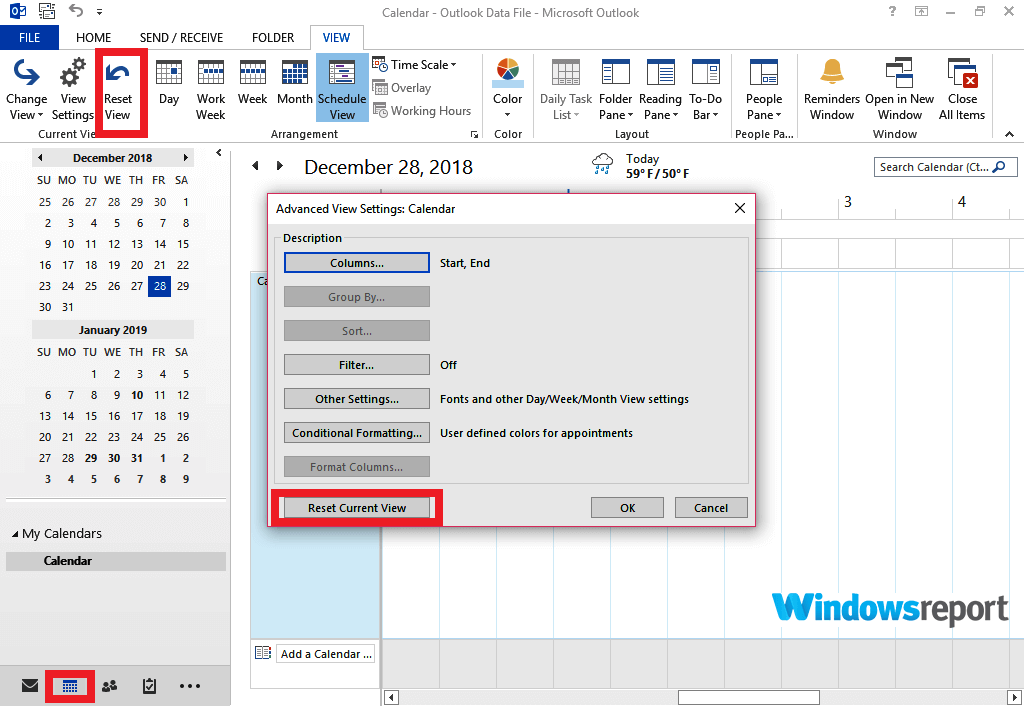
2.2. Reset The Calendar View (Outlook 2010 Going up)
A custom view can also hide your meetings after setup so you should try to restore the factory view for the calendars folder:
Open Outlook.
Click the Calendar tab (on the left bottom side).
Open the View tab.
Click the view settings option.
Now click Reset Current View.
Press ok and check to see if the previously missing Outlook meetings now show.
3. Outlook Meeting won’t open/cancel/delete invites
3.1. Log Into Your Account Using OWA (Outlook Web Access)/Office 365 portal
For some reason, the option to cancel a meeting works when you are logged into your account using your Outlook Web Access/Office 365 portal details.
Log in there by going to the link you usually use.
Go to the calendar.
Locate the meeting event from the screen.
Right-click and press cancel.
Users are only able to cancel meetings in which they are registered as organizers so ensure you’re the meeting organizer.
3.2. Log Out Of Outlook Then Login
Sometimes the error is because of lingering Outlook performance/Sync issues. In this case, you should log out of your current Microsoft Outlook session then login again.
This refreshes your Outlook session and could allow you to cancel a meeting.
3.3. Disable All Adds-in
The issue of This meeting may be a result of a conflict with any of the installed Outlook add-ins. Try to disable all add-ins as explained below to see if you will succeed.
Launch outlook.
Go to the File.
Click Options.
Then click Adds-in.
Under COM Add-Ins click go.
Uncheck the box against the add-in you are no longer using.
Click OK.
Restart Outlook.
4. Outlook Meeting attachment won’t open
In certain instances, your Outlook account may refuse to open attachments from a phone (Android and Apple) or PCs despite being correctly set up.
Now, this problem could have several root causes and has even sucked in Microsoft in an attempt to get a permanent resolution. We suggest you try these ideas.
Follow the instructions to automatically download and update your Outlook version. For instance, for Windows 7, Click install office updates as highlighted.
Then, those using older Outlook releases such as MS Outlook 2013 will need to further modify the registry for attachments made in the latest Outlook versions such as Outlook 2016 to open. Here is how:
Back up the registry first
Close all Microsoft Office programs.
Press the Windows key + R, type regedit, and click OK.
Navigate to the other below in the left pane: HKEY_CURRENT_USER\Software\Microsoft\Office\15.0\Outlook\Options\Calendar
Point to New On the registry Edit menu and then choose DWORD Value.
Type AllowHTMLCalendarContent then press Enter.
Now right-click the AllowHTMLCalendarContent key and select Modify.
In the provided Value data box, enter 1 then select OK.
Close the Registry Editor and try to open the meeting attachment.
5. Updating the Outlook app on Android/iOS
5.1. Update the app
Head over to the Google Play store from the phone.
Download the latest Microsoft Outlook or click update.
5.2. Log Out Of Outlook
An easier fix is to log out of the current Outlook session and then come back in.
On the same note, sometimes restarting Outlook helps so attempt this if you are not yet successful.
5.3. Change Microsoft Trust Center Settings
For some Outlook editions including Outlook 2016, the fault is with the wrong trust center settings.
You thus need to edit the Trust center settings for all Microsoft products you typically use to open your Outlook meeting attachments including Microsoft Word and Excel:
Open Outlook.
Go to File.
Click Options.
Select Trust Center.
Now click the Trust Center Settings tab.
Locate the Protected View option and do the following:
Uncheck the option Enabled Protected View for files originating from the internet
Check the option Enabled Protected View for files located in potentially unsafe locations
Uncheck the option Enabled Protected View for Outlook attachments
5.4. Ensure the relevant opening programs have been installed
The applicable attachment opening application needs to be available on your computer to access any attached files. For example, a PDF attachment won’t open if a relevant PDF reader is not installed.
Users thus need to confirm that the required file opening programs exist on their PCs.
We have reached the end of this guide on Outlook not sending meeting updates issues and other meeting-related problems. If Outlook Scheduling Assistant is not showing on your PC, check our detailed guide to fix it.
Over the past 48 hours, companies such as HP, Asus, Acer, LG, Samsung, and Dell have unloaded their laundry list of wares on to the Consumer Electronics Showcase floor that includes everything from portable Surface Pro-like gaming rigs to 75-inch bezel-less wall-mounted displays.
Not to be outdone by the competition, Lenovo is now set to unveil its slew of products to help improve the average and niche workspaces.
ThinkPad X1 Carbon
Starting at: $1709.00 Available: June 2019
Once again, Lenovo is rolling out its ThinkPad X1 Carbon device but with specs for the 2019 customer. This year, customers are being treated to a ThinkPad X1 Carbon (7th Gen) starting at around $1709.00 in the US. For the relatively hefty price tag, buyers have gifted a laptop with a new woven carbon fiber finish option in addition to the slate black, thinner (14.95mm) hardware footprint with Intel’s latest 8th Gen processors and new RGB & IR camera with the increasingly popular ThinkShutter switch.
ThinkPad X1 Yoga
Price: $1929.00 Available: June 2019
A new 4th generation ThinkPad Yoga is also making a debut and bringing a device with a 17% smaller footprint than last year, new CNC aluminum chassis covered in Iron Grey, 11% slimmer bezels around the screen and up to 500 nits of brightness across a 4K panel.
The X1 Yoga also comes with industry standard 8th Gen Intel processor, Dolby Atmos support, RBG color calibration and backlit keyboard.
Lenovo ThinkPad X1 Yoga (6th Gen)
Starting at $1929.00 Available: June 2018
Technically introduced last June, Lenovo is reannouncing its ThinkPad X1 Yoga 6th, Gen, on the 2019 CES floor. Not much has changed from its initial unveiling that included a 14″ FHD IPS Touch panel, up to 16GB LP DDR3 RAM, up 2 TB PCIe SSD, Dolby Atmos Sound System, and Fingerprint and IR Camera biometric authentication options.
ThinkVision P44W
Price $1299.00 Available: April
Connecting to Lenovo’s new breed of laptops and tower PCs is the dual screen ThinkVision P44W that offers an immersive 32:10 aspect ratio with HDR400 certification, smooth 144Hz refresh rate and 4ms response time as well as support for the latest AMD FreeSync technology.
Other P44W features include USB Type-C connectivity, dual video input management, detachable Harmon Kardon certified speakers and a hidden USB Hub called ‘Push n Push.’ The P44W will also offer up to 99% sRGB, BT.709, and DCI-P3 color accuracies.
Lenovo VoIP 360 Camera Speaker
Price: $249.99 Available: March 2019
Shift just a bit away from more traditional desktop offerings, Lenovo is rolling out a new portable 360-degree camera and speaker device for cleaner on-the-go video conferencing.
The new VoIP 360 Camera Speaker looks like a desktop speaker but packs noise cancellation (AEC) and noise suppression (ENS) technologies as well Plug and Play connectivity with support for USB-C. In addition to the obvious Skype support, Lenovo’s little conference speaker and camera also support Jabber, Webex, Google Hangouts and QQ out of the box. Standing only 3.5 inches tall, the new speaker packs a lot of convenience into this speaker-looking accessories.
Lenovo 700 Ultra-portable Bluetooth Speaker
Price: $249.99 Available: April 2019
Lenovo is offering an actual Bluetooth speaker to accompany the faux-speaker looking VoIP camera. The Lenovo 700 comes with a rechargeable battery that Lenovo claims up 8hrs of continuous playback.
Perhaps, more important than the length of the playback is support for the new Bluetooth 5.0 technology as well as USB-C. The Lenovo 700 also houses quick charge technology and can fully charge the speaker in as little as 2 hours and comes with IPX2 splash-proof water resistance.
Lenovo Powered USB-C Travel Hub
Price: $79.99 Available: January 2019
As the tech industry continues to move towards a USB Type C powered future, Lenovo is aiming to help its customers with the transition by providing a new USB-C travel hub (dongle).
The new dongle comes with six port connections that include: HDMI, VGA, RJ45 Network, Two USB-A, and an additional USB-C connector. At only 1/4 of a pound and ‘hideaway’ wrap cable, the Travel Hub becomes the perfect travel accessory for anyone who needs the functionality of their docking station but doesn’t have the room in their bag.
Lenovo is set to unveil even more on the CES show floor but for businesses, these new laptops and accessories are big news and should be gracing desktops, travel bags and conference rooms in the near future.
Our friend Michael Gillett, who created WallpaperHub.app, a repository for Microsoft-centric wallpapers in a variety of themes and sizes, has just introduced a fun new addition, one he calls Bliss at Night. As you can see in the Featured Image above, the wallpaper is a riff on the classic “Bliss” wallpaper from back in the glory days of Windows XP.
We had a quick chat on Twitter with Michael (who as you may know created our Office 365-inspired social media icons), and he had this to say:
(N)ow that there’s going to be a light and dark theme throughout Windows I think there should be versions of the default wallpapers to match (maybe like the new macOS feature)
If you’re a classic Windows enthusiast as well as a dark theme type, head over to Wallpaperhub.app and download your favorite size, and while you’re at it, check out Michael’s great collection of Windows wallpapers, including favorites from Bing, some great Surface wallpapers, and some original images sure to capture your imagination.
The partnership between Microsoft and Walmart is designed to help move Walmart’s digital communications and operations onto Microsoft’s Azure platform and services while offering Microsoft the opportunity to test the scalability of its cloud platform.
The Walmart and Microsoft partnership arguably also signifies the need of Microsoft’s modernization tools for two to keep pace with the rapidly evolving retail changes put forth by Amazon and Google.
As of January 7, 2019, Microsoft will once again be testing the elasticity of its Azure cloud as it partners with Kroger, America’s largest grocery retailer and global technology company on two new pilot connected experiences.
Transformative customer experiences
By using Microsoft Azure to store and process the data generated in stores, near the smart shelves and on Kroger’s app, the digital stores will introduce never-before-seen shopping experiences, including the latest generation of EDGE™ Shelf (Enhanced Display for Grocery Environment), a shelving system that uses digital displays, instead of traditional paper tags, to indicate everything from prices and promotions to nutritional and dietary information. Using Microsoft Azure AI, EDGE Shelf will connect with Kroger’s Scan, Bag, Go®, creating a unique guided shopping experience for customers.
Greater employee insight and productivity
For store associates, a pick-to-light productivity solution can reduce the time it takes to fulfill curbside pickup orders by using visual cues to help them quickly find items. Additionally, solutions like Microsoft Azure-powered video analytics will help store associates identify and address out-of-stocks to ensure customers can locate products on their shopping list.
Similar to its Walmart partnership, Microsoft is aiming to help Kroger redefine the shopping experience by providing the company with transformative big data analysis as well as marketable product for other retail businesses called Retail as a Service.
RaaS is a commercial product that was created through this partnership with Kroger and powered by Microsoft Azure, which intends to provide a suite of capabilities that focus and support specific business KPIs, collection of customer insights, hyper-personalization, employee productivity and improve out of stocks, all with the intention to provide a better customer experience.
Microsoft and Kroger are pitching the new RaaS as “enablement software built by a retailer for retailers,” and the two have plans to expand the current offering to someday include: Scan, Bag, Go, Virtual Store Manager, sensor network, point of Sale, and inventory management systems.
The first RaaS service on the market today is Edge Shelf which allowed Kroger to generate additional revenue through digital advertising to consumers on packaged goods (CPG) brands. Specifically, with the use of video analytics Kroger was able to produce personalized offers and ads to specific customer demographics.
Edge Shelf is being offered as a pilot program to select retail business with expansion plans throughout “2019 and beyond.”
Similar to a Chromebook, Microsoft’s Windows on ARM platform consist mostly of a browser-based workflow.
While Microsoft, its chipset manufacturers, and its PC partners are promising similar 3rd party application workflows to current Intel-based devices, the reality is that development on the ARM64 architecture has been anemic at best, leaving the experience 2nd rate to Google’s offering, and a distant third option to regular Intel-powered Windows 10 devices.
With that being said, it’s becoming more vital that Microsoft expedites its Chromium-based internet browser replacement development, but in the meantime, Mozilla is stepping up to the plate with its new made for ARM64 Firefox browser.
Please note that these builds are even nightlier than our normal nightlies on other platforms: they have *not* gone through our usual automated testing process, bugs are almost certain to crop up, etc. That being said, I have been using builds off automation (manually updating them) for several weeks now and have had a pleasant experience.
There are still a few areas that we know need work: the Gecko profiler is not functional but should be by the end of the week. The crashreporter does not work. Our top-tier JS JIT (IonMonkey) is not turned on. WebRTC is not turned on. EME (Netflix, etc.) does not work yet. And so forth…Did I mention that these are nightlies?
The ARM64 version of Firefox’s Nightly release is finally up for download and install on their website now despite the company offering ARM64 support in previous public builds for the past month.
For anyone with a Window 10 S Mode device looking to try another ARM64 browser to keep battery consumption low, remember that this Firefox Nightly release is still a .exe and will require a switch out of S Mode.
Microsoft news recap is a weekly feature highlighting the top Microsoft news stories of the past week. Sit back, grab some coffee, and enjoy the read!
Xbox One controllers could be getting new features according to new patents
New patents filed by Microsoft for Xbox One controllers show that the company has been looking into enhancing the vibration feedback. Currently, Xbox One controllers use precision vibration, allowing users to accurately feel the vibration of weapons in a game, but it appears Microsoft wants to take this further by allowing games to independently control the vibration of the triggers, and more.
Minecraft: The Movie finds its visual effects supervisor after significant delays
Following significant delays in finding a visual effects supervisor, progress looks to have been made on Minecraft: The Movie, as Jim Berney joins the team as visual effects supervisor, having previously worked on films such as Aquaman, The Polar Express, amongst others.
Visual Effects Supervisor Jim Berney (‘Aquaman’, ‘The Lord of the Rings: The Two Towers’) has joined the crew for ‘MINECRAFT: THE MOVIE’. (EXCLUSIVE) pic.twitter.com/UcxWNas6vx
Microsoft Visual Studio is an essential suite for developers. Both for professionals and home users, as Microsoft is trying to encourage the development for their platform. However, some users have had a strange problem with product activation. Namely, some of them who purchased Visual Studio hasn’t been able to activate it with a functioning product key.
They were met with the “This product key cannot be used to extend the use of this product” error. If you’re in the group of affected users, check the steps below.
Visual Studio can’t be activated with your product key? Here’s what to do
Solution 1 – Change Visual Studio serial number with the Master Product key
Firstly, we suggest signing in with your official account you used to purchase the software. This seemingly fixed it for some. If that doesn’t help, check additional steps.
Now, this isn’t exactly legal to do, but it will work for some iterations of Visual Studio. Microsoft provides users with the 90-days-long free trial. In addition, there seems to be a master product key which should allow you to activate the product.
Of course, you’ll still need your purchased product key later on, but this will at least allow you to go over the product key error.
Follow these steps to try it out:
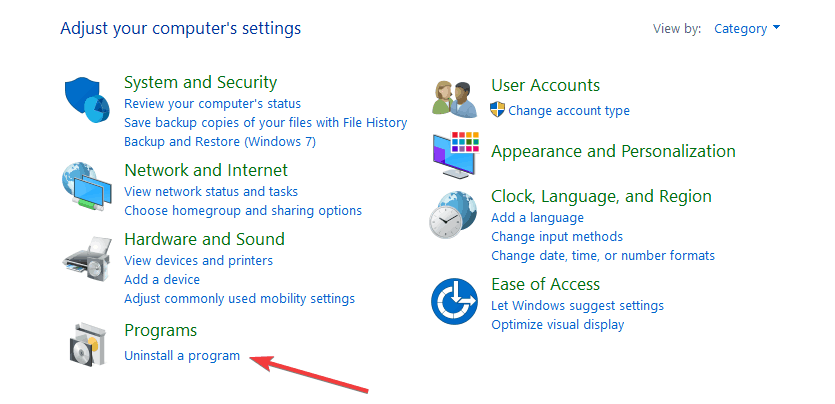
In the Windows Search bar, type Control and open Control Panel.
Choose Uninstall a program.
Right-click on Visual Studio and choose Uninstall/Change.
Try with your own product key. If the error appears, use the master key (YCFHQ-9DWCY-*****-*****-*****) which can be found online.
Click Activate and you’re good to go.
Even though this isn’t legal, as you already have the right key and have issues with it, this is a somewhat reasonable step to follow in order to activate the license.
Solution 2 – Integrate the product key into the setup.sdp file
Alternatively, instead of going for a product activation through the user interface, you can tweak the setup.sdp file and insert the master product key there. This should allow you to enter your personal product key later on and fix the issue in a seamless manner.
Here’s how to insert the master product key in the installation setup file:
Use an archiver to extract the Visual Studio ISO file.
Open the Setup.sdp file with any supported text editor.
Under the Product key heading, enter the aforementioned master product key (they differ depending on what version of the software you use).
Save changes, navigate to Control Panel > Uninstall a program, and choose to repair the application.
Solution 3 – Reinstall Visual Studio
Finally, if the master key workaround doesn’t work for you, we can only advise backing up everything and reinstalling Visual Studio. In addition, make sure to remove all previous versions of Visual Studio from the system, as their presence might cause activation issues.
With that said, we can conclude this article. In case you have any alternative solutions or questions, feel free to tell us in the comments section below. Furthermore, contacting Microsoft support is a good idea, as they usually should be able to deal with the product activation issues on their respective software suits.
Edge is one browser that includes a dark theme. That transforms Edge’s UI into a dark alternative. More and more publishers are adding similar dark modes to their software. A Chrome engineer has now effectively confirmed that Google plans to add dark mode support to its flagship browser for Windows 10.
The Chrome engineer Mr. Kasting confirmed on Reddit that Google plans to add a dark mode to Chrome. In a Reddit post, Mr. Kasting states, “For desktop, native dark mode support is in progress; in the meantime, we generally suggest people use a dark theme.”
That is not an official announcement, but Mr. Kasting has nevertheless confirmed that dark mode support for Chrome is in the pipeline.
Canary, an experimental version of Chrome, already includes a command flag that enables users to activate a dark theme for the browser. Users can activate the dark theme by entering a ‘–force-dark-mode’ command flag in the Target text box on the Canary Properties window. However, Chrome stable does not include any kind of dark mode flag.
Nevertheless, Chrome users can still add a dark mode to the browser with new themes. Morpheon Dark is one dark theme for the browser. Click the Add to Chrome button on the theme’s page to add Morpheon Dark to the browser.
That applies a dark style to Chrome’s tabs, URL toolbar and New Tab page as shown in the snapshot directly below.
To extend the dark theme, users can also add Dark Reader to Google Chrome. That extension adds a dark background to webpages open in the browser. Press the Add to Chrome button on the extension’s page to install Dark Reader.
When exactly Google will update Chrome to include a dark theme is somewhat unclear. Dark mode for macOS Chrome is expected to arrive in early 2019. However, it will probably take a little longer for Google to add dark mode to Windows Chrome.
The encoding issues with the likes of Chinese, Japanese, or Cyrillic are quite common. Some users were able to open text files containing Chinese characters without issues, but they seemingly got corrupted.
To avoid seeing a string of incoherent text, they had to perform some changes. We provided you with the steps on how to fix corrupt Chinese characters, below.
Solutions to fix corrupted email Chinese characters
There are two ways to resolve this. Firstly, we recommend changing the encoding to UTF-8 instead of whatever is the default setting. The alternative is to copy the content of the and place it into an HTML file. After that, open the file in the browser and change the encoding to get the proper version of the text.
In addition, you can use a third-party web service called Mandarine Tools to ‘decipher the corrupted characters into a Mandarin text. This tool can be found, here. The encoding is most likely the problem, as some services will provide you with alternative encoding while the only thing you need is the UTF-8.
With it enabled, you should have a simple time decoding Chinese characters without any problems. If you’re commonly using Chinese, in email clients or different applications, it’s recommended to change the encoding to the Universal UTF-8 in order to avoid further issues.
With that said, we can conclude this article. In case you have any questions or suggestions, do us a favor and post them in the comments section below.
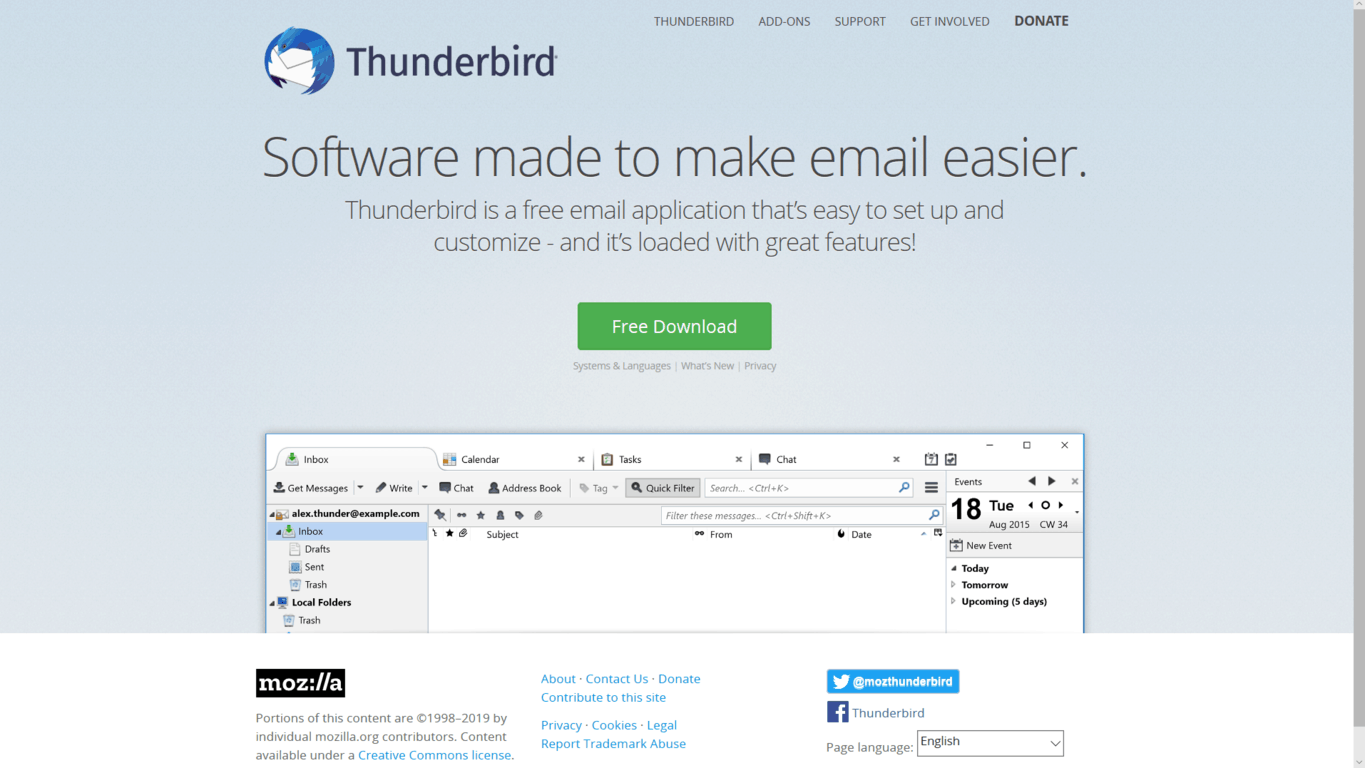
Mozilla’s Thunderbird email client is expected to get support for notifications natively in Windows 10, meaning that they will be logged into the Action Center for later viewing should they appear while the user is away. This also gives the user greater control over these notifications as well, as native support in Windows 10 also means they can be disabled automatically when Focus Assist is turned on.
Notifications in Windows 10 from the Access Center, accessible from the notification icon on the far right of the taskbar.
Thunderbird is Mozilla’s email client. It can serve as a great alternative to the Mail application pre-installed on Windows 10 devices, especially as it uses Mozilla’s reputable Gecko layout engine, which renders emails much better than what Word does in Mail.
Mozilla hasn’t given an timeline of when support for the Action Center be available, but the organization is also working on other ways to improve the email client, such as enhancing support for Gmail, overhauling UI elements such the application settings, and improving email encryption. Perhaps with enough improvement, Thunderbird could potentially regain the attention it once had before Google popularized webmail.
A lot of users are just unplugging the USB without disabling it first. Others will use this option to prevent possible USB drive or external HDD issues. However, some reported that Windows is unable to stop the device prompt appeared.
The error message states that the device is still in use and users should terminate programs that might be employing the USB. But this is easier said than done! Identifying the program and terminating it takes a great deal of effort.
So, we made sure to provide you with some solutions to the problem at hand.
What to do if Windows is unable to stop the device?
1. Check the background applications
When the error appears, close the dialog box.
In the Windows Search bar, type System Event, and open View event logs.
Under Summary of Administrative Events, expand Errors and Warnings, respectively, and check for EventID 225.
There you should find what exact application is using the USB Mass Storage and kill its process in the Task Manager.
As the Windows is unable to stop the device prompt itself points out, there seems to be a background process using the USB Mass Storage as you try to eject it.
Now, even though you’re quite sure that there are no background processes preventing ejection, it’s still advised to double-check in the Task Manager. Some applications will work in the background, even if they are seemingly closed.
In addition, if you’re a Windows 10 user, you can easily determine which process is using the USB Mass Storage with the System Event Log. System Event Log keeps track of all errors and prompts and provides a user with in-detail reports about errors.
2. Restart Explorer.exe
Right-click on the Taskbar and open Task Manager from the context menu.
In the Processes tab, scroll to the bottom, and you’ll find Windows Explorer.
Select it and then click on Restart.
If the issue is persistent even after you’ve killed the process, the problem might lie in the Explorer. Explorer.exe tends to prevent the USB Mass Storage from ejecting, as well.
3. Check for storage errors
Open either File Explorer or This PC.
Right-click on the affected USB Mass Storage drive and select Properties.
Go to Tools.
Under Error checking, click Check. The scanning process might take some time, based on the data size.
Another thing worth checking in order to avoid future issues is disc corruption. The system should offer you repairs the moment you plug the USB Mass Storage into a USB port.
If you’ve ignored it until now, we suggest using it to get rid of the Windows is unable to stop the device error. On the other hand, even if the system doesn’t recognize drive errors, you can scan for errors on your own or even use a disk repair tool.
In the Windows Search bar, type msconfig and openSystem Configuration.
Under the Services tab, check the Hide all Microsoft services box, and click Disable all to prevent all active third-party services from running.
Click OK to save the changes and try safely removing the USB Mass Media drive.
With the System Event Log, you should be able to identify the exact application which is using the USB Mass Storage. However, the easiest way (although a bit too restrictive for some) to resolve inflictions of background applications is by the Clean Boot sequence.
This procedure kills off all non-system services and it should resolve the Windows is unable to stop the device error so you can unplug your USB Mass Storage.
5. Format USB Mass Storage and start from a scratch
Finally, if you’re unable to resolve this issue with any of the previous steps, we suggest using a reliable backup tool to save the data and formatting your USB Mass Storage.
This might be a drag, especially if you have a ton of data to back up. However, this is the safest way to avoid further issues with that particular drive.
Despite the fact that digital assistants like Cortana and Alexa are more ubiquitous than ever, there are certain situations when talking to a machine can feel weird. This is especially true in public spaces, when you just want to fit in and avoid having strangers hear any personal information.
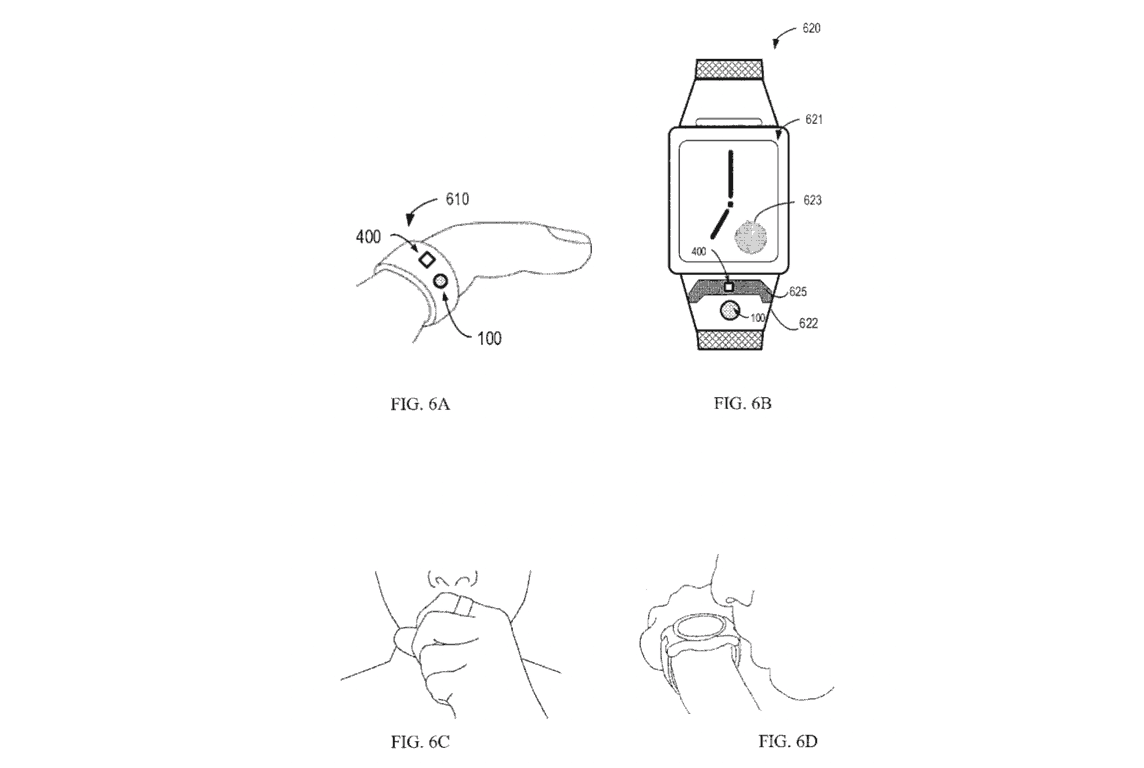
We’re now seeing connected speakers and PCs with far-field microphones that can catch your voice in very noisy environments, but these mics still don’t allow you to use voice commands without being noticed. Microsoft is apparently aware of this, a new patent spotted by Windows Central describes a “silent voice input” apparatus that could push voice recognition technology to the next level.
According to the patent description, the silent voice input module could be integrated into a cellphone or any other type of electronic device, including wearables. It would require users to put the module very close to the mouse before issuing voice commands, and Microsoft explains that users would also need to utter words with ingressive airflow instead of whispering.
Implementations of the subject matter described herein provide a silent voice input solution without being noticed by surroundings. Compared with conventional voice input solutions which are based on normal speech or whispering that use egressive (breathing-out) airflow while speaking, the proposed “silent” voice input method is performed by using opposite (ingressive or breathing-in) airflow while speaking. By placing the apparatus (e.g. microphone) of the apparatus very close to the user’s mouth with an small gap formed between the mouth and the apparatus, the proposed silent voice input solution can capture stable utterance signal with a very small voice leakage, and thereby allowing the user to use ultra-low volume speech input in public and mobile situations, without disturbing surrounding people. Besides of air flow direction (ingressive and egressive), all other utterance manners are same as our whispering, so that proposed method can be used without special practice.
It’s not clear is this “silent voice input” technology could really change how we interact with digital assistants, but as with most patents, it may not end in an actual product anytime soon. In the meantime, most users will probably continue to behave in public and continue to do things the old-school way. And as of today, it still often faster to use touch input than voice commands that don’t always get understood properly.
Deleted files in the Recycle Bin tend to pile up fast, especially if you’re not emptying it frequently. Restoring deleted files to their original location is rather simple, but what happens if you accidentally restore hundreds of files?
Can you undo restored files and delete them in batch or you’ll need to do it by hand, one-by-one? We answer below.
How to undo Restore All in Recycle Bin
Let’s say you want your files to stick in the Recycle Bin for some time in case you’ll need to keep them. And, when the need arises, you would want to restore deleted (or archived) files from the Recycle Bin. However, if you have tons of deleted files in the Recycle Bin, the last thing you want to do is restore them all.
And no, you won’t be able to undo the Restore All action and the only way to delete files again is one-by-one. Which is a ludicrous concept if you have hundreds or even thousands of files to deal with.
That’s the deal with this feature, it just doesn’t allow you to undo your error. Relying on system restore or File History won’t do you any favor, as the files restoration won’t be undone that way. This, sadly, means that you better start deleting those files manually as there’s no an easy way around it.
After you’ve done that, make sure to be more attentive next time you’re meddling with the Recycle Bin. Deleting files regularly (on weekly basis) would help you a lot next time this happens.
To learn more about this feature, we have a whole guide dedicated to Recycle Bin on Windows 10, so feel free to check it out.
We hope this was an informative read and make sure to leave your feedback in the comments section below.
HDD or SSD encryption is of utmost importance, especially for enterprises and professional users. Most people will go for the software solutions as they allow a better insight and additional layers of control over encrypted data and used protocols.
However, some users don’t deem it necessary and decided to use their SSD with built-in encryption. We explain how to do it below.
How to utilize built-in SSD encryption on PC
Some SSD drives come with the built-in hardware AES-256 encryption. Now, this built-in feature has a variety of software counterparts and, due to a few advantages, a lot of people will prioritize it over hardware encryption.
The problem is, although a lot of SSDs come with it, the fact that it’s not as simple to utilize it on an older motherboard. That in addition to lack of some features will push users to software-based solutions.
Now, even though hardware-based full-disk encryption (commonly referred to as FDE) is limiting in some regards, you still can take its full potential. And that’s full-disk AES-256 encryption. To activate this built-in function, you’ll only need to have a supported SSD ( OCZ, SanDisk, Samsung, Micron or Integral Memory) and a supported motherboard.
The procedure can also differ. Some devices will utilize software while others require for you to set up a BIOS password. Just boot into BIOS/UEFI and set a password. This will automatically trigger the hardware encryption.
HP users have had a hard time using the hardware encryption on Windows 10. Allegedly, the HP Client Security client doesn’t support Windows 10. If that’s the case with you, we’re afraid you’ll either need to use BitLocker or third-party encryption software in order to encrypt your SSD.
With that said, we can conclude this article. Make sure to tell us whether this was a helpful read in the comments section below. We look forward to your feedback.
Corrupt Default Domain Policy is something no one wants to see on the Windows Server. And most people are not stressed about it as they have made timely backups. But, if that’s not the case and you’re in dire need of a solution, we can recommend following the steps we listed below. Using this guide, you should be able to fix the corrupt Default Domain Policy.
How to repair corrupt Default Domain Policy
There are so many variables which might or might not invoke the corruption of the default Domain Policies. Most of the time, users change default policies directly instead of creating new ones.
This might lead to issues and the only two reliable ways we can suggest are either to restore a backup of the GPO or, in the absence of backups, use the Dcgpofix tool.
This tool should restore all settings to their default values, so make sure to inspect them and change them based on your needs later on. That’s of utmost importance, as this is the last-resort tool and it’s to be used in the disaster scenarios where you’re unable to fix the GPO. So, don’t forget to back up even the corrupt GPO as there’s always a chance something will go wrong.
If you’re not sure how to run this tool, here’s the step-by-step explanation you need to follow:
Open Command Prompt.
Run the following command and press Enter:
Dcgpofix /target:domain
Confirm selection and run the tool.
That should do it. In case you have any questions or suggestions, feel free to tell us in the comments section below.
Crystal Reports is a widely-acknowledged business intelligence application which uses data analysis to create in-depth reports. After that, users are able to access those files and compare them in order to improve productivity and efficiency.
However, some users were having a hard time accessing RPT files (Crystal Reportsextension) for various reasons. The most common reason is the corruption of Crystal Reports files. If you’re not sure how to fix corrupt Crystal Reports file, check out the solutions listed below.
Solutions to fix corrupted Crystal Reports files
Instead of wasting your time in trying to restore the rpt file, we rather suggest re-creating it again. There are, indeed, a few things you can try. Firstly, make sure that you have the current or newer Crystal Reports version based on the version you’ve used to create the RPT file.
Also, if you have used a third-party backup tool or the built-in File History tool, chances are you’ll be able to restore the original file without corruption.
Some users even suggest trying with an older version, if the report file is quite old. We can’t say with certainty whether this can fix a corrupt Crystal Reports RPT file, but it’s worth giving it a try. At least, if you can get your hands on an older iteration of the program. Furthermore, some users suggested reinstalling all associated software, which seemingly addressed the problem for some of them.
We can’t say with certainty whether this is the case or not, but it’s worth a try. Finally, you can also send an inquiry to the official support team and ask for a better insight. There are so many things which may lead to the file corruption, and it’s hard to determine what’s exactly the issue-starter.
Either way, don’t forget to try some of these instructions and tell us whether they helped you in the comments section below.
Happy New Year everyone! Hope all of you are enjoying all that the new year brings. For us here at OnMSFT.com, that’s quite a bit, as it turns out.
First, a bit of backstory: WinBeta.org, our predecessor until we changed our name some two years ago, for most of its tenure, and most of OnMSFT’s, was run by our Editor Emeritus Ron, who was passionate about both Microsoft and this site. In the past year or so, though, his available time to devote to OnMSFT diminished, and a few months ago he turned the reins over to me. In that time, though, the site didn’t get the attention it needed, and market forces have changed the landscape for consumer-centric Microsoft blogs.
So for the past month or so I’ve been preparing a cleanup of the site, including the WordPress code it runs on, the database that runs everything, and the services we use to get the results of our Microsoft enthusiasm out to you. Last night, I flipped the switch and moved our site from Rackspace, a premium host provider that was maybe a bit too rich for our needs, to a Virtual Machine running on Azure. As it turns out, the Azure VM boasts about the same specs as our old host, for about half the cost. I’ll be writing some more about Azure and the little guy as we move forward, but for now, it’s enough to say that we’re eating the dogfood.
Our next project will be to complete a new WordPress theme, as you may notice there are a few immediate changes, but most of the work was done on the back end to fix some problems, clean up some code, and make a new theme possible. You can think of this as a placeholder for now: we’ve stripped down the car, cut out the rust, sanded things down, and applied a coat of primer. A shiny new paint job is in the works, but all that prep work had to be done first, and here we are.
Luckily, we were able to accomplish this over the holiday break, when Redmond becomes a ghost town, and our readers spend more time setting up their new Surface or their new Xbox than they do reading about what’s coming next. But as soon as next week with CES, the news cycle is going to be ramping up again, and we can’t wait! It is going to be a big year for Microsoft, and by this time next year we’ll know a lot more about HoloLens, about Surface, about Windows and Cortana and Edge and, yes, about Azure.
Thanks for reading OnMSFT.com. Please be patient over the next couple of days as I work through some known issues, but feel free to leave a comment below on what you see, and especially what you’d like to see.
There has been some speculation that Microsoft is planning to launch a HoloLens 2 in 2019. That would be a successor to the current HoloLens mixed realityheadset. The Windows tipster WalkingCat has now spotted references in a HologramCompositor.dll DLL that highlights the next Windows 10 build version (19H1 update) will support HoloLens 2.
WalkingCat posted what he has spotted in HologramCompositor.dlls on his Twitter page. There WalkingCat states: “Now this in HologramCompositor.dll in 19H1: Output: Dummy, Output: Indirect, Output: Hololens and Output: Sydney.” Thus, that DLL contains a reference to Sydney, which is reputedly the codename for the upcoming HoloLens 2.
When is HoloLens 2 coming out?
Microsoft HoloLens 2 is slated for release in April 2019. So that might mean Windows 10 build version 1903 will support HoloLens 2 after Microsoft rolls out the 19H1 update. The Windows 10 19H1 Update will roll out sometime in spring 2019. April is the usual starting month for Microsoft’s springtime build updates.
Microsoft launched the original HoloLens headset in 2016. In April 2018, Microsoft stated that the headset had shifted about 50,000 units. That may not sound a lot, but the HoloLens was more of an experimental device for a niche VR market. Microsoft more recently received a $480 million contract from the Department of Defence for HoloLens headsets.
The software giant reaffirmed its commitment to mixed reality by stating: “Mixed reality is the future of computing, and Microsoft HoloLens is the future and present of mixed reality. Our commitment requires no roadmap.”
Now Microsoft is expected to release a HoloLens 2 in 2019. The rumor mill suggests that the HoloLens 2 might be based on a Qualcomm Snapdragon CPU. In addition, Microsoft’s next mixed realityheadset could incorporate an enhanced Kinect depth camera and holographic display. Although it will be the second HoloLens released, it is reputedly a third version of the headset as Microsoft skipped the release for version two.
If Windows 10 version 1903 does indeed support HoloLens 2 as the HologramCompositor.dll highlights, Microsoft might release its next mixed reality headset in quarter one of 2019. As such, the software giant could unveil the HoloLens 2 at its Build conference in May 2019.
RELATED STORIES TO CHECK OUT:
Snapdragon 1000 to power HoloLens v2 and Surface Phone
As 2018 is coming to a close, today is the perfect time to look back at everything Microsoft achieved and missed over the past 12 months. This year has been a very good one for Microsoft, and as of this writing the company remains the most valuable US company ahead of Apple. And even though Steve Ballmer’s Microsoft allowed Apple and Google to dominate the mobile market, Satya Nadella’s Microsoft is a completely different beast that managed to find a lot of other sources of growth.
Despite great financial results quarter after quarter, there has been some less shiny areas this year. I’ll do my best to highlight the good, the bad and the ugly for Microsoft in 2018.
If Office 365 remains a very important business for Microsoft, the company has continued to heavily promote its “Microsoft 365” offering this year. Microsoft 365 is a complete enterprise package that includes Windows 10, Office 365, and Enterprise Mobility + Security, and we should continue to hear a lot about it in 2019.
Microsoft Teams, the company’s Slack competitor, also reached new milestones this year. 329,000 organizations are now using Teams worldwide, including 87 of the Fortune 100 companies. According to a recent study from SpiceWorks, Microsoft Teams is expected to experience the biggest growth collaborative chat apps over the next two years.
Surface
Microsoft released several new Surface models this year including the affordable Surface Go, the Surface Pro 6 and the Surface Laptop 2. Since its launch back in August, the 10-inch Surface has already become the fourth most popular Surface device according to AdDuplex, right ahead of the Surface Pro 6.
Surface is now a billion dollar business for Microsoft, and the company also became one of the top five manufacturers of PCs in the US market this year. With the launch of new accessories like the Surface Headphones, Surface is slowly but surely becoming a lifestyle brand with premium products that can easily rival with Apple’s. When you remember that the first Surface device was launched only six years ago, that’s quite a big achievement.
Even though there is a lot to like about Surface devices, they also received criticism for being hard to repair, and the lack of USB-C ports on the Surface Pro 6 and Surface Laptop 2 is really hard to justify in 2018. Hopefully, this is something that Microsoft will finally address with the next generation.
Some great mobile apps
Windows Phone is still dead in 2018, but that’s not really a problem since Microsoft is now fully supporting iOS and Android devices. Android has obviously become Microsoft’s mobile OS of choice these days, and the company managed to create great synergies between Windows 10 PCs and Android phones thanks to apps like Your Phone and the Microsoft Launcher.
Microsoft Edge is another app that gets frequent updates on iOS and Android, and it has become a key part of the Microsoft ecosystem thanks to new features like Timeline integration. We’ll have more on Microsoft Edge below, but if you have yet to try Microsoft’s web browser on iOS and Android, you really should.
There are more and more synergies between Windows 10 PCs and Android phones.
Xbox
It will likely take years for Microsoft to fix the Xbox’s exclusive games problem, but the company proved this year that they’re finally ready to address this issue. The Redmond giant acquired several game studios this year including Playground Games (Forza Horizon 4), Undead Labs (State of Decay 2), Ninja Theory (Hellblade: Senua’s Sacrifice) and Obsidian Entertainment (Fallout: New Vegas). Let’s not forget about The Initiative, a brand new studio led by former Tomb Raider boss Darrell Gallagher who has been hiring top talent this year.
A lot of new exclusive games are hopefully in the pipeline, but in the meantime Xbox continues to lead on the services front. All first-party Microsoft Studios games are now available on day one on Xbox Game Pass, and the subscription service has also welcomed many great games from Bethesda, Square Enix, Capcom and more this year.
Whether you’ve been with us since the beginning or just joined, thanks for playing with us this year. Find your next favorite game in January! pic.twitter.com/Rm6kZRvFYM
Microsoft also pushed hard to make gaming more inclusive in 2018, starting with the Xbox Adaptive controller. Inspired by an internal hackathon, the accessible controller has been ranked one of the top inventions of 2018, and we hope that the video games industry will follow Microsoft’s lead in the near future
The botched releases of the Windows 10 April 2018 and October 2018 updates will definitely leave a mark. Microsoft having to pause the release of the October 2018 Update due to a file deletion bug was a quite PR disaster for the company, and hopefully a learning moment as well.
Despite having millions of beta testers in the Windows Insider program, there’s an ongoing feeling that the quality of major Windows 10 updates has been decreasing over the years. This has forced Microsoft to be more cautious during the rollout of the October 2018 Update, which as of this month may be running on less than 10% of Windows 10 PCs according to AdDuplex.
Microsoft Edge was supposed to be the company’s modern, lightweight browser that can finally replace Internet Explorer, but so far Windows 10 users have continued to prefer Google Chrome, Firefox, and other alternatives. The slow pace of updates has always been a big issue, but websites not being optimized for the EdgeHTML engine was an even bigger problem. Well, Microsoft has finally given up on EdgeHTML, and the company plans to launch a Chromium-based version of Edge next year that will also run on macOS and older versions of Windows.
This should be good news for Edge users, who will get a better browser that is compatible with all Chrome extensions, but it’s definitely not great news for the web. It was pretty bad when all websites were optimized for Internet Explorer, and we could soon end up in the same situation where Chromium and Google Chrome become the de-facto standard. Microsoft’s decision will leave Mozilla and its Quantum engine remain the last alternative to Chromium-based browsers and Apple’s Webkit-based Safari, and that’s not a great look for the web in general.
Always connected PCs
We’ve seen Microsoft’s OEM partners launch the first Windows 10 on ARM PCs this year, and the first generation has been quite disappointing. All these Qualcomm Snapdragon 835-powered (a smartphone chip) have been overpriced, offering disappointing performance when running emulated Win32 apps.
Things got slightly better with the second generation devices using the more powerful Qualcomm Snapdragon 845 chip, but Windows 10 on ARM PCs still don’t offer a good enough price/performance ratio for most consumers. Things should change once developers start to compile their apps for the ARM64 architecture, and hopefully we’ll see Google Chrome and other browsers run natively on Windows 10 on ARM next year. In the meantime, you should probably keep your money and wait for new models powered by Qualcomm’s upcoming 8cx chip.
Microsoft let its OEM partners lead the charge this year, but we’re waiting to see the company launch its first Windows 10 on ARM Surface device. Intel reportedly blocked an ARM-based Surface Go this year, but it’s probably a good thing that Microsoft avoided another Surface RT situation with a compromised product.
The first generation Windows 10 on ARM PCs have been a real disappointment.
The ugly
The Microsoft Store and UWP/PWA Apps
After all these years, the Microsoft Store is still in pretty bad shape. Quality apps and games are still hard to find, and the overall experience hasn’t really improved since 2015. As of today, the Microsoft Store app often struggles to download big apps and games, and like many other UWP apps, it can feel pretty slow to use.
With app developers neglecting Microsoft’s UWP platform, the company was expected to fill the app gap on the Microsoft Store by automatically adding Progressive Web Apps (PWAs) using the Bing crawler. However, this didn’t really happen this year: So far, Twitter seems to be the only developer that cares about PWAs, though the Twitter PWA probably isn’t as good as other third-party clients.
Ironically, the best apps you can find on the Microsoft Store today are bridged desktop apps like iTunes, Spotify or Microsoft’s own Office desktop apps. Earlier this year, the company announced that it was halting work on its Office Mobile UWP apps, which probably tells a lot about the general disinterest for the UWP platform.
Cortana
At this point, Cortana has pretty become the new Windows Phone. The digital assistant still has its fans, but it’s being ignored by most consumers, developers, and Microsoft. Despite launching in 2014, Cortana is currently only available in 13 regions worldwide, and the Cortana mobile app is still pretty much a US/UK affair. This is a big missed opportunity for Microsoft, and it’s almost like the digital assistant has been PC-focused for too long.
While Amazon and Google have released many smart appliances over the years, we’ve only seen Cortana show up on the Harman Kardon Invoke speaker and the GLAS smart thermostat. We doubt that other manufacturers will consider integrating Cortana into their products in the future, and they really don’t have to: Microsoft teamed up with Amazon to integrate Cortana with Alexa, and Amazon’s digital assistant is now available on Windows 10 PCs as well as Xbox One consoles.
Microsoft really accomplished a lot this year overall, even though from a consumer point of view, it can look like Windows 10, Cortana and other products are fading in the background. It’s true that Windows isn’t as important as it was 10 years ago, but the company still cares a lot about software. Because Redmond now makes its own hardware, the company can’t afford to stop innovating on the software front.
2019 should be an even more interesting year for Microsoft fans thanks to new Surface and Xbox hardware, a new Hololens headset, and maybe a Windows-based foldable mobile device. There’s also Project xCloud, the company’s new game streaming service that will work on all devices, including phones and tablets. Last but not least, after the company acquired LinkedIn and GitHub, we can’t wait to see what will be Microsoft’s next big acquisition. See you in 2019 for even more Microsoft news!
Corrupted user profiles are quite an issue for all IT administrators. Citrix profile corruption issues require advanced troubleshooting skills. And all system servers come with so many variables it’s hard to find a universal solution for every affected user.
We noted below some excerpts from the official support forum in order to help you. Albeit, the best way to find your way around the constant corruption of Citrix profiles is to send your logs to a support.
How to fix corrupt Citrix profile
A corrupted profile is never a good news for a digital workspace administrator. And not that common even, considering Citrix is quite a reliable service. However, that doesn’t mean that it’s not a possibility.
If that happens, we suggest inspecting the group policy and the netuser.dat file. The most prominent reason for issues like these is a corruption of the said file, especially occurring if the user’s PC shuts down before the DAT file is written.
If the file is only partially written over UPM, the profile will get corrupted and issues will emerge. The problem mostly appears to bother users with UPM (Universal Password Manager). When that happens, whether you’re using XenDesktop or VM, you’ll need to look into logs to find out what’s causing the problem at hand.
The problem is seemingly also connected to a Windows version discrepancy when using roaming and UPM profiles. In all regards, we suggest obtaining logs and sharing them with the support officials. This might require some advanced knowledge in order to determine why some profiles work fine while others get corruption on daily basis.
In case you’re unable to fix the issue, deleting the profile and re-establishing it again might resolve all issues. With that said, we can conclude this article.
Hopefully, we shed some light to this. The problem consists of so many variables that there’s no such thing as a universal solution.
Bitdefender has always been a top service for when it comes to protection against the various threats that surface online, but offline as well. As we advance and technology gets a more center stage role in our lives, so do the methods through which we can be attacked increase in potency.
What this all means is that hackers and antivirus developers step up their game concomitantly, so it’s always a very sensitive battle. That’s why it’s important to have the newest and most powerful security solution and for Bitdefender fans and users, that’s Bitdefender 2019.
Interested in what the 2019 version has in store for users that want to know why they should upgrade? Let’s take a look and see what’s cooking over at Bitdefender. It sure smells like high-end security.
The top features taking the spotlight in Bitdefender 2019:
Advanced Threat Defense
This feature allows the antivirus to scan your computer but also to keep a watchful eye on any services and processes going on that just seem fishy. If something is suspicious or out of place, Bitdefender will bust that intruder and debunk any scheme that a wishful thinking hacker might have thought up.
Webcam Protection
One of the nastiest ways in which your personal information can leak is through webcams. Wrongdoers have learned how to manipulate unsuspecting victim’s webcams from a distance a long time ago. With the new webcam protection feature, however, your webcam is as safe as ever.
If you’re worried about webcam protection, you can buy the Huawei Matebook X Pro laptop that features a pop-up webcam for extra security.
Safe files (for Mac or Windows)
The feature is available on both Mac and Windows and it allows the user to protect their data. The mode allows data only to be accessed by trusted software. This is great against security threats like ransomware, which is becoming a very concern factor.
Firewall and Parental control
The new Bitdefender is ideal for both keeping threats out and keeping kids from accessing things they shouldn’t. Children are the most vulnerable in the online space, and keeping them safe is a tricky business. That’s why this highly efficient software is needed.
Download BitDefender 2019 for free
If you would like to download BitDefender 2019 for free, you have to be aware that the single way to do this is through a free trial offer. If you like the product, you will keep using it, if now, you’re free to find something else. But since this is considered to be the best antivirus in 2019 that you can get, I doubt that you’ll find something better. So here are the download links:
There’s nothing worse for a Minecraft player than for his long-developed world to have corrupted chunks. This is, luckily, not as common, especially if you stick to the vanilla version.
Though chunk corruption happens more often, and it’s usually followed by game crashing. So, here we are with the ways to find and fix corrupted chunks in Minecraft.
How do I fix a corrupted chunk in Minecraft?
1. Erase the corrupted chunks
If you don’t have any saves, you can erase the corrupted chunks and allow Minecraft to regenerate them. This would be instant in most cases.
Of course, if you’ve built something there, we’re afraid it will be gone afterward. So, you might want to consider the next option in this case.
2. Use a dedicated tool
For users who get a corrupted region chunk in the Minecraft world, the best way to deal with it is by using one of the numerous third-party tools. You can either load the previous backed-up version and fix those affected chunks in no time.
The best tools you can use to fix corrupted chunks in Minecraft are:
Another thing you should consider is disabling mods, as some of them might be the reason for the corruption in the first place. Remember, this helps prevent future corruption of chunks in Minecraft, but won’t fix the current ones.
In addition, if you’re loading a newer world with an outdated client, corruption is almost imminent.
While you can delete the chunk manually by using the correct coordinates, and it just re-explores him later, the most reliable way is to stick with the MCEdit tool. Just run it, and you’ll see all modded blocks causing the chunk corruption.
Working with any file, including the HTML, requires timely backups. Some users got themselves in a tricky position as the files got corrupted for some reason. If the HTML file is corrupted, you must repair it.
If we’re not looking at the encoding error, there’s hardly anything you can do. However, if the encoding made the text all scrambled, we have a quick solution to get things up and running.
How do I fix a corrupt HTML file?
Tip
The chances that your HTML file will get corrupted are pretty low. Still, it’s always suggested to create multiple backups of all your projects and save them in different locations. There’s only a slight chance you’ll be able to recover corrupted HTML files if they’re not properly saved.
Using Notepad
Open the document and cycle through all available encoding schemes until you find the one which fits the current scheme.
If that doesn’t help, you can use (if available) the File History feature. This way, you can restore an older version of the HTML file before the corruption occurs.
When facing the problem, you can utilize some tools within the editing tools (Notepad ++ or Microsoft Word) to try and fix the corruption. Though, we won’t hold our hopes high!
In addition, sometimes the tool won’t be able to decode the character if you’ve copy-pasted special characters or concatenated (linked) two different encoding schemes.
If that doesn’t help, start over, and don’t forget to back up your files timely to avoid data loss in the future and eliminate the need to repair a corrupt HTML file.