Far Cry 2 originally came out on the Xbox 360 back in 2010 and is now playable on both the Xbox 360 and Xbox One due to its new backwards compatibility. The game takes, what has since become, the popular video game franchise to Africa and boasts the large open-world play area that fans have come to expect.
WRC 6 FIA World Rally launched on the Xbox One in 2017 and is a racing game that supports local and online matches for up to eight players.
New games are made available to Xbox Live Gold subscribers to claim at the beginning and around the middle of each month. The 2D platformer, Celeste, is also currently available to grab until January 31st. Both Far Cry 2 and WRC 6 FIA World Rally Championship will remain listed until mid-February.
Are you excited to play Far Cry 2 and WRC 6 FIA World Rally Championship? Let us know which one you’ll be playing this month in the comments below and then follow us on Pinterest for more Xbox gaming content.
Skype is a product developed for voice and video calls and chat. You can use it on computers, tablets, smartphones and smartwatches, even the Xbox One console. Through Skype, you can send and receive images, text and video files.
First released in 2003, Skype was bought in 2011 by Microsoft. And shortly after the purchase, Skype was integrated with Microsoft products. Furthermore, Microsoft suspended two previous products (Windows Live Messenger and Lync) and started recommending Skype.
In 2016, Microsoft released build 14342 for Windows 10, that included a new updated Skype UWP Preview. The highlight of this update was the ability to set up a dark theme. This mode was enabled when the settings were made within the operating system’s theme.
But there was no option to enable or disable the dark mode just for Skype. Recently in 2018, Microsoft released a new version of the tool, Skype version 8. With this update, Microsoft added a dedicated dark theme for Skype.
Steps to change Skype theme on Windows 10
1. Select your profile picture or the three dots on the right.
2. Select Settings and then Appearance. You can access the Themes menu directly from the main Skype screen, by using Ctrl+T keyboard shortcut.
3. Select Light or Dark from Modes. And from Color, you can choose a different appearance.
The settings take effect the moment you set the theme (color, modes, accessible modes). To restore the settings, you can easily use the button Reverse top right.
Useful tips for Skype users
Use Ctrl + comma – to open the Settings menu.
From Calling menu, you can select showing subtitles for voice and video calls.
Click on Advanced to set up “Answer incoming calls automatically”.
From the Messaging menu, you can adjust the text size or set up the folder where you save the file that you receive. If you are during an audio or video call, select the + button to turn subtitles on.
Alt+V – to open the View menu to Zoom in/ Zoom out
Ctrl + N- to open a new chat window
Ctrl + Alt + M – to reveal the microphone status during a call and Ctrl + Shift + Alt + K – for video status during a call.
A new idea of the Microsoft’s foldable Surface phone has been revealed by a popular YouTube channel called ConceptCreator. Codenamed Andromeda, Microsoft is reportedly working on this elusive smartphone for many years.
The handset follows a clamshell design, and there are no buttons on it. The concocted design can be folded into a complete tablet.
The users will be seeing a lot of similarities in the smartphone to the established line of Surface devices. It is also expected to have a stylus that is almost similar to the one users found on Surface Laptop and Surface Pro.
Microsoft has not made any official statement regarding the product, so it is just a matter of time to see that to what extent these predictions are true.
The news about the mysterious Andromeda foldable device first surfaced in July last year. The smartphone/tablet hybrid becomes a phone by folding into half. At the same time, it also provides the functionality of the tablet by folding out.
The tech giant is also reported to be experimenting with ARM processors, but it is yet to be revealed whether the final device will have Qualcomm or Intel processors.
Will Microsoft win the foldable smartphone war?
Microsoft has expended its ecosystem and diversified its business with its evolution from a software company into a hardware one. During the last quarter, the commercial cloud business has recently observed a 47% rise annually with the addition of more consumers and companies to the ecosystem. The investors can take advantage of the situation by keeping a track of the recent launches in 2019.
The recent reports revealed that the leading smartphone companies Apple, LG, and Huawei are also working on the foldable handsets. These smartphones are expected to hit the stores in the next two or three years.
We can predict from these major developments that the future of smartphones is undeniably going to be foldable. The various patents logged by Microsoft were used by this YouTube channel to create a three-dimensional model of the phone.
With this new product category, it is the perfect time for Microsoft to beat its rivals with its Surface brand.
SharePoint is a go-to collaborative tool for so many different enterprises. It greatly supplements Windows Server and makes the organization workflow simple.
Even though licensing should be a simple task, some governing users weren’t able to license their SharePoint and were stopped by the “This product key cannot be used to convert SharePoint Server Trial” error.
How to upgrade SharePoint from Trial to Licensed version
Microsoft SharePoint is one of those collaborative intranet tools which uses a subscription-based plan. However, older iterations of SharePoint, just like Microsoft Office, required one-time purchase licensing in order to use them. Users could go with the Trial version for the limited period and after that had to upgrade to a licensed version.
This should be a walk in a park as long as you have a proper license. Just access the central administration menu and open Upgrade and Migration. Once there, just enter the product key and wait for some time until the activation completes. The server must be online and this action won’t cause any downtime.
On the other hand, if you’re met with the “This product key cannot be used to convert SharePoint Server Trial” error, try again and look for improvements.
You can also test the activation process by using an Enterprise Trial key and then try upgrading the product with the purchased one afterward. The Enterprise Trial key differs based on the version of SharePoint you’re running.
If you’re still stuck with the error at hand, make sure to contact Microsoft Support and ask for the resolution. These issues are luckily not as common so we’re sure they’ll resolve it in no time. That’s a wrap. Don’t forget to post your two cents in the comments section below.
In a post on LinkedIn, Microsoft President Brad Smith takes stock of the issues that faced the tech industry in 2018 and looks ahead listing the top 10 issues that the tech industry will need to address for 2019. Here’s a look at the top 10 tech issues and developments to look out for in 2019, as referenced by Microsoft’s Smith:
PRIVACY
DISINFORMATION
PROTECTIONISM IN THE PACIFIC
DIGITAL DIPLOMACY
ETHICS CHALLENGES FOR AI
AI AND THE ECONOMY
THE PEOPLE SIDE OF TECHNOLOGY
RURAL BROADBAND
SOVEREIGNTY, HUMAN RIGHTS AND THE CLOUD
TECH GROWTH AND COMMUNITIES
While Smith’s top 10 list is far from the only important issues tech faces, it doesn’t offer solutions. This list could easily be a list of required courses for a degree in Digital Business Management. It seems as if there is a new privacy leak or issue on an almost daily basis. Recently, Amazon and Ring doorbells are once such alarming privacy example.
Artificial intelligence and machine learning are just beginning to show what they can do to reap benefits for the technology world. With and without proper governance by the tech industry of these technologies, AI, machine learning, and other emerging technologies can bring big positives as well as unforeseen negatives on people and the world as a whole.
BuildFeed is a popular 3rd party Twitter account and website that does one thing, scours the internet (we think, or who-knows-where) for the latest Microsoft build numbers. These largely unreleased build numbers don’t have much if any other information about them, but it can be an interesting source of conjecture as to the next Windows Insider or Xbox Insider build number, for example, and can sometimes shed some new light as to what’s going on behind closed doors at Microsoft.
Over the weekend, BuildFeed has posted a number of new numbers with some interesting new information. For the first time to our knowledge, has included some builds marked with OneCore and WCOS, the Windows Core Operating System naming that Microsoft is reportedly working on to power “Andromeda,” or what at one time was known as Surface Phone, the Surface Hub 2, possibly HoloLens v2, and perhaps a lot more.
BuildFeed has also recently posted some other interesting info, along with what appear to be old build numbers, perhaps newly captured, including a build referring to “shell devices foldable,” a 19H1 version, and even something called “rs_fun_pkg”
Having these builds show up on BuildFeed is interesting, but it may not be much more than that. For one thing, we don’t have any reliable information as to the source of these posted build numbers, it could be that BuildFeed has just gained new access to what internally is an ongoing series of OneCore and other builds (and we suspect this is the case). Still, having the builds in the 19H1 numbering sequence is noteworthy, and expectations are to hear a lot more about OneCore in the coming year. Whether this is just a peek through a keyhole or an important new development is unclear at this point, but we’ll be keeping a close watch on BuildFeed and beyond, so stay tuned to OnMSFT.com.
Microsoft is coming back to the Bett 2019 education conference in London next week, where the company will showcase its latest tools for empowering students and educators. Before the first sessions kick off on Wednesday, January 23, the Redmond giant will publish a special Bett episode of its “What’s New in EDU” video series on January 22.
“Microsoft, as a worldwide partner of Bett, will be hosting a wide array of sessions and hands-on demonstrations on the show floor, along with inspirational talks to support educators looking for new ways to engage and empower their students,” the Microsoft Education team explained today. You’ll be able to watch the different livestream events using the links below:
Windows 7 was introduced to the world in January of 2009, the successor to a fairly disastrous Windows Vista release, and over time became a favorite of enterprise and consumers alike for its fresh new look and no-nonsense approach. Vista had unleashed a number of problems to the Windows ecosystem, including an overbearing User Account Control (UAC) that had users needing to elevate security privileges for just about everything, a focus on new hardware that left a lot of legacy hardware without working device drivers, and mainly because of those two issues, a bad reputation among Windows users and the tech press.
Microsoft moved Steven Sinofsky from Office to “get the trains running on time,” which he largely did, fixing most of the problems of Vista, re-focusing the marketing on Windows 7 as something new and different, as opposed to Windows Vista R2, which is what it really was.
But time moves on, and after Sinofsky created a debacle of his own with Windows 8, and another reset, Microsoft has settled on Windows 10. In one year from today, Microsoft will end free support for Windows 7, with any enterprise stragglers needing to pay to continue to get security updates. Mary Jo Foley has all the details on what that support will look like after January 14, 2020, but for most consumer users, and a large swath of business users, the option to continue support by finally moving to Windows 10 may make the most sense.
We put up a poll on Twitter this morning, asking for your favorite operating system, and early results in this decidedly Windows Insider-centric crowd has Windows 10 leading by a large margin, but with Windows 7 at a solid #2:
Poll: What's your favorite Windows? Not so much what you're using now, but which one did/do you enjoy the most?
Were you a Windows 7 fan? Are you hanging on still, like some 11% of our readers using Windows are? Is it time to say goodbye to Windows 7 and look toward the next big thing? Let us know in the comments below.
There’s hardly anything worse than an error pop appearing on a basic plug-and-play USB device. And, in my experience, this tends to happen even with mice or keyboards, external hard drives and a plethora of other devices. The device isn’t recognized or the “Windows has stopped this device because it has reported problems” suddenly appears.
A headache to say the least. The infamous Error Code 43 is almost certainly a driver issue and thus the resolution is quite simple. Check it out below.
How to fix device error code 43 on Windows 10/8.1/7
As you’re probably aware, the “Windows has stopped this device because it has reported problems” comes with the Error Code 43. The reason for such occurrence mostly lies in faulty drivers. However, for starters, unplug your device and plug it in again. If that doesn’t help, we suggest rebooting your PC and looking for changes.
Test out device or navigate to Device Manager and look for Device Status under Properties. Just right-click on the Start menu and open Device Manager. Right-click on the affected device and open Properties. There you should see whether the Error Code 43 is still at hand or the issue is gone.
If this won’t work, we’ll obviously need to move to drivers as they’re the probable cause of the device malfunction.
Solution 2 – Reinstall drivers (disable network)
If you’re experiencing the Error Code 43 with GPU or Network adapter, we suggest moving to the solution 3 right away. On the other hand, if we’re looking at the malfunctioning USB device, you can try this out first.
The Windows Update feature provides users with drivers automatically, as soon as the system boots for the first time. However, these are not always the best-fitted drivers, even though they are seemingly latest versions.
What you can do is uninstall the driver and disable network. This will prevent Windows Update from installing the nonfunctional version and the driver will be installed from a local source.
This worked for me on multiple occasions, especially on Windows 7. Here’s what you need to do:
Right-click on Start and open Device Manager (or search for Device Manager in the Search bar).
Right-click on the affected device and choose Uninstall device.
Unplug the device, disable network temporarily, and restart your PC.
Plug in the device and wait for the system to install its driver.
Solution 3 – Install official drivers
Finally, if you’re still stuck with the Error Code 43, we suggest navigating to an official support website and downloading official drivers digitally assigned to your device. This is of utmost importance for users who are unable to get Display adapters working. Once you’ve got the official driver, install it and reboot your PC.
The error should be resolved and your device ready to use. With that said, we can wrap this up. Don’t forget to share your thoughts with us. We look forward to alternative solutions or questions, and you can post them in the comments section below.
If you’ve dealt with Windows Loader, we can safely assume your tech guys are pirating the OS. There’s no other need to use this tool except for the activation for Windows.
We don’t support pirating Windows. Besides intellectual property theft, it might result in lots of issues, like Windows loader unsupported partition table error on Windows 7, and deprive you of valuable updates.
What is an unsupported partition table error in Windows Loader?
Windows Loader is a common tool that is a part of MSToolkit software specifically made to activate Microsoft products, like Windows or Microsoft Office. It basically uses a string of BIOS-emulating actions to ‘trick’ Windows into activating.
However, some users who tried to run it were met with the Unsupported partition table error. This means WAT (Windows Activation Technology) detected it and prevented it from executing.
Below are some of the other potential causes of this issue:
Pirated Windows version – If you pirated Windows 7 to avoid activation, you are likely to get this error message. And that’s hardly uncommon, as a lot of users got used to some of the third-party tools to avoid Windows Activation or apply license keys.
Corrupted partition drive – In some cases, this issue might not just be down to pirating Windows 7 alone. It can also be caused by issues with the partition drive.
Disk format is not supported – At times, you can get this error because your disk format is not supported. This is especially through if your disk is formatted in NTFS and ReFS, which is not supported in older operating systems like Windows 7.
How do I fix the Windows Loader unsupported partition table error?
We won’t provide you with any links, but since you have gotten this error, you probably know about the RemoveWAT tool.
While this tool, will help you clear this error message, it is highly suspicious, and we do not support its activities.
There is always a possible malware presence in all those pre-activated Windows 7 variations circulating online. Add possible system corruption after update installation, and you’ll think twice before going for it.
With that in mind, most software pirates will install a standard version, skip the activation, and use either Windows Loader or RemoveWAT tools to activate Windows 7.
Keep in mind that these tools are usually full of adware and come from suspicious sources, to say the least. With this tool, you should be able to activate Windows 7. Again, there’s a good chance that something will go wrong, so act of your own volition.
Welcome back to our Windows 10 news recap, where we go over the top stories of the past week in the world of Microsoft’s flagship operating system.
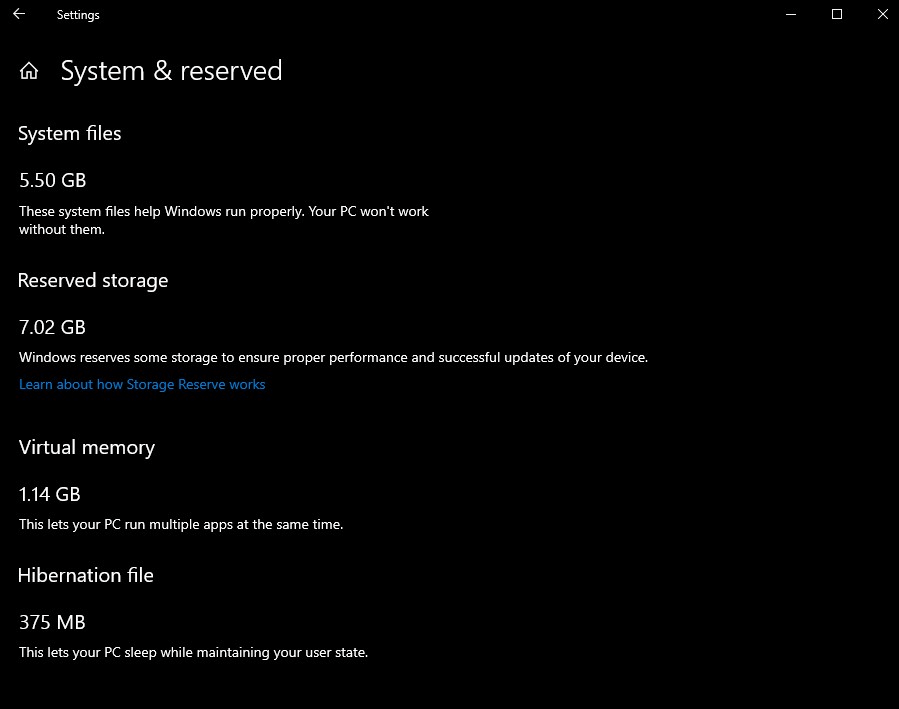
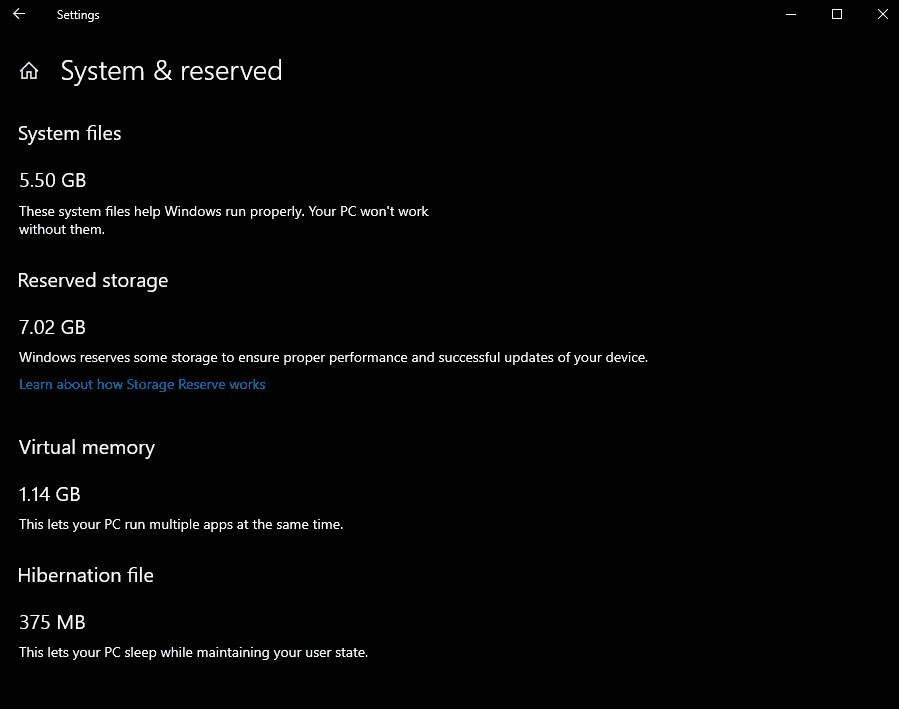
Windows 10 version 1903 to reserve 7GB of disk space for updates
From version 1903, Windows 10 will begin reserving 7GB of disk space to use for future updates. The aim behind the disk space reservation is to reduce the number of issues during the update process and helps alleviate some users having to free up disk space themselves before updating.
Samsung announced two new Windows 10 laptops at CES 2019
At CES 2019, Samsung has unveiled its 2019 lineup of devices, which includes two new Windows 10 laptops, the Samsung Notebook 9 Pro and the Samsung Notebook Flash, an Always Connected PC.
Firefox nightly builds are now available for Windows 10 on ARM
Mozilla is working on bringing Firefox to Windows 10 on ARM, with its ARM64 version being available as a nightly release, though users should expect bugs as these versions have not gone through automated testing like regular releases.
CES 2019: Asus unveils Surface Pro-like ROG Mothership gaming PC
Alongside Samsung, Asus has also unveiled its latest devices at CES 2019. Asus came in with its new Surface Pro-like gaming PC, the ROG Mothership. It offers a 17.3-inch display, a kickstand, and a detachable keyboard with wireless operation.
That’s it for this week. We’ll be back next week with more Windows 10 news!
Microsoft Management Console is a vital part of Windows and is used to access system and storage tools, along with making critical changes to the PC. However, many users reported getting the mmc.exe Application Error when opening the Device Manager or other tools linked to it.
This makes users tricky since they cannot update the drivers, manage the disks, enable/disable services, or sometimes even check the error logs in Windows. So, let’s walk you through the underlying triggers and the solutions that worked for others.
What causes the MMC.exe Application error?
Here are a few reasons you might be getting the error:
Corrupt system files: When the system files are corrupt, you are likely to come across The program mmc.exe stopped interacting with Windows and was closed message, along with other errors.
Issues with the disk: Even problems with the disk that render vital files unaccessible could trigger the error.
Missing permissions: Users require a range of permissions to access several built-in tools, and if these are not granted, you might get the mmc.exe Application Error.
How can I fix MMC.exe error?
Before we head to the slightly complex solutions, here are a few quick ones to try:
Restart the computer. This should always be the primary approach when troubleshooting an error on any device.
Check for Windows updates and install any that are pending.
If you have third-party antivirus installed, disable it, and check whether the problem is fixed. In case it does the trick, we recommend you switch to a more reliable and Windows-friendly antivirus.
Make sure you are logged in with an administrator account. Some apps won’t run unless users have administrative privileges.
If none work, move to the fixes listed next.
1. Launch the app from an elevated Command Prompt
Press Windows + S to open Search, type Command Prompt, and click on the relevant search result.
Now, type one of the following commands and hit Enter to open the linked utility:
Device Manager: devgmgmt.msc
Local Group Policy Editor: gpedit.msc
Event Viewer: eventvwr
Task Scheduler: taskschd.msc
Disk Management:diskmgmt.msc
If you can’t open Device Manager and get mmc.exe Application Error, try opening the desired utility from the Command Prompt.
2. Run the DISM, SFC, and Check Disk scans
Press Windows + R to open Run, type cmd, and hit Ctrl + Shift + Enter.
Click Yes in the UAC prompt.
Paste the following commands individually and hit Enter after each to run the DISM tool:DISM /Online /Cleanup-Image /CheckHealthDISM /Online /Cleanup-Image /ScanHealthDISM /Online /Cleanup-Image /RestoreHealth
Next, run the following command to perform an SFC scan:sfc /scannow
Now, execute the following command to run the Check Disk utility:chkdsk /r
When asked to schedule a scan, press Y, then hit Enter, and finally, restart the computer.
Running the DISM tool, SFC scan, and Check Disk utility helps fix issues with Windows installation, repairs corrupt system files, and tries to reduce the damage caused by bad sectors respectively.
Run all three in the same sequence, restart the computer once done, and check whether the mmc.exe Application Error is fixed.
3. Modify the Local Security Policy
Press Windows + R to open Run, type secpol.msc, and click OK.
Expand Local Policies in the navigation pane, select Security Options under it, and then double-click on User Account Control: Run all administrators in Admin Approval Mode to open its Properties.
Select Disabled, and then click on Apply and OK to save the changes.
Press Windows + S to open Search, type Change User Account Control settings, and click on the relevant result.
Drag the slider to the bottom, i.e., Never notify, and then click OK to save the changes.
Click Yes in the prompt to confirm the change.
In some cases, it was problems with the UAC (User Account Control) settings that triggered the mmc.exe Application Error and prevented any of the linked consoles from running. Make sure you use this as a temporary measure and revert UAC settings to their previous configuration.
5. Repair Microsoft Visual C++ Redistributable
Press Windows + R to open Run, type appwiz.cpl in the text field, and click OK.
Now, locate all Microsoft Visual C++ Redistributable entries, select them individually, and click on Change.
Now, click Repair.
Wait for the process to complete.
6. Uninstall the recent Windows update
Press Windows + I to open Settings, and click on Update & Security.
Click on View update history on the right.
Now, click on Uninstall updates.
Select the last installed update after the error first appeared, and click Uninstall.
Click Yes in the confirmation prompt.
Restart the computer once done for the changes to come into effect.
For many users who reported that mmc.exe Application Error started appearing after an update, removing the latest version and reverting to the previous stable one did the trick. An OS update can often mess up the PC, and uninstalling the update is the best way to go.
7. Perform an in-place upgrade
Go to Microsoft’s official website, and click on the Download tool now button to get the Media Creation Tool for Windows 10.
Once downloaded, run the setup, and click Yes in the prompt.
Wait for the setup to ready things.
Click Accept to agree to the license terms and conditions.
Select Upgrade this PC now, and click on Next to continue.
Wait for the download to complete and follow the on-screen instructions to complete the process.
If nothing previously worked, an in-place upgrade can be used as a last resort to fix the mmc.exe Applications Error. It will replace all corrupt files and eliminate other issues triggering the error, though your files and apps remain safe.
While it’s usually easier to share photos and videos of your products with others through popular social networking sites like Facebook or LinkedIn, your creation still needs a special place such as a dedicated website. But it can be challenging to design a product prototype that’s optimized for a website. Many professionals resort to mockup tools to meet that challenge, one of which is Mockuuups Studio.
The program is a drag-and-drop tool for Windows and Mac computers users can create app previews and marketing materials with.
Create mockups with Mockuuups Studio for Windows
With Mockuuups Studio, you will be able to make a product mockup. You can then use this mockup to display your design on multiple devices including PCs, tablets, smartphones or smartwatches. If you have not undergone a proper training in graphic design before, there is nothing to worry about as the tool requires no advanced design skills.
Also, Mockuuups Studio does not need you to have advanced Photoshop skills, either. Simply import your screenshots to the program and choose from more than 250 mockups which are grouped according to their type and function. You must double-click a certain image to get a larger view of it and export the mockup in its original or standard resolution.
How it works
The program automatically crops and rotates the file you imported to suit the mockup templates. Mockuuups Studio then displays your product mockup in large thumbnails for preview. Mockuuups Studio also lets you sort the list according to device, image content, and orientation.
You can get 22 templates free of charge once you download the software. The free templates are designed for select devices and orientation such as iPhones, watches, and a landscape orientation.
The tool is also free to use for personal purposes, though you can’t use its full suite of features. A premium version is available for $9 per month. You can download the Windows version of Mockuuups Studio now.
UPDATE: Mockuuups Studio now offers you over 300 templates that you can choose from. We’re sure you’ll find the right templates for your marketing needs.
There is also a Mac version available just in case you’re working on a team-based project and some of your colleagues use a different OS.
Red Dead Redemption 2 released its own version of battle royale yesterday on Xbox One. As noted in a post on the Rockstar Games’ blog, a new Red Dead Redemption 2 Online Beta update introduced “Gun Rush,” its own version of battle royale, along with a few other bug fixes and performance updates.
Gun Rush puts “your survival instincts to the test, gathering weapons and ammunition while the play area shrinks in this new mode for up to 32 players. Available to play now in Free-for-all and Team variations, where the last one standing wins.”
Rockstar promises more updates are on the way, including new Races and Showdown Modes, as well as new weapons, clothing, emotes, and new missions available to build on your character’s story. Rockstar used player feedback to come up with other Red Dead Redemption 2 Online Beta gameplay refinements:
Daily Challenges: Tackle new challenges each day covering every aspect of the game, from sharpshooting to evading the law.
Law and Bounty Upgrades: Some changes are coming to the way the Law and Bounty systems work in Red Dead Online to reduce the enticements for griefing. Soon, players will get a bounty for committing crimes and will be incentivized to pay them off within an allotted time. Wait too long and bounty hunters from each of the states will track the player forcing them to either pay up or escape.
Parley Changes: We’re making the Parley system easier to trigger so that you can avoid aggressive players more quickly. In addition, it will be easier to trigger Feuds, Posse Feuds and Leader Feuds to take on attacking players in structured competition.
Proximity-Based Player Blips: Player location blips will soon appear only over short distances, reducing the range at which you are visible to others, decreasing the likelihood of being targeted by another player across large areas.
Right now, Xbox One players can use the Red Chestnut Arabian Horse, Alligator Skin Ranch Cutter Saddle, and the High Roller Double-Action Revolver in the Red Dead Online Beta. Give Rockstar feedback on any in-game bugs, issues or features you would like to see in a future Red Dead Redemption 2 Online Beta content update.
Ever since Microsoft discontinued its efforts on its Windows 10 Mobile platform, many former users have moved to other platforms, namely iPhone and Android. Because of this, Microsoft has refocused its efforts to these systems, building new apps to bring their ecosystem to those platforms.
Over time, Microsoft pushed out what used to be Windows 10 Mobile exclusives, including Edge and Cortana, over to the iOS and Android platforms. While the company isn’t leaving the many proud iPhone users out of the equation given its releases of Edge and Cortana for that platform, it’s clear Android users will be able to make themselves feel even more at home to Microsoft’s services. This is because the company can virtually bake its services into those phones by installing a simple app: Microsoft Launcher.
Originally known as Arrow Launcher, the home screen app started as a Microsoft Garage project and has since been rebranded to become the central hub for users to use Bing, Cortana, and Microsoft News. Microsoft has taken features in Windows 10, such as Cortana, Timeline, more recently Sticky Notes, and brought them to Android thanks to this one app. Below are some of likely the most useful features you get with Microsoft Launcher over the stock version that likely comes with your phone.
Timeline—syncing activities between devices
Timeline first came to Windows 10 in the April 2018 Update as a way for users to easily jump from one PC to the next by syncing recently viewed activities. These include webpages in Edge as well as documents in Word, PowerPoint, and Excel, which are synced between devices in a single view. However, the feature became available to those on Android devices thanks to Microsoft Launcher’s 5.0 update, giving users a chronological list of activities browsed on Edge for Android as well as Office documents.
In Microsoft Launcher, activities are listed in a chronological list order, with the most recent being on top. Assuming your privacy settings allow this, the activities include Edge history from both your phone as well as what where you’ve been to on your PC.
Timeline can be accessed by swiping to the right in Microsoft Launcher.
I find this to be very useful, because often, I close tabs unintentionally, and Timeline is a very easy way to re-access the webpages I was on before. As a writer, I also find it handy that I can access a source article on my phone as well, and then quickly access the same link on my PC when I begin writing.
While certainly an interesting feature, many users are likely skeptical about it given its nature on user privacy. For this to work, Microsoft must sync all of the user’s activity of those supported apps and store them in the cloud, then redistribute the data onto other devices. It’s not a big issue for me as I am not big on privacy myself, but I can understand where the concerned people come from.
Cortana—your virtual assistant from Microsoft
Cortana is the assistant that comes on Windows 10 PCs and Xbox One consoles, although it was first released for the Windows Phone 8.1 platform to compete with the likes of Siri on iPhones. Microsoft Launcher includes integration with that same assistant, which can be accessed from the microphone icon either on the search bar or the Cortana card.
The Cortana card can display quick info, which she gathers from the system, including unread text messages, upcoming reminders, tracking info. She is especially useful because of her integration with Microsoft’s services, including Outlook, To-Dos, Bing, and Translator. She’s very basic if you use her though the Microsoft Launcher, however there is a dedicated app on the Google Play Store, which can additionally play music, and manage devices such as the Xbox or the Surface Headphones we recently reviewed.
Adding a reminder from Cortana also adds it to the Tasks list in Microsoft Launcher.
While I don’t use Cortana very often, I do find it to be useful when I ask her to add an entry to my to-do list, so that I can access the list later from the Tasks card. And speaking of cards…
Glance screen—a customizable list of pinned cards and widgets
Most Android phones come with a left home screen with Google search and news. Apple devices show a customizable list of widgets, and even the OnePlus 6T lets you choose between a Google Search screen or a widgets list. Microsoft takes all this a step further by putting it all on a single glance screen, complete with info cards, widgets, news, and the Timeline history.
Cards are Launcher’s built-in information widgets, useful for displaying many different things, such as sticky notes, recent messages and emails, calendar, tasks, screen time, contacts, and recently opened documents and apps, just to name a few. And of course, if the cards aren’t enough, you can also add any Android widget to the list, which are fully customizable in height to suit the user’s preference.
Glance Screen as seen on the left, which is fully customizable as seen on the right.
I am a big fan of the vertical list of widgets. It’s how information should be sorted. Windows Phone and iOS got this right, with both platforms sorting tiles and widgets (respectively) in this order. On an Android phone, someone with a lot of widgets would have to use multiple home pages to sort all of this info, and resorting can also take extra time. Putting all of it in a vertical list makes it easier to access the info on one scrollable screen and saves me a lot of time rearranging the widgets if I want to remove one or add another.
Microsoft Launcher still has its fair share of issues
I really do enjoy using Microsoft Launcher. But there are a few issues that cause me to scratch the back of my head. For one, the expandable dock at the bottom is buggy. Rearranging icons can cause icons to mistakenly duplicate and track over each other, adding to frustration when the intention is to swap one app for another.
I would also like to see Microsoft expand the gesture settings a little bit. Right now, I’m using my phone’s home button to access the app drawer, reserving the upwards swipe for accessing the expanded dock. But I think it might be slightly more intuitive if I could set a slight swipe up to expand the dock, with a longer swipe opening the app drawer. Something similar is already incorporated into the Google Pixel’s new navigation introduced in Android Pie, where a slight swipe up brings up the recent apps and the dock, while moving the finger all the way up opens the app drawer.
Other than that, Microsoft has done an excellent job at bringing its ecosystem to Android devices, giving users quick access to Cortana and the company’s other services with just the one app. Adding the additional apps like the Edge browser, Outlook, OneNote, To-Do and the countless others makes for a terrific Windows Phone alternative. Why not try it for yourself?
Since Microsoft’s has discontinued its Kinect 2.0 for the Xbox One, the company has been trying to replace the intuitive Kinect voice commands by launching Xbox skills for Cortana and Alexa. Unfortunately, voice commands through these digital assistants has never been as good and intuitive as the original Kinect voice commands, but Microsoft is apparently working on a fix.
As reported by Windows Central today, it seems that Microsoft has quietly upgraded the Xbox voice commands on the Cortana-powered Harman Kardon Invoke speaker, as well as Amazon’s Echo speakers with Alexa. If you own one of these devices, you can now use more natural voice commands like “Hey Cortana, launch Netflix” or “Hey Cortana, go Home” to interact wit your Xbox One. Previously, you need to formulate your voice commands like “Hey Cortana, tell Xbox to…” for the console to respond, which was a bit cumbersome.
Invoke + Xbox integration got an update today. It's so much faster now, and doesn't require you to say "on Xbox" for it to function. Now works like if you were using Kinect natively for voice commands. It's AWESOME pic.twitter.com/i31dpeUR8F
For now, these more intuitive voice commands seem to be restricted to connect speakers, and they’re not working yet on the Cortana and Alexa mobile apps. Microsoft is still selling the Harman Kardon Invoke on its online store for $49.95, though the device is still exclusive to the US. Amazon Echo products are available in many more markets, though be aware that the Xbox skill for Alexa is currently only available in the US and in beta in the UK.
Halo 5: Guardians is now free to play on Xbox One consoles for gamers with an active Xbox Live Gold membership. The full game can be downloaded and played from the Microsoft Store and all progress and Achievements will save to the cloud and carry over to a purchased version of the game should players choose to buy it at a later date.
This free period for Halo 5: Guardians will remain active until the end of this weekend, on Sunday night. It should be noted that Halo 5: Guardians is also currently free to play for Xbox Game Pass subscribers and that those who use Microsoft’s game subscription service will continue to be able to play it for free after this weekend is finished.
Halo 5: Guardians is the most-recent entry in the main Halo video game series. Its sequel, Halo Infinite is currently in development. Not much is known about Halo Infinite beyond the new visual style glimpsed in its initial teaser video, the fact that it will include microtransactions, and that it will be made with esports in mind. It’s officially been announced to launch on Windows 10 and Xbox One though a release on Microsoft’s next Xbox console could be a possibility depending on how long development takes.
Microsoft has released the first Windows 10 build preview of 2019. The Windows 10 Insider Preview Build 18312 shows us a few more new things that the 19H1 update will add to the platform. The latest 19H1 update preview introduces new reserved storage and modified UI design for the Reset this PC window among other refinements.
The reserved storage is the most notable new feature the 18312 preview build includes. It reserves, or allocates, storage for updates, apps, caches, and temporary files.
That will ensure users don’t need to manually free up hard drive storage space for new updates as temporary OS files in reserved storage get automatically erased. The default value for reserved storage will probably be about seven GB.
Note, however, that Microsoft is only including reserved storage on devices that come with Windows 10 version 1903 pre-installed. At the moment, Windows Insider Program users also need to modify the registry with the Registry Editor to enable reserved storage. Microsoft’s Windows Insider Feedback Hub provides more details on how users can enable reserved storage.
The Reset this PC window, with which users can reset Win 10, has a modified UI design in the latest preview build. Microsoft has not drastically redesigned the Reset this PC window.
However, Microsoft’s 18312 blog post states that, “The new UI provides a more consistent experience across devices with different configurations and requires fewer clicks to complete.”
Windows Subsystem for Linux is a Windows 10 utility that enables users to quickly install and run Linux distros. Microsoft has also confirmed that the WSL includes new consolidated command-line options in the latest 18312 build preview. Now WSL users can utilize the ‘– import’ and ‘– export’ options to import tar file and export distributions to tar files.
Previous Windows 10 preview builds for the 19H1 update have also shown that version 1903 will include a new Game bar gallery, revamped system light theme, sandbox mode, search index settings, and more besides.
Windows Sandbox is one of the more notable new additions to version 1903 that enables users to run programs within an “isolated, temporary desktop environment.” The new Game bar gallery enables users to look through captured snapshots and videos within games and share the content on Twitter.
Microsoft has not yet confirmed any release date for the 19H1 update. However, the company usually rolls out the spring updates in April. Version 1903 will be the seventh build version of Windows 10 when it rolls out.
Do you own a Lenovo computer? Are you experiencing Bitlocker recovery issues? Maybe a better way to formulate the second question is this: ‘How long have you been experiencing Bitlocker issues on Lenovo Ideapad laptops for?’
Although there hasn’t been much media coverage of this topic, thousands of users are still affected by this problem.
What’s up with these Lenovo Bitlocker issues?
First of all, judging by user reports, it seems that this problem often affect Lenovo IdeaPad 100S laptops. Long story short, after installing new updates, users are constantly getting Bitlocker blue screen of death errors asking them to enter the recovery key. This happens even if users haven’t set up a recovery key.
Who to blame?
Technical issues do occur sometimes due to hardware and software incompatibility problems, incorrect settings or other specific causes. Identifying the exact root-cause of the problem and developing a permanent solution or a hotfix is of paramount importance.
Unfortunately, in this Lenovo-Bitlocker case, things are a bit complicated. Both companies blame each other for this problem. Microsoft says this is an issue for Lenovo to sort out and the other way around. This only adds up to user frustration.
My Lenovo 100s got a Microsoft update on 2/11/18. Since restarting I get the bitlocker blue screen asking me to enter the recovery. I never set one up, was never asked to set one up, so don’t have one. Been backwards and forwards with Lenovo, who say they are working on the problem and have now said it is a problem for Microsoft to sort out. Contacted Microsoft who have said it is a hardware problem for Lenovo to sort.
What causes this problem?
As users already pointed out, Lenovo Ideapad 100S does not have a TPM chip installed. Moreover, the hard drive is not partitioned and there is no separate boot option. As such, the device does not meet the criteria for Bitlocker to be enabled.
What does Lenovo customer support say about the Bitlocker issue? Lenovo support agents already advised users to wait on a Microsoft hotfix for this problem.
How do I fix Lenovo IdeaPad 100S Bitlocker issues?
A potential solution to fix this problem is to complete deplete your battery and then run recovery media. Here are the steps to follow as sent to one user who requested technical support:
A resolution for your Bitlocker issue may be to run recovery media after your devices battery has been drained.
Please spend the next few days draining this battery as you see fit.
In the meantime please create yourself a Recovery Media using the below steps (on a separate device);
Here is the link of the Microsoft page. And the direct link for the tool.
(Follow the steps on the first link to create an installation media on a USB drive) When this is created and the battery is completely empty please follow these steps to run this.
Please do ensure that your device is fully drained of power and that you start this process as soon as you place the device on charge to provide power.
We’ll keep an eye on this Microsoft-Lenovo ping-pong dialogue and update this post as soon as new information is available.
The newest Patch Tuesdayupdate for Windows 10 v1803 bears the code name KB4480966. This is a security-focused patch that adds a series of improvements and fixes to various Windows OS components such as PowerShell, the Edge browser, Microsoft Virtualization and more.
For more information about the complete changelog, you can check out Microsoft’s official update page.
Unfortunately, this patch also brings quite a few issues of its own. There are already four known issues listed on the support page. Unfortunately, the list of potential bugs does not end here.
In this quick report, we’ll list all the known issues affecting KB4480966, as well as some of the most common bugs reported by users. In this way, you’ll know what to expect. Let’s dive right in.
KB4480966 known issues
After you install the August Preview of Quality Rollup or September 11, 2018 .NET Framework update, instantiation of SqlConnection can throw an exception. Microsoft is working on a fix. If we’re lucky, we might get it with the upcoming Patch Tuesday edition.
Some users cannot pin a web link on the Start menu or the taskbar. Again, the big M is working on a fix.
The cluster service may fail to start with the error “2245 (NERR_PasswordTooShort)” if the Group Policy “Minimum Password Length” is configured with greater than 14 characters. As a workaround, you can set the domain default “Minimum Password Length” policy to less than or equal to 14 characters.
Third-party applications may have difficulty authenticating hotspots. The good news is that a hotfix is scheduled for release in mid-January.
And now, let’s see what issues users have reported so far.
KB4480966 reported bugs
Windows DLL file flagged as malware
Some anti-malware tools may flag d2d1.dll as being a Trojan agent.
If you’re getting similar alerts –irrespective of the anti-malware solution that you’re using — rest assured, there is nothing to worry about. This is a false positive. D2d1.dll is a legit Windows system file. Most likely, the DLL has been modified in the update. As a result, the new version does not appear in some security software databases trigerring this Trojan alert.
Error 0x80070057
Some system may fail to recognize this update if installed manually. Consequently, the respective PCs may throw error 0x80070057, as this user reports.
Cumulative Update for Windows 10 Version 1803 for x64-based Systems (KB4480966) – Error 0x80070057
I have manually updated but the updater doesn’t recognize the manual update. I really do not want to manually update my pc for every subsequent update. Why is this not recognizing the manual update or actually updating?
Database format unrecognized
This is an issue that’s affecting all the January 2019 Patch Tuesday updates, irrespective of the OS version that you’re running.
I have many sites using my VB6 app that uses MDBs. Since Windows update KB 4480966 was rolled out yesterday they are all getting an “unrecognizable database format” error at various parts of my program. It can load the database for some parts of the program but not others presumably based on the different tables being accessed.
As a workaround, you can simply uninstall the update and reinstall it after Microsoft has deployed a permanent fix for this issue.
Update error 0x800f080d
Quite a few users could not install KB4480966 due to error code 0x800f080d.
So i’ve been trying to troubleshoot this using the troubleshooting section of my settings and I can’t seem to figure it out. My error code is 0x800f080d, and the update I’m trying to download is (KB4480966).
While we don’t have a specific solution for this problem, you may try to use the troubleshooting methods available in the guides below. Maybe some of them will work for you.
These are some of the most common KB4480966 bugs. If you encountered other errors or problems after installing this update, let us know in the comments below.
The winter holiday season is over and Microsoft is back in business. The IT giant has recently rolled the January 2019 Patch Tuesday updates, adding two important security improvements to all Windows 10 versions.
If you go to Windows Update and hit the ‘Check for updates’ button, you’ll find the following patches:
KB4480116 for Windows 10 version 1809 and Windows Server 2019
KB4480966 for Windows 10 version 1803
KB4480978 for Windows 10 version 1709
KB4480973 for Windows 10 version 1703
KB4480961 for Windows 10 version 1607 and Windows Server 2016
Basically, these five updates pack the same fixes and improvements. Namely, they:
Address a security vulnerability in session isolation that affects PowerShell remote endpoints. By default, PowerShell remoting only works with administrator accounts, but can be configured to work with non-administrator accounts. Starting with this release, you cannot configure PowerShell remote endpoints to work with non-administrator accounts. When attempting to use a non-administrator account, the following error will appear: “New-PSSession: [computerName] Connecting to remote server localhost failed with the following error message: The WSMan service could not launch a host process to process the given request. Make sure the WSMan provider host server and proxy are properly registered. For more information, see the about_Remote_Troubleshooting Help topic.”
Add security updates to Microsoft Edge, Internet Explorer, Windows App Platform and Frameworks, Windows MSXML, Windows Kernel, Windows Storage and Filesystems, Windows Wireless Networking, Microsoft JET Database Engine, Windows Linux, Windows Virtualization, and the Microsoft Scripting Engine.
Apart from these two improvements, Windows 10 v1809 KB4480116 also fixes the issue where using esentutl /p to repair a corrupt Extensible Storage Engine (ESE) database results in a mostly empty database. As a result, the ESE database get corrupted and cannot be mounted.
It is worth mentioning that Windows 10 v1607 KB4480961 also addresses an issue that may sometimes prevent the cluster service from starting if the Group Policy “Minimum Password Length” is configured with greater than 14 characters. When this issue occurs, your computer will display error 2245 (NERR_PasswordTooShort)”.
You can automatically download and install the Windows 10 Patch Tuesday updates via Windows Update. If you want to download the stand-alone update package, you can go to Microsoft Update Catalog. Enter the KB number that you want to install and then hit the download button.
Yesterday, we reported about the Invalid Handle errors that Windows 7 users got after installing the January 2019 Patch Tuesday updates. As a quick reminder, apart from the invalid handle problem, some users encountered additional issues, including: SMBv2 sharing issues and database errors.
Microsoft confirms bugs in KB4480970
Well, following the wave of user complaints, the Redmond giant has officially acknowledged that KB4480970 is indeed causing three really annoying issues.
1. Network interface controller won’t work
Microsoft explains that after you apply this update, the network interface controller may stop working on some client software configurations. This occurs because of an issue related to a missing file, oem<number>.inf. The exact problematic configurations are currently unknown.
2. Error 0xc004f200
In some cases, this update may trigger KMS Activation error,“Not Genuine” 0xc004f200.
3. Windows Server 2008 remote access issues
And the third problem officially acknowledged by Microsoft concerns access shares on Windows Server 2008. Mores specifically, local users who are part of the local “Administrators“ group may not be able to remotely access shares on Windows Server 2008 R2 and Windows 7 machines after installing the January 8th, 2019 security updates. This does not affect domain accounts in the local “Administrators” group.
How to fix KB4480970 issues
Microsoft was kind enough to also post some workarounds for two of the bugs listed above. Unfortunately, there is no workaround available for error 0xc004f200 but Microsoft said its engineers are investigating the issue.
Fix network interface controller issues
Launch devmgmt.msc to locate the network device.
Go to the Action menu > click Scan for Hardware Changes to rediscover the NIC and install drivers.
You can also install the drivers for the network device by right-clicking the device and choosing Update. Select Search automatically for updated driver software or Browse my computer for driver software.
This quick workaround should solve the problem.
How to fix Windows Server 2008 issues
Microsoft recommends to use either a local account that is not part of the local “Administrators” group or any domain user (including domain administrators).
Of course, if nothing worked, you can simply uninstall the update.
Mojang, the studio that develops Minecraft and is owned by Microsoft, wants to celebrate 2019 by seeing what builders create in 2019. This also celebrates the recent release of version 1.9, the second of the Village and Pillage updates, the latest of which adds bamboo, scaffolding, pandas, and new cats.
To make things even sweeter (not that they could be when you have pandas), the company is going to put its favorite creations to be featured on its website at Minecraft.net. The site has been needing a makeover now that the year is new, especially seeing as how the screenshots used are, well, from last year. So now’s your chance as a Minecraft fan to show the world what you really know how to build something great!
To help you and others get familiar with the new items, the developers are also giving players a few tips to get started.
Bamboo, the panda’s favorite food and hiding place, can be a great plant for your garden. That is, if you can handle its incredibly fast growth rate. In addition to its usefulness in foodmaking, it can also look really nice as decoration if you combine them with flowers here and there.
The new scaffolding blocks are, in a sense, like elevators, except more natural and better for the environment. That’s because it allows the user to move up and down tall structures without the risk of fall damage. And what’s more, if you don’t need them anymore, just break the block at the bottom and all of the ones at the top will come falling down.
The developers are also encouraging use of blocks from previous version as well, such as the coral blocks and dried kelp from the Update Aquatic version. What do you plan on building? Feel free to share below.
Windows’ default app settings decide which apps launch automatically when you open a file or perform certain tasks. Out of the box, Windows will use its built-in apps, so you’ll get Microsoft Edge for web browsing, the Mail app for email and Photos for image viewing. These options can be changed though, letting you ensure tasks are always completed using your favourite apps.
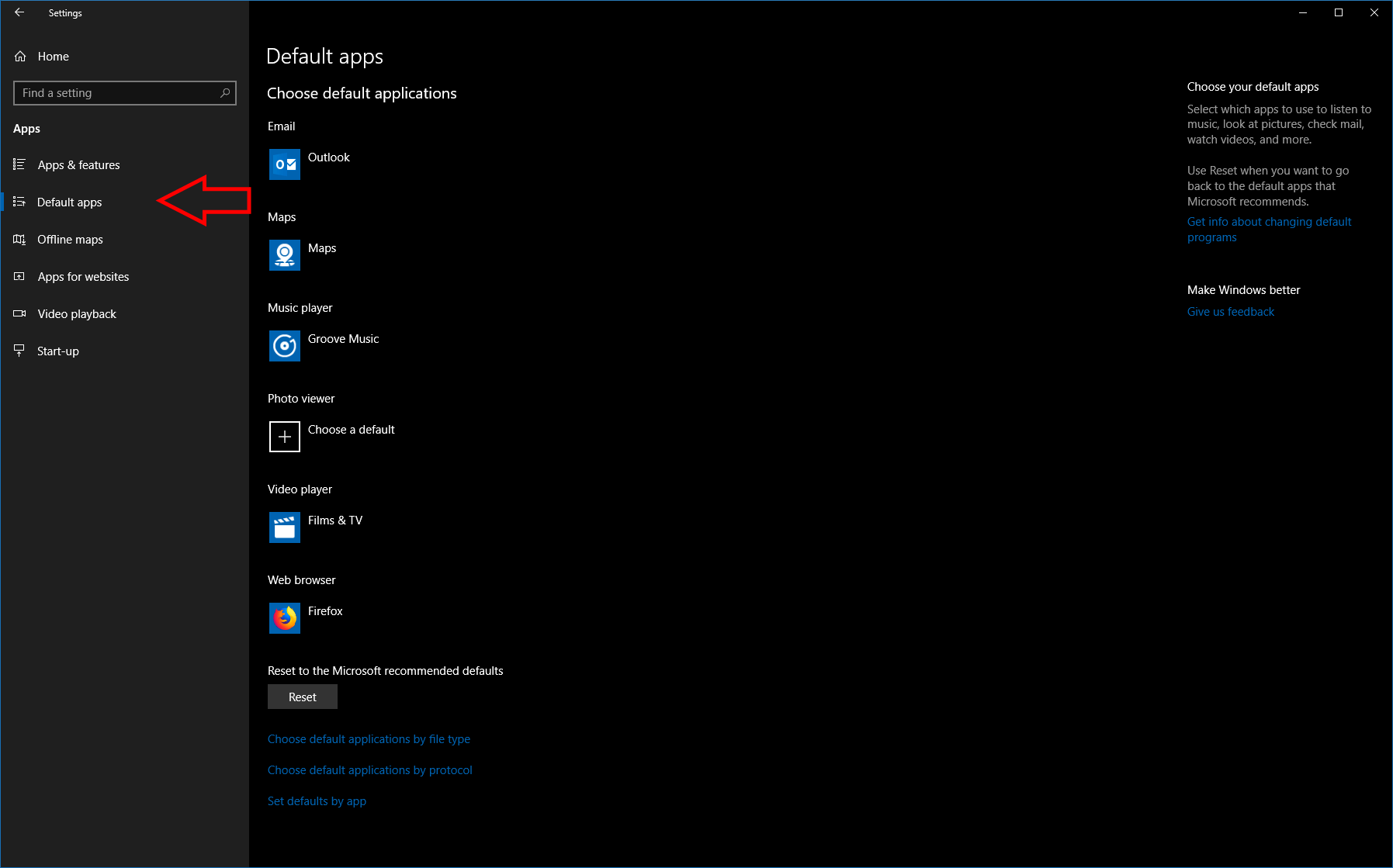
Once you’ve installed your desired apps, head to the Settings app to start changing your default applications. Click the “Apps” category from the homepage and then navigate to the “Default apps” page within the section that opens.
At the top of the page, you can select your default app for each of six common tasks – email, maps, music, photos, videos and web browsing. The currently configured app is shown by default. To make a change, click the app’s name.
A menu will appear showing all the installed apps associated with the task category – media players will be offered for the “music player” category, while email clients will be shown for “Email.” Click the app you want to use as your default to configure it.
The impact of the change will vary depending on the app category. In general, default apps will be used when an app needs to be opened by the system or another program. For example, the default web browser will open links you click in your email app, while the default email client is the one that will draft new messages when you click an email address on a webpage.
You can get more fine-grained control over your default apps using the three links at the bottom of the page. The first two, “Choose default applications by file type” and “Choose default applications by protocol,” give you granular control over the circumstances in which an app should be considered the default.
If you want Microsoft Photos to be your default photos app, but need JPEG files to always open in Adobe Photoshop, you can configure this with a file type association. Find the “.jpeg” file extension in the “Choose default applications by file type” list and click the displayed app name to change the default.
Finally, the bottom-most link, “Set defaults by app,” displays a list of all your installed apps. Clicking an app and then pressing the “Manage” button will reveal a list of all the file types and protocols that it can act as the default for. This gives you a simple way to make an app the default for all the file types it supports.
It’s worth noting that you’ll generally only need the main “Default apps” page in settings, unless you’re an advanced user looking for more precise control. Many program installers let you register new apps as defaults for their category or file types during setup, so look carefully for these options when you add new software. If you want to change these defaults later, or reverse an unintended change made by a program installer, just head back to the “Default apps” page in Settings.
The developer of the popular third-party YouTube app, yTube, has released a statement which has been shared on Reddit. In it, he goes over what has been improved in the latest app update, which went live today, and also shares his plans for yTube going into 2019 on Xbox One, Windows 10, and Windows 10 Mobile.
Of particular note is mention of Version 4.0 which is currently expect to launch in at least beta by March this year. Here’s the complete statement:
All Platforms
Seeking forward in long videos is now significantly faster! When you jump to the 30 minute mark in a video, playback will resume in less than 10 seconds on the average connection. This has been a problem in myTube for a very long time, and the solution was fairly complicated to implement, but I’m happy I’ve finally been able to work this out for you guys!
There have been lots of tiny design changes throughout the app. For instance, the notification you clicked on to bring this message up has been completely changed. Comments have been redesigned as well, and there are many other subtle changes to make things look a little cleaner.
This update fixes a bug where videos weren’t being added to your watch history, as well a bug where videos couldn’t be removed from watch later. This update also fixes a bug where the video player UI would sometimes go into a false “buffering” state even though the video was playing.
PC & Mobile
It’s now possible to create offline playlists for your saved videos! Just click “Add to” on any of your saved playlists and click “New” to make a new playlist; you’ll have the option to make it an offline playlist. Then you can add any of your saved videos to that playlist ?
A new acceleration curve has been added when seeking using touch. This should make it easier to seek to precise timestamps in long videos using touch.
The system media controls that appear when you press the volume button now linger after a video/audio has ended. So if the song you were listening to in the background ended, you can just bring up the controls and hit play to repeat the song, no need to re-open the app anymore.
On PC specifically, you can now press up and down to select search suggestions while typing into the search box. You can now also seek to specific points in a video by pressing the numbers on your keyboard.
Xbox
The default playback controls have been changed slightly. Seeking has been moved from the right stick to the triggers. Changing playback speed has been asigned to up/down on the right stick.
Don’t like these changes to the playback controls? Now you have the ability to change them to whatever you want! Playback controls can now be mapped to your liking to the two bumpers, two triggers and all 4 directions on right stick! You can assign play/pause toggle, manual seeking, seek by 10 seconds, playback speed, and frame-by-frame to these controls. You can map the controls from the playback section of the app’s settings, or by pressing the Menu button on the controller while playing a video.
That’s it!
That’s the most important stuff from this update, but there were a lot of other small changes that you can see in the changelog using the link below (thank you Arlo, the creator of “myTube! Companion,” for building me a new changelog page).
Enjoy the update!
Cheers, Chris
Hi everyone,
I’ve had a small tradition with myTube’s development process since 2014. When myTube reached version 1.5 nearly 5 years ago, I started working on myTube 2.0. Then when version 2.5 came, I started work on myTube 3.0. Today we hit version 3.5, and the tradition will continue with myTube 4.0 in 2019!
While 2.0 and 3.0 were completely rebuilt from scratch, that won’t be the case for 4.0. Instead, I’ll be taking the current app and overhauling it from the inside out. Hopefully that means development won’t take a whole year this time, but no promises haha. At the very least, you can expect 4.0 to be available in beta by early March!
There’s a lot of stuff I have planned that I want to tell you guys about, but I won’t spoil the surprises until later. As with 3.0, I’ll be keeping you up to date on 4.0’s development progress with occasional messages ?
Windows 10 includes plenty of Microsoft services. Those are basically small programs that provide a specific OS service. Some of those services are essential to Windows 10, but there are less essential services that users can turn off if they don’t need them.
Windows 10 services consume system resources just like third-party software. Users can see services’ system resource consumption on Task Manager’s Processes tab (shown directly below). They don’t usually hog as much RAM as third-party software. However, there are still numerous superfluous Windows 10 services that waste system resources.
Players often close third-party software before running games, but might sometimes overlook Windows 10 services. Yet, turning Win 10 services off can also free up more RAM for gaming. So it’s worth turning off some services before launching a game. These are some of the superfluous Windows 10 services players can disable for gaming.
What Windows 10 services can I disable for gaming?
Print Spooler
The Printer Spooler stores multiple print jobs within a queue. Thus, this service is essential for printing. However, users who don’t have printers can certainly turn this service off. Users with printers can at least temporarily disable the Printer Spooler before playing a game, and then turn it back on later.
Windows Insider Service
The Windows Insider Service provides essential infrastructure support for Microsoft’s Windows Insider Program, which gives registered users a preview of future Windows 10 build updates.
However, users who aren’t registered with the Windows Insider Program can certainly turn off this one. At any rate, it’s certainly OK to turn this service off temporarily and switch it back on when it’s needed.
Bluetooth Support Service
Bluetooth enables users to wirelessly connect devices, such as speakers, with their desktops or laptops. The Bluetooth Support Service is essential for Bluetooth connectivity, but it’s not essential for the Windows 10. So anybody who doesn’t have any Bluetooth devices to connect can certainly turn off the BSS.
Fax
Faxing is on its way to becoming obsolete. So does Windows 10 really need the Fax service that enables users to send and receive faxes? No, of course not, and users who have long since chucked out their fax machines can disable this service.
Remote Desktop Configuration and Remote Desktop Services
Win 10 includes a Remote Desktop utility with which users can connect to another PC. The Remote Desktop Configuration and Remote Desktop Services are both essential to have enabled to remove desktop connectivity. Users who don’t need remote connectivity can disable both of those services.
Downloaded Maps Manager
Download Maps Manager enables map apps to access downloaded maps. Windows 10 includes a Maps app that certainly needs this service enabled. However, users who don’t utilize any map apps can turn off the DMM service.
Windows Mobile Hotspot Service
The Windows Hotspot Service enables users to share a mobile device’s internet connection with a laptop or desktop. Those who often utilize mobile hotspots will need to keep this on. However, users who have no need for a mobile hotspot can disable this service.
Windows Defender Firewall
It’s not usually recommended that users turn off Windows Defender Firewall, which can block software connections. However, that’s not really an essential system service; and the firewall can also block multiplayer games. Thus, it might be a good idea to temporarily turn off the WDF before playing a game. Note that some third-party antivirus software also incorporates firewalls, so you might not need the Windows Defender Firewall service on at all.
Touch Keyboard and Handwriting Panel Service
The Touch Keyboard and Handwriting Panel Service enables the touch keyboard in Windows 10. However, few users ever need Windows’ on-screen touch keyboard. As such, most users can turn off the Touch Keyboard and Handwriting Panel Service.
How to Turn Off the Above Windows 10 Services
Users can disable all off the above services via the Services window. To do that, press the Windows key + R hotkey.
Enter ‘services.msc’ in Run’s Open text box, and press the OK button.
Then double-click one of the above services to open its properties window as in the snapshot below.
Select Disabled on the Startup type drop-down menu.
Press the Apply button.
Click the OK button to close the properties window.
Users can turn service back on if ever required by selecting the Automatic option on its Startup type drop-down menu.
Turn Off Third-Party Services
Many third-party software packages have their own services. Those services typically provide automatic updates for programs. For example, the Adobe Acrobat Update Service updates Adobe applications. Those third-party software services consume system resources, but none are essential to Windows 10.
Users can turn off third-party services via the Services window. However, the System Configuration utility (otherwise MSConfig) includes a handy Disable all option with which users can quickly turn off all third-party services to free up more RAM. This is how users can quickly turn off all third-party software services.
Open the Run by pressing the Windows key + R keyboard shortcut.
Enter ‘msconfig’ in Run’s text box and click OK to open the window shown directly below.
Click the Services tab shown in the snapshot below.
Select the Hide all Microsoft services setting to exclude them from the listed services.
Then select the Disable all option.
Click the Apply button.
Click OK to close the window.
Press the Restart button on the dialog box window that pops up.
Turn Off Windows 10 Services With Wise Game Booster
Wise Game Booster is game booster software with which users can optimize their desktops or laptops for gaming. The software includes a Service Optimizer tab that lists superfluous services that can slow down games. Users can then select to disable the service with the software.
Click the Free Download button on the Wise Game Booster page to download and install this software. Then users can open the Service Optimizer tab shown directly below after they’ve launched Wise Game Booster. Press the Stop Service buttons to turn off the listed services.
Wise Game Booster also includes a handy Optimize Now button that will optimize listed items to enhance gaming. Users can select that option by clicking the System Optimizer tab. Then press the Optimize Now button.
Turning off the non-essential Windows 10 services listed above, along with third-party software services, can potentially free up quite a bit of RAM. Players need as much system resources as they can get for the latest Windows games, so don’t forget to disable some of those superfluous services.
Ultimate Marvel vs Capcom 3 and Just Cause 3 are both now available to play on Xbox One for Xbox Game Pass subscribers. While these video games came out back in 2017 and 2015 respectively, they’re both rather major releases so their addition to Microsoft’s Netflix-like subscription service is a boon for current members.
Ultimate Marvel vs Capcom 3 isn’t the latest entry in the Marvel vs Capcom fighting series but it is one of the more-popular ones. This particular Ultimate version is a re-release of the 360 game with improved graphics and all of the downloadable content characters included straight out of the box.
It features local multiplayer for two players, online multiplayer for up to eight, and a large number of popular Capcom and Marvel characters to play as such as Wolverine, Iron Fist, Ryu, Phoenix, Thor, and Deadpool.
Just Cause 3 is the third entry in the Just Cause action series which is garnering a lot of buzz right now due to the release of Just Cause 4 on Xbox One last month. The game features a large open world to explore, loads of action and explosions, and numerous vehicles to drive like speedboats, jets, helicopters, and sports cars.
Many Windows users are getting ‘The Handle is Invalid’errors when they try to connect to Windows servers. It seems that this error code is affecting mainly Windows 7 users.
Today after installation of KB4480970 (automatically by Windows Update as Important) to our Windows 2008 R2 Standard Server the server stopped serve Clients by shared storage (haven’t tried anything else). The Client has issued an error Invalid handle and couldn’t connect (tried on Windows 7 Pro SP1 clients with installed KB4480970 only). After uninstallation it started work again, so the problem is positively in the KB4480970. Pls stop distribute the KB4480970 to the Windows 2008 R2 Server and correct the behavior.
However, some Windows 10 users have complained about this problem as well.
It seems that uninstalling the updates can help you to solve this issue.
For the time being, there is not much information about this error code. We’ll update this news articles as soon as new details are available.
UPDATE: We found another report on Reddit about the same invalid handle error:
Is anybody else having issues with shared drives on 2k8 after last night’s security updates?
Everything was just fine – until this morning. All workstations throwing an error trying to access shared drives on a 2008 server – The handle is invalid. Pings out via IP and hostname. Can’t browse to it.
At this point, all the reports seem to indicate that the problem affects Windows 2008 servers.
Let us know if you’re experiencing the same issue in the comments below.
UPDATE: Microsoft has officially acknowledged that these issues are triggered by Windows 7 KB4480970. The company also provided users with a few workarounds to help them fix this issue. Meanwhile, its engineers are working on a permanent fix.
Read more about these Patch Tuesday update issues in the articles below:
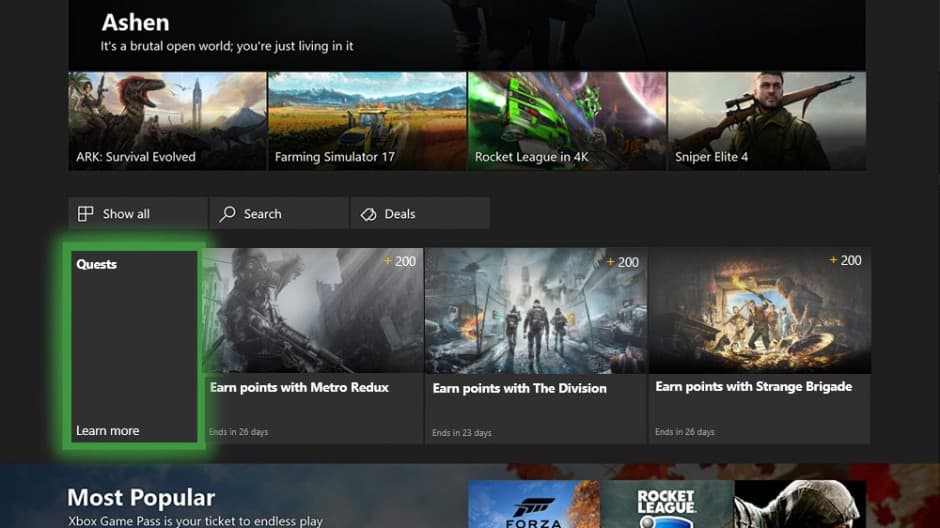
Xbox Game Pass, Microsoft’s Netflix-like video games subscription service is already a great way to try new games on Xbox One, but Microsoft is now leveraging its Microsoft Rewards program to encourage even more discovery. The company has just announced seven Xbox Game Pass quests for January, which will allow gamers to earn Microsoft Rewards points by playing any game in the catalog.
“Members can earn up to 2100 Microsoft Rewards points by playing any game from the Xbox Game Pass catalog. It’s easy to rack up points that you can spend towards your membership or DLC for your favorite games — just play the games you love and watch your rewards grow,” the blog post on Xbox Wire reads.
Three of the seven Xbox Game Pass quests for January will require you to play Tom Clancy’s The Division, Strange Brigade and the two Metro Redux games, but the four other quests can make you earn Microsoft Rewards points by playing any game in the catalog. You can find the full details about the different quests below:
Extraction Expert: Complete two specific extraction achievements in Tom Clancy’s The Division to get up to 200 points. You earn points with each achievement. Complete this before January 31.
Metro Redux: Play Metro 2033 Redux and Metro: Last Light Redux to complete four specific achievements and get up to 200 points. You earn points with each achievement.
Adventurer: Bring out your inner adventurer and get up to 200 points when you complete two specific achievements in Strange Brigade. You earn points with each achievement.
Achievement Hunter: Get points with your first achievement and continue to complete up to 21 achievements in any combination of Xbox Game Pass games to get a maximum of 600 points.
Genre Explorer: Get 300 points when you complete an achievement in three games from different genres.
Play something new: Complete an achievement in a Xbox Game Pass title that was added in December to get 100 points.
Quest Master: Complete all Xbox Game Pass quests to get an additional 500 points.
This kind of synergy is a pretty great way to encourage Xbox gamers to subscribe to Xbox Game Pass and spend more time playing and discovering new games. Since Xbox Game Pass launched back in June 2017, Microsoft has observed that “members increase their total time gaming on Xbox by almost 20% more than before and are also increasing their total number of games played by almost 40%, including titles outside the Xbox Game Pass catalog.”
Unfortunately, Xbox Game Pass quests are restricted to the US for now, but it’s apparently not a limited-time experiment. “We’ll have new quests lined up every month and will unlock the next set of quests on February 4,” the company said today. If you live in the US, you can head to the Xbox Game Pass membership area on your Xbox One console to check out your quests and start earning those Microsoft Rewards points.
Microsoft Teams, the hub for teamwork in Office 365, is getting three new capabilities to help Firstline Workers be more productive, the company announced today. The first new feature is a customizable Teams mobile experience, which will allow IT administrators to enable specific features like location sharing, the ability to record and share audio messages, as well as a “smart camera.”
This customizable Teams mobile experience is available starting today, and this is all about giving Firstline Workers easier access to the tools they really need. “This capability can be used for employees in any role, with the option for IT to create a custom policy or use the newly available Firstline Worker configuration policy template. Employees can further customize their experience by pinning the modules they need most from their module tray to their navigation bar,” explained Emma Williams, Corporate Vice President of Modern Workplace Verticals.
The second new feature that Microsoft announced today is Shifts, a schedule management tool that is now available for all customers. With Shifts, managers will be able to plan shift schedules that team members can access right within the app, with the ability for Firstline Workers to make schedule change requests. The Graph API for Shifts, which will enter public preview this quarter will also allow integrations between Shifts and enterprise scheduling systems.
Lastly, Microsoft Teams is getting a new Praise feature that looks like a mix of LinkedIn recommendations and modern gamifications systems. With this new Praise tool, managers will be able to send praise to employees by using different badges such as “Problem Solver,” “Team Player,” and more, and all badges will be viewable by team members
“Firstline Workers such as retail associates play a key role in representing a company’s brand, but this segment of the workforce experiences some of the highest turnover rates. Taking steps to engage and recognize employees can go a long way to improving their satisfaction and reducing turnover,” explained Williams. This new Praise tool will roll out later this quarter.
This week’s Deals With Gold and Spotlight sales are now online on Microsoft’s Xbox One and Xbox 360 consoles with a massive list of video games being given discounts from just 10% all the way to 85%.
The full list of discounted games can be viewed within the Store section on the Xbox 360 and Xbox One console. Note that the Deals With Gold games require an active Xbox Live Gold description to receive the discount. The individual product pages for each game will mention what sort of discount is available.
An image of a newly discovered Chinese tomb, which bears a remarkable resemblance to Microsoft’s Xbox logo, was posted on Twitter by user, Xbao, earlier this week. The image quickly garnered a lot of attention from gamers and even received a response from the official Xbox account which jokingly replied, “Ah yes, that’s the Xbox 220 BC.”
While such an image could easily be faked, it appears to be authentic and is taken from a CCTV10 video on the Chinese social network, Weibo.
The official description for the video describes it as the unearthing of a mysterious pre-Qin dynasty tomb and the Chinese viewers in the comments also appear to have caught the similarities between it and the Xbox logo with some joking about it being a paid sponsorship.
Amusingly, the official Xbox China Weibo commented with just “…..” which is currently the most-upvoted comment on the video.
Like other PC manufacturers, Dell unveiled a handful of new laptops for consumers and businesses during CES 2019 that included an update to its Latitude line up with a new frost white casing as well as a new XPS 13 housing a quad-core 8th generation Intel processor and two Inspiron 7000’s with Active Pens included and 13-inch and 15-inch display options.
However, Dell may be the only company producing a relatively modular laptop in its Alienware line up in 2019.
Alongside its Alienware Legend PC for 2019, Dell is introducing the Alienware Area-51m. Described as “the world’s most powerful 17-inch gaming laptop”, when fully tricked out, the 51m is Dell’s flagship gaming laptop with upgradable graphics and processors and holds the title as being the only laptop housing a 9th Generation 8-core desktop processor.
Other 51m features include stock 64GB of memory, 2.5 Gbps Ethernet technology, narrow bezel display, and a significant 50 percent increase in performance due in part to it’s cutting-edge thermal and cooling technology.
The Alienware Area-51m starts at $2,549 and should be going on sale around January 29, 2019.
Dell also announced its Alienware m15 and m17 this year that sport lightweight 17-inch gaming chassis for relative portability. The m15 weighs about 4.76lbs for the m15 and 5.79 for the m17 variants while both house the latest NVIDIA GeForce RTX 20 series GPU, Cryo-Tech Cooling technology and 8th generation Core i5 and i7 option.
The m15 and m17 will be available January 29, 2019, starting at $1,379.99 and $1,649.99 respectively.
Many iPod, iPhone, and iPad users need to transfer files between their Apple devices and Windows. However, iPod users can’t transfer files when the “iPod has been detected but it could not be identified properly” error message pops up.
The full error message states: An iPod has been detected, but could not be identified properly. Please disconnect then reconnect and try again. If problem persists uninstall iTunes then install iTunes again.
The above error message can also pop up for iPhone and iPad users. It is an error message that pops up when iTunes doesn’t detect a connected Apple device. These are some of the various resolutions that can fix iTunes when it doesn’t detect connected devices.
What to do if your iPod has been detected but it could not be identified
1. Connect the iPod With an Alternative USB Cable
Some iPod users might need to replace their iPod USB cables when the “iPod has been detected but it could not be identified properly” error message pops up. So try connecting the iPod to PC with an alternative USB cable if one is available. In addition, connect the iPod to an alternative USB slot.
2. Check That Apple Services are Started
There are a few Apple services that need to be started in Windows for iPod users to transfer files with iTunes. Those services are iPod Service, Bonjour Service, and the Apple Mobile Device Service. This is how users can start those services in Windows 10.
Open Run with the Windows key + X keyboard shortcut.
Input ‘services.msc’ in Run’s Open box, and select the OK option.
Then double-click Apple Mobile Device Service to open the window in the snapshot below.
Select Automatic on the Startup type drop-down menu.
Then click the Start button so that the service’s status is running.
Press the Apply and OK buttons.
Repeat the above steps for the Bonjour and iPod Service.
3. Check for iTunes Updates
The “iPod has been detected but it could not be identified properly” might pop up for users utilizing antiquated iTunes versions. So checking for iTunes updates might fix the issue for some users. To check for updates, click Help > Check for updates within iTunes. Then users can update the iTunes software to the latest version if there is a more updated version.
4. Reinstall iTunes
Reinstalling iTunes is a resolution that numerous users confirm fixes the “iPod has been detected” error message. That will ensure your iTunes software is updated and that you’re not missing any of the other additional components it needs. This is how iTunes users can reinstall that software.
Open the Programs and Features Control Panel applet by entering ‘appwiz.cpl’ in Run and clicking OK.
Then select iTunes and click Uninstall.
Click the Yes button to confirm.
Users should also uninstall Apple Software Update, Bonjour, Apple Application Support, and Apple Mobile Device Support (assuming they’re all installed). The Programs and Features Control Panel applet lists all those components.
Restart Windows after removing iTunes and the other Apple software.
Then open the iTunes page on MS Store, and press the Get button.
Open the downloaded installer for iTunes to add the software to Windows. That will also reinstall Apple Software Update, Bonjour, Apple Application Support, and Apple Mobile Device Support.
Restart your desktop and laptop again after reinstalling iTunes.
5. Fix iTunes With iMyFone TunesFix
The iMyFone TunesFix software for Windows 10, 8, and 7 can fix all manner of iTunes error messages. So this is certainly software worth noting for fixing the “iPod has been detected but it could not be identified properly”error. TunesFix is currently retailing at a discounted price, and iTunes users can click Try it Free on the software’s webpage to try out a demo. This is how iPod users can fix iTunes with iMyFone TunesFix.
Add iMyFone TunesFix to Windows, and then open the software’s window.
The software automatically scans the iTunes installation when users launch it.
The iMyFone TunesFix software might detect some issues after the first scan. If it does, click the Repair button to fix software.
If the initial scan doesn’t detect any errors, click Repair iTunes Connect Issues on the iMyFone TunesFix window.
Then press the Repair button to fix iTunes connect issues.
6. Check the Apple Mobile Device USB Driver is Enabled
The USB driver for Apple Mobile Device USB Driver might not be enabled. To check that, plug the iPod into a laptop’s or desktop’s USB port.
Right-click the Start menu’s button and select Device Manager on the menu that opens.
Then double-click Universal Serial Bus controllers to expand that category.
A down arrow highlights if Apple Mobile Device USB Driver is disabled. Right-click Apple Mobile Device and select Enable if required.
7. Reinstall Apple Mobile Device USB Driver
Reinstalling Apple Mobile Device USB Driver is another potential resolution that some users have confirmed fixes the iPod not recognized error. To do that, connect the iPod with a PC.
Open Device Manager from the Win + X menu.
Double-click Universal Serial Bus controllers to expand its device list.
Then right-click Apple Mobile Device USB Driver and select Uninstalldevice.
Click the Uninstall button to further confirm.
Press the Scan for hardware changes button shown directly below. That option will reinstall the driver for Apple Mobile Device USB Driver.
There’s a good chance that at least one of the above resolutions will fix iTunes when it doesn’t recognize iPod devices. Note that the above resolutions might also fix the same issue for iPhones and iPads.
While not traditionally known as a purveyor of clocks and smart screens, Lenovo is joining the parade of manufacturers who are building out connect experiences through platform flexible digital assistants.
New at CES 2019 are three digital assistants powered Lenovo devices called the Lenovo Smart Clock, Lenovo Smart Tab M10 and P10. The Smart Clock makes use of Google Assistant while the Smart Tab M10 and P10 use Amazon’s Alexa assistant.
Lenovo Smart Clock with the Google Assistant
Price: $79.99 Available: Spring 2019
Similar to Google’s Home Hub, the Lenovo Smart Clock comes with particularly soft fabric-covered exterior and four inch-IPS screen. Lenovo designed the Smart Clock with nightstands in mind as the clock “delivers visual experiences when you wake up, and when you’re ready for sleep.”
In addition to looking a lot like the Google Home Hub, the Smart Clock also operates in a similar fashion with support for Google’s Assistant’s gentle wake-up routine, “Hey Google” voice commands for alarms, music play, and calendar management.
Powering the audio on this tiny bedside device are a full-range 6W speaker and two passive radiators tuned with Dolby’s background noise reduction.
While intended for the nightstand, the Smart Clock can also function as a home hub with hands-free voice support for playing audio across multiple devices in separate rooms with Chromecast.
Lenovo Smart Tab M19 and P10 with Amazon Alexa
Price: M10 $199, P10 $249 Available: January
The Lenovo Smart Tab is as described, an Android tablet that converts from a handheld experience to a Smart Screen via Lenovo’s Smart Dock technology.
Both the M10 and the P10 come with FHD multitouch displays, a Snapdragon 450 processor, up to 4GB of RAM and 32 GB storage capacity.
Additional features include Dolby Atmos support on the tablets as well as Lenovo’s Smart Dock that also houses dual 3-watt full range speakers for music streaming and video watching as well as 3 far-field microphones for better voice recognition.
For $199 US, the M10 offers a max of 3GB of memory, 32GB of storage, a smaller battery at 4850 mAh, and fewer sensors and lower resolution camera options.
However, shelling out an additional $100 for the P10 gets buyers 4GB of memory, 64GB of storage, larger 7000 mAh battery, 4 front facing speakers (instead of 2), higher resolution cameras as well as a fingerprint reader for security.
Lenovo’s accessories development has shown some tremendous growth in 2019 and it’ll be interesting to see how its new products trickle into the home and workspaces of its customers in 2019.
Microsoft has announced an important change regarding Windows 10 and reserved storage yesterday. Starting with the next Windows 10 update, which Microsoft explicitly named “1903” in the blog post (this is a first, to our knowledge), the desktop OS will now reserve disk space for OS updates, apps, temporary files, and caches. For the most part, this is about helping users to install system updates without having first to free up space on their PCs.
“Reserved storage will be introduced automatically on devices that come with version 1903 pre-installed or those where 1903 was clean installed,” wrote Jesse Rajwan, Program Manager at Microsoft. When reserved storage is enabled, it should take around 7GB of disk space, though Microsoft noted that the amount of storage will vary over time depending on optional features and installed languages that users choose..
Here is how the feature will work on Windows 10 version 1903:
Every update temporarily requires some free disk space to download and install. On devices with reserved storage, update will use the reserved space first. When it’s time for an update, the temporary unneeded OS files in the reserved storage will be deleted and update will use the full reserve area. This will enable most PCs to download and install an update without having to free up any of your disk space, even when you have minimal free disk space. If for some reason Windows update needs more space than is reserved, it will automatically use other available free space. If that’s not enough, Windows will guide you through steps to temporarily extend your hard disk with external storage, such as with a USB stick, or how to free up disk space.
If you want to enable Reserved storage on your PC, you’ll need to be running Windows 10 Insider build 18298 or higher. The feature is actually hidden for now, but you can enable it in the Registry Editor and it will light up after you upgrade your PC to the next available build. You can get more details about how to turn on reserved storage by following this quest on the Windows 10 Feedback Hub.
Reserved storage should be a useful feature for most consumers, but it may be somewhat problematic on PCs with just 64GB of storage or less. “Over the last several releases we’ve reduced the size of Windows for most customers,” explained Rajwan. “We may adjust the size of reserved storage in the future based on diagnostic data or feedback,” he added.