Microsoft has rolled out one of the most requested features for OneNote users, the ability to paste text without formatting. The update is now live for OneNote on Windows, Mac, and the web, making it easier to keep notes clean and consistent.
Pulling text from emails, websites, or documents often brings along unwanted fonts, colors, and styles. The new “Paste Text Only” option strips all of that out, automatically matching your notebook’s default style. The result is cleaner notes and fewer formatting fixes.
Whether you’re gathering research, saving snippets, or drafting ideas, the feature helps maintain a distraction-free layout. Microsoft says it’s another step toward making OneNote a modern, streamlined workspace.
How It Works
On Windows, you can press Ctrl + Shift + V to paste without formatting, or right-click and choose Keep Text Only. Mac users can use Command + Shift + V or the same menu option. The feature works in both new and existing notebooks and supports content copied from sources like Outlook, Teams, and browsers.
Once pasted, the text adopts the notebook’s style rather than the original source’s design. This keeps pages uniform even when pulling from multiple places. The update is available in OneNote for the web and in desktop versions meeting these requirements:
Windows: Version 2508 (Build 19101.10000) or later
Mac: Build 16.100 (25080335) or later
Microsoft notes the rollout is gradual. If you don’t see the option yet, it may arrive in the coming weeks as the company monitors performance and feedback.
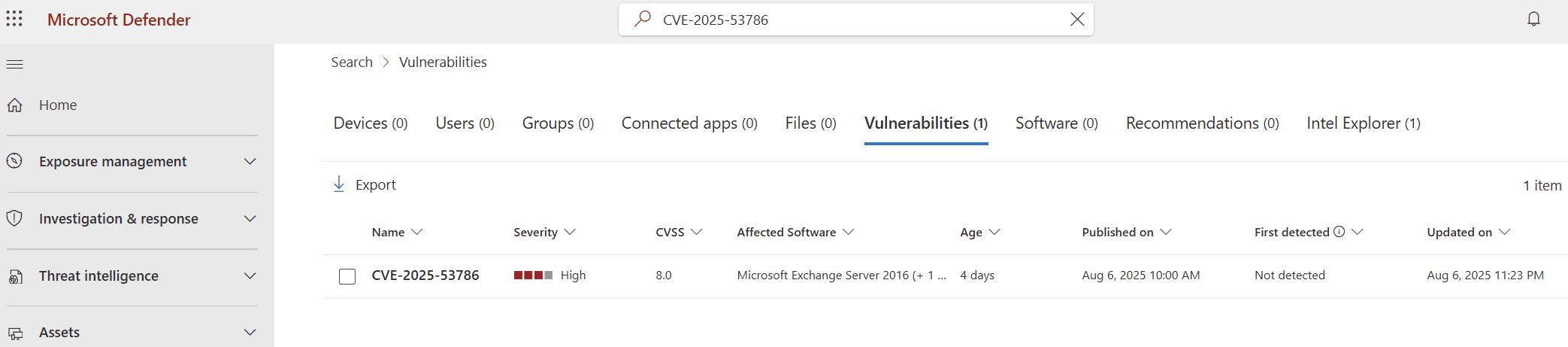
Microsoft has issued a warning about CVE-2025-53786, a serious privilege escalation vulnerability affecting hybrid setups of Microsoft Exchange Server. The company hints that the vulnerability could allow attackers with on-premises admin rights to take control of connected Exchange Online environments.
Image: Microsoft
The issue is relevant for Microsoft Exchange Server 2016 and 2019 when set up in hybrid configurations. With a CVSS v3.1 score of 8.0, it hasn’t been seen exploited in the wild yet. However, Microsoft warns that this vulnerability might be leveraged to compromise an entire domain due to the hybrid trust model.
Worth noting that Microsoft Defender Vulnerability Management (MDVM) can spot and prioritize fixes for at-risk devices to help manage risks. Additionally, administrators can look for this CVE in MDVM or use Advanced Hunting queries to identify affected servers that haven’t received necessary updates.
Microsoft has further suggested installing the April 2025 hotfix or any newer cumulative updates. These updates activate the Dedicated Exchange Hybrid App, which takes over from the older shared service principal trust that carries a risk of being misused.
Steps to Secure Hybrid Deployments
The company has also urged administrators to set up and enable the dedicated hybrid app by using the provided PowerShell scripts or the updated Hybrid Configuration Wizard. Once it’s up and running, the old shared trust keys must be removed to stop them from being reused.
Microsoft stresses the importance of confirming that the dedicated app is operational and that no old credentials are lingering around. If the Hybrid Configuration Wizard needs to be run again, the cleanup process will have to be repeated.
Even though there are no signs of active exploitation, Microsoft recommends making the aforementioned steps part of regular IT practices. You should also be keeping an eye on things with MDVM can help monitor patch compliance, uncover unprotected servers, and prevent any renewed exposure.
The architectural and interior design process takes a lot of time, especially when working from sketches or exploring different styles. With the help of AI, what used to take hours or days can take seconds. In this MNML.AI review, I tested its comprehensive AI render tools, which let you render and iterate ideas in one click.
What is MNML.AI?
MNML.AI is a web-based platform for AI-powered rendering and professional architectural visualization in seconds, especially for exterior and interior design. Its 12+ powerful AI tools can render your existing sketches, generate photorealistic designs from prompts, and transfer the style from a reference photo.
MNML.AI is trusted by 1.8M+ architects, interior designers, and real estate professionals. New users can start for free before requiring a credit pack or premium plan.
Notable Features
After getting hands-on with MNML.AI, here’s what stood out the most:
Sketch to Image AI
One of MNML.AI’s most powerful features is its ability to automate the rendering and iteration of your design sketches and images. Even the roughest of hand drawn sketches can be fully colorized and rendered into a photorealistic design by using the “creative” setting.
On the other hand, you might choose the “exact render” option for a more detailed sketch. This stays close to the original colors, materials, and geometry while levelling up the design quality.
There is also an additional geometry slider, giving you the freedom to try different levels of creativity.
The Sketch to Image AI automatically recognizes exteriors, interiors, home décor and furniture, products, art, and 2D plans. The latter can be a top view sketch, photo, or snapshot from a 3D model, allowing you to quickly generate fully visualized masterplans.
Working with a landscape photo or sketch? MNML.AI offers 15 landscape styles and you can render in watercolor, sketch, photorealism, and others.
Whatever you choose, positive and negative prompts help to refine your vision. Positive prompts are the descriptors and keywords you want to see in the design. This might include the architectural type, such as villa or townhouse, the style (i.e., modern or gothic architecture), colors, materials, time of day, and other objects like trees.
Conversely, negative prompts let you remove unwanted elements. This is particularly effective when the sketch itself includes something you now want to change.
Overall, the Sketch to Image AI streamlines the entire design process and lets you flesh out multiple ideas at record speed.
Text to Image AI
The Imagine AI tool brings your architecture or interior design ideas to life without even needing a source image. Through the power of prompting, you only need to describe what to render and make use of the settings.
Simply choose exterior, interior, or layout, the aspect ratio, and begin prompting. The MNML.AI prompt guide is there to help, but you’ll soon get the hang of it by ensuring to mention the main subject, additional objects, architecture style, colors, and lighting or weather.
For example, I chose exterior and entered this prompt: “Town houses, gothic architecture, iron gates, winter.”
The style strength slider fine tunes the level or realism vs how strongly it adheres to the prompt.
One way to improve your prompts or emulate a style is to use the prompt generator. Here, you can upload an existing image, and it reverse engineers what you would prompt to generate something similar.
AI Interior Design and Virtual Staging
For interior design, the virtual staging AI is an invaluable tool. This lets you start with a photo of an empty room and try out different ideas to see what it could look like.
Choose the desired room type, such as kitchen, then select from over 30 room styles from warm & cozy to rustic.
You can refine the design further with prompts and choose between precise (keeps the ceiling and geometry) or creative (for complete staging).
Whether you’re looking for some home décor inspiration, are a professional interior designer, or spicing up your real estate listings, this interior AI tool is perfect for quickly exploring different ideas.
Style Transfer
The style transfer tool is a quick way to apply the style from one photo to a render of your sketch or other image.
For example, your sketch or photo of a room might be plain or have a modern style. Uploading a similar angled shot of a room with a rustic style will apply that style, while maintaining the geometry and features of the original.
Editing
If you wish to modify a specific object or area, instead of using traditional image editing software, the Canvas editor combines several tools for erasing or replacing the selection.
Whichever you choose, the AI automatically fills in the gaps to blend in with the rest of the image.
Moreover, the Extender expands the borders of an image, generating new content that adheres to the style of the original design.
Export/ Download Options
Image renders can be easily downloaded in either JPG or PNG format at up to 4K resolution.
Paid users can also maintain an account history to access previous renders and projects.
MNML.AI does not use watermarks and paid users get full commercial rights.
Video Shorts
Video is a great way to showcase your designs online or privately to clients. With the AI video maker, you can quickly add professional camera panning to a still image.
In one click, it produces 10 seconds of motion in 1080p, which can be downloaded in MP4 format.
Upscaling
If you have an older design or low-resolution image, the AI image upscaler enhances the clarity and sharpness to match the standards of 4K resolution.
Now you can quickly enhance images without introducing the typical pixelation or blurriness associated with traditional upscaling methods.
MNML.AI Pricing
You can try MNML.ai for free, but for high resolution output and full commercial rights, you should purchase a premium plan. Visit the pricing page for more.
Credit Pack ($49) – A one off payment for 5,000 credits, equaling 500 designs or 1,000 text to image renders.
Basic ($19/mo or $189.60/yr) – 1,000 credits/mo, equaling 100 designs, 200 text-to-image designs, and 12 videos.
Pro ($39/mo or $390/yr) – 5,000 credits, equaling 500 designs, 1,000 text to image designs, and 65 videos.
Expert ($79/mo or $789.60/yr) – 10,000 credits, equaling 1,000 designs, 2000 text to image designs, and 130 videos.
Enterprise (from $199/mo) – Negotiate a custom plan for high volume use.
MNML.AI Review – Verdict
Although many AI platforms have the ability to generate architecture and interior design images, MNML.AI succeeds by making it the focus.
Instead of relying solely on prompting, it offers lots of useful tools that streamline different tasks. It’s incredibly easy to use, requiring only a few settings before hitting the generate button.
MNML.AI At a Glance:
Instant AI rendering for interiors, exteriors, and layouts
12+ tools and 40+ architectural styles
Sketch-to-image, virtual staging, 4K upscaling
Smart editing, video creation, style transfer
Free to try. Paid plans from $19/month
Whether you’re a beginner or a professional working in the industry, this powerful AI render suite is a can’t miss.
Ready to visualize your designs faster than ever? Try the MNML.AI architecture AI render tools free or pick a plan that fits your workflow.
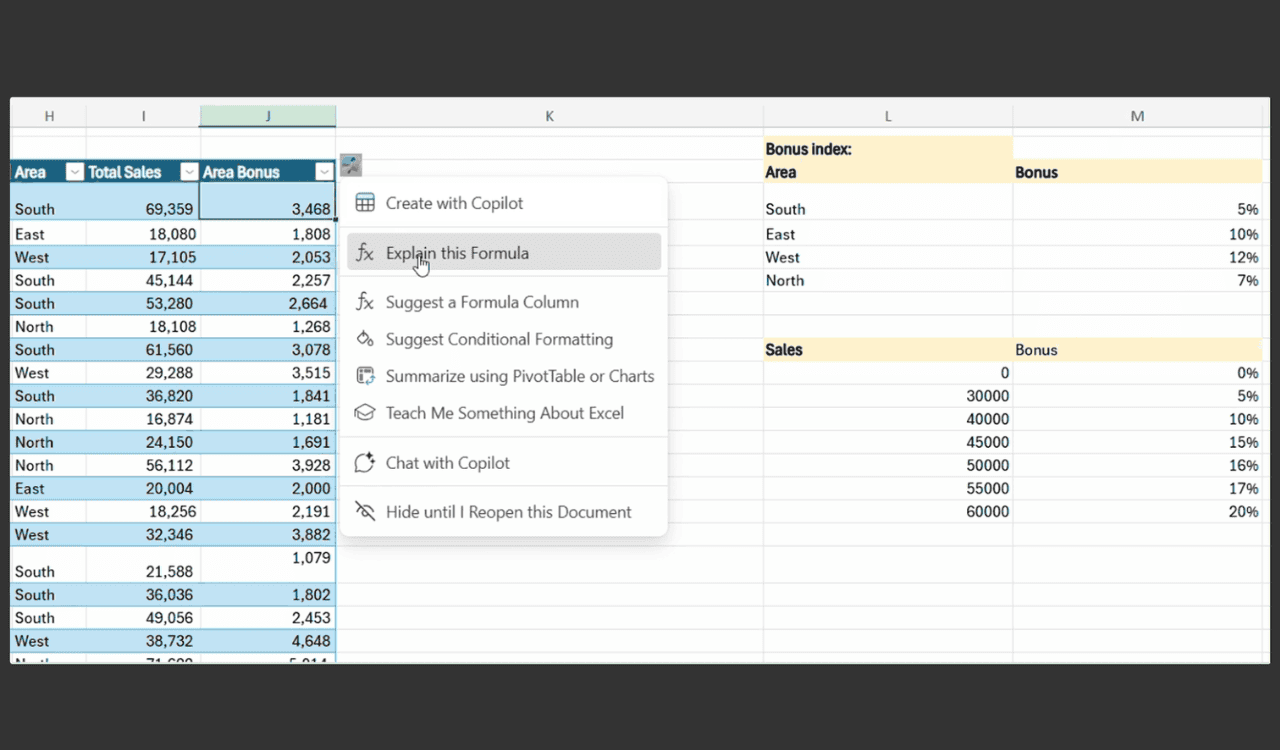
Microsoft is rolling out a new Copilot-powered feature for Excel called Explain the formula. As the name suggests, the feature makes it easier for you to understand complex formulas without leaving the worksheet.
The tool delivers step-by-step explanations directly on the spreadsheet grid, right next to your data. With Explain Formula, users no longer need to open the Copilot chat pane to get help.
Instead, selecting a cell with a formula will display a Copilot icon. From there, choosing “Explain this formula” shows a breakdown of the calculation in a dedicated card on the grid.
Image: Microsoft
Image: Microsoft
The explanations are contextual, meaning they’re based on the actual data in the workbook, not just generic definitions. This makes it easier to scan, verify, and apply the information without breaking focus.
Microsoft says the feature can handle any formula, from simple math and logic to more complex functions like arrays, lookups, and text manipulation. The explanations cover the formula’s purpose, break down each function, and describe how they work together in the context of your sheet.
If the Copilot chat pane is already open, the explanation will still appear, but inside the pane instead of on the grid. Users can also switch into a deeper conversation with Copilot for more details.
The Explain Formula feature is currently making its way to Excel for Windows and Excel for the web. The rollout is gradual, so it may take time before it appears for all users.
Microsoft is introducing a new service for its Windows 365 cloud platform called Windows 365 Reserve. The offering is designed to keep businesses running when their primary PCs go offline, whether due to hardware failure, malware, or a bad software update.
Image: Microsoft
Image: Microsoft
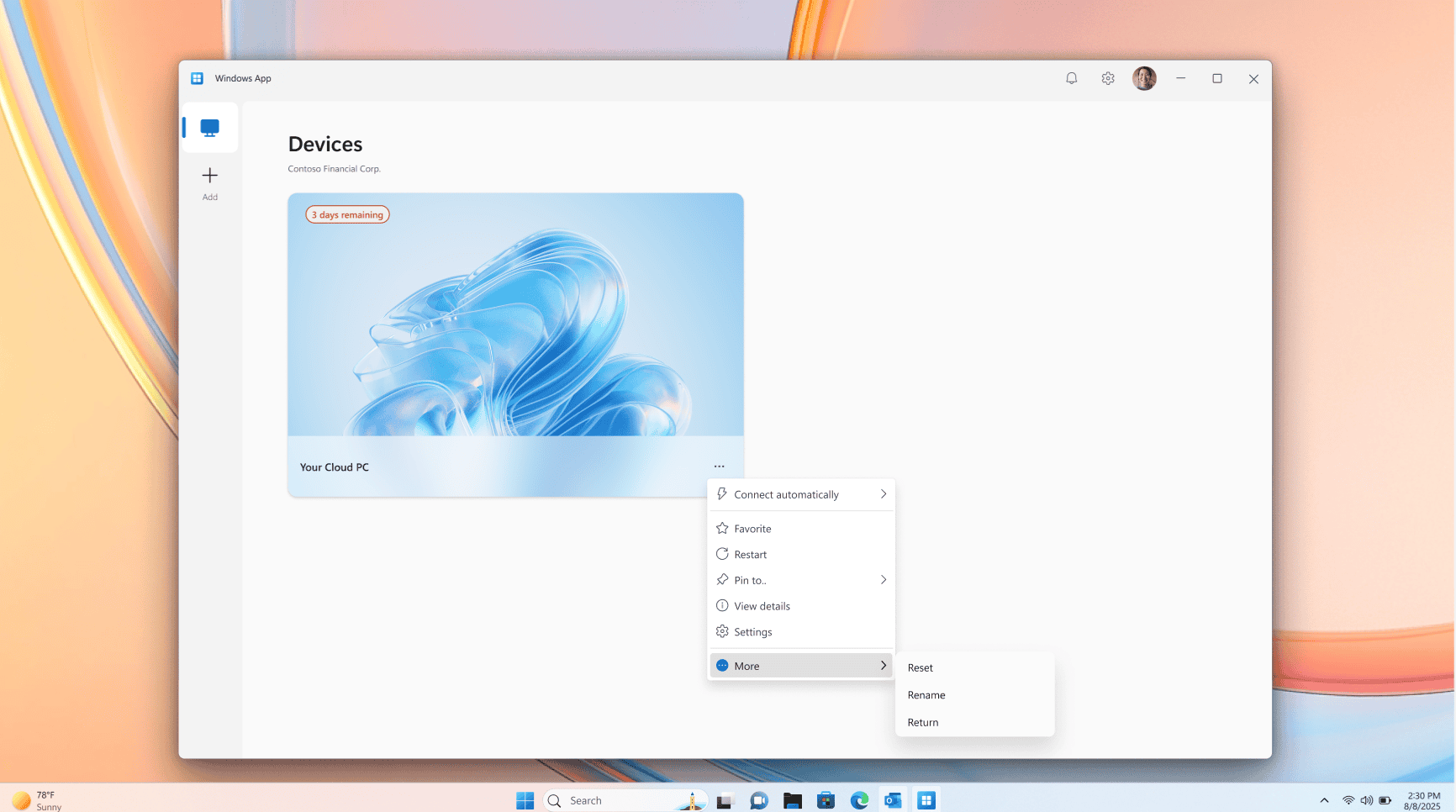
Windows 365 Reserve works as a standalone subscription, giving each user up to 10 days of access to a temporary Cloud PC per year. In a company-wide outage, IT admins can quickly deploy pre-configured cloud desktops with the required apps and settings.
This allows employees to pick up their work from any secondary device, all through a modern browser or the Windows app. Once provisioned, users receive a notification with details, including the expiration date. Windows 365 also sends a reminder three days before the temporary PC expires.
At the end of the session, users can deprovision the Cloud PC to save unused days for later. According to Microsoft’s announcement, Windows 365 Reserve is aimed at business continuity. The company highlights three main benefits:
Quick deployment to reduce downtime
Simplified IT management via Microsoft Intune
Built-in security following company policies, with easy access revocation
Windows 365 Reserve is currently in a closed public preview. Interested businesses can apply here or reach out to their Microsoft account representative.
Google is bringing its Gemini-powered image generation tool to the Google Docs app on Android. The feature first launched for the web version of Docs last November, allowing users to generate images in styles like watercolor, sketch, or photorealism.
Gemini image generation tool now in Google Docs for Android
On Android, you can access the image generation tool through the “Ask Gemini” icon at the top right of the screen. You can simply tap it, then, the app opens a panel at the bottom, where you can type detailed prompts.
For example, you could request “a photorealistic portrait of an astronaut drinking coffee on Mars”, and Gemini will create multiple versions to choose from, as seen in the image below.
Gif source: Google
Once the images appear, you can preview them full-screen, copy, download, insert them directly into your document, or upload them to Google Drive. The interface mirrors the web version’s workflow for consistency across platforms.
Rolling out to select Workspace subscribers
Google began rolling out the feature last Friday. According to the company, the rollout will be gradual, taking up to two weeks to reach all eligible users. For now, access is limited to paying customers on specific Google Workspace tiers: Business Standard and Plus, Enterprise Standard and Plus.
That’s not all; it’s also available to all those who’ve subscribed to Google AI Pro or Ultra. Customers with Gemini Education, Education Premium, Gemini Business, or Gemini Enterprise add-ons are also included.
GitHub CEO Thomas Dohmke has confirmed that he will leave the company at the end of 2025. Dohmke says he’s ready to “become a founder again” after guiding the platform through one of its most transformative periods.
GitHub saw major AI growth under Dohmke’s leadership
Dohmke announced his decision in a post to GitHub employees, later shared publicly. “Because of your relentless work, GitHub Copilot has introduced the greatest change to software development since the advent of the personal computer,” he wrote.
During his tenure, the developer platform passed 150 million users and crossed the one billion repositories mark. AI-related projects doubled over the last year, and GitHub expanded operations into the EU, Australia, and the US under FedRAMP certification.
GitHub Advanced Security became a key highlight, helping teams fix vulnerabilities three times faster while reducing remediation time by 60%. GitHub Actions also matured into the leading CI service, now processing three billion minutes of builds per month, a 64% jump compared to last year.
Perhaps the biggest introduction was the introduction of GitHub Copilot. Initially a simple code-completion tool, it has since grown into a multi-model AI platform that can review, repair, and even build full-stack applications. The service now serves more than 20 million developers, powered by models from Anthropic, Google, and OpenAI.
Dohmke, who moved from Germany to the US after selling his startup to Microsoft, described leading GitHub as “the ride of a lifetime.” Worth noting that he will remain CEO through the end of the year to assist with the transition. Afterward, GitHub will continue its mission within Microsoft’s CoreAI organization.
Microsoft has confirmed that its Edge browser will keep getting updates on Windows 10 until at least October 2028. Folks over at Windows Latest first spotted a recent update to Microsoft’s support documents and reported on it.
This extension comes even as Windows 10 itself approaches the end of its support life in October 2025. While Microsoft is ending official Windows 10 support, it has also offered optional Extended Security Updates (ESU) that let users continue receiving security fixes for up to three more years.
However, those ESUs don’t affect Edge updates. The updated Microsoft note says:
Microsoft Edge and the Microsoft WebView2 Runtime will continue to receive updates on Windows 10 22H2 until at least October 2028, coinciding with the end of the Extended Security Updates (ESU) program.
Well, you don’t need to pay for the ESU program to get these browser updates. That means Edge will stay current on Windows 10 devices, even if users decide not to buy extended Windows support.
If you want the ESU updates for Windows 10 itself, Microsoft offers three ways to get them. You can pay a $30 fee for each year of updates. Alternatively, you can sync your Windows Backup to OneDrive for free access.
The third option involves redeeming 1,000 Microsoft Rewards points, which you can earn easily by downloading apps like Bing, which gives 500 points. No wonder this decision will be a relief for users who haven’t upgraded to Windows 11 yet, knowing their browser stays secure even as Windows 10 support winds down.
What’s unclear is how long other browsers, like Chrome or Firefox, will continue to support Windows 10. We expect more news on that soon.
Pre-orders could open as early as August 20, possibly during Gamescom 2025, where Xbox is expected to share more details. The ROG Xbox Ally series was first shown off at the 2025 Xbox Games Showcase in June.
For the uninitiated, there are two models of the handhelds: the standard Xbox Ally and the higher-end Xbox Ally X.
Both use AMD’s Ryzen Z2 processors and support up to 24GB of RAM. They run a special gaming version of Windows 11, designed to boost performance and improve battery life compared to the regular version.
Earlier, Microsoft only said the devices would arrive sometime in the holiday season of 2025. This leak narrows that window to mid-October, with pre-orders launching two months before. The timing suggests Xbox will reveal pricing and specs during Gamescom.
In Europe, the standard Xbox Ally is expected to cost about 599 euros, while the Ally X will be priced at roughly 899 euros. Prices in other regions, like the US, could be different. This puts both models above the Xbox Series X’s current price of about $600.
OpenAI launched GPT-5 earlier this week, calling it its most advanced model yet. The release put the new AI in the hands of more than 700 million people worldwide.
What should have been good news for OpenAI turned into a nightmare as it faced backlash from both free and paid ChatGPT users. The problem many discovered that GPT-4o, a model they had built workflows around, had disappeared without warning.
During a Reddit AMA meant to celebrate the launch, CEO Sam Altman faced a wave of complaints. Several users said GPT-5 felt “dumber” than its predecessor and demanded GPT-4o’s return.
Altman replied that OpenAI had “heard the feedback” and would let Plus subscribers continue using GPT-4o, while tracking usage to decide how long it stays available. The rollout wasn’t just criticized for performance.
The removal of legacy models without notice left some feeling quite frustrated. At the center of the frustration is GPT-5’s new “real-time router,” a system that automatically picks the model for each task.
Altman admitted the router “wasn’t working as intended,” making GPT-5 appear less capable. He assured users it “will seem smarter” and promised more transparency about which model is responding.
For now, only Pro, Team, and Enterprise customers can toggle GPT-4o back on via the “show legacy models” setting. Free users don’t have that option. As for GPT-4.1, Altman said it would only return if Plus subscribers showed “enough demand.”
Closing the AMA, Altman pledged to “continue to work to get things stable” and to “keep listening to feedback” as GPT-5 rolls out.
Sony’s PlayStation 5 (PS5) has hit a major milestone, topping 80 million units sold since its late 2020 debut. The latest figure comes from Sony’s latest earnings report, which shows the console moving 18.5 million units in the 2024 fiscal year, followed by another 2.5 million in the first quarter of 2025.
That puts the PS5 at roughly 80.2 million units shipped to retailers worldwide, or 80.3 million if you go by Sony’s official business data page, which lists slightly higher sales for 2023.
The numbers still trail the PlayStation 4 (PS4), which hit 82.3 million in the same time frame after its launch. But the PS5’s road hasn’t been smooth.
Early supply chain bottlenecks, COVID-19 pandemic disruptions, and semiconductor shortages affected the sales in its first two years.
Despite those hurdles, its momentum remains strong. The PS5 is already trailing PS4’s early sales pace. With Grand Theft Auto VI (GTA 6) set for release next year, analysts expect it could soon overtake its predecessor.
Here’s how the PS5’s yearly sales have stacked up:
2020: 7.8M units (launch year)
2021: 11.5M units
2022: 19.1M units
2023: 20.8M units
2024: 18.5M units
2025 Q1: 2.5M units
Sony counts these as sell-in numbers, meaning shipped to distributors, not direct consumer purchases. Still, the milestone cements the PS5’s place as one of the fastest-selling home consoles in history, with plenty of big games still to come.
According to an investigative report by The Guardian, Israel’s Unit 8200 has stored 11,500 terabytes of intercepted Palestinian communications. That amount equals roughly 200 million hours of audio, kept on Microsoft’s Azure servers in North Holland province.
On Sunday, activists from the group Geef Tegengas reportedly scaled the facility’s roof and lit red flares. Others blocked entrances, demanding employees halt operations until the data is removed from the company’s servers.
Not to forget, The Guardian’s investigation, with +972 Magazine and Local Call, revealed that the data comes from military surveillance operations. The report prompted Dutch lawmakers to question whether the information could enable human rights violations in Gaza.
The country’s Foreign Minister Caspar Veldkamp promised an investigation and warned legal action could follow if laws were broken. Meanwhile, Microsoft has denied knowing the content of the stored data or supporting any surveillance of civilians.
The Israeli military insisted the partnership follows legal agreements and complies with international law to fight terrorism. The Guardian also reported Microsoft executives are urgently reviewing the arrangement amid fears of withheld internal disclosures.
Google has reportedly confirmed it will officially end support for Steam for Chromebook Beta starting January 1, 2026, marking the end of its “Borealis” project. The company has begun notifying users that the native Steam client for ChromeOS will no longer function after that date.
Image: 9to5Google
Originally launched as a way to bring high-end PC gaming to Chromebooks, the initiative struggled to gain traction. The main hurdle was hardware. Only a small number of Chromebooks shipped with powerful GPUs capable of handling demanding Steam titles.
Most devices in the market simply weren’t designed for local gaming of that scale, limiting the potential user base. In contrast, cloud gaming services have flourished on ChromeOS over the same period.
Platforms like NVIDIA’s GeForce NOW have offered access to large libraries of AAA games without relying on local hardware performance, making them a better fit for a broad range of Chromebook models.
By discontinuing Steam support, Google can redirect engineering resources toward features and technologies with wider appeal. The move also signals a stronger emphasis on cloud gaming as the primary way to play PC-quality titles on ChromeOS.
While the shutdown closes the chapter on an ambitious experiment, the growth of streaming platforms suggests most Chromebook gamers will still have access to a rich gaming experience, just not through native Steam support.
Microsoft has outlined a step-by-step method for passing custom user data to apps during sign-in, using Entra ID’s directory extension attributes. The process can help organizations include unique identifiers, such as sponsorship details, in SSO tokens for specific user groups.
In a recent guide, Microsoft showed how admins can register, assign, and map these attributes so they appear as claims in SAML or OIDC tokens, and only for selected groups.
Here’s how Microsoft suggests you to complete the process:
Step 1: Register Directory Extension Attributes
Use Graph Explorer to register two custom attributes, for example sponsorid1 and sponsorid2, in the target application.
Send a POST request to: POST https://graph.microsoft.com/v1.0/applications/{AppObjectId}/extensionProperties
Repeat this for each user, assigning the corresponding attribute (sponsorid1 or sponsorid2).
Step 3: Create Claims in Enterprise Application
Navigate to Entra ID > Enterprise Applications > [App Name] > Single Sign-On > Attributes & Claims.
1. Click Add new claim 2. Provide a name (e.g., sponsorClaim1) 3. Under Claim conditions, select Member and choose the group that should receive the claim 4. In the source attribute, use the directory extension attribute name (e.g., extension_<AppClientID>_sponsorid1)
Repeat for the second group and attribute.
Step 4: Handle Claim Mapping Error
If you see the error “Application requires custom signing key to customize claims”
You can temporarily bypass this by updating the app registration manifest:
“acceptMappedClaims”: true
This allows claims customization without custom signing keys.
Step 5: Test the Configuration
Call the application using https://login.microsoftonline.com/(Tenant ID)/oauth2/v2.0/authorize?client_id=(Client ID) &response_type=id_token&redirect_uri=https://jwt.ms&scope=openid&state=12345&nonce=12345 and sign in with users who belong to the defined groups. You should see the expected custom claims (sponsorid1 or sponsorid2) issued in the SAML or OIDC token in https://jwt.ms. Users not in any of the groups will not receive any sponsor claim.
Microsoft says this setup ensures sensitive or specialized data only reaches the right audience during sign-in, without exposing it to others.
xAI is opening up its latest AI model, Grok 4, to everyone, even those who don’t pay. The company announced the news on X, where it mentioned that free-tier users worldwide can now try the model’s Auto and Expert modes for a “limited period” with what it calls generous usage limits.
Grok 4, which only launched last month, had been locked behind xAI’s paid tiers. Auto mode decides on its own whether a question needs more reasoning power or a faster response. Expert mode puts that choice in the user’s hands.
There’s still a catch. The most powerful version of the model, Grok 4 Heavy, remains exclusive to SuperGrok subscribers. That’s not all; you won’t get access to Grok Imagine, the tool for generating images and videos, unless you’re in the US. Not to forget, Musk made it free for Americans just days ago.
It’s worth noting that paid users will still enjoy higher rate limits across all tools. Interestingly, the announcement came just a few days after OpenAI rolled out GPT-5 to all registered users, adding extra competitive heat to the ongoing AI race.
Musk also hinted at another big change on the horizon: ads. In a recent Spaces chat, he said Grok will soon show advertising inside its interface, including in answers and suggestions.
For now, free users have a rare chance to explore Grok 4’s capabilities. Whether the trade-off will eventually involve reading AI-generated answers between ad placements remains to be seen.
Mozilla recently rolled out Firefox version 141 with many new features, including AI-powered tab grouping. The browser can now scan your open tabs, figure out which ones are related, and group them with labels.
On paper, it sounds like a dream for anyone juggling dozens of tabs at once. In practice, some users say it is taking a toll on their PC’s CPU. Posts on the Firefox subreddit describe laptops running hot, fans going full blast, and battery life taking a hit.
One Reddit user said the update blew up their CPU after opening multiple tabs. Apparently, a mysterious process called “Inference” in the task manager shows that it is eating up resources until the browser is restarted.
Mozilla’s system keeps everything on your device, which means your browsing data stays private. But it also means the AI has to do all the work locally, and that can be heavy lifting if you have a tab hoarding habit.
A few Firefox fans are pointing the finger at Mozilla’s choice of Microsoft’s ONNX format for the AI models, saying that more lightweight formats might run smoother. Others aren’t bothered at all, arguing it’s a genuinely useful tool for research and big projects.
If you are among those affected and want the feature disabled, here’s what to do. You can head into Firefox’s advanced settings to disable the smart tab grouping. You can even delete the AI models entirely from the add-ons page.
Mozilla says more AI features are coming this year, joining Chrome and Edge in the push to make browsers smarter. Whether that makes Firefox more helpful or more of a battery hog will likely depend on how many tabs you keep open.
Microsoft’s decision to pull the plug on Windows 10 updates in October is now headed to court. In a lawsuit filed in San Diego Superior Court, Southern California resident Lawrence Klein claims the company is putting millions at risk by ending support for its decade-old operating system.
He argues the move forces customers to upgrade hardware they might not need, and paves the way for Microsoft’s push into AI-powered software. Windows 11, launched nearly four years ago, has only just surpassed Windows 10 in user numbers.
But StatCounter data shows 43% of Windows users are still on the older version. Come October 14, those PCs will stop receiving security patches and new features. However, users can still pay for Microsoft’s “extended security” plan, starting at $30 a year for individuals and climbing to $244 annually for businesses by 2028.
Klein owns two Windows 10 laptops. He says both will be “obsolete” once updates stop. Since Microsoft’s AI tools like Copilot require newer hardware with neural processing units, something older devices don’t have.
Industry estimates suggest 240 million PCs can’t run Windows 11 at all. Without updates, they’ll be more vulnerable to cyberattacks, and many could end up in landfills as people upgrade.
All in all, Klein isn’t asking for personal damages. Instead, he wants a court order keeping Windows 10 updates alive until usage drops below 10% worldwide.
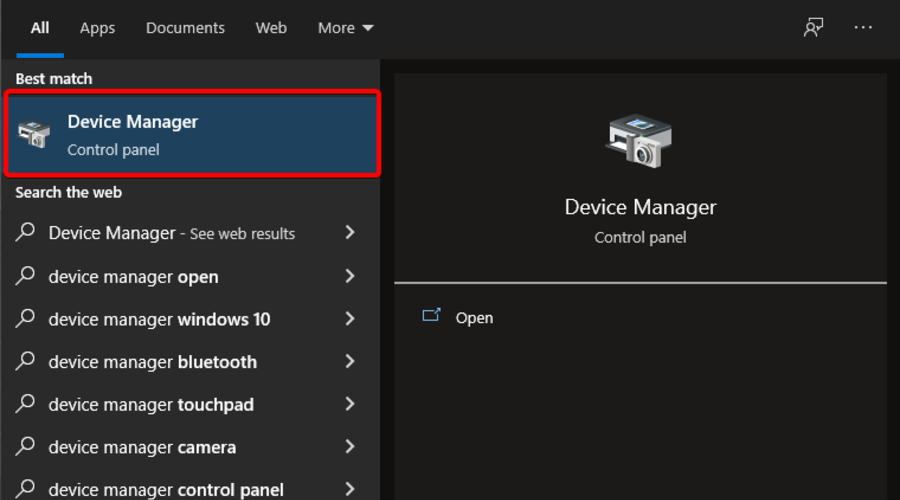
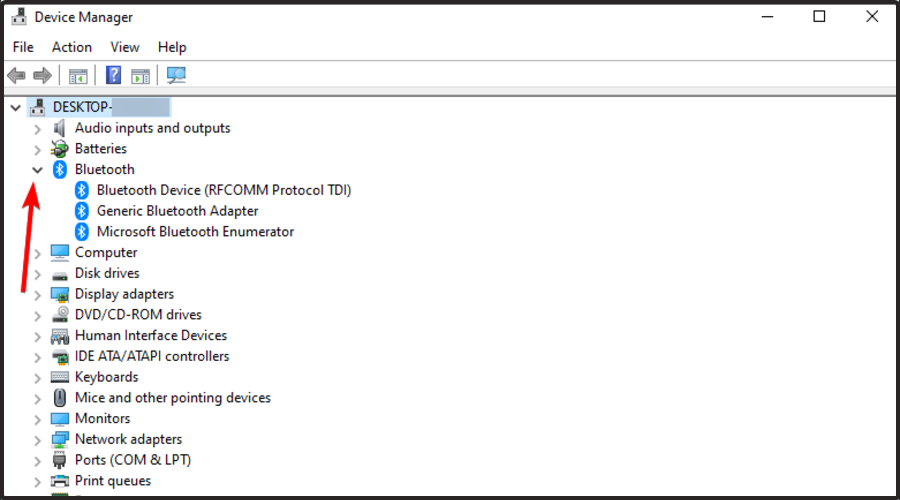
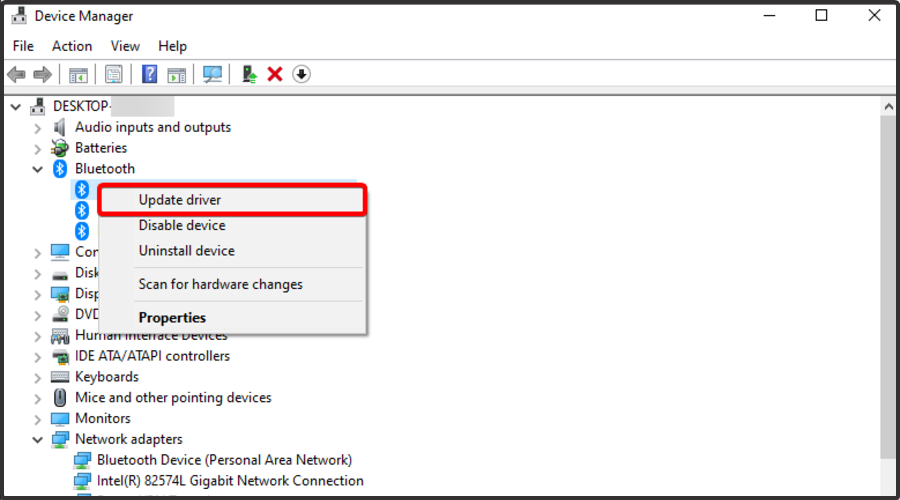
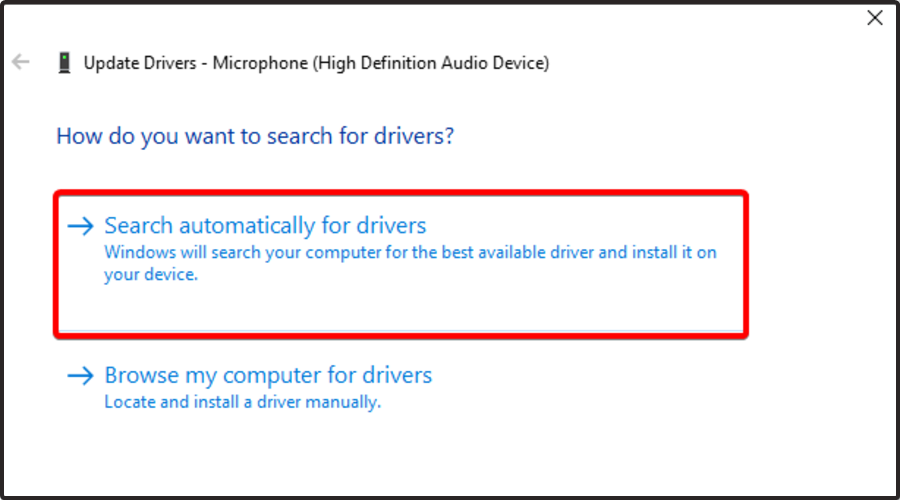
Keeping your device drivers updated ensures smooth performance and prevents hardware issues. The best driver updater for Windows 10 tools can automatically detect outdated drivers, download the latest versions, and install them with minimal effort.
Below, we review free and paid options, including the highest-rated driver updaters trusted by millions of users.
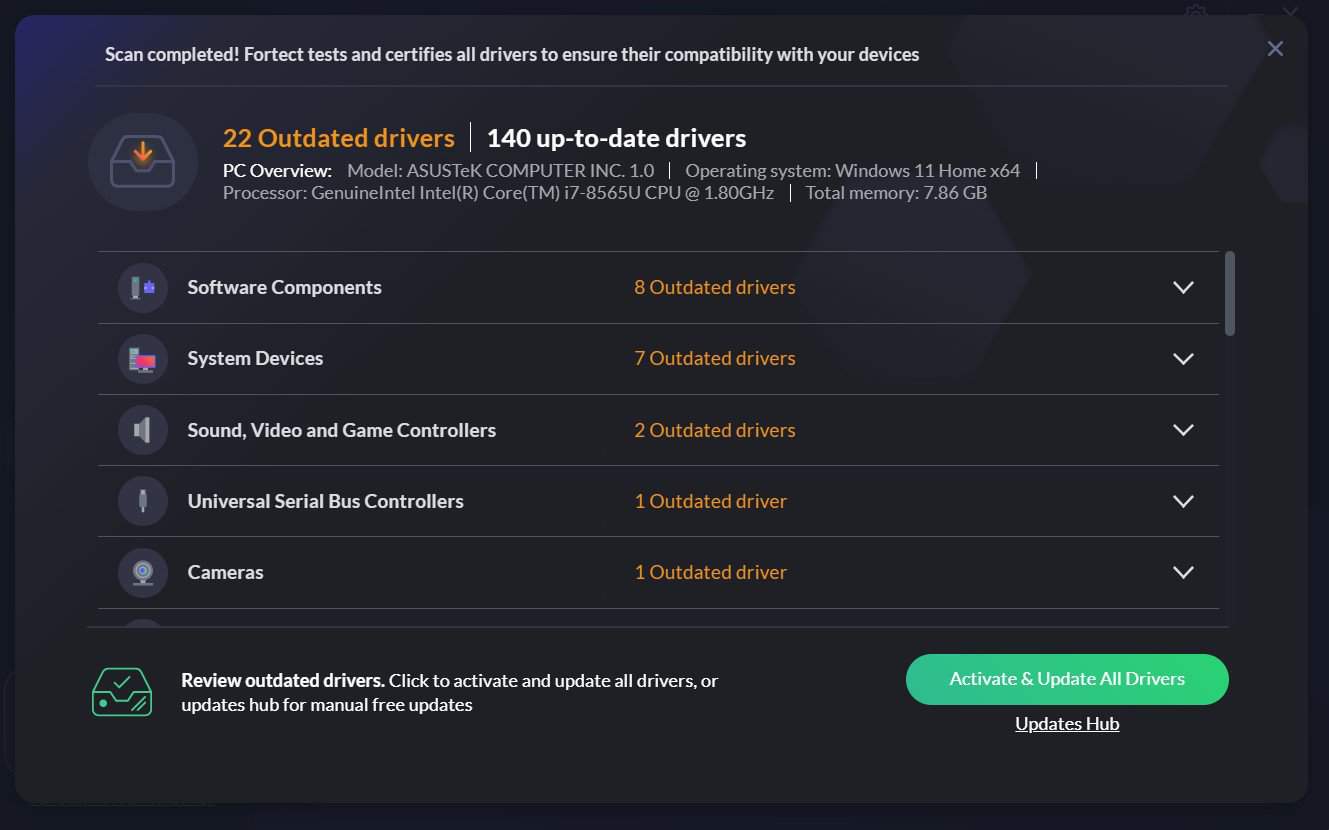
1. Fortect – Driver updater and powerful maintenance tool
Price
Type
Top Feature
Paid only
PC repair + updater
Repairs OS & updates drivers
Fortect is more than just a driver updater—it’s a complete PC maintenance tool. It repairs broken files, removes junk, and replaces damaged system elements.
We love how Fortect delivers an all-in-one package for both casual users and power users. It’s a versatile solution that tackles system health and driver issues together.
Pros:
Comprehensive system repair features
Simplifies driver updates for smooth hardware performance
User-friendly with minimal effort required
Cons:
Higher cost than standalone driver updaters
Some features require Pro version
Fortect
Update your drivers and keep your computer running smoothly with this comprehensive tool.
Fortect Driver Updater focuses on ease of use, offering quick scans and updates for outdated drivers. It has a sleek interface with tools for driver backup and restoration.
We like its straightforward design and reliable performance. For anyone seeking an efficient, no-fuss updater, this one’s a solid choice.
Pros:
Simple interface and fast scans
Includes driver backup and restore features
Excellent for non-tech-savvy users
Cons:
Limited advanced features for power users
The free version has restricted functionality
Fortect Driver Updater
Keep your computer in top shape with this powerful driver updater.
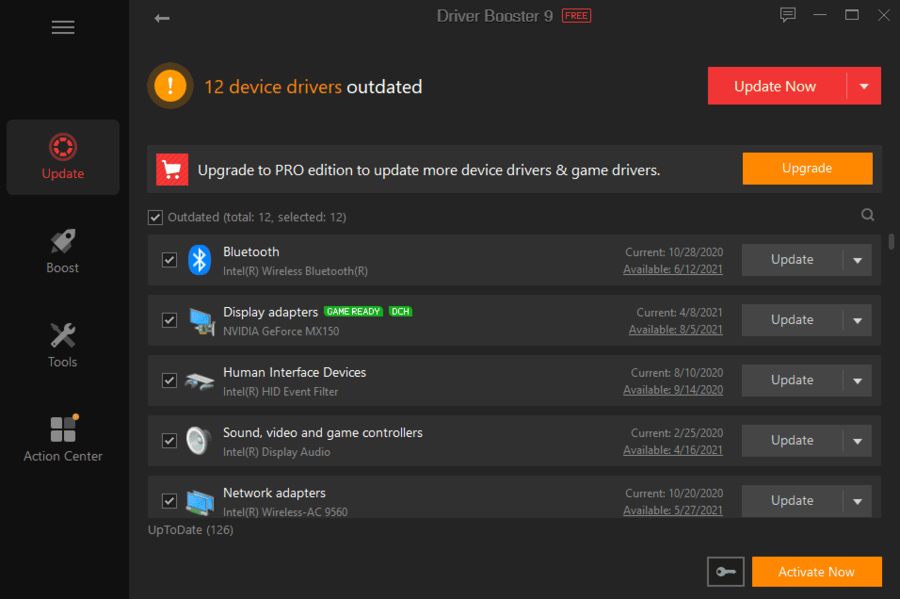
Driver Booster features a huge driver database, real-time updates, and game-focused optimizations. Its one-click scans and updates make it accessible for all users.
We liked its speed and in-depth scanning abilities. Gamers and tech enthusiasts will especially appreciate its advanced capabilities.
Pros:
Extensive driver library for broad compatibility.
Optimized for gaming setups.
Easy one-click operation.
Cons:
Free version is heavily limited.
Advertisements for upgrades can distract.
Driver Booster
Forget all about outdated drivers and get a taste of peace of mind with the IObit Driver Booster!
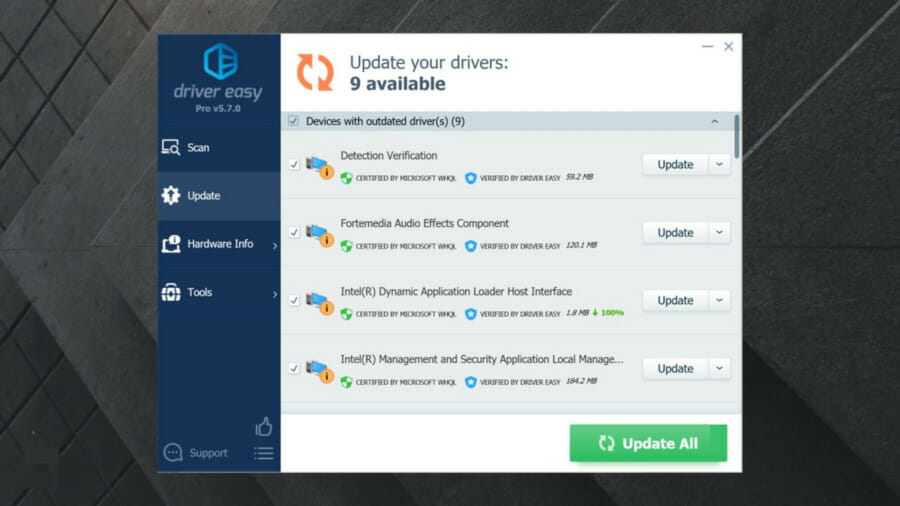
Driver Easy boasts a massive driver library that covers most hardware on the market. Its intuitive interface makes it beginner-friendly, while features like offline updating add flexibility.
We found it reliable and efficient, especially for older or rare hardware. It’s a solid choice for anyone looking for dependable updates.
Pros:
Huge driver database supports most devices
Offline update mode is handy for fixing network issues
Straightforward and user-friendly
Cons:
Free version lacks automation
Pro features locked behind a paywall
Driver Easy
A driver update solution with a massive database that helps you download all the drivers you need.
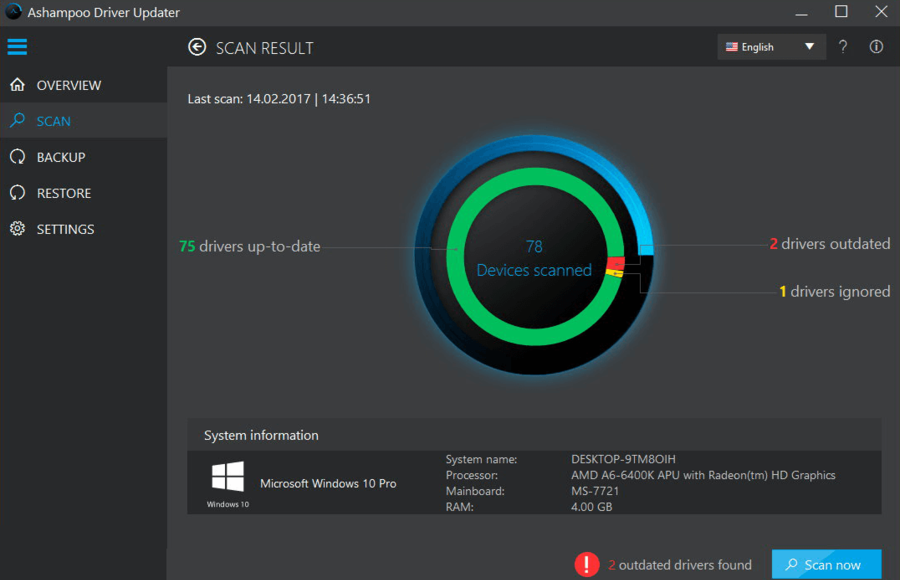
Ashampoo Driver Updater is designed to ensure seamless compatibility across devices. It supports both modern and older hardware, ensuring all drivers stay updated. Its sleek interface and lightweight design make it user-friendly.
It offers a balance of simplicity and functionality. It’s a versatile tool for multi-platform users.
Pros:
Works on both old and new systems.
Intuitive design for easy use.
Lightweight and fast installation.
Cons:
Smaller driver database than some competitors
Limited advanced customization options
Ashampoo Driver Updater
Great tool with over 150,000 supported drivers ready to help you install all the updates with just one click.
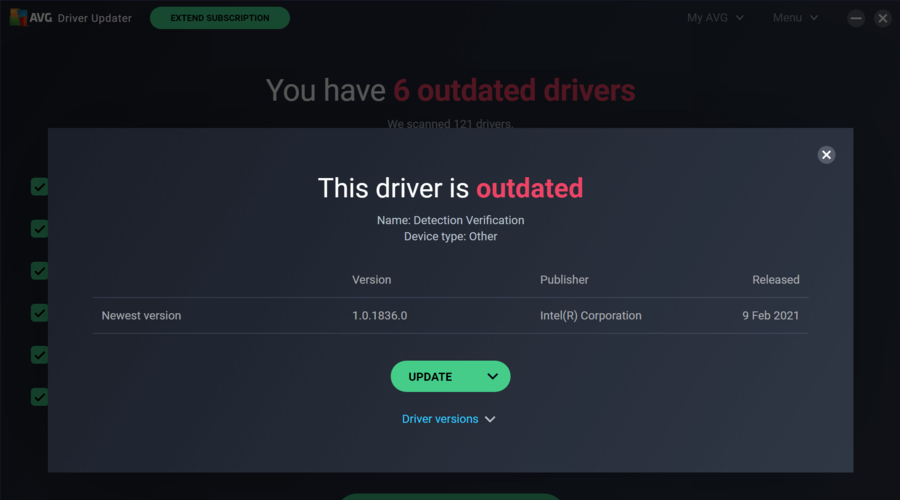
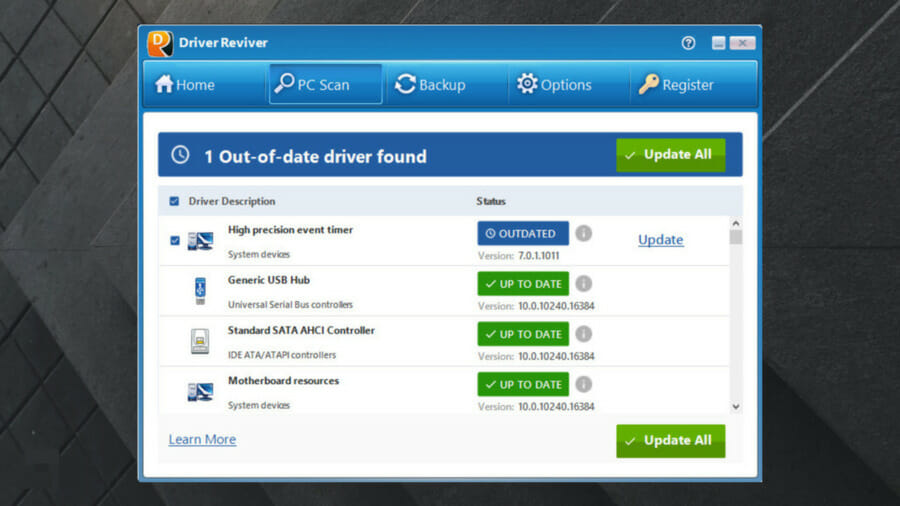
AVG Driver Updater is another great option that is worth being mentioned, as tons of worldwide users run it whenever they need to update certain drivers.
It keeps things simple with automated scans and updates. It focuses on stability, avoiding problematic updates that could cause crashes. Its trusted brand name adds an extra layer of reliability.
Pros:
User-friendly interface with automated features
Reliable updates focused on compatibility
Backed by a well-known brand
Cons:
Premium pricing compared to similar tools
Free trial is too limited for testing
AVG Driver Updater
A reliable tool with a user-friendly interface that has an extensive database to get you any device driver.
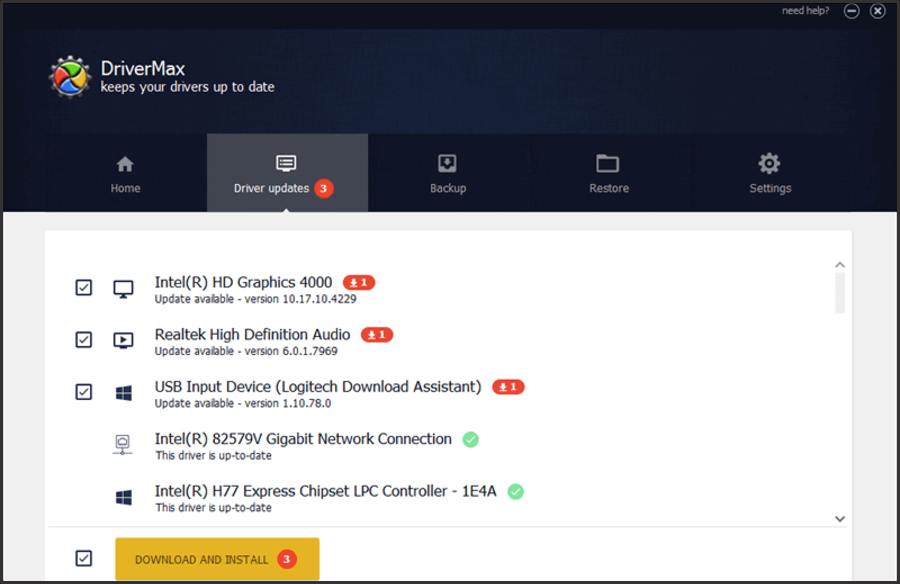
You should also consider DriverMax. Its interface is well-organized with five specific tabs: Home, Driver Updates, Backup, Restore, and Settings.
It features an extensive driver database, automatic updates, and the ability to back up and restore drivers, ensuring system stability. The user-friendly interface simplifies the process of keeping your drivers up to date.
Pros:
Extensive driver database
Automatic updates
Backup and restore functionality
Cons:
Some users report occasional false positives
Free version has limited features
DriverMax
Restore device drivers and keep your computer healthy with this amazing tool.
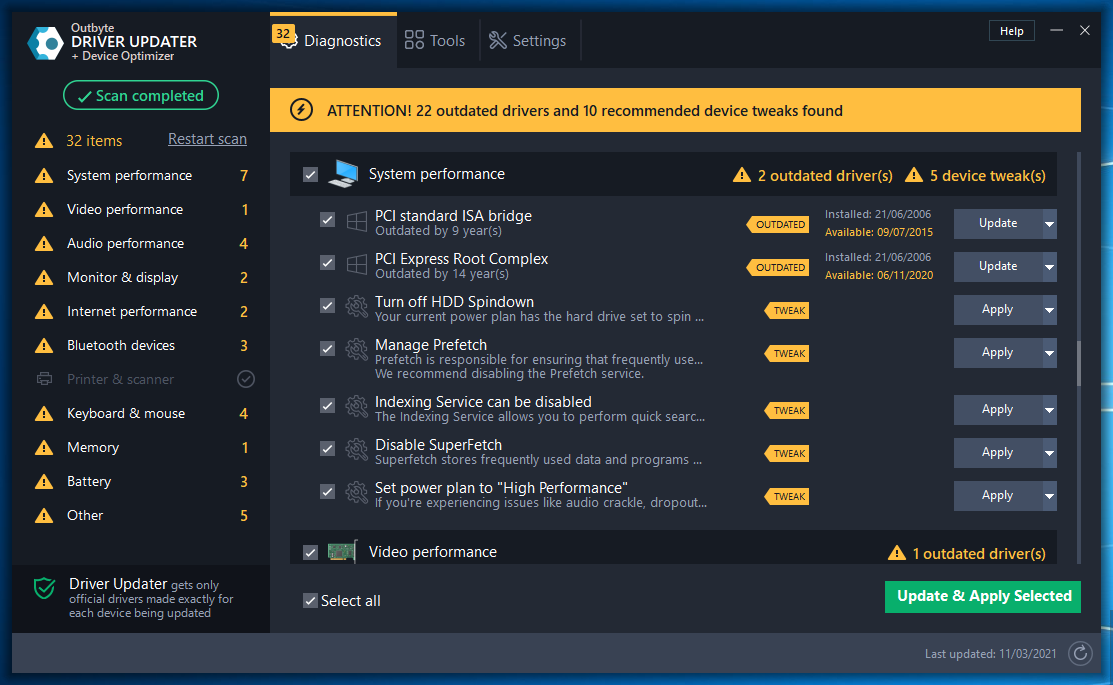
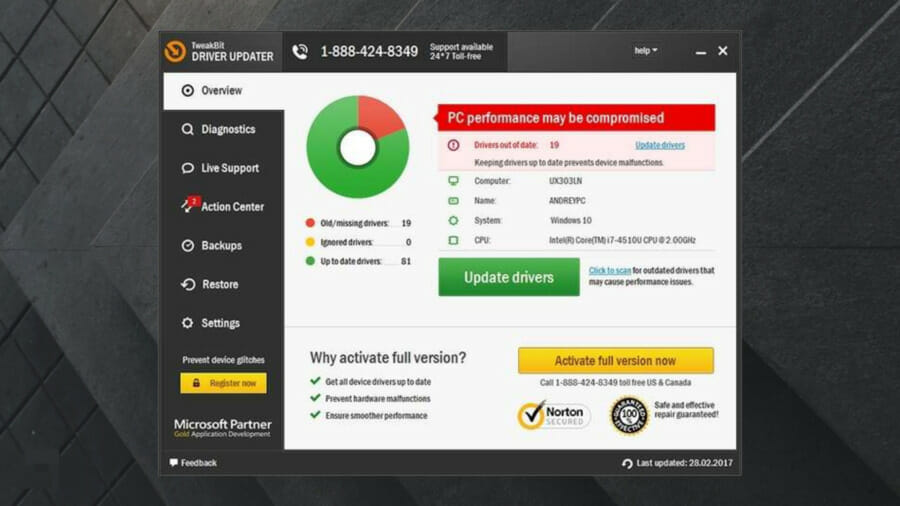
TweakBit Driver Updater supports a wide range of devices and ensures that your system remains stable and performs optimally. The intuitive interface makes it accessible for users of all skill levels.
From our perspective, TweakBit Driver Updater is a solid choice for those seeking a straightforward solution to keep their drivers current without delving into complex settings.
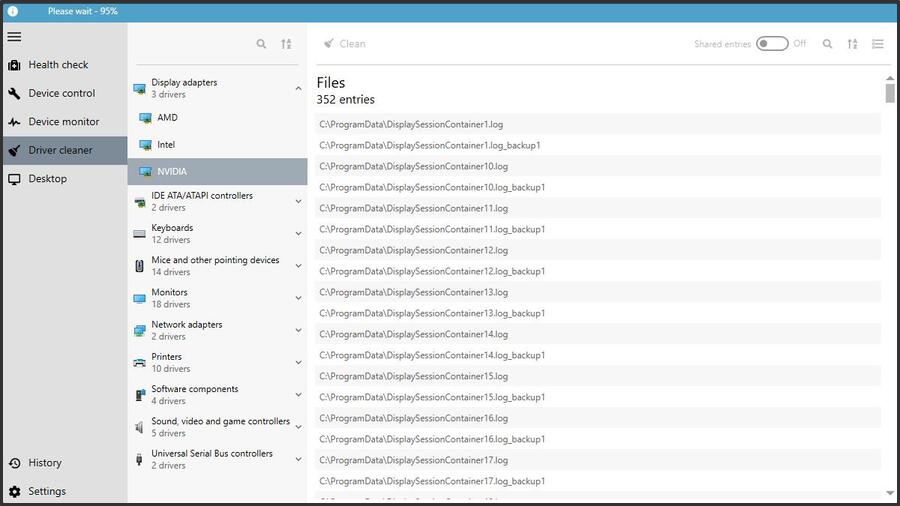
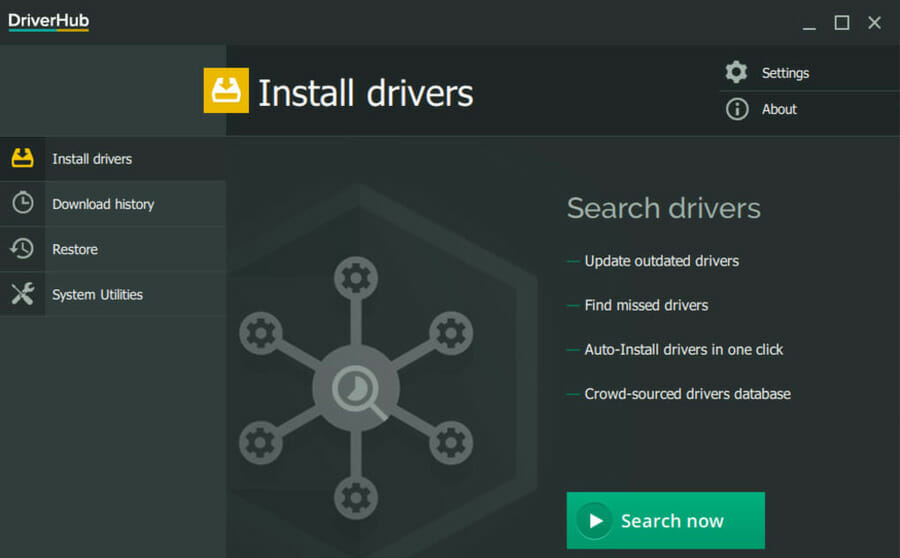
DriverHub is the right tool if you want to check for outdated drivers and easily update them because it saves you time and money.
It provides a straightforward approach to driver management, featuring a comprehensive database of drivers for various devices. Moreover, the app has an offline driver installation, which is particularly useful when internet access is limited.
After you decided on a product, tell us what it is and why did you choose it. In case of having any other questions or suggestions, we wait for them in our comments section below.
Developers can now access the latest GPT-5 lineup directly through GitHub, Azure AI Foundry, or OpenAI, with options tailored for different needs. The flagship GPT-5 model focuses on advanced reasoning for analytics, orchestration, and code generation.
GPT-5-mini offers lower cost and latency for real-time tools, while gpt-5-nano is optimized for speed and concise reasoning. There’s also a preview of gpt-5-chat, designed for natural, multimodal, multi-turn conversations with persistent context, ideal for building agent-driven apps.
The update also marks the debut of OpenAI’s GPT OSS within the toolkit, providing developers with open-source options that can run in the cloud or locally.
The gpt-oss-120b model is available via Azure AI Foundry for large-scale deployments, featuring adjustable reasoning effort and structured output support. For edge or Windows setups, gpt-oss-20b-cuda-gpu offers CUDA-optimized local inference with performance-boosting RTN quantization.
AI Toolkit now makes it easier to compare models side-by-side, generate ready-to-run SDK snippets in Python or JavaScript, and deploy to different environments — whether cloud, local, closed-source, or open-source.
With this release, Microsoft is positioning the AI Toolkit as a flexible hub for experimenting with and integrating both cutting-edge and open-source AI models. It will help streamline development from prototype to production.
The architectural design process has become much easier thanks to the rise of AI and its ability to quickly render sketches and visualize ideas.
But which platform is the best?
We narrowed down 6 powerful tools, so you can choose the best architecture AI rendering platform for your requirements.
From software plugins to web-based solutions, these tools will expand your creativity, save money, and completely streamline the design workflow.
6 Best Architecture AI Rendering Platforms
The following all perform AI architecture rendering, but each stands out in different ways:
1. MNML.AI – Best Architecture AI Rendering Platform
MNML.AI is our current top pick for AI architecture rendering.
This all-in-one AI design assistant offers 12+ tools built for architects, designers, and real estate professionals — from interior AI design to masterplan rendering and 10-second HD video generation.
Standout features include the ability to generate quick design alternatives, professional architecture visualization, and transferring the style of one image to another. The robust AI editor also lets you erase and replace selections or smartly extend images based on your specifications.
It’s never been easier to bring your ideas to life, quickly explore different styles, and generate high-resolution photorealistic images.
As an all-in-one AI architecture and design assistant, the possibilities are endless. Here’s what else it offers:
Over 40 styles across more than 12 tools.
Turn hand drawn or digital sketches into completed designs.
Transform rooms with interior AI and virtual staging.
Generate 10-second HD videos with no editing skills.
Upscale and enhance images instantly to 4K.
Render 2D plans and masterplans.
Generate design concept statements based on keywords.
Sign up now to try MNML.AI for free, with premium plans available from $19/mo or one-time credit packs for $49.
Trusted by over 1.8M users globally, MNML.AI helps you visualize, refine, and present your ideas in seconds.
MyArchitectAI helps architects, interior designers, and visualization artists transform their sketches and models into photorealistic images. The web-based platform offers a user-friendly interface with 5 main tools.
While the platform is a great all-rounder, it is one of the few that offers a dedicated furniture renderer. This allows you to generate individual furnishings with high detail, rather than an entire interior design.
Here’s what else it offers:
3D Rendering – Upload your sketch or model (CAD or linework) and use prompts to generate a photorealistic interior or exterior render.
Style Transfer – Upload a reference image to apply its style to your design, with a photorealistic output.
Render Editor – Highlight areas to populate, erase, replace, or retexture, with prompting support.
If you already use popular CAD and BIM software, EvolveLAB’s Veras works as plugin for AI render tasks on Windows. It supports Revit, SketchUp, Archicad, Rhinoceros, and Vectorworks, allowing you to quickly render your existing designs and iterate different styles.
Users can choose from a wide variety of presets, enter prompts to guide Veras, and adjust the level of creativity via the geometry slider.
Moreover, Selective Generation mode lets you edit specific parts of your image, giving more control over individual objects and textures.
In addition to the plugin, Veras offers a standalone web version where you can upload sketches and images for exterior AI and interior AI rendering.
You can try the web version for free, while premium pricing starts at $49/mo for a single plugin license.
LookX is a powerful cloud-based platform for AI interior design and architecture rendering. Like most AI render tools, it does a great job at sketch to image AI, transforming your drafts and blueprints into high-quality, photorealistic models. However, it stands out most for its text to image capabilities.
This feature allows users to create unique, custom designs simply by inputting a descriptive text prompt. By using text-to-image generation, you can experiment with different concepts quickly and easily.
The built-in prompt assistant makes the process even easier by automatically expanding descriptions and offering additional prompt suggestions.
Other notable features include:
Real-time 3D rendering, allowing model rotation.
AI video shorts, generating motion from still images.
Style Adapter, applying the style from a second image.
Resolution upscaling.
Style Duplicator, applying styles from the community Creations Plaza.
You can try LookX for free with 100 credits before upgrading to a $20/mo premium plan.
Fotor keeps things simple, offering a straightforward tool for generating exterior AI architecture.
It’s available on the web and supports sketch to image AI, which turns any existing image or sketch into a full rendering in the style of your choosing.
You can also generate architectural designs from scratch using prompts only. Simply enter some descriptive keywords and choose one of the many pre-set styles. The 3D works or photography styles work well for architecture.
A premium plan allows you to generate up to 8 variations at once. These are available from $9.99/mo and unlock several additional editing features that can help refine your images after rendering.
MidJourney can be a great tool for creating architectural renders, especially for generating unique and creative designs. While it requires a good understanding of prompting, when mastered, users can produce stunning images that capture the essence of various architectural styles and settings.
Unlike some of the dedicated AI architecture platforms, MidJourney runs within Discord. Users interact with the MidJourney bot by typing the “/imagine” command followed by a text prompt that describes the type of architectural or interior design image and style they want to create.
You can also upload one or more source images to render a sketch or change or blend styles.
MidJourney pricing starts at $10 per month (or $96 per year, which averages $8 per month).
Overall, MNML.AI provides the best architecture AI rendering platform, with a comprehensive range of tools that are easy to use.
However, the other picks may suit you in certain circumstances. For example, MyArchitectAI is great for rendering individual furnishings, while the likes of Veras can plugin to your existing software. LookX is also a great choice if you need extra prompting support.
Whatever AI render tool you choose, it’s now easy to render sketches, try different styles, and output high-resolution photorealistic designs.
Microsoft is testing a new AI tool called Copilot 3D, and it’s all about turning regular images into 3D models. The free web app is available to some users through the Copilot Labs portal and requires you to sign in with your personal Microsoft account.
You can simply upload a PNG or JPG under 10MB, and Copilot 3D will quickly generate a 3D model you can edit, print, or drop into games and art projects. There’s even a small library of ready-made models to download in the popular GLB format if you just want to play around.
Microsoft says it wants to make 3D creation less intimidating and more fun. “Whether you’re exploring ideas, testing a concept, or guiding hands-on learning, Copilot 3D supports imaginative experimentation without the complexity of traditional 3D software,” the company explained.
Everything you make is saved to your My Creations page for 28 days, so there’s time to tweak or download later. Microsoft also makes it clear, only upload images you own the rights to, and avoid anything that shows people without permission.
The company won’t use your uploads to train AI, but it will block anything illegal. To catch you up, If this Microsoft dived into 3D before with tools like Paint 3D and Remix3D. As of now, both have been discontinued.
However, we expect Copilot 3D could stick around longer given that Microsoft has been actively investing in Copilot. While it’s still an experimental feature, it could make 3D design something anyone can try.
Microsoft is adding a new way to catch up on your work in Word without staring at the screen. The latest update brings Audio Overviews to Microsoft 365 Copilot (via Neowin), letting the AI read a summary of your document out loud.
You can listen while commuting, making coffee, or doing anything else away from your desk. This update comes as Microsoft 365 Copilot now runs on OpenAI’s GPT-5, which promises more accurate summaries and smoother interactions.
The Audio Overviews feature is now available in Word for Windows (version 2506, build 18925.20138) and Word for the web, but you’ll need a Microsoft 365 Copilot license to use it.
Once you open a document, click the Copilot button in the Home tab and ask for an audio overview. Copilot will generate a short spoken summary and give you playback controls to pause, skip ahead or back, and adjust the speed.
You can also save the audio to OneDrive for later or share it with others. All saved overviews appear in your Copilot chat history, making it easy to revisit them anytime.
There are some limits, though. The document needs at least 100 words, the feature currently works only in English, and it only supports files stored online in OneDrive or SharePoint, not local files. Moreover, Microsoft says more languages are coming in the future.
NVIDIA GeForce NOW members are getting a packed week of cloud gaming, with five new titles joining the service, with the notable addition of Mafia: The Old Country, which launched yesterday.
The prequel to the award-winning Mafia series takes players back to 1900s Sicily, telling the gritty origins of Enzo Favara and his rise in the Torrisi crime family. It joins the full Mafia trilogy already available on GeForce NOW, meaning subscribers can stream the entire saga without waiting for downloads or updates.
This week’s additions also include the official launch of Stormgate 1.0, a modern real-time strategy game that blends competitive play with a lighthearted tone, plus the early access debut of Titan Quest II, THQ Nordic’s sequel steeped in Greek mythology.
Marvel fans have reason to log in too. Marvel Rivals Season 3.5 dropped today, bringing Blade as a playable hero, a new Resource Rumble mode, and overhauled team synergies that shake up the competitive meta.
Rounding out the lineup are Assassin’s Creed Mirage on PC Game Pass, Amnesia: The Dark Descent via the Epic Games Store, and HUNTER×HUNTER NEN×IMPACT on Steam.
With GeForce NOW’s cloud streaming, members can jump into these games instantly on nearly any device. Whether you’re chasing vendettas in Sicily, battling vampires in the Marvel universe, or commanding armies against demons, the latest GFN Thursday lineup has something for everyone.
The weekend’s almost here, but Xbox isn’t making you wait to start playing. This week’s Free Play Days lineup is live, and it’s a mixed bag of fantasy quests, monster collecting, platforming challenges, and even a pup-filled adventure.
The Elder Scrolls Online is free for everyone on Xbox until August 12. It’s part of QuakeCon celebrations, and you can roam Tamriel’s Second Era without spending a dime. Expect to see Morrowind’s ashlands, Daggerfall’s coasts, and plenty of dragons if you wander into Elsweyr.
The Game Pass Ultimate, Standard, and Core members also get Souldiers. This one blends Metroidvania exploration with tricky platforming and combat. You can choose between Scout, Caster, or Archer and tackle it however you like.
If you’ve got younger players around, PAW Patrol World lets you team up as your favorite pups and explore Adventure Bay. On the other side of the tone spectrum, Cassette Beasts offers a quirky spin on monster collecting. You’ll record creatures onto tapes and play them back in turn-based battles—no random encounters here.
Everything except Elder Scrolls Online wraps up August 10 at 11:59 p.m. PT, so if you want to try them, it’s time now. Hurry up!
This week’s Free Play Days titles and prices after trial ends:
The Elder Scrolls Online – $4.99 (Xbox One, Series X|S)
Cassette Beasts – $19.99 (Xbox One, Series X|S, PC)
Souldiers – $6.99 (Xbox One, Series X|S)
PAW Patrol World – $19.99 (Xbox One, Series X|S, PC)
OpenAI’s latest AI model, GPT-5, isn’t as good as Sam Altman hyped it, at least according to initial testers. The new model’s debut has been met with a wave of criticism, with long-time ChatGPT Plus subscribers voicing frustration across Reddit and other forums.
According to this Reddit post, GPT-5 is horrible. Worth noting that the backlash began almost immediately after the update went live. Many users say GPT-5 feels slower and less capable in certain tasks compared to GPT-4o, despite CEO Sam Altman’s bold pre-launch hype.
Others are unhappy about the disappearance of older models they relied on for specific work. The complaints don’t stop there. The new model now comes with tighter usage limits, which some subscribers say makes the Plus plan feel like a worse deal than before. “We’re paying more for less,” one user wrote, summing up the mood in multiple threads.
The backlash highlights a challenge OpenAI has faced with every major release, balancing innovation with the needs of its existing user base. GPT-5’s new features may appeal to fresh sign-ups, but old users feel something is clearly off. Some even said “They ruined ChatGPT.”
At the time of writing this piece, Sam Altman tweeted to address the backlash. The CEO responded to almost everything users have criticized in the last 24 hours or so. According to Altman’s post on X, OpenAI will double the ChatGPT Plus users’ GPT-5 rate limits after finishing the rollout.
The company will also improve model selection transparency, and fix autoswitcher issues which caused GPT-5 to perform significantly worse since launch. More importantly, Plus users will be able to access GPT-4o. Altman also noted that UI changes and smarter responses are coming. He further noted, “we expected some bumpiness as we roll out so many things at once. But it was a little more bumpy than we hoped for!”
Microsoft has rolled out a new security baseline for Edge version 139, making a key change to its recommended enterprise settings.
The update adds one new control and removes another, hinting at the company’s latest thinking on browser safety. According to Microsoft, the baseline now disables the EnableUnsafeSwiftShader policy by default.
SwiftShader, a software-based renderer, acted as a backup for WebGL when no GPU acceleration was available. It was especially relevant for virtual machines, which are common in enterprise setups.
The move aims to reduce potential attack surfaces, as malicious content could exploit flaws in the renderer. While Microsoft says this is a proactive measure rather than a reaction to known vulnerabilities, the change could disrupt organizations that relied on SwiftShader for compatibility.
IT teams can choose to override the setting, but that would mean departing from the company’s official security guidance. The update also introduces a new Edge for Business security connectors feature.
For the unitiated, it is designed to integrate the browser with enterprise data loss prevention tools and authentication systems, potentially closing security gaps in corporate environments.
Security baselines are downloadable from Microsoft’s Security Compliance Toolkit. Not to forget, it allow administrators to quickly apply a vetted set of browser settings across an organization.
Microsoft has rolled out Edge 139 to all Stable Channel users, bringing performance tweaks, a redesigned settings menu, and new privacy tools. The latest update has rebuilt the Settings section using Microsoft’s WebUI2 framework.
This overhaul speeds up navigation and simplifies menus, making it easier to find and adjust options. Some pages have been merged or removed, including the Wallet tab, which now directs users to a unified “Passwords, Payment, and Personal Information” page.
That’s not all; security gets a boost with real-time alerts for compromised passwords. If Edge detects your login details in a known breach, it will prompt you to update them immediately. Autofill settings also gain a consent toggle for collecting form field labels, aimed at improving suggestion accuracy.
Other updates include a policy for hiding or showing Microsoft 365 Copilot in Edge for Business. Now, there’s also a profile-based system for opening external links, and a built-in lightweight AI model called Phi-4-mini. This model powers new writing and summarization APIs for websites and extensions, available under Edge flags.
Performance tools are now split into two sections, Performance and Secure Network, for easier monitoring. Users struggling with sync can reset their data directly from settings, and macOS admins get updated controls for Microsoft AutoUpdate.
Not to forget, Edge 139 also fixes eight Chromium-based vulnerabilities and disables a key graphics feature as a security precaution. The update is rolling out now, and you can check by going to edge://settings/help.
Mozilla has released Firefox 141.0.3 targeting two specific but important bugs. The update comes shortly after version 141.0.2, which addressed crashes on PCs with older NVIDIA drivers and other stability issues.
The Firefox 141.0.3 update addresses a problem affecting websites built using Svelte, a JavaScript framework known for creating highly interactive pages.
In recent versions of Firefox, certain on-screen elements on Svelte sites would unexpectedly vanish over time. A message appearing after a button click, for instance, could disappear without warning. The latest patch resolves that bug.
The latest update also fixes an issue in Strict Tracking Protection. While Firefox continued to block cryptominers, they were not appearing in the list of blocked items, potentially leaving privacy-conscious users confused. With the update, the block list display now reflects the actual protections in place.
Not to forget, Firefox 141, released in late July, was a more feature-heavy update. It introduced AI-powered tab grouping, vertical tab improvements, WebGPU support for Windows, memory optimizations for Linux, and new address bar actions. But, the recent updates has been released to fix multiple bugs spotted by the team and users. users.
The 141.0.3 update is available now through Firefox’s built-in updater as well as Mozilla’s website. You can also install it manually by navigating to the “About Firefox” section in the menu.
YuE, an open-source AI model that can turn written lyrics into complete five-minute songs, is officially here. A research team from the Hong Kong University of Science and Technology and M-A-P is behind this model.
The project, described in a paper on arXiv, arrives at a moment when AI-generated music is facing mounting legal questions.
YuE is available on GitHub under the permissive Apache 2.0 license, allowing both developers and musicians to explore the technology without restrictive terms. The researchers say the goal is to encourage transparent innovation in AI music while keeping it accessible to creators.
Technically, YuE builds on the LLaMA 2 architecture and was trained on trillions of tokens. Its standout feature is the ability to keep songs coherent over several minutes. The model separates vocals and accompaniment into parallel streams, avoiding the muddiness that can happen in dense arrangements.
It also uses a method called structural progressive conditioning. This breaks a track into logical sections, like verses and choruses, helping it preserve melody and rhythm through each part.
Another strength is its in-context learning ability, which lets users feed in a short audio clip to guide genre, vocal style, or even replicate a specific voice.
The official demo showcases impressive flexibility, from smooth jazz scatting to aggressive metal growls, all without direct training for those styles. With its open release, YuE could become a notable tool for musicians looking to experiment with AI, without crossing into legally murky territory.
Microsoft’s 50th Anniversary Surface Laptop was never going to be easy to get. Only 50 units were given away in a competition earlier this year, and that window closed months ago. But there’s at least one part of it you can still own, the wallpaper.
Bundled with the anniversary device, the exclusive design is a reimagined version of Windows 11’s Bloom background. It’s a striking choice for dark theme fans, who love deep blacks and vibrant colors on their desktop background.
The design swaps the usual vibrant shades for a muted palette with swirling gold accents, originally made to match the laptop’s gray-and-gold finish but fitting well on any desktop.
The company never sold the laptop, but the wallpaper has now surfaced online for anyone to download. You can click on the image below to download it in high resolution.
The 50th Anniversary Surface Laptop itself was a nod to Microsoft’s history, pairing a retro 1975 logo with modern design touches.
While you can’t buy one, Microsoft’s current Surface Pro and Surface Laptop models are still around, just without the anniversary extras. Not to forget, Microsoft has also introduced a “Windows XP Crocs” to celebrate its 50th anniversary.
OpenAI is making an unusually bold move to keep its best people from walking away. According to The Information, the company is handing out $1.5 million retention bonuses to around 1,000 research and engineering employees. That adds up to more than $1.5 billion, one of the biggest talent-protection spends the industry has seen.
The payouts come at a time when its rival company, Meta, has been on a hiring spree. Zuckerberg’s company is aggressively targeting AI researchers from rival companies.
Its “buy or poach” approach, reportedly driven by CEO Mark Zuckerberg, has intensified after the company’s internal AI projects hit setbacks. OpenAI’s bonus plan appears designed to cut that recruitment drive off at the knees.
Initially, the details of the offer surfaced when Hyperbolic Labs co-founder Yuchen Jin shared news of the internal announcement on X. He said the deal even covers new hires, instantly putting them in the millionaire bracket.
Jin compared it to the wealth effect seen at Nvidia, where a large percentage of employees hold significant equity. The news comes as OpenAI just announced GPT-5, its latest flagship model. But this time, it’s not a product launch grabbing the spotlight; it’s the scale of the company’s investment in its workforce.
The bonuses add to a growing list of moves by tech giants to lock down scarce AI expertise. In an industry where the supply of elite engineers is limited, the thinking is simple: whoever secures the talent controls the future.
Built using Microsoft Azure infrastructure, GPT-5 is designed to tackle more complex reasoning tasks and improve overall performance across chat, code generation, and business workflows.
In Microsoft 365 Copilot, the model brings better understanding of context and long-form queries. It now handles deeper tasks like reasoning across emails and documents, helping enterprise users stay organized and save time.
The GPT-5 upgrade also extends to Copilot Studio, where custom GPT-5 agents can be created for more advanced business needs. Developers aren’t left out either. GPT-5 is coming to GitHub Copilot and Visual Studio Code, promising improved results for longer, more complex code and agentic tasks.
The new model can also be accessed directly through Azure AI Foundry, where Microsoft’s intelligent routing system automatically picks the best model for each prompt.
For general users, GPT-5 powers the new “Smart mode” in Microsoft Copilot. Available on desktop, mobile, and web, it brings faster, more accurate help with writing, research, and creativity, at no cost.
Microsoft says its AI Red Team has already tested the new model for safety, claiming it has one of the strongest security profiles yet. The release is part of Microsoft’s ongoing push to bring more capable and secure AI tools to everyone.
Microsoft is preparing to sunset another long-running product alongside the end of life for Windows 10 this year. The company has confirmed that Microsoft Lens, its popular mobile document-scanning app, will be phased out by the end of 2025.
To catch you up, Microsoft first launched the app in 2014 as Office Lens for Windows Phone. It quickly became a go-to tool for converting documents, whiteboards, and notes into digital files.
Seeing the successes, the company expanded to iOS and Android. It was in 2021 when the company renamed it as Microsoft Lens.
Well, the app will retire soon. Microsoft says that it will phase out the app in stages starting September 15, 2025. By mid-October, new downloads will be blocked from the App Store and Google Play. In mid-November, the app will disappear from both stores entirely.
On December 15, the app will be killed. Users will lose the ability to create new scans. Existing files will remain accessible in the MyScans folder, but without updates or support.
The company has also urged users to use the Microsoft 365 Copilot app, which now includes an upgraded Scan feature. Microsoft says this tool supports scanning text into Word, tables into Excel, and more, with all files saved to OneDrive under “MyCreations.”
If you’ve relied on Microsoft Lends for a long time, it’s time to bid goodbye to the familiar tool. With the company heavily investing in AI, we saw that coming. Speaking of AI, Microsoft yesterday announced that it has integrated the newly announced GPT-5 model into its products.
Battlefield 6 has barely begun its beta phase, but it is already breaking some longstanding records. Within its first day on Twitch, the game pulled in 844,723 concurrent viewers, putting it ahead of nearly every Call of Duty title and cementing itself as one of the most-watched FPS launches in years.
The only Call of Duty game to outpace it is Warzone, which still holds the Twitch crown with over 1.6 million peak viewers. For comparison, Modern Warfare II topped out at 751,937, while Black Ops Cold War peaked at 705,050.
It is not just Call of Duty that has been overtaken. Battlefield 6’s numbers also beat the peak viewership records of Rainbow Six Siege, Overwatch, Escape from Tarkov, and PUBG.
DICE and EA’s shooter arrives at a critical moment for the brand, which has been looking for a true comeback since its Battlefield 4 heyday. The beta’s explosive debut hints that this could be the revival longtime fans have been waiting for.
With the test set to expand to more players over the weekend, the big question is whether Battlefield 6 can keep its momentum and possibly challenge Warzone’s record.
The full launch is still ahead, and if the current trajectory holds, Battlefield may find itself not just back in the fight, but leading it.
Microsoft Flight Simulator 2024 is taking to the skies with a prehistoric twist. A new expansion, Jurassic World: Archipelago, is set to add the franchise’s iconic dinosaur-filled islands to the ultra-realistic flight sim, complete with creatures like the T. rex, Velociraptor, and Mosasaurus roaming below.
Announced by Orbx and Universal on X, the upcoming add-on reimagines the entire Jurassic archipelago just off the coast of Costa Rica.
Fans of the films will recognize locations from Isla Nublar to Isla Sorna and other islands from the Muertes Archipelago. The expansion drops players into a timeline just before the 2015 Jurassic World movie, with the park open, but not exactly stable.
“Set just before the events of the 2015 Jurassic World film from Universal Pictures and Amblin Entertainment, the islands are captured at a moment when the park is operational but not everything is under control,” reads the official description. “The landscape itself is much more than a pretty backdrop: it’s both a challenge for aviators and a journey of recreating your favorite movie scenes.”
The DLC will include multiple helipads, airstrips, and custom-built environments at Juan Santamaria Airport and Herradura Bay Marina. Spotting dinosaurs mid-flight is part of the experience, making each flyover feel like stepping into the films themselves.
Jurassic World: Archipelago launches at the end of August or early September 2025 for Microsoft Flight Simulator 2024, with support for the 2020 version and Xbox coming soon after. If you’ve ever wanted to soar over Isla Nublar in a Cessna while a Brachiosaurus grazes nearby, your time is almost here.
Microsoft has announced the general rollout of Microsoft 365 Copilot Chat for students aged 13 and older. The tool is designed to support learning while keeping school administrators in control and student data protected.
Copilot Chat is a stripped-down version of the full Microsoft 365 Copilot experience. It doesn’t access private organizational content like emails or internal documents. Instead, it uses public data and limited student inputs to help with research, writing, and general questions, making it ideal for K-12 classrooms looking for a safe AI assistant.
To activate the tool for students, IT admins will need to make a few backend adjustments. Most importantly, they must tag student accounts with the correct age group in Microsoft Entra ID. Accounts marked as “NotAdult” will gain access to Copilot Chat.
Microsoft notes this setup helps maintain compliance with privacy regulations like FERPA and COPPA. Admins can also customize how Copilot Chat behaves using the Microsoft 365 admin center.
From enabling or disabling access for specific groups to managing AI agents and enforcing usage policies, the controls are built to be flexible and secure. Behind the scenes, Microsoft promises the same enterprise-level security found across its ecosystem.
Well, that includes encrypted data, access controls, and protections against malicious prompts. While Copilot doesn’t alter permissions, it can surface content students already have access to. This is why admins are encouraged to regularly audit sharing settings using tools like Microsoft Purview.