Wscadminui.exe: What it is and how to troubleshoot it

The wscadminui.exe file comes bundled together with the Windows 10 installer package and it’s another super important part of the Windows Security Center.

This file, just like other executable files in Microsoft Windows has several versions including 10.0.15063.0, 10.0.16199.1000, and 10.0.16299.15.

Now, besides improving Windows 10 users experience by the app., the file plays an important role in stabilizing the overall functioning of your system.

But the file has also been associated with some issues, such as the Wscadminui.exe – Bad Image error, faulty application path, among others.

We will be looking at these errors, some of which have made some users mistake it for a malware, and how to fix them in this article.

But before then, let’s look at the basics.

What is wscadminui.exe?

The file first appeared on the scene in July 2015 with the release of Windows 10.

Officially describe as Windows Security Center Elevated UI App, it has since been updated several times to improve its performance.

Should I uninstall wscadminui.exe?

The answer is a big no.

First, as I mentioned earlier on, the app greatly improves the running of your Windows 10 operating system. Indeed, most of your PC won’t run without executable files like wscadminui.exe.

Furthermore, the file is developed by Microsoft meaning it’s trustworthy.

Escadminui.exe common errors

Like other .exe files, the file is known to trigger various errors in Windows 10 machines. Here are some of the most common wscadminui.exe hitches:

  • Cannot find wscadminui.exe: This could mean that the file maybe missing from the registry.
  • Wscadminui.exe – bad Image: Bad Image error happens if the file has been interrupted or is corrupted.
  • Wscadminui.exe is not a valid Win32 application: Generally this error occurs when Windows tries to run the executable file only to fail possibly because of an incomplete file download.
  • Faulting Application Path: wscadminui.exe: This arises sometimes due to wrong RAM sticks configuration or out of date drivers for essential hardware such as a motherboard.
  • Wscadminui.exe is not running: The app. could have been stopped by a third-party conflicting application.
  • Windows failed to start – wscadminui.exe: With this, it is possible that the services enabling the file to run relevant tasks have issues.
  • The file wscadminui.exe is missing/corrupt: The issue here could be interpreted to mean that the file is damaged or compromised by a malware.
  • Error starting program: wscadminui.exe: In most cases, the program’s starting errors result from the user lacking administrative rights, a virus infection, or Windows compatibility problems.
  • Wscadminui.exe has encountered a problem and needs to close: This issue has a plethora of triggers chief among them a program crash.

How to fix wscadminui.exe errors

The good news is that workarounds exist for many of these issues.  Here is how to troubleshoot some of the aforementioned errors:

  1. Scan The File To See If It’s Corrupt
  2. Restore Your System To An Earlier Working State
  3. Update Windows
  4. Reboot Your Computer
  5. Scan Your PC For Viruses
  6. Halt The Wscadminui.Exe From The Task Manager

Method 1: Scan The File To See If It’s Corrupt

The wscadminui.exe file may refuse to run effectively because its installation has been corrupted.

Here is what to do:

  1. Click on the start button.
  2. Open the command prompt by typing cmd.exe in the shown search box.
  3. Now right-click on command prompt(admin). Wscadminui.exe
  4. Click on yes if and when prompted (to progress to cmd).
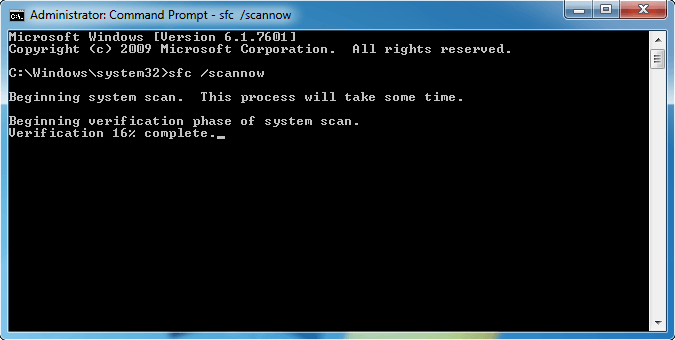
  5. Next type sfc /scannow and press enter.Wscadminui.exe
  6. The tool will inspect the entire system to see if it’s in an OK condition. Wait for it to finish then restart your PC.

Fix 2: Restore Your System To An Earlier Working State

System restore allows you to cancel any changes that you could have made in Microsoft Windows that resulted in the file experiencing problems.

Rolling back these changes could thus help permanently eliminate a couple of wscadminui.exe problems:

Steps:

  1. Click start
  2. Type control panel(on the start menu’s search dialog). Press enter.
  3. Click control panel from the results.Wscadminui.exe
  4. Now type recovery on the control panel’s search box. This brings up the system recovery options.Wscadminui.exe
  5. Tap on Open System Restore and click Next.windows 7 wmpshare.exe
  6. Choose the latest update, driver, or app from the listed options then click Scan for affected programs.Wscadminui.exe
  7. A fresh list of the items targeted to be deleted after removing the current restore point is displayed. If satisfied with the present selection, click Next then  You can alternatively select an older restore point appropriately.
  8. Follow the remainder of the steps.

Fix 3: Update Windows

Installing the recent updates from Microsoft helps you keep your system safe from emerging security issues as well as repairing existing problems in files, drivers, and other programs.

You can try to update your system by downloading and adding the latest updates to eliminate some of the issues:

Steps:

  1. Click Start.
  2. Type update in the search dialog box (then press enter).Wscadminui.exe
  3. Choose check for updates.Wscadminui.exe
  4. Select Install Updates(If any come up).

Fix 4: Reboot Your Computer

Rebooting your computer clears any unnecessary data and program files occupying the memory and which could be affecting your machine.

For this reason, restarting the PC can resolve several wscadminui.exe-connected errors.

Furthermore, some Window’s executable files are known to stop/crash when the system resources such as CPU are overstretched.

This problem is again easily fixed by restarting your computer.

Fix 5: Scan Your PC For Viruses

Malicious code attacks your computer in critical system areas including in locations where the wscadminui.exe file reside.

This could be contributing to some of the persistent errors associated with the file.

The solution here is to start your antivirus and scan your PC for an infection.

Steps:

The steps depend on the security software you have in your computer. You can refer to your antiviruses’ manufacturer’s website if you run into trouble.

Fix 6: Halt The Wscadminui.Exe From The Task Manager

If you’re searching for a quick solution, use the task manager to stop the file. This should at least temporarily block the processes linked with the app. and hence some of the glitches.

Steps:

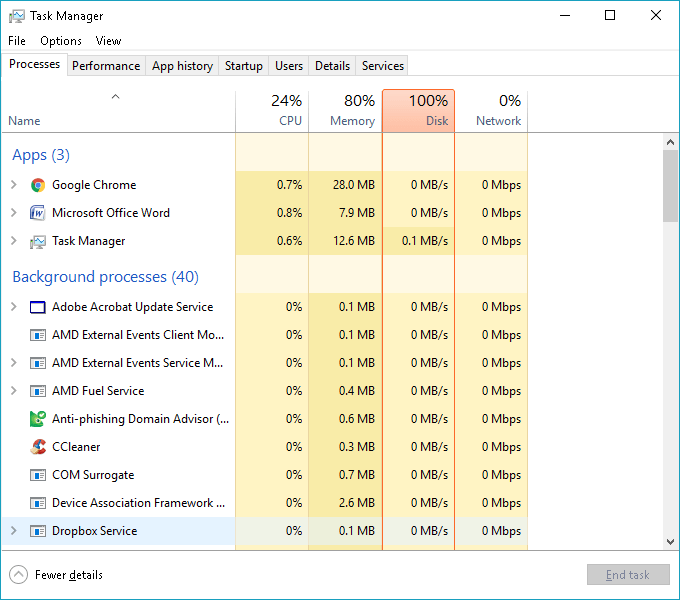
  1. Start Window’s Task Manager, press the CTRL+Alt+Del buttons to access the task manager.Wscadminui.exe
  2. Go to the Details
  3. Locate and click the Wscadminui.exe file from the highlighted list.
  4. Right-click it then select End task.

 RELATED STORIES YOU NEED TO CHECK OUT:
OneNote Windows 10 app will get a new dark theme and navigation improvements

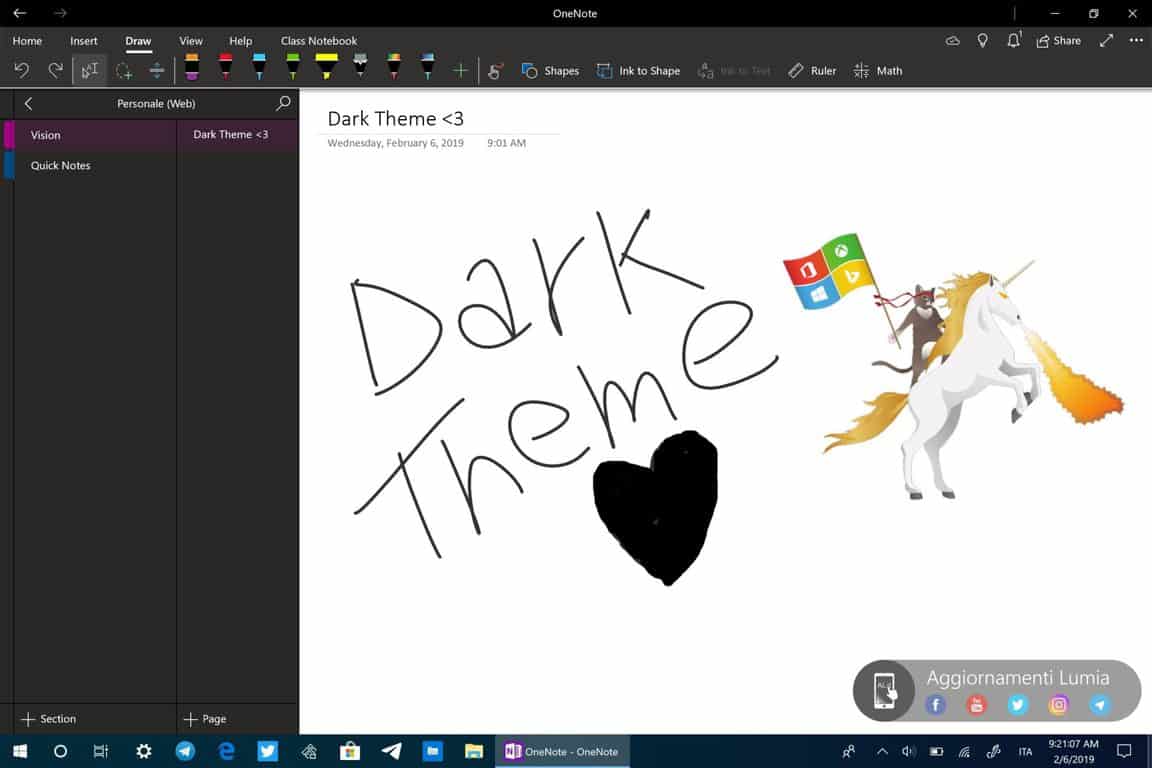
OneNote is one of the few inbox apps that ship on all Windows 10 PCs, but it curiously didn’t get a dark theme option like most of the other UWP apps from Microsoft. Well, that should be changing soon as Italian blog Aggiornamenti Lumia has shared some screenshots showing the new dark theme today.

Laura Butler, head of Microsoft’s Notes and Tasks team confirmed that the dark theme is currently being worked on, teasing upcoming major navigation improvements along the way.

As we’ve seen with many other Microsoft apps in dark mode, the company has opted for a dark grey background color, but the white background will apparently still be there when you open a specific note in the app. There’s no word yet about when this new dark mode will be available for Insiders testing, but it could be a while a Butler said that the app isn’t fully available internally. In the meantime, let us know in the comments if you like what you see in those screenshots.

Crackdown 3 Wrecking Zone technical test will be open to Xbox Insiders starting tomorrow

Microsoft has just dropped some exciting Crackdown 3 news ahead of the game’s release on February 15. Indeed, the company will be running a technical test of Wrecking Zone, the game’s multiplayer mode featuring cloud-powered destruction starting tomorrow, February 7.

The technical test (the team insists that “this is not a beta”) will be available exclusively for Xbox Insiders through the Xbox Insider app. The first playtest will kick off tomorrow at 12PM PST/8PM UTC (you won’t be able to install the client before 9AM PST/5PM UTC tomorrow), and Microsoft is planning additional sessions over the weekend.

“Wrecking Zone is built on brand-new technology that utilizes the cloud in ways never been done before, enabling players the ability to destroy entire buildings and cause mayhem on an unprecedented scale. We’ve been playing and simulating games internally every day, but nothing beats real-world data and feedback from you,” the blog post on Xbox Wire reads.

In case you missed it, the team over at IGN published a video showing a full round Crackdown 3’s Wrecking Zone mode last week, and you can watch it below:

The first previews for Crackdown 3 have been published last week, and early impressions seem to be pretty mixed. Wrecking Zone in particular will ship with just three maps at launch, and this week’s playtest will just include the Agent Hunter game mode on the Blackout Zone map.

Last but not least, in case you missed it while it was free back in November, the original Crackdown Xbox 360 game is once again free to grab on the Xbox Store. The game is backward compatible on the Xbox One and enhanced for the Xbox One X with 4K graphics.

Crackdown
Crackdown
Developer:
Microsoft
Price:
Free

Want to stay on Windows 7 past next year with extended support? Here’s what it will cost

Microsoft has announced its pricing plan for businesses who wish to remain on Windows 7 but still want to continue receiving security patches and support. According to a report from Petri, starting next year the tech giant intends to start with $50 for the first year of support for Windows 7 Professional, then double in price each year. For Windows Enterprise users, an additional 50% will be added to the cost, which will also double annually:

  • Year 1 (January 2020 through January 2021): Windows 7 Pro is $50 per device, Windows Enterprise (add-on) is $25 per device.
  • Year 2 (January 2021 through January 2022): Windows 7 Pro is $100 per device, Windows Enterprise (add-on) is $50 per device.
  • Year 3 (January 2022 through January 2023): Windows 7 Pro is $200 per device, Windows Enterprise (add-on) is $100 per device.

Microsoft is pushing its increased pricing likely as an incentive to move users over to the Microsoft 365 platform. Additionally, some business users might benefit from Microsoft’s recently announced Desktop App Assure incentive, which provides assistance for those who might run into problem with their Windows upgrade.

As it stands, only time will tell how many businesses will continue to use their current Windows 7 setups, upgrade to Windows 10 and risk running into problems, or subscribe to get assistance from Microsoft. Feel free to share your thoughts on this below.

New Microsoft Technology Centre opens in the heart of Sydney, Australia

Microsoft this week opened the Microsoft Technology Centre (MTC) in the heart of Sydney, Australia. This new high-tech location is designed to assist businesses and government employees in digitising their workflow and services by adopting the latest in Microsoft Cloud and AI technology.

According to the official news release, Microsoft Australia has already formed a partnership with the NSW Government where it will focus on “building a data-centric approach to good government, important cyber, platform and capability development initiatives” as well as DXC Technology, a major Australian IT services provider.

The partnership with DXC Technology will involve the company and Microsoft Australia working together to move both of their “leading enterprise and public sector clients in Australia to the Microsoft Azure cloud.”

Microsoft Australia’s managing director, Steven Worrall, said of the arrangement, “This is a significant and important investment by Microsoft in the Australian market. The Microsoft Technology Centre will help our customers accelerate their digital journeys by bringing together the right resources – people and technology – in one location to demonstrate what can be achieved in their organisation and then to work with them to bring that to life. We are delighted that both the NSW Government and DXC Technology and their clients are trailblazers that will be among the first to benefit from our investment in the MTC and Microsoft’s ongoing commitment to Australia.”

A brief video tour of the Sydney Microsoft Technology Centre has been released revealing the modern design of the location, its various social spaces, the showcase of Microsoft hardware and services (like HoloLens), and its incorporation of functional technology concepts such as an AI-powered juice bar. You can watch it below.

“Microsoft Azure is a trusted, secure and high-performance cloud with an already comprehensive and growing array of services,” DXC Technology’s managing director, Seelan Nayagam, enthused. “Together we can provide solutions that our government and commercial clients can confidently deploy today while being prepared for changing market conditions or expectations. The combination of our deep understanding and experience and Microsoft’s cloud and technical expertise is going to be a game changer for existing and new clients to realize and expand their digital transformation ambitions.”

For more of the latest Microsoft news, make sure to follow us on Pinterest, Twitter, and Facebook.

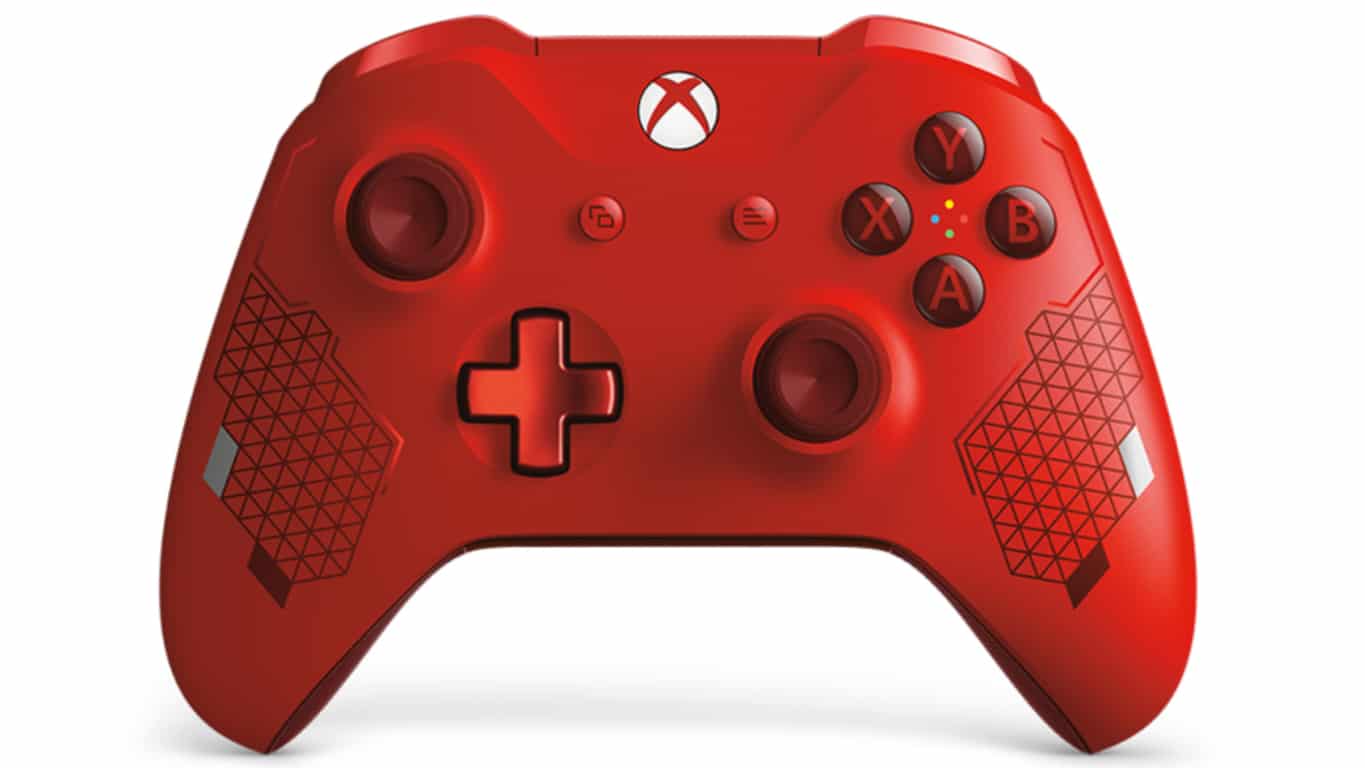
New Sport Red Xbox One Controller announced for March release

Microsoft today announced the Sport Red Special Edition Xbox Wireless Controller. This new controller, which is due to launch on March 1st, contains all of the same features as the regular Xbox Controllers but boasts a limited edition red and silver design.

“Inspired by the world of active wear and sports lifestyle, the Xbox Wireless Controller – Sport Red Special Edition is the second controller in the Sport Series,” the official announcement reads. “This red controller exudes energy–it features metallic red and silver accents on the front of the controller as well as a metallic red D-pad. The red diamond rubberized grips on the back of the controller will increase your comfort during long gaming sessions and help you stay on target.”

The Sport Red Special Edition Xbox Wireless Controller, like other modern Xbox controllers, will work with both Xbox One consoles and Windows 10 computers. A charging stand, featuring the same Sport Red design, has also been announced.

Sport Red Xbox Controller Charging StandAre you planning on picking up this new controller? Let us know why or why not in the comments below and then follow us on Pinterest for more Xbox gaming content.
Update: The controller is now up for pre-order on the Microsoft website here.

How to recover Sticky Notes in Windows 10/8/7

As you all know, Sticky Notes is a handy Windows 10 app. Users can stick notifiers to the desktop with that app. However, deleted notifications don’t go in the Recycle Bin. Thus, users seemingly can’t restore deleted notes if they need to.

Steps to recover deleted Sticky Notes

1. Open the StickyNotes.snt File in Windows 10, 8, and 7

Yet, users can still recover Sticky Note’s desktop notifications from a StickyNotes.snt file in Windows 10 versions earlier than build 1607 (the Anniversary Update). That’s a file which stores note content for the Sticky Notes app in Windows 8 and 7 and earlier Win 10 build versions.

Users might find deleted note content within that file. This is how users can open the StickyNotes.snt file in Windows 10.

  • Click the File Explorer button on the taskbar.
  • Then click the View tab.
  • Select the Hidden Items option if it’s not already selected.

  • Then enter ‘%APPDATA%MicrosoftSticky Notes’ in File Explorer’s path bar, and press the Return key.

  • Right-click the StickyNotes.snt file and select Open with > Choose another app to open the window shown directly below.

  • Select to open the StickyNotes.snt file with MS Word if you can. Alternatively, open the StickyNotes.snt file with Notepad or another word processor.

Then the StickyNotes.snt file will open in the selected application as shown directly below. The file includes a lot of jumbled text. However, Sticky Note users can also find the actual text of deleted notes within that file.

Copy the actual note text with the Ctrl + C hotkey so that you can paste it back into a sticky with the Ctrl + V hotkey.

Users can also recover recently deleted Sticky Notes in more update Windows 10 versions by opening the plum.sqlite file at: %LocalAppData% Packages Microsoft.MicrosoftStickyNotes_8wekyb3d8bbwe LocalState.

Open that file in MS Word, or alternative word processor, as shown directly below. Then you might find the text for some deleted notes near the bottom of the document.

— RELATED: Create password-protected notes with ZenR Notes

2. Recover Deleted Sticky Notes With Outlook

Sticky Notes now synchronizes notes with Microsoft accounts. Consequently, users can now recover deleted notes with Outlook 2016 and the Windows 10 Mail app so long as they have a synched MS account set up.

Click Deleted Items in Outlook 2016, and press the Restore button. Then users can select to move deleted notes back into your Notes folder. Thereafter, the notes will reappear in Sticky Notes.

3. Back Up Your Sticky Notes

Sticky Notes users can also back up their notes. Then they can recover deleted notes with the backup copy. This is how users can back up their note storage in Windows.

  • Open File Explorer in Windows.
  • Browse to this folder path: %LocalAppData% Packages Microsoft.MicrosoftStickyNotes_8wekyb3d8bbwe LocalState.
  • In Windows 8 and 7 (and earlier Win 10 build versions), users should enter ‘%AppData%MicrosoftSticky Notes’ in Run and click OK.

  • Then select either the plum.sqlite file in Win 10 or StickyNotes.snt file in earlier Windows platforms.
  • Click the Copy to button to select a folder to copy the file to.

  • Users can drag the backup plum.sqlite or StickyNotes.snt file into the LocalState or Sticky Notes folders when they need to restore deleted notes. Then the window shown directly below will open.

  • Select the Replace the file in the destination option to restore deleted notes.

So, users can restore deleted notes by opening the StickyNotes.snt or plum.sqlite files, keeping backup copies of the notes, or moving erased notes from Outlook’s Deleted Items folder. In addition, users can automatically back up Sticky Note’s storage file with File History.

RELATED ARTICLES TO CHECK OUT: 

How to enjoy a smooth Windows 7 to Windows 10/11 upgrade

Microsoft has now launched a Windows 7 solution called Desktop App Assure that will aid users to upgrade easily to Windows 10. The tool is already available in ten different languages across the globe.

The good old Windows 7 is already living its last days, as Microsoft is pushing more efforts into making users see reasons to upgrade to Windows 10. The company promises the transition will go smoothly and there will be no software compatibility issues.

Note that in January 2020, Windows 7 support will be coming to a halt. This means that running on the 2009 OS are running out of time, so now is the better time to move on to Windows 10.

Microsoft wants a smooth transition

The Desktop App Assure solution is a new service from Microsoft FastTrack that was created with the main purpose of helping users deal with app compatibility challenges.

All kinds of tests had been carried out on this new solution by Microsoft and it has been discovered that a small number of applications may be needing additional tweaks in the process of migrating from Windows 7 to Windows 10. This means that all the other apps and programs should perform excellently well on the new OS architecture.

Microsoft has guaranteed free debugging to all users who will have the misfortune of experiencing technical issues after the upgrade. All these are part of their efforts to creating an easy transition from Windows 7 to Windows 10.

A Microsoft engineer works with you to address valid app issues at no additional cost to you with an eligible subscription. We also provide guidance to customers who face compatibility issues transitioning from Office clients to Office 365 ProPlus. This is a service provided by FastTrack and not a software package.

If you want to know more about the Desktop App Assure solution, check out Microsoft’s official page.

RELATED GUIDES YOU NEED TO CHECK OUT:

Microsoft to roll out a standalone Chromium-based Edge installer

Microsoft announced in late 2018 that they were going to switch EdgeHTML over to push a new Chromium-based Edge browser, thereby creating its own Google Chrome Browser version.

The company confirmed that a test version of the new Microsoft Edge browser would be released early 2019. Microsoft’s engineers also stated that the date for the release of the test version of Microsoft Edge is not yet known, but it is expected to be announced in the early months of the year.

While the exact release date is still unknown, we expect the company to roll out the first version of its Chromium-based sometime at the end of March or the beginning of April.

It was believed that the preview version would be available to the Window Insider Program only. However, the company had made it clear that this is going to be a standalone installer. In other words, everyone will be able to get a feel of how the latest Chromium Microsoft Edge browser functions.

The browser can be installed even if one is configured for Windows Insider Builds or not.

The company is making efforts towards getting as many Insider builds as possible to go live. Microsoft is making sure that the first preview version is going to offer a great experience to all users.

If the big M want to impress potential Edge users, that’s the best strategy to use. The first impression always matters. If the first versions of the Chromium-based Edge browser are very fast, highly responsive and support all the features and options that users need, then chances are this will be a successful experiment for Microsoft.

Again, while there is no Estimated Time of Arrival (ETA) concerning the stable version of the Chromium-based Edge, it will most likely go live when the next major OS upgrade is released.

RELATED POSTS TO CHECK OUT:

Xbox Live support to expand to iOS, Android and Nintendo Switch

Xbox Live is one of the biggest gaming subscription networks in the world with millions using the service daily.

Microsoft is planning to expand Xbox Live support to gamers on Android, iOS devices and the Nintendo Switch. If we’re lucky, the Redmond giant is going to confirm this piece of news at the game developers conference scheduled to take place on March 18-22 at San Francisco.

Xbox Principal Program Manager Jeffrey Shi and Xbox Software Engineer Ramsey will be there. Most likely, they will be the heralds of this news.

Xbox Live cross-platform support will enable Microsoft to reach billions of potential gamers and save time while expanding the services.

Innovation gets live

Microsoft has already preparde quite a few games with Xbox Live support for these platforms. One of these titles is Minecraft, which requires an Xbox Live login. The company is planning to expand the feature to more titles.

Furthermore, this new multi-platform strategy will give developers access to use Xbox Live’s infrastructure for multiplayer as well.

Breaking barriers by crossplay revolution

Xbox Live will officially bring and engage communities closer together regardless of the platform they are based on if developers begin participating in the new cross-platform SDK.

Other initiatives under this multi platform strategy include Project xCloud and the next-generation Xbox.

It looks like Microsoft will keep going forward with its cross-platform SDK for Xbox Live. The update could be exactly what the next-gen gaming platforms need taken into account the growth in popularity of mobile gaming.

RELATED POSTS TO CHECK OUT:

Microsoft Studios rebrands to Xbox Game Studios

Microsoft Studios, the company’s video game publishing division and home of 13 video games studios is becoming Xbox Game Studios today. Matt Booty, Head of Xbox Game Studios announced the rebranding during today’s Inside Xbox live show.

“As we’ve expanded our focus beyond the console, the Xbox brand has also evolved from its original roots. Today, Xbox is our gaming brand across all devices, no matter how or where you want to play, or who you want to play with. In that spirit, I’m pleased to share that we are changing the name of our game development organization from Microsoft Studios to Xbox Game Studios,” explained Booty.

Xbox Game Studios expanded in quite a big way last year, with Microsoft acquiring nothing less than seven new game development studios including Obsidian Entertainment (Fallout: New Vegas), Turn 10 Studios (Forza Horizon 4), and Ninja Theory (Hellblade: Senua’s Sacrifice). “As a gaming organization, we have never been in a better position to deliver a diverse line-up of exclusive games for Xbox fans now, and in the future,” said Booty, and we can’t wait to see what these new studios will bring to the table in the near future.

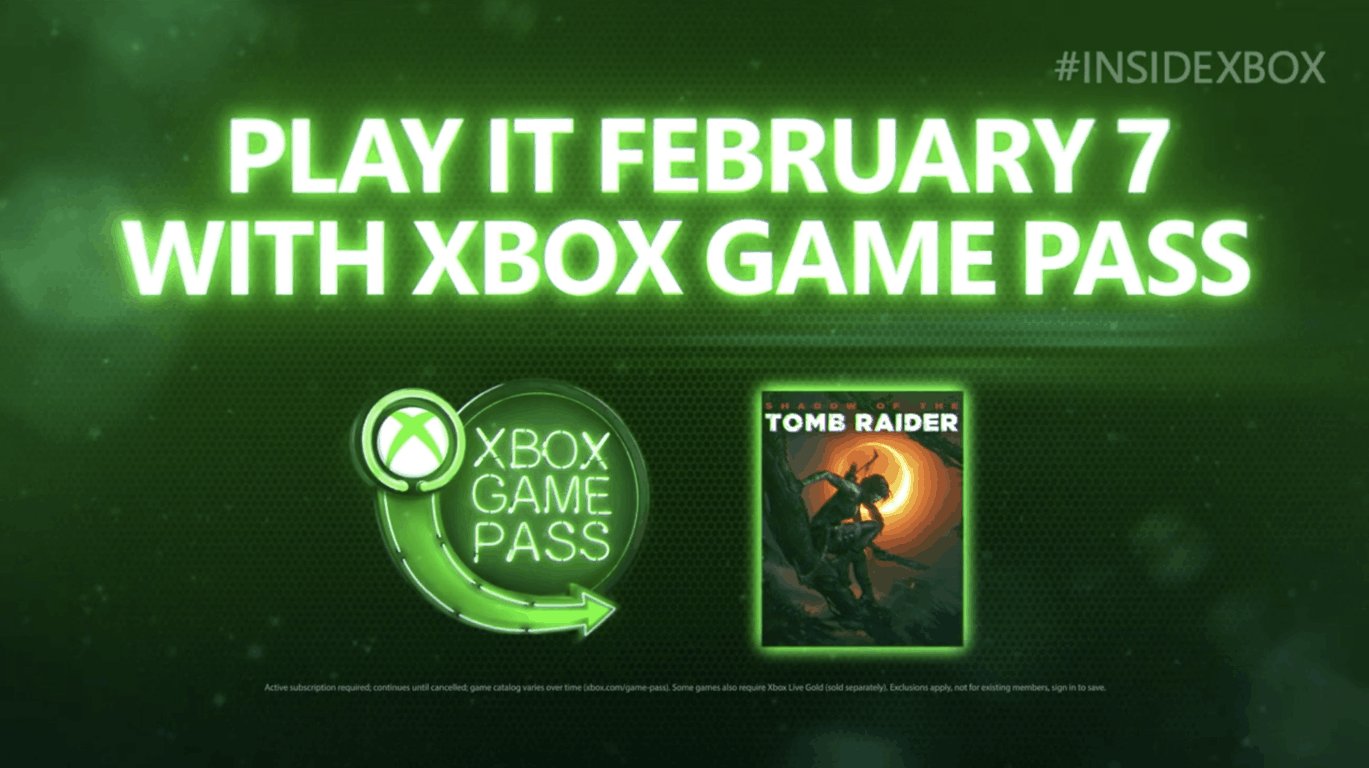
Shadow of the Tomb Raider is coming to Xbox Game Pass on February 7

Microsoft has just announced a major new addition to the Xbox Game Pass catalog during its Inside Xbox live show. Shadow of the Tomb Raider, the latest entry in the popular action-adventure franchise will be available on Xbox Game Pass starting this Thursday, February 7. The game will join Tomb Raider: Definitive Edition as well as its sequel Rise of the Tomb Raider, so that will make all the whole trilogy available for subscribers.

Shadow of the Tomb Raider was released back on September 14, and it’s actually quite surprising that Microsoft has been able to add the game to Xbox Game Pass so early. The game is about to get its fourth DLC, “The Price of Survival” on February 12th, and developer Eidos Montreal still has some more additional content in the pipeline.

Microsoft also announced four new other games coming to Xbox Game Pass later this month: The Walking Dead: Season 1 and Pumped BMX Bro are both coming on February 7 along Shadow of the Tomb Raider, and they will be followed by De Blob on February 14 and then Batman: Return to Arkham on February 21. This is in addition to Crackdown 3, the next Xbox One/Windows 10 exclusive to be released on February 15.

If you have yet to subscribe to Xbox Game Pass, you can currently get your first month of subscription for just $1 instead of $9.99. The catalog currently includes over 100 Xbox One and Xbox 360 games, and Microsoft keeps adding quality titles month after month.

Microsoft announces Xbox One S Anthem bundle

As the gaming world prepares for the next biggest title to hit consoles with Electronic Arts Destiny-like successor, Anthem, Microsoft is seizing an opportunity to push a couple of more Xbox One S off the shelves with a new tie-in.

Along with a full-game download of Anthem Legion of Dawn Edition (which includes four legendary armor packs, a legendary weapon, and more), the Xbox One S Anthem Bundle includes an Xbox One S console with a 1TB hard drive, an Xbox Wireless Controller and 1-month trials to EA Access, Xbox Game Pass and Xbox Live Gold.

The Xbox One S Anthem bundle will available for purchase on February 22, 2019, the same day as the release of the game across digital and retail stores.

However, eager fans can pre-order the bundle from their nearest Microsoft Store (if in the US) or online at Xbox.com for anyone not fortunate enough to have a local store within distance. Other retail outlets such as Gamestop should also have pre-orders available for purchase.

Just a few days ago, Microsoft reported that it had one of its best gaming quarters yet as digital services revenue increased due in part to more people signing up for Xbox Live, Game Pass and in-game purchases from behemoth franchises such as Fortnite.

However, Microsoft also reported a quarter where hardware revenue saw a slight decline and offering a new bundle alongside the hotly anticipated Anthem game might go a long way inflating those numbers for next quarter.

Tune in to Inside Xbox on Mixer later today to get another exclusive free “MixPot”

Microsoft’s Inside Xbox Live show is coming back later today at 2PM PT, and those of you who watch it live on Mixer will be able to grab another free “MixPot.” This time, the team will offer an exclusive Onyx Compass skin for Sea of Thieves, as well as invites for the upcoming private beta for Tom Clancy’s The Division 2.

Ubisoft’s upcoming post-apocalyptic shooter will be released worldwide on March 15, but the private beta is set to kick off on Thursday, February 7th at 10am CET through February 11th 2019 at 10am CET. The game will ship after several other AAA games coming this Spring including Far Cry: New Dawn, Metro Exodus, Anthem, and Devil May Cry 5, and hopefully it will be able to find its audience during this busy period.

Today’s Inside Xbox episode should deliver some new Xbox Game Pass additions, as well as lots of news about Crackdown 3, Sea of Thieves, and more. Make sure to connect your Microsoft account to your Mixer account before watching it live on mixer.com/xbox.

Microsoft announces the launch of the Accenture Microsoft Business Group

Microsoft and Accenture have just announced a new partnership aptly called Accenture Microsoft Business group, which, from the announcement, appears to be a sort of service solution for more than 45,000 dedicated professionals.

Accenture and Microsoft have a longstanding collaborative relationship that has already resulted in a grouped effort called Avanade, but yesterday’s, February 4, 2019, announcement seems to be going after scale in the enterprise arena.

Regarding yesterday’s news, Accenture’s chief technology & innovation officer and chairman of the board for Avanade Paul Daugherty described the combined efforts as such,

“The Accenture Microsoft Business Group is a major step forward in our decades-long relationship with Microsoft. It brings Accenture’s broad industry experience and transformation skills together with Microsoft’s powerful digital technologies and Avanade’s specialization in the Microsoft ecosystem. The demand for digital transformation, powered by the cloud, has never been greater. We are bringing the leading capabilities of our companies together to meet this demand and deliver innovation to our clients.”

As for the details of the deal, it appears that Accenture’s role will be to be more of the client facing portion to this global services and solutions offering while Microsoft will help provide the actual infrastructure and technologies.

The collaboration will focus on, “helping clients migrate to Microsoft Azure and effectively harness the power of data, artificial intelligence, optimize Microsoft business processes with Microsoft Dynamics and foster modern work and collaboration with Microsoft 365.”

Microsoft and Accenture have already found similar success in their Avanade partnership delivering some 35,000 Microsoft-related projects to more than 4,000 professional clients over the globe. With the spin-up of Accenture Microsoft Business Group, the two companies look to expand on that success and client portfolio many times over.

TomTom to become main provider of location data for Microsoft Azure and Bing Maps

Microsoft is partnering with location technology specialists TomTom to bring its traffic data statistics over to the tech giant’s Bing Maps program, as well as to their Azure cloud computing service. The Redmond-based tech giant explained that the partnership will enhance Azure Maps by bringing features to allow businesses to build “map-based dashboards to visualize IoT spatial analytics to mobility scenarios for vehicle movement” on their blog post.

Bing Maps users will likely benefit from TomTom’s infrastructure, which will enable users to perform various such as tracking parking meter rates in real time, plus the tracking of street traffic, carbon footprint, noise pollution, and others. TomTom also has the technology to support self driving vehicles, which could also enable Microsoft to integrate its maps into those systems in the future. The tech giant is giving access to these statistics to business users who may want to incorporate them into their apps, but if at least a couple of these made it to Bing Maps, it could help serve to give Google a run for their money. Microsoft’s Partner Group Manager of Azure Maps and connected vehicles Tara Prakriya, explained that:

“This deep partnership with TomTom is very different from anything Microsoft has done in maps before. TomTom hosting their services in the Azure cloud brings with it their graph of map data. Manufacturing maps in Azure reduces the latency to customer applications, ensuring we offer the freshest data through Azure Maps. Azure customers across industries end up winning when their geospatial data and analytics, TomTom data, and Azure Maps services are all running together in the same cloud.”

TomTom will also benefit from the partnership, as Azure will become their primary resource for cloud management. This will give them access to Microsoft’s vast array of services and APIs as they expand their services in the future. It’s a move we recently made ourselves, for those of you who might not already know.

Deal: Get 40% off anime movies and TV seasons on Xbox One and Windows 10

The annual Anime Month campaign is now live in the Microsoft Store on Windows 10 devices and Xbox One consoles.

For the whole month of February, a wide selection of anime movies and TV series will have their prices heavily reduced with some being slashed by as much as 40%.

Some of the discounted anime series worth checking out this month are Dragon Ball Z, Yu-Gi-Oh!, Digimon, One-Punch Man, Cardcaptor Sakura, Ranma ½, and Tiger and Bunny while some recommended anime movies are Digimon Adventure tri, Sailor Moon R: The Movie, A Letter to Momo, Patema Inverted, and Road to Ninja: Naruto The Movie.

Discounts are available to all users and don’t require Xbox Live Gold or any other subscription service. As with all movies and shows bought in the Microsoft Store, all of these anime films and series are viewable on Windows 10 devices, Xbox 360 consoles, Windows phones, and Xbox One consoles.

Have you bought any anime from the Microsoft Store this month? Share your recommendations with the community in the comments below and then follow us on Pinterest for more geek content.

Titanfall battle royale game Apex Legends launches on Xbox One for free

EA and Respawn Entertainment today announced and launched Apex Legends, a new free-to-play battle royale video game set within the same universe as Titanfall and Titanfall 2.

The game is set around 30 years after the Titanfall 2 campaign and focuses on human combatants over the giant titan mechs, which is likely why its title lacks any reference to them. Apex Legends is completely free for anyone to play and supports itself via loot boxes containing purely cosmetic items that have no impact on gameplay or progress whatsoever.

Apex Legends is the latest of the many new battle royale video games launching after the incredible success of Fortnite and PlayerUnknown’s Battlegrounds (PUBG) but its design aesthetic and setting does help set it apart from these two giant rivals.

Here’s its official game description and download link for Xbox One:

Conquer with character in Apex Legends, a free-to-play Battle Royale shooter where legendary characters with powerful abilities team up to battle for fame and fortune on the fringes of the Frontier. Master an ever-growing roster of diverse legends, deep tactical squad play, and bold new innovations that level-up the Battle Royale experience—all within a rugged world where anything goes. Welcome to the next evolution of Battle Royale.

  • A Roster of Legendary Characters: Master a growing roster of powerful Legends, each with their own unique personality, strengths, and abilities that are easy to pick up, but challenging to truly master
  • Build Your Crew: Choose your Legend and combine their unique skills together with other players to form the ultimate crew.
  • Strategic Battle Royale: Use your abilities–and your wits–to make strategic calls on the fly, adapting your crew’s strengths to meet new challenges as the match evolves.
  • Genre-Evolving Innovation: Experience a brand-new array of innovative features that level-up the Battle Royale genre, including Respawn Beacons, Smart Comms, Intelligent Inventory, and an all-new way to drop into the action with Jumpmaster deployment.
  • Sweet, Sweet Loot: Drop in and loot up with a host of powerful weapons, diverse attachments, and useful armor to protect you in battle. After the battle, collect a wealth of cosmetic options for personalizing your character and weapons, and unlock new ways to show off during the match.

Have you had a chance to play Apex Legends yet on your Xbox One console? Share your impressions with the community in the comments below and then follow us on Pinterest for more Xbox gaming content.

Apex Legends™
Apex Legends™
Developer:
Electronic Arts
Price:
Free

How do you want to use this disc with a CD/DVD player?

Even though flash memory took over, there are more than a few solid reasons why one would still use CD or DVD to store and access one’s data. They’re far from being extinct, to say the least.

Now, most DVD drives will work seamlessly on any given Windows configuration and the issues are quite rare.

One rare problem affecting users who try to open the CD/DVD via the optical drive is “How do you want to use this disc with a CD/DVD player?” prompt. It seems that the system reads the non-rewritable CD or DVD as a rewritable one.

We have some steps you could try and resolve what it seems to be a system issue, as Windows is unable to recognize and properly utilize an optical drive.

How to get rid of How do you want to use this disc with a CD/DVD player message?

  1. Run Hardware troubleshooter
  2. Check the DVD ROM driver and BIOS presence
  3. Reinstall IDE/ATAPI drivers
  4. Fix registry
  5. Disable Clone Drives/Virtual Drives
  6. Scan for malware
  7. Uninstall recent Windows Updates
  8. Check hardware

1. Run Hardware troubleshooter

Let’s start by running a built-in hardware troubleshooter. This tool should identify issues with system resources failing to recognize a DVD ROM. If it doesn’t resolve it on its own, you’ll at least get a better insight into the cause of the problem.

The procedure to run the tool is the same applies only to Windows 7/8.

Here’s how to run Hardware troubleshooter on Windows 10:

  1. Open Control Panel.
  2. In the Search bar, type Troubleshoot.
  3. Choose Hardware and Sound.hardware troubleshooter windows 7/8 How do you want to use this disc with a CD/DVD player?
  4. Click Configure a device.
  5. Set up your optical drive and look for changes.

2. Check the DVD ROM driver and BIOS presence

In order for any piece of hardware to function properly, you’ll need a proper driver. Now, even though DVD-ROM drive usually works with the set of generic drivers provided by Windows Update.

However, that’s not a rule of thumb, so we suggest reinstalling the driver or, even better, going for an official driver from the manufacturer’s website.

Here’s how to reinstall the CD/DVD drive’s driver:

  1. Right-click Start (or type Device manager in the Search bar) and open Device Manager.
  2. Expand the “DVD/CD-ROM drives” section.dvd/cd-rom drives section device manager How do you want to use this disc with a CD/DVD player?
  3. Right-click on the optical drive and select Uninstall device.
  4. Restart your PC.
  5. Wait until the driver is installed, place the disk in the drive, and give it another try.

In addition, we encourage you to navigate to BIOS/UEFI settings and confirming that the drive is recognized. If that’s not the case, consider accessing your PC component and unplug and then plug in again the CD/DVD into the motherboard and PSU.


AutoPlay doesn’t work on your PC? Fix it now with this simple guide!


3. Reinstall IDE/ATAPI drivers

While we’re at drivers, another option is reinstalling or even removing the IDE/ATAPI drivers from the Device Manager. Of course, this is only until the next restart and the whole procedure focuses on re-acquiring a new set of drivers.

They seem to cause issues from time to time, making the drive completely invisible by the system. Which will, of course, lead to the “How do you want to use this disc with a CD/DVD player” error on some occasions.

Here’s what you need to do:

  1. Right-click Start (or type Device manager in the Search bar) and open Device Manager.
  2. Click on View under the Toolbar and choose Show hidden devices.
  3. Expand the “IDE/ATAPI Controllers” section.IDE/ATAPI Controllers device manager How do you want to use this disc with a CD/DVD player
  4. Uninstall all entries (usually ATA Channel 0, ATA Channel 1, and Standard Dual Channel PCI IDE Controller).
  5. Reboot your PC and look for changes.

4. Fix registry

Another possible reason for the error at hand might lie in the corrupted registry entry. All kinds of third-party applications tend to change the values of the registry and this might lead to a plethora of errors.

A casual user will rarely look into the Registry as it’s known fact that meddling there might bring a lot of problems. However, in this case, we encourage you to check drive-related registry entries and fix them.

Here’s where to look and what to do:

  1. In the Windows Search bar, type Registry and open Registry Editor.
  2. Navigate to:
    • HKEY_LOCAL_MACHINE\SYSTEM\CurrentControlSet\Control\Class\{4D36E965-E325-11CE-BFC1-08002BE10318}
      registry editor How do you want to use this disc with a CD/DVD player?
  3. In the right pane, right-click on the UpperFilters and delete it. Don’t delete UpperFilters.bak.
  4. Repeat the action for the LowerFilters entry.
  5. Exit Registry Editor and give the optical drive another try.

Can’t access Registry Editor? Don’t worry, we got a fix for it!


5. Disable Clone Drives/Virtual Drives

If you’ve recently installed a Clone virtual drive tool which allows you to mount ISO files, it’s advised to uninstall it. A possible mix-up between the hardware and software-based drives seems to cause issues like this all the times.

Even though your Virtual Drive is inactive (no files are mounted), it still might interfere with the hardware optical drive.

That’s why we recommend navigating to Control Panel > Uninstall a program, and removing all and any third-party applications used to simulate hardware optical drive. After that, reboot your PC and give it another go. If the issue persists, continue with the steps below.


6. Scan for malware

Whenever a strange system issue occurs, there should be a hefty dose of suspicion concerning a malicious software. We can’t stress enough how much danger a virus brings so make sure you have proper protection.

You can either use one of many third-party antivirus solutions or stick with the built-in Windows Defender. Nonetheless, performing a deep system scan is paramount and, in this case, it might resolve the problem with the optical drive.

Here’s how to perform a deep scan with Windows Defender:

  1. Open Windows Defender from the taskbar notification area.
  2. Choose Virus & threat protection.
  3. Choose Scan options.
    windows security main window How do you want to use this disc with a CD/DVD player?
  4. Select Windows Defender Offline Scan.
  5. Save everything you’re doing as this mode will restart the PC.
  6. Click Scan now.

If you’re not sure how to perform the same procedure on a third-party antivirus, check the support site or navigate to Help menu.


Want better protection for your PC? Try one of these antivirus applications!


7. Uninstall recent Windows Updates

Even though you shouldn’t avoid Windows Updates for a prolonged period of time, some of them can certainly break the system. A bit strange thing considering that they supposedly improve the system, both security-wise and feature-wise.

However, it is what it is and there are only two things you can do if you suspect an update broke CD/DVD ROM optical drive. You can either uninstall a recent update or wait for the next update to patch up the issue.

The latter option may take some time until the problem is acknowledged and dealt with. On the other hand, the first option (uninstalling updates) should help you right away.

Of course, if the update caused the “How do you want to use this disc with a CD/DVD player” error in the first place.

Here’s how to uninstall updates in Windows 10:

  1. Press Windows key + I to open Settings.
  2. Choose Update & Security.
  3. Select Windows Update from the left pane and click on “View update history“.
    view update history How do you want to use this disc with a CD/DVD player?
  4. Select Uninstall updates.
  5. Remove recent updates and restart your PC.

8. Check hardware

check your hardware How do you want to use this disc with a CD/DVD player?

Finally, if none of the previous steps worked for you, we suggest disconnecting the optical drive from the current configuration and connecting it to another PC. This might seem like a too much, but the only thing you need is a fitting screwdriver and a few minutes of your time.

If the optical drive works on an alternative PC, then consider reinstalling your system and starting from a scratch. Of course, double check all connections, both to a motherboard and PSU.

On the other hand, if it behaves similarly on an alternative PC, consider replacing the optical drive. And, on that note, we can wrap up this article.

If you know of an alternative way to tackle this, make sure to tell us in the comments section below. We look forward to different insight into this issue.

RELATED STORIES YOU SHOULD CHECK OUT:

Chrome’s new security feature warns users about lookalike URLs

It seems that typosquatting and IDN homograph attacks are going to be impossible on Chrome now. Thinking how? With Chrome‘s new security feature code named Navigation suggestions for lookalike URLs.

This new security feature was developed to prevent lookalike malware or similar domain hacking on Chrome.

What is a lookalike URL?

Lookalike URLs are URLs similar to URLs of popular sites. These fake URLs are designed to support malware attacks such as data phishing. By data stealing, one means stealing of sensitive information like your username and password.

But how do these lookalike URLs work?

These lookalike URLs direct the user to an unregistered website that is cunningly built to steal sensitive information of users. Surprisingly there is a minute difference between the original and fake URL.

Users cannot even perceive that they are visiting a fake site. Here’s an example: the original PayPal.com versus the fake PayPa1.com. This is termed as homograph attack.

Chrome declares war to lookalike URLs

However, with this new security feature, Chrome engineers are confident to give crooks a strong hit back. With this security update, Chrome algorithms will determine if the searched URL is a lookalike URL.

If the results are positive, then a notification box will appear below the Chrome search bar asking users “Did you mean to go to [URL].”

If users take into account this alert, they can protect themselves from phishing attacks.

It is not yet confirmed that when would this feature be officially available for all the users. Once launched it would be available by default. However, you can manually enable it while it is in the testing phase. To enable it, go to this search address: chrome://flags/#enable-lookalike-url-navigation-suggestions.

Chrome is an excellent browser. Google takes all the necessary measures to ensure the security of its users’ data. Enable this Chrome security feature to shield yourself from the dangers of lookalike URLs and enjoy a safe browsing experience.

RELATED POSTS TO CHECK OUT:

How to disable encrypted file indexing on Windows 10

The seventh Windows 10 version that Microsoft will release in a few months’ time is code named the Windows 10 April 2019 Update or Windows 10 19H1. This will be the first major 2019 update out of two scheduled updates.

We already know that Microsoft is separating Cortana and search into two different experiences in the taskbar in this OS version.

As you probably know, the search bar allows you to search any type of files on your device and is an invaluable feature.

On the other hand, the search function can result in encrypted files being unintentionally exposed depending on user settings.

Similarly, some users may not want the search feature to display encrypted files or hidden files on the results screen of the search bar, not only because this could display sensitive data, but because Window attempts to decrypt them and display the content.

First and foremost, users can quickly decide whether to enable or disable the feature. However, many of them are not aware of these settings. As a result, encrypted files are indexed by the search tool by default.

Block Windows 10 Search from indexing encrypted files

  1. To change the indexing settings, you need to launch the Group Editor Policy by typing gpedit.msc in the Start menu.
  2. Then, go to Computer Configuration > Administrative Templates > Windows Components > Search
  3. Search for a policy called: Allow indexing of encrypted filesdisable encrypted file indexing
  4. Right-click on this feature and disable it.turn off encrypted file indexing windows 10

So basically, if the option is enabled, Windows 10 will index encrypted files and the Search tool will display them. That means that data is decrypted in order to display the content.

This causes some problems to users who want their files to remain encrypted and hidden. If you want to let it stay like they are, you can use the search policy settings to block indexing and exclude encrypted files from the search results.

Long story short, simply change the policy to Disabled if you just want to make sure that no indexing is made.

With the landing of a new version of Window 10, the Search menu will get a boost thanks to all the changes coming to search and Cortana.

RELATED POSTS TO CHECK OUT:

Xbox One 1902 system update heads to Omega Insiders ahead of public release

The upcoming Xbox One 1902 system update is rolling out today to Xbox Insiders on the Omega Ring. Now that the Preview Beta, Delta and Omega Insider rings have all received this new software update, we should be pretty close to general availability.

The Xbox One 1902 system update is a minor release that doesn’t bring any new features to the table. According to the Xbox team, this is all about “various general system fixes and improvements,” and today’s blog post about the Omega ring availability doesn’t share further details.

To get new features, we’ll have to wait for the upcoming 1904 update, which is currently in testing with Insiders on the Preview Alpha and Skip Ahead rings. So far, the latest 1904 preview builds have introduced two new features, a floating mini keyboard and the ability to reprogram the OneGuide button on the Xbox Media Remote. We’re hoping to see the team add more over the next couple of weeks, and maybe tomorrow’s Inside Xbox episode will be a good opportunity to announce some new features.

New Edge Chromium browser beta to be separate download, not tied to Windows Insider build

As Microsoft begins the long road to replacing its Edge browser in Windows 10 with a newer version powered by Chromium, developers are already being teased with the future benefits of its development for users.

Microsoft senior program manager for Edge, Kyle Alden, hopped on Reddit to share the news that the company’s new Chromium-powered web browser will be available for testing as a separate download in early 2019 (via TechDows).

As of now, there is no solid timeframe to expect for the first non-Windows 10 attached download, but it might be safe to expect something around Microsoft’s yearly developer conference, BUILD.

We’re working on getting preview builds out as soon as possible – “early 2019” is still the idea, but we want to make sure the first preview is a great experience, so we’re not quite ready to commit to something more specific than that just yet. Stay tuned!

In addition to the development of a standalone PC version of its Chromium web browser, Microsoft has also opened up a new Edge Insider program for developers that will serve as a testing bed of new API and features for upcoming builds of Windows.

Presumably, the Edge Insider program and this new Chromium-powered Edge separate download app will converge development-wise down the road.

Alden’s comments piggyback on the discussion opened by the corporate vice president of Windows Joe Belfiore who dropped a post on the Windows blog detailing Microsoft’s plans to move to the Chromium open source solution.

Today we’re announcing that we intend to adopt the Chromium open source project in the development of Microsoft Edge on the desktop to create better web compatibility for our customers and less fragmentation of the web for all web developers.

Similar to its efforts on Android and iOS, Microsoft plans to make testing and development as inclusive as possible allowing the process to buck traditional Windows OS packaging. The new development path allows for developers and users to test flights much faster and at less risk to their devices as it will no longer be tied to buggy Windows 10 installations nor will the pace of development be slowed by build release issues such as the Windows 10 October 2018 Update rollout.

Microsoft is buying DataSense data management platform from BrightBytes

Microsoft announced today the acquisition of DataSense, a data management platform developed by BrightBytes, an education data analytics company based in San Francisco. The BrightBytes DataSense team will join Microsoft’s global education team and help the company provide better data analytics for schools.

“Together with DataSense, we are committed to help schools migrate to the cloud, simplifying data management and providing explicit security and control over their data,” wrote Steve Liffick, General Manager in the Education product team at Microsoft. “We believe this school-controlled, secure starting point in Azure will make it easier to use analytics to help improve student outcomes, while also servicing the typical data transfer and management needs of a school or district IT team,” he added.

Microsoft and BrightBytes didn’t share financial details about the transaction, and the latter will continue to develop its data analytics solution. The Redmond giant plans to start integrating DataSense technology into its own education products in the coming months, with no disruption for existing DataSense customers.

Microsoft to discuss Project xCloud, new Xbox Live cross-platform “XDK” at Games Developer Conference

It’s look like the upcoming Game Developers Conference is San Francisco will be an opportunity for Microsoft to unveil some exciting things. A session about a new cross-platform “XDK” was spotted by Windows Central yesterday, and this looks to be all about expanding Microsoft’s Xbox Live network to more platforms including iOS, Android, and Nintendo Switch:

Now Xbox Live is about to get MUCH bigger. Xbox Live is expanding from 400M gaming devices and a reach to over 68M active players to over 2B devices with the release of our new cross-platform XDK.

Get a first look at the SDK to enable game developers to connect players between iOS, Android, and Switch in addition to Xbox and any game in the Microsoft Store on Windows PCs.

There are already a couple Microsoft casual games that require an Xbox Live account on iOS and Android, including Wordament or the soon to be discontinued Age of Empires: Castle Siege. The new “Bedrock” version of Minecraft goes even further, leveraging Xbox Live to enable crossplay on all platforms including the Nintendo Switch.

Microsoft has been interested in bringing Xbox Live to other platforms for quite some time. A similar initiative has been described in a Microsoft job posting from five years ago, though those efforts didn’t immediately materialize. However, we’ve seen Mike Ybarra, Corporate Vice President of Xbox Program Management at Microsoft calling developers to integrate Xbox Live functionality to their games last year.

The same Mike Ybarra has been pretty vocal about making crossplay and cross-progression a standard in video games. A few games such as Minecraft and Rocket League now supports cross-platform multiplayer across Xbox One and PlayStation 4, but it seems that cross-progression (the ability to start a game on a select platform and pick up where you left off on another one) is going to be the next frontier for the video games industry. This is really an area where Xbox Live cloud saves could really help, as cross-progression is already present on Xbox Play Anywhere games for Xbox One and Windows 10.

In addition to this new cross-platform XDK, we’ve also spotted another Microsoft GDC session dedicated to Project xCloud, the company’s upcoming game streaming service. “Developers already building games for Xbox will learn how Project xCloud will make it easy to get that entire catalog running on mobile,” the session description reads. GDC will kick off on March 18, and we hope to learn more about Microsoft’s plans ahead of the event.

Download the right Xbox 360 controller driver for Windows PCs

Even though the PC Master Race community has a lot to say about PC superiority over the consoles, we can agree that some games are just not suited for the keyboard/mouse combo. Using a controller is a must, especially if you’re playing sports simulations a lot.

And, what’s better for Windows gaming than a Microsoft-produced controller? Xbox 360 is old but its controllers are still sturdy and built with quality.

So, if by any chance, you want to use an Xbox 360 controller on Windows 8, here’s how to get a necessary driver.

How to get a proper Xbox 360 controller driver for Windows

Windows 10 has a lot of drawbacks in comparison to older Windows iterations but driver support isn’t one of them. In the Xbox 360 controller case, Windows 10 would install the controller automatically, saving you some time and effort.

This doesn’t apply to Windows 8 or Windows 7, where you need to get the driver manually. Plug-and-play won’t work for Windows 8 and earlier iterations of the Windows platform.

Luckily, there’s no need to roam all around the World Wide Web for a proper set of drivers. Microsoft provides Xbox 360 controller drivers for Windows 7 and earlier iterations on their official website.

Have in mind that they won’t work on Windows 8 if not run in the compatibility mode. A lot of users will rather rely on third-party applications for drivers and key mapping but this all can be done with the system built-in resources.

Download and install Xbox 360 controller driver for Windows PC

If you’re not sure how to download and install Xbox 360 controller driver for Windows 8, follow these steps:

  1. Navigate to the Xbox 360 controller for the Windows website, here.
  2. Download Windows 7 driver compatible with your system architecture (32-bit only or 64-bit only).
  3. Plugin the controller.
  4. Right-click on the driver setup file you’ve just downloaded and open Properties.
  5. Choose the Compatibility tab.
  6. Check the “Run this program in compatibility mode for” box and choose Windows 7 from the drop-down menu.
  7. Confirm changes and double-click on the installer to run it.

If you want to test it, follow these instructions:

  1. Search for Joystick in the Windows Search bar and open “Set up USB game controllers“.
  2. Highlight the Xbox 360 controller and open Properties.
  3. Here you can test all the buttons and both sticks. If it won’t work, unplug it and plug it in again.

You can also choose to automatically install and update your Xbox 360 controller driver with the help of third-party software. Using a dedicated driver updater tool will reduce your work steps and will prevent you from installing the wrong drivers that can lead to serious PC malfunctions.

⇒ Get Fortect Driver Updater

That should do it. After this, you shouldn’t have any issues running Xbox 360 controller on Windows 8.

There’s the comments section below for questions or suggestions. So, feel free to share your thoughts.

RELATED STORIES YOU SHOULD CHECK OUT:

Windows 10 news recap: Windows revenue declines while Surface increases, Chrome may get Windows Mixed Reality support, and more

Welcome back to our Windows 10 news recap, where we go over the top stories of the past week in the world of Microsoft’s flagship operating system.

Microsoft’s FY19 Q2 Earnings highlight Azure and Surface increases, Windows declines

In Microsoft’s Q2 earnings for FY19, the company’s Windows revenue declined, but its Surface product line saw an increase. As expected, Azure continued on its track record of revenue increases. See all of Microsoft’s earnings details here.

Windows Mixed Reality support might be coming to Chrome

Google Chrome could support Windows Mixed Reality in the future. As part of its WebVR, a new commit to Chrome has added a flag to enable experimental Windows Mixed Reality support to the web browser.

Windows 10 Twitter app updates with LOADS of changes to events, video, and more

Twitter’s latest updates for its Windows 10 app bring a number of changes across the board, particularly for events and videos. Below is the changelog:

New

  • Video: Events with a video will now pop-out the video and put it in the bottom corner of the screen as you scroll down to read tweets.
  • Events: Added social context (‘8k people here’) to the events page to share the scale of the event.
  • Image Uploading: You can now resize and crop uploaded images for your Tweets and DMs.  Click the paintbrush icon on the bottom right after selecting an image to adjust the image (Profile image cropping is coming soon™).

Updated

  • Polls: Improvements to poll display and poll creation on smaller screens.
  • Emoji: Update emoji to Twemoji 11.3. Good visual coverage of the changes at Emojipedia and more specific details at GitHub
  • Profile: Allow media carousel to scroll through more items. It was set to 6, increased to 20.
  • Profile (mobile only, for now): When viewing an account’s Tweets, Likes, or Media we’ll show the total count. It appears under the account name in the header, and changes appropriately as you navigate the profile.
  • Images: Slightly improved image quality for large images.
  • Timeline: Scroll positioning now accurately accounts for the size of the top-navigation component.
  • Accessibility: Improved the screen readability of the composer to at the top of the timeline.
  • Direct Messages: Make the entire conversation a drag/drop target, rather than just the input component.

Fixed

  • Profile: Profile photos are no longer slightly cropped.
  • Timeline: The ‘retweeted by’ text is now properly aligned.
  • Tweets: Tweet gif attachments were incorrectly limited to 5MB, we’ve increased the limit to 15MB.
  • Video: Fixed an issue when rotating a device while playing a full-screen video.
  • Video: Allow Firefox to autoplay videos too.
  • Timeline: Fixed a scroll position bug cause by a change in Chrome’s full-screen behavior.
  • Direct Messages: Images in DMs will always be full size (as opposed to the cropped display the timeline uses)

Internet Explorer 10 users encouraged to upgrade to IE11 by 2020, when security updates end

Users of Internet Explorer 10 are being encouraged to begin their upgrade to Internet Explorer 11 as the date for security updates on IE10 gets closer. Those who are still using IE10 should upgrade to IE11 by 2020.

Internet Explorer

That’s it for this week. We’ll be back next week with more Windows 10 news!

Microsoft news recap: Xbox Live wobbles, former Google Cloud exec to head up GitHub, and more

Microsoft news recap is a weekly feature highlighting the top Microsoft news stories of the past week. Sit back, grab some coffee, and enjoy the read!

Signing in to Xbox Live is currently down again

Xbox Live hasn’t had its best week. Users have had to endure a week of hiccups and downtime with the Xbox Live service, with one downtime even requiring users to restart their consoles after it caused a black screen.

Former Google Cloud exec to head up Microsoft’s GitHub

Following Microsoft’s acquisition of GitHub, a former Google Cloud exec has been appointed to head up GitHub. Shanku Niyogi is coming on as the head of product development.

Microsoft, GitHub

Xbox Game Pass starting to pay off as gaming revenue had best quarter ever

Microsoft’s bet on a Netflix-like service, Xbox Game Pass, for games appears to be paying off, as gaming revenue climbed to have its best quarter ever.

Redesigned Outlook for iOS app is now available for all users

Outlook users on iOS can enjoy a treat this week as Microsoft releases a redesigned Outlook app on iOS.

That’s it for this week. We’ll be back next week with more Microsoft news.

Microsoft Update Catalog Not Downloading: How to Force it

Many reported that the Microsoft Update Catalog is not downloading updates, which can be a big problem, especially if Windows Update is not working.

This can leave your system out of date or vulnerable, so it’s important to fix this issue, and this guide will do just that.

Why can’t I download Microsoft updates?

  • Browser extensions can prevent certain websites from working properly, including Update Catalog.
  • Incorrect date or time might cause various update problems.
  • Certain antivirus or firewall settings can interfere with the download process.
  • The update database might be damaged.

How can I fix Microsoft Update Catalog if it’s not downloading?

1. Disable pop-up blocker

  1. Open Edge.
  2. Click on the More button (the three dots near the top right).
    windows 10 updates wont install
  3. Click on Settings as shown.
  4. Scroll down until you see View Advanced Settings and click.
    windows 7 wont download updates
  5. Drag the slider below the Block pop-ups tab to the left. Again this deactivates the pop-ups. 
    windows 7 update wont install

If you’re using a different browser, the steps might be slightly different.

2. Use an alternative browser

For many years, the Update catalog website was exclusively working on Internet Explorer. But now, the modern-day iteration of the site supports other popular browsers pretty well.

Plus, it no longer needs an ActiveX control, so you can try to download updates using Google Chrome, Mozilla Firefox, Opera One, or any of your favorite internet browsers if the error won’t budge.

We recommend using an all-in-one browser with powerful privacy features and customizable settings that allow you to be in complete control of your browsing experience.

⇒ Get Opera One

3. Turn off existing browser add-ons

  1. Click the Extensions icon and choose Manage extensions.
  2. Now click the switch next to extension name.
  3. Do this for all available extensions and check if solves the problem.

4. Adjust the system’s date and time

  1. The time icon is located on the bottom-right side of your screen. Right-click on it and choose Adjust date/time.
  2. Disable Set time automatically.
  3. Wait for few moments and enable this feature again.

5. Run Windows Update Troubleshooter

  1. Download the Windows 10 Update Troubleshooter . Choose either Open or Save when prompted by the pop-up window.
  2. Once the file is downloaded, run it.
  3. Select Next then follow the steps to eliminate Windows Update catalog issues.

6. Repair the update database

  1. Press Windows key + X and choose PowerShell (Admin).
  2. Run the following commands:
    net stop wuauserv
    net stop cryptSvc
    net stop bits
    net stop msiserver
    Ren C:\Windows\SoftwareDistribution SoftwareDistribution.old
    Ren C:\Windows\System32\catroot2 Catroot2.old
    net start wuauserv
    net start cryptSvc
    net start bits
    net start msiserver
  3. Exit the Command Prompt and retry the update process.

7. Disable your security applications (antivirus and firewall)

  1. Go to Start then click on Settings.
  2. Choose Update & Security then Windows Security.
    how to install security catalog driver
  3. Choose Virus and threat protection.
    windows 7 updates fail every time
  4. Click either Manage settings or Virus /threat protection settings (depending on your version)
  5. Set Real-time protection Off.
    Microsoft Update Catalog Won't Install

Third party antivirus

  1. Locate the Antivirus icon and right-click on it.
  2. Choose Disable, Shut down, Stop, exit or something of the sort to disable it. Sure, for some you to open the program’s menus but this method work for quite a number.
    Microsoft Update Catalog Won't download
  3. If this solves the problem, enable your antivirus again once done.

Keep in mind that this steps might be different depending on the antivirus software you’re using.

Turn off firewall

  1. Click the Start button, and type Firewall. Select Check firewall status.
    microsoft fixit tool for windows update
  2. Select Turn Windows firewall off/on.
    windows 10 latest security update
  3. Click Turn off firewall (under the two settings).
    KB3172985 won't install, can't get update on catalog
  4. Click OK.

To avoid these types of issues, check our guide on how to access Microsoft Update Catalog properly. With it, you can easily manually install Windows 10 update, or even update Windows 10 offline.

To avoid these types of issues, check our guide on how to access Microsoft Update Catalog properly. With it, you can easily manually install Windows 10 updates or even update Windows 10 offline.

How did you fix this issue? Let us know in the comments below.

OnMSFT.com featured in the latest installment of The Azure Podcast

Over the New Year’s holiday, as you may know, OnMSFT.com moved to a Virtual Machine (Ubuntu 18.04, Nginx, MySQL, WordPress) running on Azure. So far we’ve been very happy with the move: everything works, and we’re paying about half what we were paying, including the VM, a 256GB virtual SSD, and daily backups, as well as all the advantages that Azure, especially the Azure Portal, gives to you. We haven’t had any hiccups yet, but we can quickly monitor CPU use, disk in and out, network traffic, and a number of other parameters from within the Azure Portal:

When we made the move, I wrote a quick post on what we were doing, and the folks at The Azure Podcast, all Microsoft employees but all doing this as a side gig, took notice, and the other day we chatted about our move, about OnMSFT.com, and about Microsoft.


Feel free to take a listen, and to head over to The Azure Podcast to hear more about Azure from the people that run it and the people that use it. Have any questions about our move to Azure? Sound off in the comments below.

Lenovo IdeaPad 730S: The price of the ultrabook is coming down

The 2019 PC manufacturing engine is beginning to churn and out of the gate, Lenovo is attempting to set a benchmark for what customers should come to expect from their ultrabook purchase this year.

Welcome to the 2019 year of reviews

As I review various devices over the year, I like to treat my write-ups as though it’s a seasonal experience for the readers with comparisons to previous reviews and other hardware.

Fortunately, the Lenovo IdeaPad 730S marks the first device of 2019 that I’m reviewing and this ultrabook will seemingly function as my baseline for features, specs, and performance that laptops should match, if not exceed.

Feel the pitch

As with every review I undertake, I try and start based on the featured spec or pitch from the company and the Lenovo IdeaPad 730S is being sold as the “thin, thinner, thinnest notebook yet.”

At just 2.43 lbs/1.1kg and just 11.9mm, the 730S is impressively light and Lenovo delivers on its pitch.

Contributing to its consummate thinness is a new cooling system architecture that involves putting a secondary vent hidden within the keyboard that allows Lenovo to fit more into this slim chassis.

Compared to my one of my favorite reviewed laptops of last year in the Yoga C930, I find the 730S to be feather-light figuratively. The C930 was far from being considered a heavy device, resting at just 3 lbs/1.38kg, but the way Lenovo has managed a design for its 730S it makes any laptop from last year hovering around that high 2lb or over 3lb mark, feel like a relative brick.

Traveling with the 730S was a pleasure and a sometimes found myself over packing my backpack to just to get back to the weight I got used with other laptops, adding an extra book or notepad or battery charger to my everyday carry.

For anyone concerned about space and weight as they lug stuff across a campus, travel by train or bus, or bike ride or skateboard places or simply want flexibility in luggage choices, Lenovo has hit the mark with its design of the 730S. Going forward, any laptop that comes in weighing more than the 730S will have a hard time justifying it as Lenovo also packs a 13.3 FHD display, battery with up to 10 hours and Rapid Charge technology and several USB-C ports.

The Standard for 2019

As I just mentioned, the Lenovo IdeaPad 730S packs a lot for its size and price. While the design of the laptop is a slight refinement over previous models within Lenovo’s lineup, it does feel like Lenovo has found its laptop motif and is now in a polishing phase of production, for better or for worse.

Some people may find the dark grey aluminum 13″ slab design of laptops boring, I find it refreshing. Similar to the Einstein wardrobe philosophy, keeping the design simplistic and standard allows the device to fad into the background and offers the customer the option of personalizing or customizing the device to their liking. In hindsight, Apple may have nailed it with their arguably boring grey aluminum design, as the market for 3rd party decals, covers and keyboard mats is abundant.

Screen

The Lenovo IdeaPad 730S sports a 13.3″ FHD (1920 x 1080) IPS Anti-Glare display that supports up to 4K playback in YouTube (for those concerned about that sort of thing). Unfortunately, the display on gets as bright as 340 NITS, which falls fairly short of the 500 NITS some devices have been topping for the past few months.

The panel on the 730S does support 100% SRGB and about 75% Adobe RGB, enabling some decent photo and video editing depending on the memory configuration a customer gets.

The bezels have been further trimmed on three sides of the screen from top to both sides, however, the bottom lip remains an uneven sized eyesore for people who prefer symmetrically thin bezel displays.

The screen supports 10-finger touch input but its unclear to what the level of sensitivity the screen will support with pen input.

Unlike Lenovo’s slightly more expensive Yoga series, the 730S screen does not fold 360 degrees but rather tops out at the traditional clamshell angel of 180 degrees.

Processing and storage

The Lenovo 730S comes with models that sport either an Intel i5 8265U processor or the i7 8565U variant both able to Turbo Boosts and 6MB and 8MB cache respectively.

While Intel has already become a standard in the processing sector for laptops, the fact that Lenovo is not mucking around with the M-series or tricking customers with i3 variants is something to be acknowledged. Historically, laptop vendors have justified their skimping on processing power by pointing to low price points, but the 730S hits a great price point while offering customers real-world processing functionality.

As for storage, I would have preferred to larger capacity options, but it seems every and their mothers are leaning hard into the use of cloud storage or the evolving market of external storage.

The 730S offers a single model with 128GB solid-state drive (SSD) storage while the other remaining options top out with 256GB SSD selections. Fortunately, the price of external SSD has also come down over the years and supplemented my usage with a  1TB Samsung T5 SSD I got on sale at Amazon.

As for the speed of the device, the model I reviewed came with 8GB LPDDR3 memory and handled fairly decently. Lenovo does offer a 16GB version, but for most people, I believe 8GB can be more than enough to last for 4 to 5 years of college or office work, (dependant on enterprise software).

For my usage, the 730S managed to keep up with my testing of various Fast Ring Insider builds, macros-enabled Excel workbooks, web development, and amateur Visual Studio tinkering.

Where the system seemed to bog down a bit was having both Office applications and Adobe’s Creative Cloud suite open together. While unfortunate, perhaps, not a dealbreaker for most as my situation was compounded by utilizing both suites on a PC that was running an unstable Insider build.

Other intangibles

Despite the futuristic feel of an infrared facial recognition camera for Windows Hello bio-authentication, most OEMs have opted for the more practical fingerprint reader and that trend continues with the Lenovo 730S.

I had little trouble using the fingerprint on the Lenovo 730S despite my sausage-like digits that have given some readers difficulty with recognition.

Going forward, fast and reliable fingerprint readers should be as standard as USB-C ports as well as quick charge, which is another feature of the 730S.

If Windows OEMs can’t overcome the battery usage dilemma that occurs between their stated terms and real-world usage, the next best thing is a laptop that charges that underwhelming battery quickly.

While Lenovo claims the battery should last up to 10 hours, the reality was that I was seeing six reliable hours of mixed usage that included Office 365 apps being open, over 10 Edge browsing tabs open, Twitter PWA, Spotify and a steady stream of tech review videos playing on YouTube via a web browser.

However, with the 730S charger usually within reach, I was able to get about 80% of battery recovery with only about an hour of charging.

Summary

The Lenovo IdeaPad 730S is perhaps the most straightforward ultrabook I’ve encountered in while. The 730S isn’t pitching anything beyond its rather thin footprint (not to be mistaken with uber claims such as the LG Gram) and relatively affordable price.

Customers looking for a detachable, foldable, speakers built-into the hinge mechanisms, OLED screens, massive battery claims or an Always Connected experience should look elsewhere.

Instead, the Lenovo IdeaPad is the go-to device for everyone else. The 730S is a natural fit for former MacBook Air converts, anyone upgrading their Windows 8 device, first-year or graduating high school or college students, and any employee tasked with finding a replacement laptop within a budget.

What customers get for around $750.00 US is a baseline laptop that comes with 2019 baseline specs and features that include standard bio authentication, future-proof USB-C ports, thinner bezel screens, rapid charge technology, and the latest Intel processors.

In 2019, any and every OEM offering a laptop should be able to slot a device in their line up that matches the Lenovo IdeaPad 730S; a no-nonsense feature packed ultrabook for under $800.00 US.

We Hit A Snag Loading Your File: How to Fix it

Skype is certainly one of the best video conferencing software, and one of the reasons is its stability across multiple devices-computers, mobile, and tablets. But many reported getting the We hit a snag loading your file error in Skype when accessing shared files.

The problem has been present for a long time and usually has to do with an issue at the user’s end, even though it doesn’t seem that way. So, let’s find out how you can get things up and running in this case!

Why do I see We hit a snag loading your file?

The issue mostly arises when one tries to download some files from old conversations, meaning you cannot save the relevant files on your devices.

This could be a result of several factors, including:

  • The sender being inactive on Skype: This error has been quite common among Skype users whose partners are no longer on Skype. This means you may not be lucky if the party who sent you the concerned files has deleted their Skype account.
  • Using an incompatible version of Skype: It’s always advisable to use the latest version of any software. So, if an update failed or you just haven’t looked for newer versions recently, update Skype.
  • Skype conversations are stored for only 30 days: A common reason for this error is that Skype stores files, voicemails, and even call recordings on its cloud for only 30 days. Consequently, any content older than 30 days are automatically erased from Skype servers.

What can I do when Skype reads We hit a snag loading your file?

Before we head to the slightly complex solutions, try these quick ones first:

  • Update Skype from Microsoft Store, or if you are using the version downloaded from the web, check for updates from within the app.
  • Ask the sender to log in to their Skype account, and make sure their status is set to online.
  • Access Skype Web and download the file.
  • Disable any VPN or third-party firewall configured on the PC.
  • Make sure you have a fast Internet speed. Also, you could use a wired network if currently accessing the Internet via Wi-Fi.
  • Head to Skype’s status page and make sure the services are up and running.

If none work, move to the fixes listed next.

1. Change the file storage path

  1. Launch Skype, click on the ellipsis near the top left, and select Settings.settings
  2. Go to the Messaging tab, and click on Change Directory.change directory to fix we hit a snag loading your file
  3. Now, choose another directory (folder), and click on Select folder.select folder
  4. Once done, restart the PC for the changes to come into effect, and then try accessing the file.

Users often see the We hit a snag loading your file Skype error when the configured download directory has been deleted or the path is changed. In this case, it’s best that you change the directory.

2. Repair or reset Skype

Tip icon Tip
This solution only works for the Microsoft Store version of Skype. If you downloaded Skype from the web, uninstall the app, and then get it from Microsoft Store.
  1. Press Windows + I to open Settings, go to Apps from the navigation pane, and click on Installed apps.installed apps
  2. Locate Skype, click on the ellipsis next to it, and select Advanced options.advanced options
  3. Now, click on Repair and wait for the process to complete.repair to fix we hit a snag loading your file
  4. Verify whether the problem is resolved.
  5. If not, click on Reset.reset to fix we hit a snag loading your file
  6. Again, click Reset in the confirmation prompt.

The Repair and Reset feature for built-in apps and those downloaded from the Micorosft Store are highly beneficial when fixing errors, including We hit a snag loading your file when downloading files in Skype.

3. Install Classic Skype

Interestingly, downloading Classic Skype does, from time to time, isolate the issue. This will work as a workaround until a patch for the problem is released.

Just remember to log in using your usual Skype ID afterward, and you should be able to access all files that couldn’t be downloaded earlier.

While Skype is one of the most robust communication apps around, it’s not perfect and will have its issues, such as the We hit a snag loading your file.

And if you are looking for alternatives, check our curated list of the most secure video conferencing apps for a safer experience.

For any issues or to share what worked for you, drop a comment below.

Error 0x87dd0006 is back: Xbox Live is down again

Folks, we have a piece of bad news for you today: error 0x87dd0006 just reared its ugly head again. Thousands of Xbox users can’t sign in to their accounts or access previously purchased content.

Microsoft is aware of this issue and is working on a fix.

If you’re running into errors attempting to sign in or access previously purchased content, our teams are aware and working to identify the cause. We’ll update here when we have more to provide.

How to fix Xbox error 0x87dd0006

Meanwhile, you can try to fix this problem by following the troubleshooting steps listed in our  guide.

Or you can simply wait for Microsoft to fix this problem on their end.

This is actually the second time that error is preventing Xbox users from connecting to Xbox Live. Needless to say, users are very angry with Microsoft:

I am entitled to compensation. This has been very poor and has happened several times from Xbox over the last 2-3 days. We the players pay for a service but can’t access it. If we can’t sign in, then we can’t play games. We demand compensation.

We’ll update this news report as soon as new information is available.

UPDATE: It seems that Microsoft has fixed this issue. The majority of Xbox Live users can now access their accounts.

You have one year to upgrade from IE10 to IE11

Windows users, may I have your attention please? Microsoft is giving you a final chance to upgrade to the newer Internet Explorer 11. Internet Explorer 10 is not going to receive any new security upgrades after 2020, as it is moving towards its official end of support.

Initially, Microsoft plans to roll out Internet Explorer 11 Windows Embedded 8 systems and Windows Server 2012  from spring this year. This expected move by the company is expected to bring Windows Server 2012 and Windows Server 2012 R2 in-line with each other. 

The users of Windows Embedded 8 systems and Windows Server 2012 will use pilot rings or test environments to run Internet Explorer 11. It will be done to ensure the smooth running of everything on the safest web browser version.

According to Microsoft, Internet Explorer 11 is going to be the latest version of Internet Explorer. Moreover, any version before Internet Explorer 11 is no longer going to receive any new updates. It’s a part of Microsoft’s latest tactic to push users towards Edge or IE11. 

Microsoft stated that most of its consumer PCs are already running either IE11 or Microsoft Edge apart from Google Chrome. All versions of Windows Embedded 8 Standard and Windows Server 2012 are going to receive IE11 through Microsoft Update Catalog.

Furthermore, Windows Update and Windows Server Update Services (WSUS) will be used to publish the upgrade. It will be a lot easier for the users to migrate to Windows 10, Windows Server 2016 or 2019, or Windows 10 IoT as a result of an upgrade to IE11. 

It is highly recommended that you should not compromise the security of your sensitive data that is being shared through your web browser from time to time. If you are interested in receiving free security updates, you should upgrade to IE11 until January 2020.

Trust us, you are definitely going to love the fluid, faster, greater, performance of IE11 on your PC. You can easily download the update from either Windows Update or Microsoft Update Catalog. 

RELATED ARTICLES:

How to fix GOM Player crashes on Windows 10/11

GOM Player is a highly rated media player that incorporates its own codec system so that it can play most video and music files. Yet, GOM Player still crashes for some users. Some users have stated that the media player crashes when they launch it or when they play a file in it. These are some of the error messages that GOM can throw out:

  • “Wldcore.dll not found”
  • “GOM Player has stopped working”
  • “GOM Player Error 0X00000059”

So GOM Player can throw out a few alternative error messages much the same as other software. There are various potential resolutions for GOM crashes. This is how users can fix GOM crashes.

Potential Fixes for GOM Player Crashes

1. Reinstall GOM Player

When GOM Player crashes at launch, a “GOM Player has stopped working” error message might pop up. Then reinstalling the software can often be one of the best resolutions. That will replace the program’s files and ensure it’s the latest version. Follow the guidelines below to reinstall GOM.

  • Right-click the Start menu button to select Run.
  • Enter ‘appwiz.cpl’ in Run’s text box and click OK to open the uninstaller.

  • Select GOM Player in the uninstaller window, and click the Uninstall button.
  • Select Yes to provide further confirmation.
  • Restart Windows after uninstalling GOM.
  • Thereafter, click Download on GOM Player’s webpage to get the installer for the latest version of the media player.
  • Then open GOM’s installer to reinstall the media player.

— RELATED: 6 of the best 4K media players for Windows 10 to use in 2019

2. Close Background Software

GOM Player crashes can be runtime errors triggered by conflicting software. As such, closing third-party programs that might be conflicting with GOM can fix the media player. Closing other programs will also maximize system resources for the media player. Users can close software with Task Manager as follows.

  • Press the Windows key + X keyboard shortcut to open a menu.
  • Then select Task Manager to open the window shown directly below.

  • Then select programs listed under apps on the Processes tab.
  • Click End task to close the selected software.
  • Users can also clean boot Windows to remove third-party software and services from the Windows startup. To do that, enter ‘msconfig’ in Run and click OK.

  • Click the Selective startup radio button.
  • Deselect the Load startup items option.
  • Select the Load system services and Use original boot configuration settings.
  • Select the Services tab shown in the shot directly below.

  • Then click the Hide all Microsoft services option.
  • Click Disable all to deselect all the selected third-party services listed on the tab.
  • Press the Apply button.
  • Click OK to close the System Configuration window.
  • A dialog box will then pop up that includes a Restart option. Press the Restart button.
3. Uninstall Third-Party Codec

GOM Player crashes can also be due to conflicting third-party codecs. As GOM incorporates plenty of built-in codecs, additional third-party ones aren’t usually essential for the media player.

Users can remove third-party codecs by entering ‘appwiz.cpl’ in Run and selecting to uninstall them via Programs and Features.

— RELATED: The best cross-platform media players to use

4. Fix the Corrupted Media File

Corrupted media files can also crash GOM Player when users try to play them within the software. If the software crashes when playing video formats it certainly supports, such as MP4, users might need to repair some corrupted files. Users can fix corrupted media files with Stellar Repair for Video, which is retailing at $49.99. However, users can utilize the trial version of Stellar Repair for Video to preview repaired files that are less than 10 megabytes.
  • Click Free Download on the Stellar Repair for Video page. Then add the software to Windows with its installer.
  • Click Add Files to select the media files that don’t play in GOM Player.

  • Press the Repair button to fix the corrupted files.
  • Then users can click Preview to preview the repaired videos.

  • Users can then click Save Repaired Files in the full Stellar Repair for Video version.

Alternatively, check out the Fix.Video web app that fixes corrupted video for $6. That app fixes MOV, MP4, and 3GP files. Click the Upload button on the Fix.Video page to fix corrupted clips.

5. Fixing GOM Player Missing DLL Errors

GOM Player can also throw out missing DLL error messages. Those error messages usually state that a specific DLL file cannot be found. GOM probably won’t start when a DLL error message pops up. Those types of error messages are often due to a corrupted or missing (deleted) DLL file. Thus, users can fix missing DLL errors with the System File Scanner, which repairs corrupted files, or by replacing the missing file with a new DLL.

  • To fix corrupted DLL files with the System File Checker, press the Windows key + X hotkey and select Command Prompt (Admin).
  • Enter ‘DISM.exe /Online /Cleanup-image /Restorehealth’ in the Command Prompt and press return to run Deployment Image Servicing.
  • Then input ‘sfc /scannow’ in the Prompt, and press the Enter key.

  • Windows Resource Protection might repair corrupted system files. Restart Windows 10 if it does.

DLL error messages pop up when a required DLL for the software has somehow been deleted. Users can get a replacement DLL for the missing one from numerous DLL directory websites. Not all those sites might be entirely reputable sources, but DLL-Files.com is among the more reputable DLL file providers. Follow the guidelines below to get a new DLL from DLL-Files.

  • Open the DLL-Files.com website in a browser.
  • Enter the file title in the site’s search box, and press the Search DLL file button.
  • Then click the DLL file link found.

  • Click Download to download the latest DLL file version. Note that users with 32-bit Windows platforms must download a 32-bit DLL.
  • Open the DLL’s ZIP file in File Explorer.
  • Press the Extract all button to open the window below.

  • Click Browse to select a folder path to extract the ZIP to.
  • Then click the Extract button.
  • Open the extracted ZIP in File Explorer.
  • Thereafter, drag the DLL file into either the C:WindowsSysWOW64 or C:WindowsSystem32 folder. The SysWOW64 folder is for 32-bit files and the System32 is for 64-bit DLL files.
  • Select the Replace the file in the destination option if a Replace or Skip Files dialog box window opens.

  • Click Restart on the Start menu to reboot.

Those resolutions can fix various GOM Player crashes in Windows 10. Remember, however, that there are still some great freeware alternatives to GOM. VLC, 5K Player, and KMPlayer are three of the best alternative media players that play the vast majority of video and music file formats and include a plethora of multimedia options.

RELEATED ARTICLES TO CHECK OUT: 

Windows 10 19H1 Build 18329 is out with Windows Search Improvements, Win32 apps support in Windows Mixed Reality

It’s quite unusual for Microsoft to release a new Windows 10 Insider build so late on a Friday, but here it is: the 19H1 build 18329 is now available for Fast Ring Insiders, though this time the team hasn’t been able to compile it in all languages for all different Windows 10 editions.

Unfortunately, if you’re using Windows 10 in one of the following languages, you won’t be able to download this build today:

  • Windows 10 Home: RO-RO, SK-SK, SL-SI, SR-LATN-RS, TH-TH, UK-UA
  • Windows 10 Home N: RO-RO, SK-SK, SL-SI
  • Windows 10 Pro: FR-CA, IT-IT, JA-JP, KO-KR, NL-NL, PL-PL, SR-LATN-RS
  • Windows 10 Pro N: RO-RO, SK-SK

The most interesting new feature in the build 18329 is the new support for legacy Win32 apps in the Windows Mixed Reality environnement. This means that it’s finally possible to run desktop apps like Google Chrome, Spotify or Visual Studio Code in Windows Mixed Reality. All these apps will be available when you open the Pins Panel, then go to all apps and open a folder named “Classic Apps (Beta).”

Microsoft recently separated Cortana from Windows Search, and in the build 18329 you’ll notice that the apps you use the most should now appear in a “Top Apps” section above your recent activities. Microsoft says that this is a server-side change, so you should also see this change on previous 19H1 builds.

The build 18329 also introduces ADLaM and Osage keyboard support, and the new Dark Mode improvements in Mail and Calendar that recently shipped to select insiders (including the dark background when you compose a new email) should now roll out to everyone on the Fast Ring.

Last but not least, this build comes with a long list of bug fixes and known issues which you can read below. Please note that Microsoft has also solved an issue causing Win32 apps to take much longer to launch in previous builds:

General changes, improvements, and fixes for PC

  • REMINDER: The new tamper protection setting in the Windows Security app protects your device by helping to prevent bad actors from tampering with the most important security settings. The setting is designed to be on by default, however the default state is not currently in effect for current Insider Preview builds. You may see a new recommendation in the Windows Security app suggesting you turn this setting on.
  • We fixed an issue resulting in many Win32 apps having an unexpectedly long launch time due to being incorrectly suspended by the OS in the last two flights.
  • We fixed an issue where the Windows Insider Program settings pages via Settings > Update & Security > Windows Insider Program had a bug preventing Narrator and Screen Reader programs from properly reading the page.
  • We fixed an issue from the previous flight where Desktop Window Manager would crash if multiple Office and/or video playback applications were running on the same screen on devices with Multiplane Overlay Support.
  • We fixed an issue resulting video playback going black after rotating a device from landscape to portrait.
  • We fixed an issue resulting in a green screen with error Kernel_auto_boost_lock_acquisition_with_raised_irql when using an Xbox controller with your PC.
  • We fixed an issue resulting in USB devices, including mice and keyboards, potentially not working after updating to recent builds.
  • We fixed an issue resulting in intl.cpl hanging when copying settings.
  • We fixed an issue resulting in Microsoft Edge not being able to access local IPs.
  • We fixed an issue resulting in not being able to extend your monitor to a second screen connected via Miracast.
  • We fixed an issue where when you opened a new Notepad window and pressed CTRL + F, the Find window would unexpectedly be populated with the search query from the last time the Find window was used in a previous Notepad instance.
  • We fixed an issue from the previous flight that caused consistent black screens when using Remote Desktop, DisplayLink, or Miracast if you are on an AMD or Nvidia driver.

Known issues

  • The Windows Security app may show an unknown status for the Virus & threat protection area, or not refresh properly. This may occur after upgrade, restart, or settings changes.
  • Launching games that use anti-cheat software may trigger a bugcheck (GSOD).
  • Creative X-Fi sound cards are not functioning properly. We are partnering with Creative to resolve this issue.
  • While night light functionality is back up and running, you may still find issues with other blue light reduction software not working.
  • When performing Reset this PC and selecting Keep my files on a device that has Reserved Storage enabled the user will need to initiate an extra reboot to ensure Reserved Storage is working again properly.
  • Some Realtek SD card readers are not functioning properly. We are investigating the issue.
  • The value in Narrator Settings “Change the level of detail Narrator provides about text and control” might be empty. To work around this issue, use the Narrator command Narrator key + v to change the verbosity level, then close and reopen Settings app again.
  • After upgrade, there might be two Narrator voices talking at the same time. Reboot the machine once, this issue will go away.
  • Windows Sandbox may launch to a black screen for some users.
  • Taskbar icons may stop loading and appear blank.
  • Some of the Real-Time Protection options for Malwarebytes Premium are not able to be turned on.
  • You may see an error when unzipping files.
  • The brightness slider may not work.
  • Opening Color filters setting in the Ease of Access setting will crash the Settings app.

Known issues for Developers

If you install any of the recent builds from the Fast ring and switch to the Slow ring – optional content such as enabling developer mode will fail. You will have to remain in the Fast ring to add/install/enable optional content. This is because optional content will only install on builds approved for specific rings.

Microsoft chose to release this new build while the 19H1 Bug Bash is still ongoing, and you still have until Sunday, February 3 to complete Quests in the Feedback Hub. As usual let us know in the comments if you encounter any issues after updating.