Microsoft already confirmed the Windows 10 April Update won’t install on particular Alienware laptops. The company took the decision to block the update on a five Alienware laptop models due to compatibility issues. The laptop models concerned are the following:
Alienware 13 R3
Alienware 15 R3
Alienware 15 R4
Alienware 17 R4
Alienware 17 R5
The Redmond giant explained that the latest Windows 10 OS version could trigger black screen issues after resuming from battery saver mode.
Microsoft is currently blocking these models from installing the update due to a known incompatibility that may cause these devices to display a black screen after resuming from battery saver mode.
Alienware also offered additional details about this problem, confirming that a stable hotfix should land at the end of May:
There is no application you SHOULD uninstall. The block put in place is intentional from Microsoft due to a graphics related bug in Windows 10 version 1803 which affects hybrid graphics platforms. They have a fix on the way planned around the fourth week of May.
Windows 10 April Update install failed on Alienware laptops [FIX]
Uninstall all your GPU drivers > disable the GPU in Management
Turn on airplane mode and restart your PC
Use the update wizard to install the update. Using the Windows 10 Update tool won’t work.
Turn off airplane mode > start downloading the update
Turn airplane mode back on when the download is complete.
This quick solution should help you install the latest Windows 10 OS version on your Alienware laptop, even if Microsoft blocked the update process. Keep in mind that the Redmond giant doesn’t recommend attempting to work around the current block to install the April 2018 Update– so, proceed at your own risk.
Microsoft today released Windows 10 build 17661 to Windows Insiders, and it’s jam-packed with lots of new features. Since this build puts Skip Ahead and Fast Rings on the same page, Microsoft is reminding users that the Sets experiment is continuing, so we’d like to know if you’re seeing it on your machine as well.
According to Dona Sarkar, even though Skip Ahead and Fast Ring are now getting the same build, the Sets feature is still a controlled study. This means that not everyone will be seeing it, but everyone who has opted into Skip Ahead before will continue to have the feature on their machines. She also added an interesting note in the blog post, which hints that more people might see the feature:
Unlike the controlled study we did in December, the large majority of Insiders in the Fast ring will see Sets and a smaller group won’t.
So, are you seeing Sets on your machine? Let us know your thoughts below. And be sure to check out our detailed look at Sets, and how it can change your workflow.
After teasing us yesterday that new builds would be coming soon, Dona Sarkar and the Windows Insider team have delivered. The team today released Windows 10 Insider Preview build 17661 for Fast Ring and Skip Ahead. This build merges Skip Ahead with Fast Ring, but also comes with a new Screen Snipping experience and Fluent Design in Task View. Here’s what you need to know.
A modern snipping experience:
Today we’re taking the first step toward converging our snipping experiences. The new modern snipping experience is here to help you effortlessly capture and annotate what you see on your screen. While working on this we’ve been carefully going over all your feedback about taking screenshots in Windows – you’ll find the flow and tools are optimized for sharing and make communicating visually with others quick and easy.
Screen Sketch is now an app! Originally introduced as part of the Windows Ink Workspace, this comes with a variety of benefits, including that it can now be updated via the Microsoft Store, it will now show up in the list when you press Alt + tab, you can set the window size to be your preference if you like multitasking, and it even supports multiple windows (and tabs, thanks to Sets!).
Easy snipping is only a single step away. One of the loudest things we heard is that you want to be able to quickly snip & share a screenshot, and we’re making it happen! WIN + Shift + S will now bring up a snipping toolbar – snip a rectangle, something a bit more freeform, or full screen and it will go straight to your clipboard. If that’s all you need, you can take it from there. Want more, though? Immediately after taking a snip you’ll now get a notification that will take you and your snip to the Screen Sketch app where you can annotate and share away!
New ways to screen snip:
Just click the pen tail button. If you have a pen, go into Pen & Windows Ink Settings – you’ll find Screen Snipping is now an option for single click. This will launch you directly into our snipping experience:
It’s not enabled by default – go to Keyboard Settings – you’ll see a new option that says “Use the Print Screen key to launch screen snipping”. Opening Settings and searching for “print screen” will take you to the right page.
Press the quick action button in Action Center. Called “Screen snip” – it should be there as soon as you upgrade, but if not you can always enable it via Notifications & Actions Settings.
More Fluent Design: Introducing acrylic in Task View:
We’ve heard you like acrylic! We like it too – when you update to this build you’ll find that the entire Task View background now has a soft blur effect.
Windows Defender Security Center is now called Windows Security. You can still get to the app in all the usual ways – simply ask Cortana to open Windows Security or interact with the taskbar icon. Windows Security lets you manage all your security needs, including Windows Defender Antivirus and Windows Defender Firewall.
We’re also bringing some changes to how we present threats and actions that need your attention, and we’re continuing to refine that over the coming months.
Now Focus assist will turn on automatically when you’re playing any full screen game. No more interruptions when you’re crushing it. This behavior should be turned on automatically, but you can always check by going to Settings > System > Focus assist and ensuring the “When I’m playing a game” automatic rule is enabled.
We’re happy to announce the next piece of that with today’s flight. Device properties has now been integrated into Settings – just click on the links in Sound Settings and you’ll find a new page where you can name your device and select your preferred spatial audio format.
As you can tell, there is a lot to look forward to with this new build. You should be seeing it now under Windows Update, so fire up those machines and get downloading! Once you’ve downloaded, do let us know how the build is going for you by dropping us a comment in the section below.
With the Windows 10 April 2018 Update now available to download, everyone should soon be able to discover a new type of Windows 10 app called Progressive Web Apps. PWAs are web apps on steroids that look and work just like native apps. This is possible thanks to standards-based technologies such as push notifications and service workers, which are supported on Windows 10 version 1803.
In some ways, PWAs are bringing back a pretty old debate: should developers continue to develop native apps for the most popular computing platforms, or can cross-platform PWAs be good enough for the majority of use cases? This is still a hard question to answer, but it’s already clear that PWAs could have a big impact on the Microsoft Store and the company’s app strategy.
PWAs have some undeniable advantages
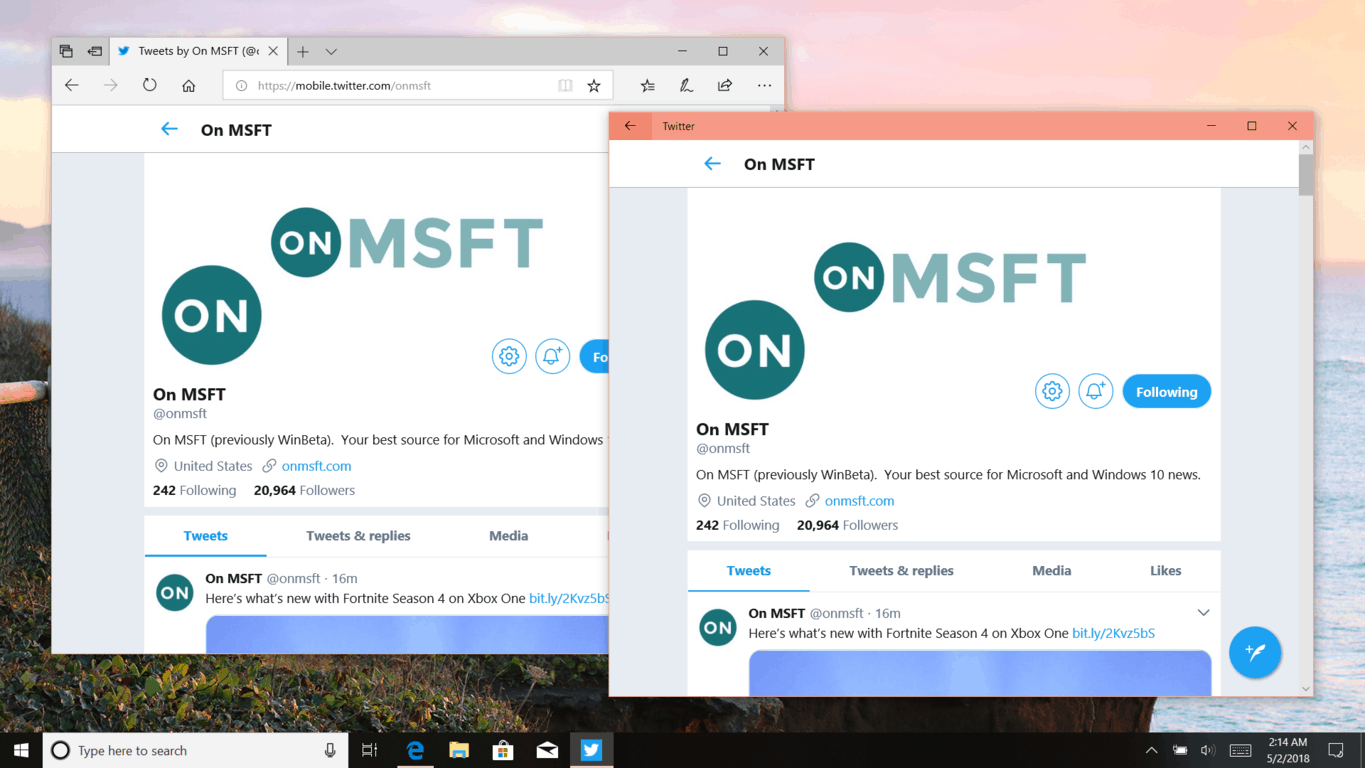
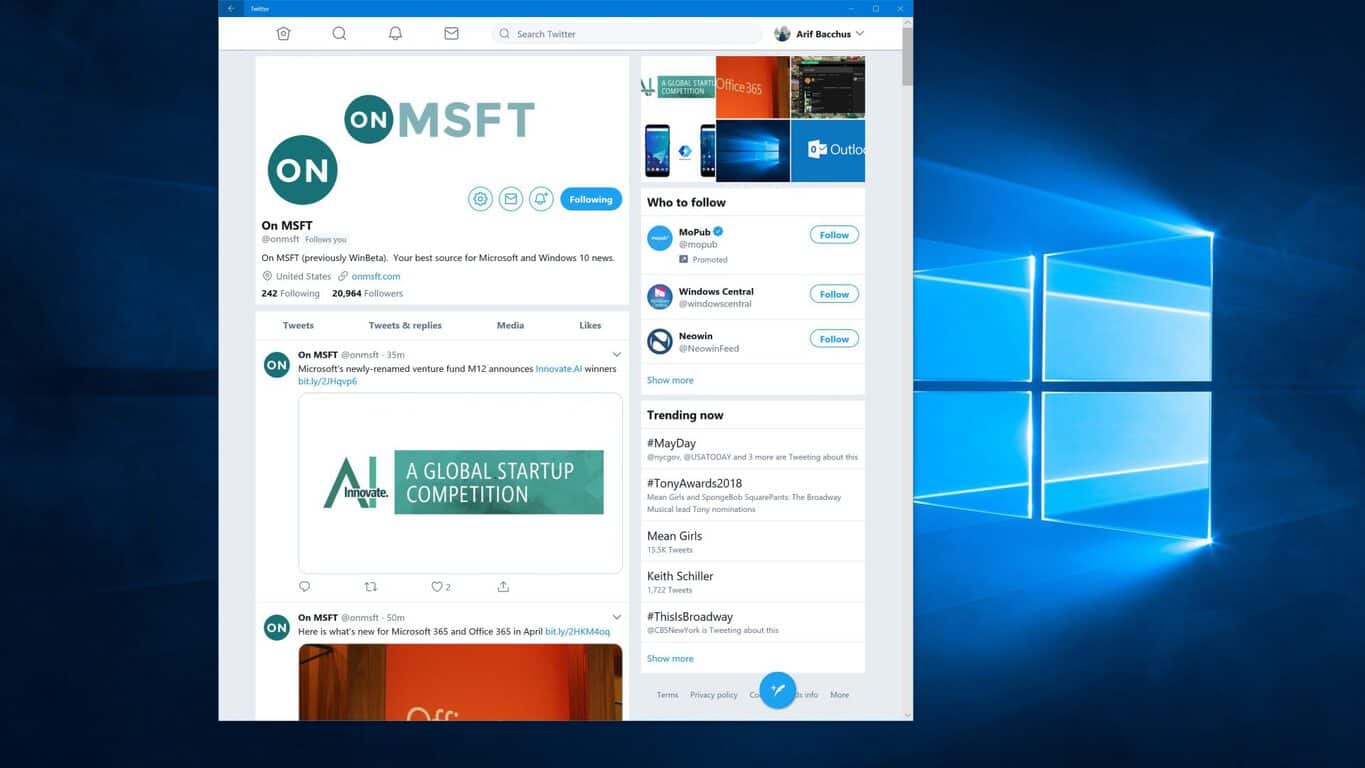
Thanks to service workers, cache and push APIs, PWAs can support push notifications, background tasks and even limited offline functionality. As we’ve seen with the new Twitter app, which is probably the best PWA you can use on Windows 10 today, devs can also add support for Live Tiles, Jump lists, and even pull to refresh.
The Twitter PWA.
As Microsoft explained in its documentation about PWAs, these apps work just like standard UWP apps and they can leverage the following features over running in the browser:
When installed on Windows 10, PWAs run as Universal Windows Platform apps and gain these technical advantages over running in the browser:
Standalone window
Independent process from browser (isolated cache, less overhead)
No storage quota (for IndexedDB, local storage, etc.)
Offline and background processes
Access to native Windows Runtime (WinRT) APIs via JavaScript
Appearance in “app” contexts such as the Windows Start menu and Cortana search results
Because PWAs are built on web technologies, they should also be always up to date. In general, Windows 10 users shouldn’t have to download a new version to enjoy new features, though app updates may still happen for some of them. There are a lot of advantages for developers, especially since a well-built PWA should work the same across browsers and different. platforms. Charlie Croom, Web engineer at Twitter recently pointed out that supporting a PWA is much less work for app developers.
A strong core app means we don't duplicate effort making each feature for every platform. Leveraging PWA support per-platform means add-on enhancements when you install the app. It might surprise you how small the web team at Twitter is; PWAs multiply effectiveness + reach.
Is Microsoft right to publish PWAs to the Microsoft Store?
Since the launch of Windows 8 back in 2012, Microsoft has struggled to get developers to supports its Windows Store. To be fair, Apple also has its own problems with the Mac App Store, but so far the Cupertino giant has refused to prioritize quantity over quality.
The fact that Microsoft intends to publish PWAs on the Microsoft Store on its own seems to be problematic for a couple of reasons. The company detailed its plans back in February:
We’ve been using the Bing Crawler to identify PWAs on the web for nearly a year, and as we’ve reviewed the nearly 1.5 million candidates, we’ve identified a small initial set of Progressive Web App experiences which we’ll be indexing for Windows 10 customers to take for a spin over the coming weeks…Throughout this process, we’ll continue to vet our quality measures for PWAs, to make sure we’re providing a valuable, trustworthy, and delightful experience to our mutual customers on Windows devices… Once in the Store, the publisher will have the option of claiming their apps to take complete control of their Store presence.
We gave these PWAs published by Microsoft a try, and they’re nothing like the excellent new Twitter app. In short, they seem to be basic web wrappers that don’t leverage service workers and other PWA features. And despite Microsoft saying that PWAs would require the Windows 10 April 2018 update, all these apps require Windows 10 version 1507 or newer, and they also work on Windows 10 Mobile. However, it’s really not a good look when you see pop-ups asking you to download an Android app.
In the end, these “PWAs” don’t offer much value, and there are also some UI/UX issues worth mentioning:
We’re not sure it makes sense for Microsoft to continue pushing such low-quality apps to the Microsoft. It doesn’t look good at all, and despite Microsoft saying that publishers can take control of these apps to improve them, we doubt many will care.
What does this mean for native apps?
Native apps usually have the advantage of close-to-the-metal code, but while this is generally true for Win32 apps, it obviously doesn’t apply to all UWP apps. Indeed, some of Microsoft’s own UWP apps have terrible performance such as OneDrive or the Xbox app, so PWAs certainly make sense for some use cases.
However, PWAs being added to the Microsoft Store means that users can now find three types of apps over there: bridged desktop apps (such as Spotify or iTunes), UWP apps and PWAs. Microsoft is still investing in its UWP platform, but it’s hard to see developers ever embracing it in a big way.
Some of the “PWAs” published by Microsoft.
In a blog post titled “Microsoft and the UWP Enterprise Delusion,” Dean Chalk, a former Xamarin developer who recently switched to Google’s Flutter alternative summed up all the issues with Microsoft’s UWP platform:
UWP is a mobile-first platform. Its designed for small devices that are being used by people touching a screen with sausage-shaped fingers. Yes, you can have the app adapt to different screen sizes but its still the same issue — powerless and simplified, with low levels of information density — if that’s all you needed, then you’re going to build a web app instead anyway.
Chalk isn’t convinced that we’ll ever see any serious PWAs being developed either. “Web apps have been done where required, and PWA’s aren’t on any enterprise roadmap,” he explained, adding that Microsoft should rather focus on its strength, which is desktop software.
It’s probably too early to tell if developers will jump on the PWA bandwagon, but we already know that Microsoft has dedicated many Build 2018 sessions to the topic. One of them will feature the Twitter team explaining how they re-built their Windows app as PWA, leaving the previous UWP version behind.
In some way, it’s been weird to see Microsoft promote both the new Twitter PWA and iTunes finally coming to the Microsoft Store this past couple of days. iTunes is pretty much the type of app that could have become a web app a long time ago, but for some reason, Apple still thinks that having a desktop app for Windows remains valuable. The debate between web and native apps is still ongoing, and so far Microsoft wants to welcome all types of apps in its Store. Whether this can lead to more developers and Windows 10 users embracing the Microsoft Store remains to be seen.
Since the Windows 10 April 2018 Update is now generally available, it’s now time for Windows Insiders to check their Ring settings. Indeed, the first Redstone 5 builds should soon start rolling out to Fast Ring and Slow Ring Insiders, Dona Sarkar said yesterday.
#WindowsInsiders: if you don't want to start receiving RS5 builds, you should switch to Release Preview TODAY. Both WIP Fast and Slow will see RS5 builds….why, yes, SOON ™ pic.twitter.com/I9oHGDNIyq
— Dona Sarkar at #MBAS #a11y (@donasarkar) May 2, 2018
So if you do want to stay on Redstone 4 for the time being, you’re invited to switch to the Release Preview Ring. Because Sarkar wrote “today” in all caps, the first RS5 build could well roll out to Fast Ring Insiders as soon as this week. The last Redstone 5 build (17655) was released for Skip Ahead Insiders on April 25, a little more than a week ago. So far, the main new RS5 feature is Windows Sets, which adds a tabbed interface to all UWP apps as well as some legacy apps such as File Explorer.
If you’re planning to jump on the Redstone 5 bandwagon, we remind you that these first builds have their fair share of bugs. If you don’t want to deal with too many bugs, it’s probably best to choose the Slow Ring, even though this means you may have to wait a little bit more to get these first RS5 bits.
Every major Windows 10 update brings new features and improvements to the table. At the same time, new OS versions remove a series of features previously available on older versions. The Windows 10 April Update follows the same line, removing a bunch of features — to users’ disappointment. Microsoft explained that these features have been removed in order to add a better version.
The Redmond giant already published a list of all the features that are no longer supported in the Windows 10 April Update. In this post, we’ll list the most important ones.
Windows 10 April Update says goodbye to these features
Groove Music Pass — you can now use Spotify to play and stream music on Windows 10.
People – Suggestions no longer include unsaved contacts for non-Microsoft accounts.
Language control in the Control Panel is no longer available. Instead you can use the Settings app to change language preferences.
Microsoft removed HomeGroup from File Explorer, Control Panel and Troubleshoot.
The ‘Connect to suggested open hotspots‘ option has been removed from the Wi-Fi settings page.
You can no longer access Conversations in the People app when you’re offline. The Windows 10 April Update
lets you see new emails in the People app provided that you’re online and you signed in with your Office 365 account.
In Windows 10 version 1803, you may need to install XPS Viewer from Apps and Features in the Settings app after a clean installation.
Microsoft also revealed that it stopped developing a series of features, such as Phone Companion, and is planning to remove them in future updates. You can read more about Microsoft’s plans on its Support Page.
If you want to get stable 160-180 FPS when playing Overwatch, then this post is for you. The Windows 10 April Update finally fixes the annoying FPS drops and low performance issues that have been affecting the game for months. Without further ado, here are the steps to follow.
Fix Overwatch FPS and low performance problems
1. Install the Windows 10 April Update
You can download the latest Windows OS version from Microsoft’s official webpage or you can check for updates to see if there are any updates pending for your computer.
2. Download the latest graphics driver updates
Both Nvidia and AMD released dedicated driver versions for the latest Windows 10 OS.
However, if your computer is equipped with an Nvidia 1060 graphics card, you should stick to the driver before version 397.31 as this one can be pretty buggy for this particular graphics card type.
3. Customize your Nvidia/ AMD settings
You need to use a specific series of settings in order to get maximum performance on your Windows 10 computer. Turn off ambien occlussion, anisotropic filtering, anti-aliasing, DSR factors, keep the number of maximum pre-rendered frames to 1, enable single display performance mode, set the power management mode to maximum performance. As for the preferred refresh rate, set it to application-controlled. Turn off triple buffering and vertical syn as well. Allow texture filtering and set texture filtering quality to high performance.
If you want to customize only Overwatch, then you can select the ‘Program settings‘ tab. In this manner, you won’t be nerfing the graphics for everything on your Windows 10 computer.
While this solution won’t work for absolutely all Overwatch players, it is worth giving it a try. Many gamers confirmed it helped them to significantly increasethe FPS rate:
So far I have seen drastic improvements in fps I went from 80-90 fps during teamfights to 130+ fps in teamfights It feels great
Even with a lot of issues, OneDrive have had over the years (it succeeded SkyDrive after the renaming in 2013), it slowly becomes the essential part of Windows ecosystem. In Windows 10 even comes pre-installed and integrated within the system shell. However, a lot of bugs and inconsistencies followed by errors are sometimes hard to cope with. For example, the “This item might not exist or is no longer available” error when accessing synced files.
Allegedly, this error is hard to overcome and the only viable solution is the hotfix provided by Microsoft. On the other hand, this implies that cause isn’t on your side. In order to make sure that you’re into clear and OneDrive is indeed culpable, follow the solutions and workarounds we provided below.
How to address “This item might not exist or is no longer available” error in OneDrive
First things first. No matter how much this workaround seems obvious, the OneDrive has its own share of tantrums and bugs. And those can be, more times than not, resolved with a simple approach. This, of course, applies to the desktop client or the app. For the web-based client, you can try to sign out and sign in again.
Follow these instructions to Unlink your account and re-link it again:
Right-click on theOneDriveicon in the notification area and openSettings.
Select theAccounttab.
Click on theUnlink this PC button.
Sign in with your credentials.
Select the location of the OneDrive folder.
Another viable thing to do is to check your Recycle Bin on OneDrive. You might have archived some files by accident and they’re to be found there.
2: Clear browser’s cache for the online version (MarcAristotle workaround, as well)
When we consider covering OneDrive issues, our main concern is addressing free version issues. With that said, it seems that OneDrive for Bussines iteration has this issue occurring more frequently. In order to resolve this, as a premium customer of the premium service, we recommend sending the ticket to the responsible support team. On the other hand, there are two things you can do.
READ ALSO: The upcoming OneDrive UI focuses on new files
Both apply to the web-based version. Firstly, we suggest clearing the browser’s cache. It can be pilled-up and thus corrupting the preserved credentials and cookies. Here’s how to do it on Chrome and Edge:
Open Chrome or Edge and write down your passwords or back them up.
Press Ctrl + Shift + Delete to open the “Clear browsing data” dialog box.
OneDrive has a few downloadable troubleshooting tools. The sole presence of those tools speaks volumes about various issues OneDrive has. We give our insight on 3 respective downloadable tools, here. Their main role concerns diagnosticating issues, but they might resolve them, as well.
Since the two of the aforementioned tools are for OneDrive for Bussines, we’ll show you how to use the universal troubleshooter for OneDrive. Here’s how to use it in a few simple steps:
After the procedure is finished, try to log in and access your files.
If they’re still missing, you can send the report to Microsoft for a revaluation.
4: Check Network for issues
Since the OneDrive relies on the connection, making sure that your network is working as intended is of the utmost importance. Even the slightest issues with your bandwidth might provoke errors while loading the stored files. For that reason, make sure to check whether your connection is stable.
If there are any issues, we suggest trying out these steps, gradually progressing through the list:
Run network troubleshooter.
Restart your PC and router/modem.
Contact your network administrator.
Disable third-party firewall and VPN/Proxy solutions temporarily.
Update router’s firmware.
5: Reinstall the app/client and re-establish the sync folder
Reinstallation is another option. Depending on the way you access OneDrive cloud storage, you can reinstall the app (Microsoft Store) or desktop client (built-in desktop client). Moreover, we advise deleting and re-establishing the sync folder located on your local storage. This will, most of the time, restart the sync sequence and the “This item might not exist or is no longer available” error should be resolved.
Double-click theOneDriveSetup.exe file and run the installer.
After the installation completes, log in and look for changes.
6: Update Windows 10
Finally, if all previous resolutions fell short, there are only so many things you can do. You can update your Windows 10, for starters. When this error firstly emerged it affected a lot of users. In response, Microsoft provided a hotfix which dealt with the problem. Besides that, sending a ticket to Microsoft might help. There’s the Live support and we recommend using your end-user privileges and ask for the resolution.
Those who have been keeping an eye out for Microsoft’s Windows 10 April Update know that the update was promised a long time ago and since then, Microsoft has been hard at work adding polishing the OS. The update’s release has taken so long because it is actually a huge patch that incorporates updates and new features across pretty much every aspect of Windows 10. Moreover, some unexpected BSOD errors ruined Microsoft’s release plans forcing the company to delay the update.
That being said, the wait is finally over. You can now upgrade to the Windows 10 April Update with the help of Microsoft’s Update Assistant. We’re sure that many Windows fans have eagerly waited for this new update as it’s one of the most anticipated updates ever released by Microsoft.
However, certain preparations need to be made before installing the Windows 10 April Update. While these are not mandatory, performing them will help tremendously both during and after installation. Here are the top things to do before upgrading to the Windows 10 April Update.
Checklist for installing the Windows 10 April Update
1. Backup and clean your computer
Both the update process as well as its results will be much more pleasant to look at if there is a little bit of a spring cleaning done beforehand. As such, delete any unnecessary files because they may slow down the upgrade process.
Make sure you have enough free space on your hard drive to install the Windows 10 April Update. Microsoft’s Update Assistant will first check the available free space, but you can always give the tool a helping hand by deleting unnecessary files and programs. Also, don’t forget to clear your browser’s cookies and cache.
Additionally, backup all the important files stored on your computer. In this manner, you’ll avoid being subject to various errors that might just delete important documents or files.
RELATED: PC won’t wake up from sleep after Windows 10 April Update install [FIX]
2. Run a full system scan
Make sure your antivirus is up to date and run a full system scan to detect and remove any malware and virus programs that may have snuck into your computer.
3. Update your OS and programs
It is also very important that you install the latest Windows updates on your computer. Additionally, refresh your drivers and install the latest updates for all your programs.
4. Keep product keys and software licenses at hand
Should your computer fail to activate some programs after the upgrade, you’ll need the product keys or licenses to enable them again. Print this information so you can always have it in hand in case something goes wrong.
5. Create recovery media
Should your computer become completely unresponsive after the upgrade, having recovery media handy is a real treasure. For more information on how to create a recovery drive, check out Microsoft’s Support page.
6. Check system requirements
Last but not least, make sure that your computer meets the system requirements necessary to run the OS:
Processor: 1 GHz or faster processor or SoC
RAM: 1 GB for 32-bit or 2 GB for 64-bit
Hard disk space: 16 GB for 32-bit OS 20 GB for 64-bit OS
Graphics card: DirectX 9 or later with WDDM 1.0 driver
The official Microsoft Developer blog post was updated to confirm the release date of the Windows 10 April Update. The document shares a clear view of Microsoft’s plans for the release of the Redmont-based technology.
Windows 10 Redstone 4 is now available for download
Microsoft has provided an overview of the new operating system and now updated the end of support date for Redstone 4: October 2019. Since we know the company’s policy for the support to last 18 months, we can close the bets now and get ready for the Windows 10 April Update.
Update: Microsoft delayed the end of support until November 2019. Check out this list below of Windows 10 versions always updated.
The official release date of the Windows 10 April Update remained shrouded in mystery for a long time which caused a lot of stir among users:
I hope the Release Date is 05.04.2018 for Spring Creators Update, Windows 10 everytime in Dependency with .NET Framework. Now this Framework (4.7.2) is Testphase, is that right ????.
Hi Christian, we don’t have a final release date for the 1803 version yet but it’s probably around this date. Framework 4.7.2 will be most likely be released with RS4.
Bringing developers the opportunity to create engaging experiences with apps they build using AI and ML, Windows 10 is improving with more features.
The headlines in this edition are about artificial intelligence (AI) and machine learning (ML). Giving a heads-up to developers, the new platform will have the support to incorporate AI and ML into their apps.
Windows Timeline is included in the OS and allows you to sync your work seamlessly across multiple devices and also keep track of all the recent apps.
For sure, many more exciting new features will come with the Windows 10 April Update . Above all, many of us are waiting for new privacy settings to keep our private data private and trust the company’s transparency about user data collection.
Well, despite all the rumors and inside information regarding the launch date of the Windows 10 April Update, Microsoft changed its mind more than once. Many expected the tech giant to release Windows 10 version 1803 on April, 10 but apparently something came up and Microsoft decided to wait a little bit longer before pushing the red button.
The Windows 10 April Update is now available for download, and the company already rolled out the first ever cumulative update for the new OS version. Update KB4100375 takes Windows 10 to build version 17133.73.
Windows Insiders running build 17133 in the Fast, Slow, and Release Preview rings were the first to download this cumulative update, but now all users can download and install KB4100375 on their machines.
Sometimes Internet Explorer failed to identify custom controls. This bug should no longer affect SCU users.
Security updates to Internet Explorer, Microsoft Edge, Microsoft scripting engine, Windows kernel, Microsoft graphics component, Windows Server, Windows cryptography, and Windows datacenter networking.
You can automatically download KB4100375 via Windows Update. Go to Settings > Update & Security > Windows Update > click on the ‘Check for updates‘ button. Your computer will then download and install all the available updates.
Update KB4100375 has been available for all Windows 10 April Update users immediately after Microsoft rolled out the new OS version. Fortunately, Dona Sarkar’s team managed to fix all the major bugs that blocked the initial release.
If you already installed the first Windows 10 April Update patch on your machine, use the comments below to tell us more about your experience.
Meanwhile, you can check out the guides listed below to learn how you can install the latest Windows 10 OS version on your computer:
The Command Prompt is one of the hallmark features of the Windows operating system, but for average and novice users, it can sometimes be too technical to understand. Well, Microsoft recently released a Windows Command Reference, which details over 250 Windows console commands (via BleepingComputer.)
The reference guide can be found here for download on Microsoft’s official website. It can prove to be pretty useful for IT Pros and even those looking to learn more about Windows Commands. It lists all commands from A-Z in a total of 948 pages, but also includes step-by-step descriptions of each command and even examples on how to use commands in any given environment.
Feel free to check it out for yourself, as the guide might refresh your memory, or leave you with something that you never knew about before. Have you ever used Command Prompt in Windows 10 to accomplish simple tasks? Let us know your thoughts in the comments below.
Red Dead Redemption 2 is definitely one of the most anticipated games of 2018, and the talented folks over at Rockstar Games know how to capture gamer’s attention. A brand new trailer for the Western-themed action-adventure game has been published today, and it already crossed 345,000 views at the time of this writing.
The action of Red Dead Redemption 2 is set in 1899 in America, and the game will be a prequel to the 2010 title Red Dead Redemption. This new episode will focus on outlaw Arthur Morgan, a member of the Dutch van der Linde gang who is forced to flee after a robbery goes wrong in the western town of Blackwater.
Red Dead Redemption 2 was originally due for release in the second half of 2017, but the game has since been delayed to October 26, 2018. As a result, the game will likely have to compete with Call of Duty: Black Ops IV and other AAA games to be released this Fall. Rockstar Games already released one of the most popular games of all time with GTA V, and it remains to be seen if Red Dead Redemption 2 could reach the same level of momentum.
For now though, we remind you that the Xbox 360 version of Red Dead Redemption is now enhanced for the Xbox One X, so it’s a pretty good time to revisit the first episode before playing the prequel later this year.
Microsoft is bringing back the ID@Xbox Game Fest this month, with cool discounts on some of the best indie games every week. During the first week of May, the puzzle-platformer game I, Hope is 20% off ($7.99).
For those unfamiliar, this indie game has been developed in partnership with hospitals and child researchers to have a poignant impact on the lives of children fighting cancer, and 100% of the proceeds will be donated to Game Changer Charity, a non-profit organization that leverages technology to ease the pain and suffering of children facing life-threatening illnesses.
Titles featured in the first week of ID@Xbox Game Fest also include Firewatch (75% off), Night in the Woods (30% off), Mulaka (10% off), Tacoma (25% off) and the critically-acclaimed platforming game Celeste (20% off). We invite you to check the Game Fest page on Xbox.com to see what’s new every week through May 28.
Yesterday, Twitter made their new Progressive Web App (PWA) for Windows 10 official by announcing they would no longer support the old UWP app come June 1. This marks an important step, especially since the social media giant said they are making a “long overdue” commitment to Windows with the new PWA.
In perspective, this hints at the failure of the old Twitter UWP and shows that PWA is to be taken seriously going forward. It also is important because Twitter is specifically leading the release of the app and not just Microsoft, as has been the case with some UWPs in the past.
“This release represents a renewed commitment to Windows that has been long overdue and is part of a longer-term strategy to reach greater feature parity to all of our platforms. We wanted to make sure the app represented a modern Twitter experience while taking advantage of unique Windows features,” explained Twitter in a blog post.
Microsoft published a separate blog post on the news, where it was detailed that only users running the Windows 10 April 2018 or Windows 10 Fall Creators Update would get the new PWA Twitter app, which requires Edge support for PWA features like Service Workers. This obviously shows that PWAs are the new deal, and will be first-class citizens in Windows 10 moving forward.
Starting tomorrow, May 3, and lasting until May 6, 2018, Just Cause 3 is free to play all weekend on Xbox One. As noted in a Reddit post, Just Cause 3 is a great sandbox game, albeit with some noticeable framerate issues. All games in the Just Cause series were great, with game maps that dwarfed those that appeared in any installment of Grand Theft Auto.
Just Cause 3 continues the story of Rico Rodriguez who is tasked with taking out yet another ruthless dictator on a fictional Mediterranean island. Just Cause 3 features an a vast open-world environment were you can use your infinite grapple and parachute to scale buildings, hijack vehicles (land and air), and use your grappling hook to tether things together to create maximum “Chaos.” Almost everything in the game is destructible.
Just Cause 3 features several DLC packs, including special weapons, vehicles, and more. Just Cause 3 also has online features, including a co-op mode and other multiplayer modes. As always any progress you have in the game this weekend, will carry over if you buy the full game after this weekend. Just Cause 3 is a great game to try for free, or buy for just $29.99.
PlayerUnknown’s Battlegrounds (PUBG) is receiving its 13th patch for Xbox One consoles today and it boasts several graphical and gameplay optimizations that should please players who had been critical of its admittedly less-than-perfect state (it is in Game Preview after all).
Here’s the official list of fixes that have been made.
The free-fall and parachuting process has been optimized, leading to performance improvements during the initial stages of each game.
World loading has been optimized. “Play-doh” and interior prop pop-in effects have been improved.
Movement data for nearby but out-of-sight players is now handled in a more efficient manner, resulting in general performance improvements.
Similarly, when nearby but out-of-sight players equip or unequip items, this process is handled in a more efficient manner. This helps with performance and crashes throughout the game.
The inventory has been optimized, improving response time when opening it and solving some crashing issues.
Uninhabited boats and vehicles were causing some performance issues, and we’ve resolved this issue.
Are you a fan of PUBG and have you been playing on your Xbox One console? Let us know if you’re happy with its current state in the comments below and make sure to like us on Facebook for more PUBG news.
On Microsoft’s family of Xbox One consoles, the game will unlock at 1am PDT on May 3rd. Access will close at 12am PDT on May 7th. Like most free play campaigns, the full video game will be unlocked and players will be able to gain Xbox Achievements and save their progress for any future play sessions.
As an extra bonus, For Honor is also going to be heavily discounted on the Xbox One from May 3rd through to May 15th with a 67% cut off its regular price. A special trailer promoting the free weekend has launched which you can view below.
For Honor is a major Ubisoft video game that pits warriors from different cultures against each other. Have you played For Honor yet on your Xbox One? Let us know if you’d recommend it in the comments below and make sure to like us on Facebook for more Xbox video game news.
Just a day after the public rollout of the new Twitter Progressive Web App (PWA), Twitter’s Charlie Croom published a blog post where he enthused the many benefits of the PWA platform and promised that new features, like night mode, will be coming in the very near future.
“This release represents a renewed commitment to Windows that has been long overdue and is part of a longer-term strategy to reach greater feature parity to all of our platforms,” Croom said of the importance of this new app. “We wanted to make sure the app represented a modern Twitter experience, while taking advantage of unique Windows features, like support for Windows native APIs such as share integration, pinned tiles, jump links, and more. We want to continue providing our Microsoft users with the latest and greatest, and will be adding additional features like night mode, in the coming weeks and months.”
The previous Twitter app for Windows 10 devices was functional but had been heavily neglected by its developers and had fallen way behind its iOS and Android counterparts when it came to features and functionality. One of the benefits of the PWA format is that it allows updates to be pushed out to apps faster and more frequently and also allows for developers to distribute the same app across multiple devices, thus hopefully saving on manpower and expenses.
Have you tried the new PWA Twitter app yet? Let us know what features you’d like to see added soon in the comments below and make sure to follow us on Twitter for more app news.
April Update is finally here. After it was postponed due to the same security loopholes, Windows 10 users can try out Timeline and a few new features which are quite nice.
However, as always, there are reports of the update being stuck and other install issues. This can prove a hard nut to crack.
On the other hand, there are some solutions which should resolve this problem. In case you’re not sure how to troubleshoot install issues on major updates, make sure to check our list below.
April Update stuck while installing? Here’s how to resolve this
Let’s start from the beginning. In order to installApril Update, you’ll need approximately 16 GB of free storage space. And that’s only for the 32-bit system version.
The 64-bit version requires at least 20 gigs for the installation. In case you’re unable to install the update over multiple tries, we recommend starting with the elementary steps.
Make same free space on the system partition and restart the update.
Once you’re certain that there’s no lack of storage space and that you meet the rest of the system requirements, retry the procedure. If the issue is persistent, continue through the list.
Installation issues are quite commonly tracked down to antivirus interference. Namely, even though a third-party antivirus might work great later, it can stop or block the update procedure.
This, obviously, goes only for third-party antimalware solutions — Windows Defender not included.
What you’ll need to do before the update procedure commences is disabling the antivirus or even uninstalling it. You can install it later on without problems.
The special emphasize goes to McAfee and Norton which are, although great solutions, known for instigating issues on Windows 10.
3: Download Update Assistant
Standard over-the-air update is seemingly the core of all update issues. Especially when we look at the previous major releases for Windows 10.
This can be easily avoided by turning to alternative update measures. We left the alternative as the last solution below.
But before turning to external media for updating, you can use one of the two tools to update to April Update manually.
The first tool is Update Assistant. It’s simple to use and it allows you to get the April Update immediately.
You can download it here. Just follow the instructions and prepare for a long wait. Also, we recommend backing up your data prior to running this tool.
An alternative is to download the Media Creation Tool. Instead of creating an installation media, you can use it to update Windows. Just click Update and wait it out. You can get Media Creation tool here.
Sometimes you won’t be able to access this menu with an alternative browser, so for the sake of updating, use Edge at least this one time.
Another viable solution is to reset the update services and clean up the Software Distribution folder. Services-wise, they tend to stop for no apparent reason which leads to failed update procedure.
And the Software Distribution folder is the place on the system partition where all update-related files are stored. And those tend to get corrupted.
By resetting the services and clearing the Software Distribution folder, you can have a clean start and hope for the best.
This is how to reset update services in Windows 10:
Restart PC, navigate to Updates and try updating again.
5: Install update via the installation media (ISO or USB)
Finally, if none of the previous were a resolution for your ache, we still have one card you can play on. If for some peculiar reason, your system is unable to store the update installation files — don’t worry.
You can always update via the pre-created installation media. Whether it’s ISO or USB — that’s your choice.
If you decide to go with the USB bootable drive, you’ll need the Media Creation tool and USB with at least 6 gigs of free storage space. We provided detailed instructions in this article, so make sure to check it out.
That’s a wrap-up. Don’t forget to share your questions or suggestions in the comments section below. We’ll be glad to help you overcome these issues and put your hands on latest Windows 10 iteration.
Installing the Windows 10 April Update has proven to be quite a difficult task for many users. You can now download and install the latest Windows 10 OS version through Windows Update or directly from Microsoft’s upgrade page. However, the update process sometimes fails leaving users unable to test the latest OS features and improvements.
Windows 10 April Update install fails
Many users complained the update process suddenly stopped and froze at 30% or 50%.
windows 10 april 2018 update hung at 50% on one of my machines. How should I proceed after restart? It is restoring the previous version of windows.
Other users got the following error message from the Update Assistant:
Windows could not load required file WinSetup.dll. The file may be
corrupt. To install Windows, restart the installation. Error code: 0x5
It is worth mentioning that users who encountered this error message said that Cylance PROTECT was the culprit. This antimalware tool quarantined the dnsapi.dll within the C:$Windows.~BT. To fix this problem, you need to exempt dnsapi.dll and then the upgrade should go just fine.
Some users couldn’t even get past the download phase. For many, the download process stopped at 1% forcing them to hard reboot their computers.
Feature update to Windows 10, version 1803 is not updating. It’s stuck on 1%. Internet connection is also good.
As you can see, installing the Windows 10 April Update seems to be an impossible task for many users. If you’re experiencing the same issue, temporarily disable your antivirus software and then download the update. Once you’ve installed the latest Windows 10 version, you can turn on your antivirus protection. If this quick workaround didn’t help, check out our detailed guide on how to fix Windows 10 April Update install issues.
The Windows Phone might have fallen by the wayside, but that does not mean Microsoft is finished with mobiles. In fact, the software giant might even still have an exciting mobile device brewing. Microsoft’s CEO, Mr. Nadella, has also confirmed that the company is still continuing to invest in mobile devices.
Mr. Nadella spoke at an April Conference Call in which he provided further details for Microsoft’s fiscal year. During that conference, he stated:
Our results speak to the strength of our platform and services for both first party and third-party experiences. And we’ll continue to invest in our platform, enhancing our cloud services with AI capabilities for developers to quickly build and monetize games across PC, console and mobile.
As such, Microsoft is still investing in mobile devices despite the demise of Windows Phone. However, the above quote might be a little ambiguous. For Microsoft, mobile devices are various things such as phones, tablets, ARM devices or laptops.
The April Conference Call was not about mobile devices. It was actually a conference about the company’s fiscal year. There Microsoft announced that its third quarter revenue had increased by 16%.
Yet, Mr. Nadella’s confirmation that Microsoft is still investing in mobile devices will no doubt further stir the Surface Phone rumor mill. The fabled Surface Phone is speculated to be a foldable Windows 10 mobile device, as shown in the concept art below. It is also anticipated that the Surface Phone will be based on the Windows Core OS (Andromeda OS) the company is developing. Windows Core OS will supposedly be a new Windows 10 version compatible on any form factor device.
Furthermore, Redstone 5 preview builds have also revived Surface Phone rumors. An April Windows 10 Insider Preview for Redstone 5 includes phone APIs. With phone APIs returning to Windows 10, it seems all the more probable that Microsoft is cooking up a new Win 10 mobile device.
So perhaps there might still be a Surface Phone, or alternative new Windows 10 mobile device, after all! Yet, Microsoft has confirmed nothing about a Surface Phone. However, Microsoft might reveal more about an upcoming mobile device at its Build 2018 developer conference.
Recent reports suggest the latest Windows 10 version causes quite a few gaming bugs that may severely limit your gaming experience.
Windows 10 April Update game issues
1. Games stutter
Gamers become unplayable when they overwrite standby memory.
For example, if you open an antivirus or antimalware tool and you then launch your favorite games, you’re going to experiencing severe stuttering.
So, the best solution is to simply limit the number of apps and programs running at the same time. In this manner, your computer will direct all the resources to the games that you’re playing.
Games stutter when they are forced to overwrite standby memory. Continues to be an issue on a fresh install on 1803.
Hey, there is a bug that for, as a gamer, is frustating. I cant use my mic anymore since the update. I already tried to reinstall drivers, using windows troubleshoot but nothing has fixed it. i really need to fix this problem.
First of all, make sure that you allowed games to access your mic. Go to Settings > Privacy > Microphone > check the option ‘Let apps use my microphone’.
If the issue persists, check out the troubleshooting guides listed below:
To prevent game crashes after installing a major Windows 10 update, you need to manually uninstall and reinstall your graphics card drivers (aka perform a clean install).
There you go, we hope that these quick tips helped you fix game stuttering, crashes and microphone issues.
If you encountered other game problems after installing Windows 10 April Update, tell us more about your experience in the comments below.
Xbox’s Major Nelson today announced that Saints Row 2 has arrived in the Xbox One Backward Compatibility catalog. The title joins the other Saints Row games which already were backward compatible with Xbox One— both Saints Row: The Third and Saints Row IV, added in 2017 and 2016.
Saints Row 2 is an open-world action adventure game and it was originally released back in November of 2009. The game is set in the fictional city of Stilwater and challenges you with the task of helping the 3rd Streets take back their city. If you already own a physical copy of this game, all you need to do is put the disc into your Xbox and enjoy. If you own a digital copy of the game, meanwhile, it should appear in “Ready to Install” section in the Games and Apps section of the Xbox One dashboard.
The long-awaited Windows 10 April Update is live and the saga of errors just started. Microsoft also rolled out KB2267602 which is a new definition update for Windows Defender Antivirus. The official description for this update reads as follows:
Install this update to revise the definition files that are used to detect viruses, spyware, and other potentially unwanted software. Once you have installed this item, it cannot be removed.
Unfortunately, KB2267602’s install process often fails with error 0x80070643. This is actually an old Windows Defender error that’s been around for a few years now. It’s extremely surprising that it still affects users even to this day.
Windows Defender update KB4052623 has been failing to install with error 0x80070643 for months
I have tried all the things i could find online, including “sfc /scannow”, trying to install the update with Windows Defender disabled and run the update troubleshooter, i’ve tried running wumt and loads of other things. My Windows is clean and i have no other antivirus, and i don’t want to refresh my installation. How can i fix this problem?
Sinceerror 0x80070643 is a very common Windows Defender error code, we compiled a list of fixes that will help you solve the problem for good. Here are some of the steps you need to follow to get rid of error 0x80070643:
Restart the Security Center Service to force install the update
Install the update manually
Delete all the files and folders from the catroot2 folder:
Launch Command Prompt as an administrator > enter the following commands:
net stop wuauserv
net stop bits
net stop cryptsvc
Go to C:\Windows\SoftwareDistribution/ C:\Windows\System32\catroot2 > delete all the files store in this folder
Return to Command Prompt and type the following commands hitting Enter after each one:
net start wuauserv
net start bits
net start cryptsvc
Update Windows Defender again.
For step-by-step instructions on how to fix error 0x80070643, check out this guide. If you came across additional solutions and workarounds to solve this problem, feel free to list the steps to follow in the comments below.
Microsoft rolled out KB4135051 a few days ago to get Windows 10 computers ready for the April Update. The exact changes, improvements and possible bug fixes remain shrouded in mystery even to this day. The Redmond giant has yet to reveal what exactly is included in this update but most users agree this release is all about upgrade optimization tweaks.
Users also noticed that KB4135051 is affected by a few issues of its own. Many reported that this patch completely deleted their update history.
I installed it on two PCs. It wiped out the Update History on one and not the other. The only real difference in the Settings on the PCs was that the one with the problem had Windows Defender and the one without a problem had Bitdefender.
So, it seems that this small bug is prevalent for users running Windows 10’s built-in antivirus software. Moreover, users reported that after several restarts, the update history magically appeared. However, the miracle didn’t last too long, as the update history disappeared again when users booted up their computers.
After installing this update yesterday and after many restarts (no shutdowns, I have fast start disabled), the update history remained. However, this morning after being shutdown over night, the update history was gone.
Just yesterday, Microsoft unleashed the Windows 10 April 2018 update to PCs across the world. The update comes with many new features, one of which is support for Progressive Web Apps (PWAs). Windows Insiders have had the privilege of these apps for a while now, and today, Microsoft is choosing to promote the Twitter PWA. It is now available for everyone running the Windows 10 April 2018 or Windows 10 Fall Creators Update to download from the Microsoft Store.
The new PWA will replace previous Twitter UWP desktop and mobile apps, which will be phased out “over the coming weeks.” This means that those not yet running the Windows 10 April 2018 or Windows 10 Fall Creators Update should consider updating their OS, (or visit Twitter on the Web instead), as Twitter will no longer support previous versions of the app starting on June 1st.
The Twitter PWA comes as a major improvement over the previous UWP app on Windows 10. It supports all the features that are present on Twitter on the web, including the ability to type out Tweets of up to 280 characters, explore trending topics, bookmark tweets, and view polls and videos. There are also Windows 10 specific features too, such as pinning the app to the taskbar, getting push notifications in the Action Center, and sharing content with other Windows apps.
You can check it out by visiting the link below, and keep in mind that new features (like a dark mode) will be coming to the Twitter PWA at a quicker pace since the app is built on a common web code and is not platform specific. Once you’ve downloaded, do feel free to let us know your experience by dropping us a comment in the section below.
The Windows 10 April Update is finally available for download. You can head over to Windows 10‘s official update page and download the update from there. As a quick reminder, Microsoft initially intended to roll out the Windows 10April 2018 Update on April, 10 but frequent BSOD errors delayed the release.
Dona Sarkar’s team had some extra days at their disposal to get rid off all the bugs affecting the April Update code, but it seems that some bugs still went under the radar. Insiders already started reporting all kinds of technical issues after installing the update. For example, the Windows 10 April Update fails to install, touch keyboard is unresponsive, and so on. In this post, we’re going to list the most commonWindows 10 April Update bugs reported by users so that you know what to expect in terms of problems.
Windows 10 April Update issues
1. Touch keyboards won’t work
This was actually one of the first problems reported by users after installing the latest Windows 10 version.
And busted touch keyboard! Yay, I enjoy it when basic input methods are broken!
If you’re experiencing the same problem, maybe this troubleshooting guide on how to fix on-screen keyboard will help you.
2. Windows 10 April Update won’t install
Many users are still trying to install the latest Windows 10 version on their computers. The update process goes smoothly up to a certain point but then reverts changes. Also, attempting to do a fresh install often results in “A media driver your computer needs is missing” error.
86% of final instalation after 3 or 4 restarts i get “windows is instaling previous version…”
Here are a few troubleshooting guides to help you fix Windows 10 update errors and issues:
Many gamers complained about slow ALT+TAB issues, especially when playing League of Legends. The good news is that you can quickly fix this problem by disabling all the options from Focus Assist. So, go to Settings > select > System > navigate to Focus Assist and disable absolutely every option and feature listed there.
Other Windows 10 April Update users noticed that at least one of their drives appeared to be fulled when there were actually no files store there.
The other problem is more worrying, is its showing my E drive as being full but when i click on the E drive folder its showing nothing at all even though i have hidden files to be showing. Btw my E drive is the drive that is partitioned for the windows operating system.
To fix this problem, use can use Diskpart. Here are the steps to follow:
Start Windows 10 setup using a bootable USB or DVD.
Go to Advanced tools> selectCommand Prompt >enterstart diskpart.
Now enterlist disk to see all the hard drives connected to your computer.
Find the number that represents the problematic hard drive > enterselect disk 1 (we used 1 as an example, so replace 1with a number that matchesyour hard drive).
Enter the following commands and hit Enter after each line:
disk 0 clean
disk 0 create partition primary
disk 0 active
disk 0 format fs=ntfs quick
disk 0 assign
Enter exitin order to close Command Prompt.
Start the installation process again.
5. NVIDIA GPU settings are unavailable
If your computer is equipped with an Nvidia graphics card but you can’t find it after installing the Windows 10 April Update, rest assured, you’re not the only one experiencing this issue.
My pc just updated to the april update. But i,ve noticed a few things. First of all it seemed to remove my nvidia gpu completely which is weird. I can’t even right click on the screen where you can usually see the nvidia stuff.
You can quickly solve this problem by downloading and installing the latest Nvidia driver update (which is version 397.31 if you’re using an GeForce Experience GPU).
6. Fluent Design apps are laggy
Microsoft revamped Windows 10‘s UI using Fluent Design elements. However, sometimes Fluent Design apps can get quite laggy, as this user reports:
Open fluent design apps […] activate timeline, there will be laggy animation and also upon click the app back..even groove music (upon clicking it back only). The strange thing is when i connect to external full hd monitor and make it the only screen, the problem solved.. It was something related with very high dpi display that cause the problem
These are the most frequently encountered Windows 10 April Update issues. We’ll update this post with new bugs and bug fixes as soon as new information becomes available. If all these issues scared you, you can block the Windows 10 April Update from installing on your computer until Microsoft pushes a few hotfixes to patch all these problems.
If you’re one of the early adopters and you already installed the Windows 10 April Update on your computer, tell us more about your upgrade experience in the comments below.
April has come and gone, and it is now time to look back at the new features introduced in Microsoft 365. First, Office 365 picks up new creativity features, AI enhancements, new features in Outlook for iOS, and new security features. Here’s a look at what you need to know.
Creativity
Microsoft added Ink analysis to PowerPoint, enhancing shape and text recognition to give users more ways to be creative when inking on their slides. Users can also leverage this feature to convert their handwritten words to text, and sketch out an entire slide, making things flow much more easily.
Also falling under the same category is inking in Microsoft Word. Users can now add handwritten text to a document, and interact with content using a pen. Examples include splitting paragraphs, inserting words into sentences, and joining separated words.
AI inspired features comes to Word for Mac
In April, Microsoft delivered AI capabilities to Word for Mac. MacOS users can now translate sections of text and documents in over 60 languages in order to understand sentence context. They also can enjoy the Resume Assistant, which is powered by LinkedIn.
Office 2019 Preview and Mobile Editing for more users
Also in April, Microsoft announced the availability of the first Office 2019 previews for commercial customers. This is the first preview, coming first for the Windows apps, including PowerPoint, Word, Excel, Outlook, OneNote, Publisher, Access, Project, and Visio.
There will be more previews soon for Office 2019 on MacOS, and previews of Exchange 2019, SharePoint 2019, and other servers. Microsoft is also promising that more Microsoft 365 subscribers (Office 365 Business Essentials, Office 365 F1, and Office 365 E1 subscribers) will soon get access to the full versions of the Office mobile apps.
New features for Outlook on iOS, and Outlook Calendar on Windows 10
For Outlook on iOS, Microsoft made it easier for you to continue drafting your emails that were started on other devices. The name of this feature is “Draft Sync” and it makes it easier for you to pick up where you left off, almost instantaneously by just navigating to the conversation in your Inbox. Other new features for Outlook on iOS include a new organization view, which uses AI to show pictures of user profiles and positions of a user inside a company.
Lastly, there is the new features for Calendar in Outlook for Windows. You can now protect your company’s privacy since Microsoft introduced the option for meeting organizers to prevent forwarding calendar invitations to recipients that weren’t on the original invite list.
Microsoft 365 gets more secure and makes IT simpler
Finally, here are the new Microsoft 365 features for April. Microsoft says it has added Intelligent security for the modern workplace, and also made IT simpler for Microsoft 365 users. Have a read below for more on these features.
We also announced the addition of advanced security features in Microsoft 365 Business to further protect small and medium-sized businesses (SMBs) from cyberthreats and safeguard sensitive information from unintentional data leaks.
We announced several new technologies and programs that build on our unique intelligence capabilities to make it easier for enterprises to secure their assets from the cloud to the edge. These new features help organizations simulate phishing attacks, automate threat detection and response, quickly assess their security posture.
We announced a range of new capabilities coming to Microsoft 365 to help organizations minimize total cost of ownership while enhancing user experience. These new capabilities include improvements to cloud-based device management, solutions like Kiosk Browser in Windows 10.
We unveiled new resources and tools to help organizations meet compliance obligations like the EU’s General Data Protection Regulation (GDPR)
We announced the general availability of Multi-Geo Capabilities in Office 365, a new feature that helps multinational organizations address their global data-residency requirements.
Microsoft definitely improved on Office 365 and Microsoft 365 last month, and we’re hoping for more of the same in May. The subscription-based services continue to offer big value for the buck, especially since they are constantly getting new features. Are you a Microsoft 365 or Office 365 subscriber? If so, which of these features are your favorite? Let us know your thoughts in the comments below.
Microsoft launched the Windows 10 April Updateon April, 30. However, many users are not planning to install this Windows 10 version as soon as it’s available. Windows 10 is infamous for its plethora of bugs that occur shortly after users decide to hit the upgrade button. As a matter of fact, technical issues are inherent to each and every Windows 10 launch.
As a result, many users prefer to delay the Windows 10 April Update in order to buy more time for Microsoft to patch the initial issues.
When it comes to blocking updates, Windows 10 Pro users are by far luckier than Windows 10 Home users. The latter don’t have that many options to delay the updates and forced upgrade reports are bound to appear on the list of complaints every time Microsoft launches a new OS version.
How to defer the Windows 10 April Update on Windows 10 Pro
As stated above, Windows 10 Pro users have more options at their disposal to delay updates. So, if you’re a Windows 10 Pro user, you can also use the method listed above to block the April Update.
Apart from that solution, you can also block updates by following the instructions listed below.
1. Block the April Update by pausing updates
Go to Settings > Updates & Security > Advanced Settings > Turn on the “Pause updates’ toggle
As you can see, this is only a temporary solution as you can block updates only for a limited period of time.
You can also defer updates for longer by enabling the following settings:
Go to Settings > Updates & Security > Advanced Settings
Select ‘Choose when updates are installed‘ > postpone feature updates for 365 days
The Windows 10 April Update allows you to postpone updates for about four or five months. If you’re an Insider, follow these instructions:
Go to the Settings page > navigate to Updates & Security
Select Advanced options > go to ‘Choose when updates are installed‘
Use the drop-down menu to select the ‘Semi-Annual Channel’ option.
If you’re running the Creators Update or the Fall Creators Update, you won’t have access to the Semi-Annual Channel option. Instead, you’ll see this screen:
You can then choose to pause feature updates for 365 days and quality updates for 30 days as shown above.
3. Block the April Update by using Group Policy
You can also use the Group Policy Editor to block the Sprint Creators Update.
Go to Start > type gpedit.msc > hit Enter
Navigate to Computer Configuration > Administrative Templates
Go to Windows Components > select Windows Update >Defer Windows Updates
Then double-click on ‘Select when Preview Builds and Feature Updates are received’ or ‘Select when Feature Updates are received’ (depending if you’re an Insider or not)
Select ‘Enable’ > select the update channel that you want to use and the number of days that you want to defer updates for.
There you go, these suggestions should help you block Windows updates including the Windows 10 April Update. There have already been many reports about various technical issues affecting this new Windows 10 version. For example, touch keyboards are unresponsive, Fluent Design apps are laggy, NVIDIA GPU settings are unavailable, various shortcuts don’t work as intended, and so on. So, if you want to enjoy a stable OS version, you’ve got many reasons to delay installing the Windows 10 April Update until Microsoft fixes all these bugs.
For all the Xbox achievements hunters out there, we have some good news for you. Starting today, all achievements unlocked on Xbox 360 games, including backward compatible games played on the Xbox One, will now be taken into account in the Gamerscore Leaderboard. Previously, the monthly ranking only counted Achievements unlocked on Xbox One games or Xbox Live-enabled games on Windows 10 and other platforms.
Starting today, Gamerscore earned from Xbox 360 and Backward Compatible achievements will now count towards the monthly Gamerscore leaderboard pic.twitter.com/D6yS81gYIf
Xbox’s gamerscore leaderboard is a pretty great gamification feature, and you can check it from your profile on Xbox One, Xbox.com as well as the Xbox apps for Windows 10, iOS and Android. Integrating achievements from Xbox 360 games to the monthly gamerscore leaderboards may encourage more players to play backward compatible games. Moreover, this also contributes to making these old games look like they are natively integrated into the Xbox One experience.
Are you an Achievements hunter, and if so are you pleased that all Xbox 360 achievements will now be taken into account on the Gamerscore leaderboard? Sound off in the comments below.
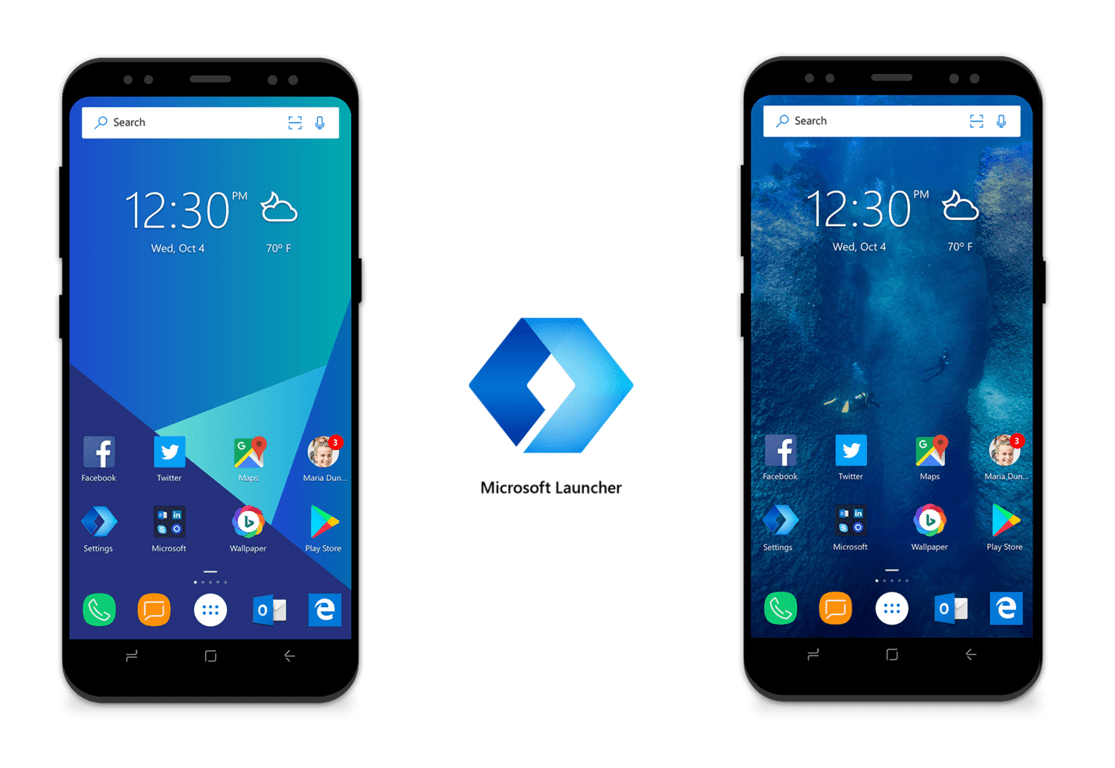
The Microsoft Launcher experience is always evolving on Android, and new releases are frequently tested first with users who have opted into the Beta version of the launcher. In the latest version 4.9 beta, Microsoft is enhancing the overall user experience and introducing ways to make the launcher more customizable.
The full changelog is shared on the Google Play Store, but you can also have a look below for more on what is new:
Improved Home screen import logic
Sort your apps alphabetically in folders
Display names of apps or folders in your dock
Customizable gesture for pressing the Home button from the Home screen
New gesture option that lets you quickly lock your Home screen
Microsoft announced yesterday several new features coming to Outlook across Windows, Mac, web, and mobile platforms. Not all Mail and Calendar features will roll out to all platforms at the same time, and we’ll just highlight the most important additions below.
First of all, Outlook.com can now help you pay your bills on time with bill pay reminders. That’s right, the web app can now identify bills in your mail and automatically create calendar events on the due date.
Outlook.com now supports Bill pay reminders.
Outlook for Windows has also been updated to suggest event locations when you create a meeting, and the suggestions will use recently used and available conference rooms as well as Bing. During the process, You’ll also see a new option to allow or prevent the forwarding of your calendar invitation.
Among other highlights, Outlook for Windows now lets you see the tracked responses and RSVPs for all your meetings. The Windows app also supports up to three time zones, which you can add under File > Options > Calendar Time Zones. Multiple time zones are also supported on the Mac and Outlook on the Web.
Outlook for Windows, Mac and the web now support multiple time zones.
There are a lot of new features coming to Outlook for iOS and Android as well. On iOS, the Outlook app can now show you organization directory details, helping you see who your contacts report to (this feature only works with Azure AD accounts). You may also have noticed the new Quick Reply feature, which added a reply box at the bottom of your email conversations. As for the Outlook app for Android, an upcoming update will add an integration with Office Lens later this month. When writing an email, you’ll be able to tap the new photo icon and quickly scan a whiteboard, document, or photo.
In June, the Outlook apps for iOS and Android will also get a new “Favorite people” feature, letting users keep select contacts front and center across mobile and the web. You can learn more about all the new features coming to Outlook in May and June on Microsoft’s blog post.
With yesterday’s release of the Windows 10 April 2018 Update, SteamVR on Windows Mixed Reality has finally come out of early access. This follows several months of beta testing (and a period of 24 beta updates) in which the entire experience, overall performance, and stability evolved based on the feedback from early users.
The news means that there are now over 422 games in the Steam Store that officially declare support for Windows Mixed Reality. More SteamVR games also now support the Windows Mixed Reality controller haptic feedback function, and will also show virtual versions of the motion controllers inside games.
Valve also said in the message that it still has some work to do to make SteamVR a better experience for Windows Mixed Reality users, and there are plans to add in more customizable input options, and the ability to launch StteamVR from the Cliff House:
It’s important to clarify that today’s announcement doesn’t change anything about our ongoing commitment to our SteamVR experience and our community. We will continue to release regular updates with new fixes and features, and you will still find us here in the discussion forums. We aren’t going anywhere. In particular, we’ve heard the community’s requests for more customizable input and the ability to launch from the Cliff House. We’re investigating solutions and look forward to sharing more details soon!
Windows Mixed Reality is still a very young platform, but it’s nice to see that Valve remains committed to supporting it with SteamVR games. It will be exciting to see where things can go from here on out.
This means that the update won’t be available for all the Windows 10 users at the same time. Some of you will get it today, while others will have to wait for a few more days to get it.
So, if you’re too eager to try out the new features and you can’t wait until the update lands on your computer, then you can quickly download and install the ISO files today.
For more information on how to install a new Windows 10 version from an ISO file, check out this guide.
Over to you know: If you already installed the Windows 10 April Update on your computer, tell us more about your experience in the comments below.
For a folding smartphone, the first solution that comes to one’s mind is a flexible screen. But if you sit and think about it, because of the need for a having a sufficient turn radius, this would involve quite a thick device. Two screens would also seem a viable solution, but what about that center bezel that would be left?
Another solution would be using a curved screen on the edge, but this would trigger a new problem stemming from the distortion of the image that is caused by a curved screen. Microsoft might just have come up with another great solution which might solve all problems.
Microsoft explains the new technique in a 2017 patent
As you already know, Microsoft’s folding smartphone is in the works for quite a while now and we have seen a lot of ways in which the company has been working on solving the issue on joining together two internal screens in order to obtain a single surface.
Now, in a new patent that’s called Curved Edge Display With Controlled Luminance, the company details a brand new technique that would make use of a special layer. This layer would correct the distorted image, and it would give the appearance of a flat surface despite the fact that there is a curve in reality.
The display matrix includes a flat face portion, a curved corner portion, a light-releasing surface, and a series of pixels extending across the flat face portion and around the curved corner portion.
One of the most intriguing things about this patent is not the technology that is described, but the fact that it was filed more than one year ago, in January 2017. This can mean that Microsoft hasn’t ditched the project two years ago, but it’s still working on it, so we can expect to see this smartphone sometime in the future.