Would you like to install this device software? How to disable the prompt

Microsoft is pretty strict when it comes to drivers distribution and installation. If there’s a device and its manufacturer doesn’t provide the proper drivers inspected by the Microsoft, you’ll have a hard time making it work. You’ll repeatedly get prompted by the “Would you like to install this device software?” dialog box. Furthermore, even if you willingly accept the untrusted source, there are a lot of issues which might emerge later on.

For the sake of avoiding this, it’s recommended to disable the driver signing. If you’re not sure how to do it, we posted the detailed instructions below.

How to disable the “Would you like to install this device software?” prompt in Windows 10

There are various ways to overcome this security protocol which makes sure that your driver is indeed safe to use. If the driver comes from the “untrusted” source (doesn’t have WHQL signature), you’ll have a hard time installing it on any Windows iteration, especially Windows 10.

However, there’s a way to disable the driver signature and avoid the prompt. Bear in mind that this will permanently disable the driver signature and, on a long run, this makes your PC susceptible to third-party malware in the driver disguise. You can re-enable it later, of course.

Disabling the driver signature enforced protocol in Windows 10

Follow the instructions below to disable the driver signature security enforcement in Windows 10:

    1. Press and hold Shift and restart your PC.Would you like to install this device software
    2. Click Troubleshoot.
    3. Choose Advanced options.
    4. Select UEFI Firmware settings.
    5. The PC should boot into the BIOS (UEFI).
    6. In there, disable Secure boot, confirm changes and exit.
    7. When the system starts, type CMD in the Windows Search bar, right-click on the Command Prompt and run it as an administrator.Would you like to install this device software
    8. In the command line, copy-paste the following command and press Enter:
      • bcdedit.exe /set nointegritychecks onWould you like to install this device software
    9. Close Command Prompt and restart your PC.
    10. Try installing the non-signed driver afterward and the prompt shouldn’t appear again.

Additionally, if you want to re-enable the driver signature enforcement, just repeat the action and, instead of the aforementioned command, enter bcdedit.exe /deletevalue nointegritychecks or bcdedit.exe /nointegritychecks off. Albeit, Windows 10 won’t be able to load the non-signed driver later if you decide to re-enable it.

We guess that’s the choice you’ll have to make. If you’re dependent on the device, driver signature need’s to be disabled in order for everything to work in a seamless manner.

That’s should do it. In case you have questions or suggestions regarding the driver signature and “Would you like to install this device software?” prompt, make sure to post them in the comments section below.

RELATED STORIES YOU SHOULD CHECK OUT:

Word Online Not Working: How to Get it Back

Word Online is a program that allows you to edit and format your document in a web browser. However, many reported that Word Online is not working properly.

This can be an issue since you won’t be able to use Word or edit documents online. In case you’re not familiar with this feature, we have a guide on how to use Word in browser, so be sure to check it out.

Today we’re going to show you how to fix this issue, so let’s get started, shall we?

Why is online Word not working?

  • Issues with your browser or device can cause this problem.
  • Problems with the browser cache can sometimes cause this issue.
  • Browser settings can prevent Word from working online.
  • Popup settings can sometimes cause this issue.

What can I do if Word Online not working?

1. General troubleshooting

  1. To fix Word Online not working or not responding, check first whether you can access it on a different browser, like inPrivate browsing.
  2. Also check if you experience the same when accessing the program on a different device.
  3. Restart your device, sign in again and then restart Word Online and see if it helps.

2. Download the document and edit in Word

  1. Try to download the document and edit in Word desktop application (locally).
  2. Once the document is downloaded, open it in Word/Office installed on your PC.
  3. Alternatively, use WordPad.

This is a simple wokaround if Office Online is not working.

3. Refresh your browser cache

  1. Right click Start and select Run.
    word online not working
  2. Type inetcpl.cpl.
  3. Press Enter or click OK.
  4. Click Advanced under Internet Properties.
    word online not working
  5. Restore Advanced settings.
    word online not working
  6. Reset until a new prompt opens up
  7. Check Delete personal settings box
  8. Click Reset and click OK

If Wword online not workingord online won’t work, refreshing the cache is the best way to fix it.

4. Reset browser settings

For Chrome

  1. Open Google Chrome
  2. Click Settings
    word online not working
  3. Scroll down and click Advanced
    word online not working
  4. Go to Reset box
    word online not working
  5. Click Reset and confirm by clicking Reset again
    word online not working

Resetting Chrome settings changes the default search engine back to Google, but also changes your homepage and tabs, as well as the new tab page, pinned tabs, content settings, cookies and site data, extensions and themes – back to the default settings.

The only settings that will be reset are for the logged-in Chrome profile, and these changes will apply across all computers or devices you’re signed into with your current and active profile.

After doing that, check if Word Online still won’t work.

For Internet Explorer

  1. Start Internet Explorer
  2. Go to Tools menu
    word online not working
  3. Click Internet options
    word online not working
  4. After that, click Advanced tab in the Internet Options window
    word online not working
  5. Click Resetword online not working
  6. A confirm reset dialog box will display
    word online not working
  7. Select Delete personal settings box if you want to clear browser history, search providers, home pages, tracking protection, accelerators, and ActiveX Filtering data as well.
    word online not working
  8. Click Close once default apps have been applied, then exit and restart Internet Explorer

5. Set browser pop-up blocker

  1. Open browser settings.
  2. Locate popup settings.
  3. Make sure that popups are allowed for Office.

6. Run browser in safe mode

  1. Type CMD in the search box
  2. Click Command Prompt
    word online not working
  3. Type C:\Program Files\Internet Explorer\iexplore.exe –extoff
  4. Press Enter
  5. Go to the website you are accessing Word Online from and check if the issue persists

You don’t need to run the command again to enable the browser extensions; open a new Internet Explorer to run a normal window.

In case you haven’t Word Online still won’t work, we have a great guide on download Word for free, so don’t hesitate to check it out.

Has any of these solutions helped fix Word Online not working/not responding on your PC? Share with us in the comments section below.

Download the Windows Defender Chrome extension, it’s 99% efficient

Tech giant, Microsoft, is bringing its antivirus protection to Chrome, as a browser extension meant to add an additional layer of protection for Chrome users as they browse online. The Windows Defender Browser Protection extension for Google Chrome not only alerts users about known malicious links, but also directs them back to safety, and is powered by the trusted intelligence found in its Microsoft Edge browser.

According to the firm, the extension, which is available for free, protects its users with a 99 percent rate of efficiency and effectiveness against phishing, and malicious websites, through its real time protection features.

Google Chrome is already a safe browser with similar protective features for its users, which also sends alerts in the event that a user stumbles upon or goes to a malicious website, or may have clicked on a link laden with malware that can seep into their computers.

However, Microsoft insists that its service is a much better option compared to what Chrome offers users. The company went ahead to share a comparison from a report by security firm NSS Labs, which found that Microsoft Edge browser blocked up to 99 percent of phishing attacks, compared to Google Chrome’s 87 percent, and Mozilla Firefox’s 70 percent.

Windows Defender Browser Protection extension for Google Chrome

It seems there’s a current trend by tech and software firms upping the ante on users’ safety and privacy. Just last month, Firefox launched a new extension dubbed Facebook Container, with an aim to make it hard for Facebook to track users’ activity outside of its network.

Similarly, Czech-based antivirus giant, Avast, released a new version of its web browser dubbed Avast Secure Browser, meant to protect users’ data, while enhancing security and privacy.

Windows Defender’s Chrome extension is said to run in tandem with Google’s built-in security features, which may just be the strongest combination when it comes to a much safer browsing experience for users.

What do you think about the new Windows Defender Chrome extension? Share your thoughts in the comments section below.

RELATED STORIES TO CHECK OUT:

Microsoft reveals all the features coming with Xbox One May update, including 120Hz support

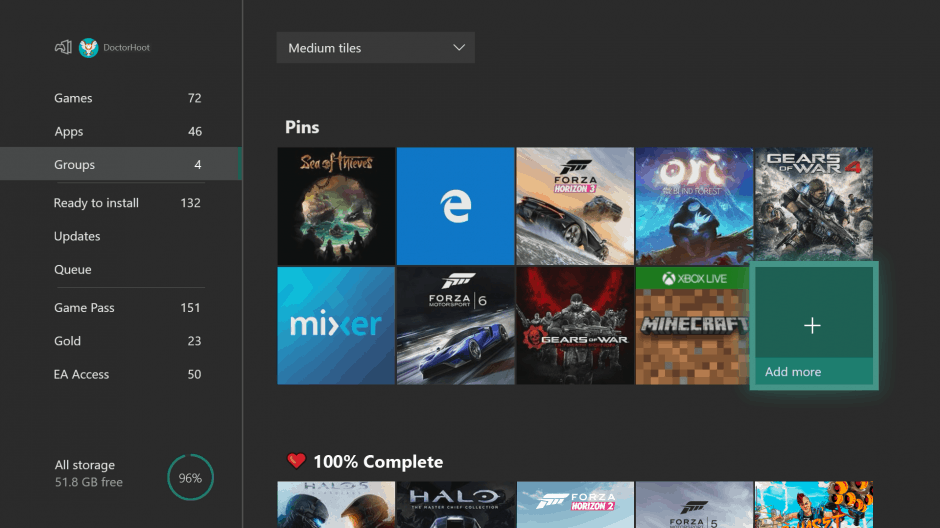
Microsoft released the second preview of Xbox One version 1805 to Xbox Alpha Insiders this week, and today followed up to announce all the features coming with the “May Update.” Many of the features for this next version of the Xbox OS build on what will be coming soon with the upcoming Xbox Spring Update (version 1804.) Big features include 120Hz support, the ability to organize pinned apps into groups, and more.

120Hz support

Expanding on the 1440p resolution support which Microsoft introduced in Xbox Version 1804, is support for 120Hz refresh rate. The option will be available in May for gamers who have their Xbox connected to displays which support 1080p and 1440p output resolutions. This is especially a nice option for high-end monitors and display which support the high refresh rate.

120 Hz

Grouping Games and Apps

A much-requested feature also coming in May is the ability to group pinned games and apps together. Microsoft is fittingly calling this feature “Groups,” mentioning that you can make collections of anything that is listed within My Games and Apps and have them sync across your consoles. You’ll also be able to assign custom names to groups, organize and order groups, and add groups to your home page so you can see them at a quick glance.

Groups will not be enabled for everyone in the Alpha ring and will be rolling out on a gradual basis. Microsoft says they are doing this in order to gauge interest and collect feedback on the feature first.

Grouping Games and Apps

Trimming Clips Directly in the Guide

Microsoft had previously made it easier to share and upload captures from Xbox to Twitter, and in May, this process is getting even faster. The company says gamers will soon be able to trim recent games captures directly from the guide, eliminating the need to switch to Upload Studio.

Trimming clips

Other features

120 Hz support, grouping apps and games, and trimming captures from the Guide may be the biggest features coming in May, but there are also some minor changes too. For one, Microsoft says they will be improving on Family Settings and adding a “Details” page for Parents to configure their controls on Xbox consoles. Another big change is an improved Xbox Accessories app, which should be easier to navigate and look through. Finally, there are “Intuitive Button commands”, which will allow you to use the View button on Home to edit the order of blocks and re-order items within Groups.

Xbox Accessories App

These are some nice features, and it’s good to see that Microsoft is working on the feedback from gamers and looking to introduce more experiences to the console OS. As usual, you can expect most of these features to roll out over time, and you might even see additional experimental features not introduced in today’s announcement. Do you like these new features? Feel free to let us know your thoughts in the comments below.

[Updated] Xbox is reportedly testing several ways to let gamers gain experience with new “Career” system

Microsoft pioneered the achievement system with the Xbox 360 back in 2005, a great gamification feature that can now be found on pretty much all gaming platforms. It’s quite fascinating to see dedicated Achievements hunters getting closer to a 2 million Gamerscore, but Microsoft is now looking for new ways to keep Xbox gamers engaged.

A couple of months ago, we learned that Microsoft was working on a new “Career” system for Xbox gamers, complete with visible player levels, prestige ranks, quests to complete and exclusive rewards. According to a new report from Windows Central, this Xbox Career system is still in active development. There could be several ways for gamers to earn EXP, and the following solutions are reportedly in testing:

  • Total playtime across all games, to be updated at specific milestones.
  • EXP level milestones.
  • The number of games you have played.
  • Simply playing a set number of games per day.
  • Competing on Xbox Live, although it’s not clear in what context, whether as part of Tournaments or general multiplayer games.
  • Creating content on Xbox Live, perhaps by sharing game clips and so on or streaming.
  • Earning regular Gamerscore achievements.

To keep players engaged every day, the Xbox team is reportedly working on “daily quests” to allow gamers to win extra EXP every day. The most interesting aspect of this career system could be the cosmetic items to unlock for your Xbox Avatar. “Microsoft might be tying the Career system to lootcrate-like rewards for the new Avatar system, which will bring vibrant and updated customizable character models for players on Xbox Live,” the report says.

Last but not least, the Redmond giant is also reportedly considering some tie-ins between this new Career system and Microsoft Rewards. This is an interesting idea considering that Microsoft Rewards will replace the Xbox Live Rewards Program in all markets in June. We may learn more about this Xbox Career System during E3 2018 in June, so best to keep tuned for more.

Update: Xbox’s head of platform engineering Mike Ybarra tweeted today that this career system isn’t in active development. “As fun as it all sounds, there isn’t a career system in active development. Good to see all the feedback on this, however,” he said.

Google’s Project Zero outs Microsoft for security flaw in Windows 10 S

Google’s Project Zero team has rightfully pointed out several security issues with Microsoft’s products in the past, and they’ve now just disclosed yet another vulnerability. This time, after waiting out the 90-day deadline for a fix to be published (and not getting action from Microsoft) the team has publically documented a “medium” security vulnerability in the Windows 10 S operating system (via Neowin.)

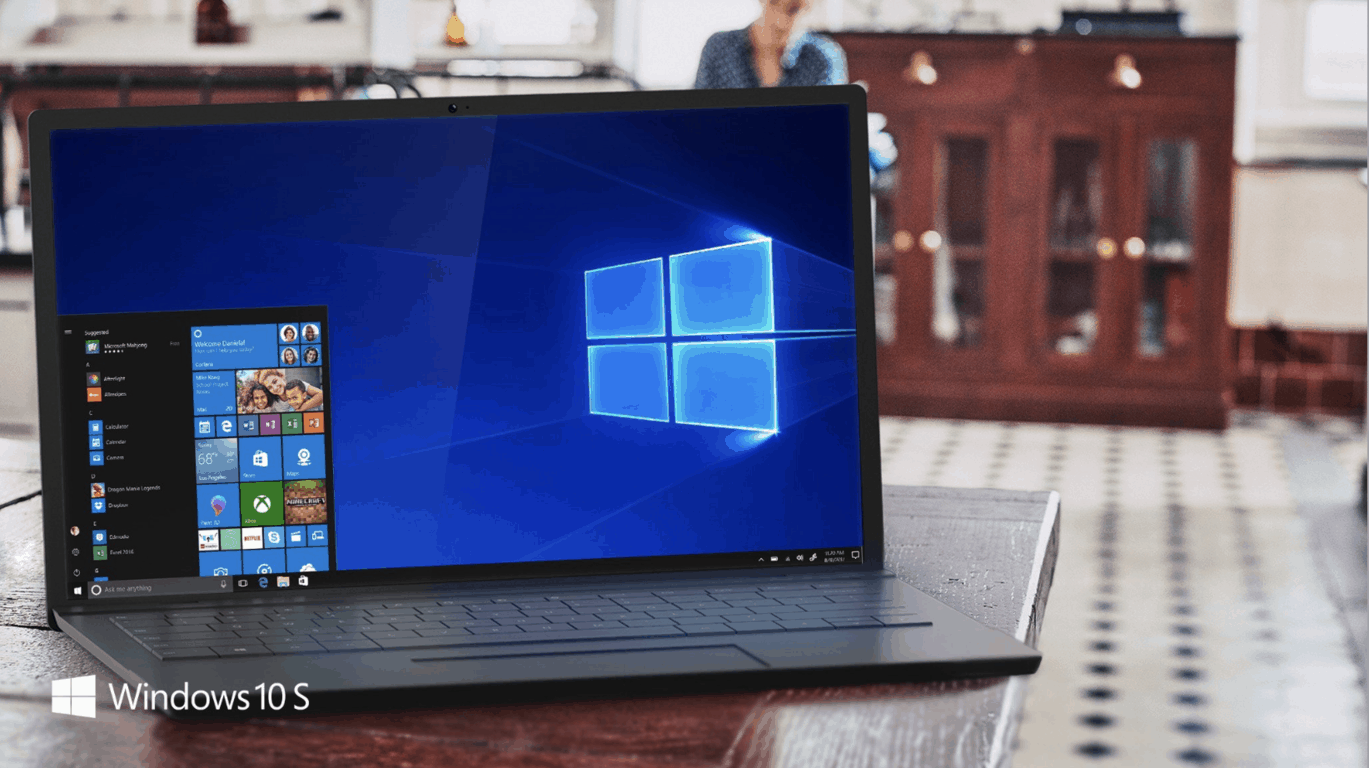
Windows 10 S made its debut on Microsoft’s Surface Laptop last year, and this special version of Windows 10 that can only run Windows Store apps has since been used by some PC manufacturers for low-cost education-focused machines. Considering that Windows 10 S is marketed by Microsoft as “streamlined for security,” this latest disclosure definitely raises some questions about how secure the operating system really is.

Google’s notes on the vulnerability can be seen here, and it primarily involves a method of bypassing the Windows Lockdown Policy by using a bug in the .NET Framework. The vulnerability, though, only impacts systems with Device Guard enabled, and it can’t be exploited remotely, which makes it less severe. According to Google:

This issue was not fixed in April patch Tuesday therefore it’s going over deadline. This issue only affects systems with Device Guard enabled (such as Windows 10S) and only serves as a way of getting persistent code execution on such a machine. It’s not an issue which can be exploited remotely, nor is it a privilege escalation. An attacker would have to already have code running on the machine to install the registry entries necessary to exploit this issue, although this could be through an RCE such as a vulnerability in Edge. There’s at least two know DG bypasses in the .NET framework that are not fixed, and are still usable even on Windows 10S so this issue isn’t as serious as it might have been if all known avenues for bypass were fixed.

Google originally disclosed this vulnerability to Microsoft in February but Microsoft was not able to patch it in time, even after requesting a 14-day extension period and providing additional context for the deadline miss. Microsoft also requested an additional grace extension, saying the Redstone 4 release would have the fix, but Google once again turned it down, saying there is no firm date for the Redstone 4 release, and it is not considered a “broadly available patch.”

Microsoft is actually planning on re-branding Windows 10 S to “Windows 10 in S Mode” later this year. The company has said that S mode will be available for all versions of Windows 10, and it will appear on new PCs following the Redstone 4 update. Citing security and consistent performance, Microsoft previously noted that its customers have received Windows 10 S positively, so it will be interesting to see how Windows 10 in S mode takes off.

Phantom Trigger launches on Xbox One & Windows 10 with Xbox Play Anywhere

The video game, Phantom Trigger, is now available to play on Windows 10 PCs and tablets and Xbox One consoles. Being an Xbox Play Anywhere title, buying it on one platform will automatically unlock it for free on the other and gameplay progress with sync between versions.

Phantom Trigger is an action adventure title that revolves around an everyday man who is thrust into a battle against the supernatural. The game features a branching storyline and four alternate endings to experience and a combat system that evolves as the game progresses. Here’s the full game description.

Stan is losing control. The phantom realm brings arcane hexes into a pulsing neon reality, where demons fight in packs and use every trick they have to break your defense. Throw spells and traps mid-combo, ride the edge of control and chaos in this fresh take on action combat. You are your own worst enemy in Phantom Trigger.

Story: You play as Stan, a white-collar middle-class worker living an ordinary life that gets disrupted by a mysterious event. Discover a brand new world and connect the dots along a branching story through neon-demonic worlds. Phantom Trigger has 4 alternate endings.

Gameplay: Merging elements from slasher, RPG, and rogue-like genres, Phantom Trigger takes a rich combo system and builds on it, with trapping and freezing enemies, herding groups, burning bosses and dashing from one combo to the next.

Do you prefer to play your Xbox Play Anywhere video games on your Windows 10 device or on your Xbox One? Let us know in the comments below and make sure to follow us on Pinterest for more video game content.

Phantom Trigger
Phantom Trigger
Developer:
tinyBuild
Price:
$14.99

Twitter progressive web app gains Windows 10 Live Tile support

The new Twitter progressive web app (PWA) has updated with a significant change, most notably the addition of support for Windows 10 Live Tiles.

This new functionality allows users to pin Twitter profiles to their Windows 10 Start Menu for easy access and the tile itself can be resized to one of three different sizes (S, M, and L). Once pinned, the Live Tile will update automatically to display information and media associated with the related account.

Being a PWA, the app itself doesn’t need to update in the traditional sense. Instead, the changes should already have been made as soon as the developers published the changes.

This new progressive web app version of the Twitter app is currently only available to Windows Insiders running Redstone 4 and 5 as it’s still being tested and developed. Users running a regular public version of Windows 10 (which is most people) will still have the original UWP Windows 10 Twitter app which will be replaced by this PWA version whenever it’s ready for public use.

Have you tried the PWA Twitter app yet? Let us know if you like it in the comments below and make sure to follow us on Twitter for more Windows 10 news.

Microsoft only trails behind Apple as ‘Most Valuable US Company’

In my opinion, the stock market is a lot like tarot reading, where a shuffling of vague data points results in even vaguer but loosely related predictions, but for whatever reason, the current industry climate has been the perfect nesting bed for Microsoft’s stock and what investors are predicting is its future value.

Earlier this week, Microsoft’s market value shot pass two of its staunchest rivals in Amazon (AWS) and Google (everything else), putting it in the runner-up position as the Most Valuable US company, just behind Apple’s juggernaut evaluation.

The news comes just two months after it had been reported that Microsoft and Amazon were jostling for that coveted second position among the most valuable companies in the US.

According to the numbers, Microsoft’s market value has been placed at $728 billion, surpassing Amazon’s $709 billion, inching out $722 billion and still a distant second to Apple’s $890 billion.

Part of Microsoft’s recent surge comes at stock deflations that have befallen tech companies whose dealings in data collection cross their business models in rather ambiguous ways which are leading to mounting public backlash.

Over the last month, companies such as Facebook, Google, and Amazon have been facing mounting legal battles in courtrooms around the world which are wreaking havoc on their stock prices as each company has either suffered stagnation or decline in the market due to the scrutinization of their business practices.

Fortunately, for Microsoft, the company has spent the latter part of three decades earning goodwill and trust regarding the collection and storage of sensitive data via its operating system Windows, its productivity software in Office, and using both those commodities to grow its presence in the cloud.

As Microsoft continues to seemingly shed its more consumer-facing endeavors and adheres to a further retrenchment into an enterprise-focused business the company should undoubtedly be rewarded with a steadily increasing market value as its competitors dance amongst the double edge sword of consumer adoption and individual privacy that’s as unpredictable as forecast during a tornado season.

How to show the Microsoft Edge Favorites toolbar

Most browsers include a favorites (or bookmarks) toolbar that you can select to include at the top of their windows. A bookmarks bar includes bookmarked sites and usually sits just below the URL bar for more direct page access. Edge also includes a Favorites bar, but it’s not selected by default. This is how you can show the Favorites bar in MS Edge.

How to enable the Favorites bar in Microsoft Edge?

  • First, click the Settings and more button to open the menu shown directly below.

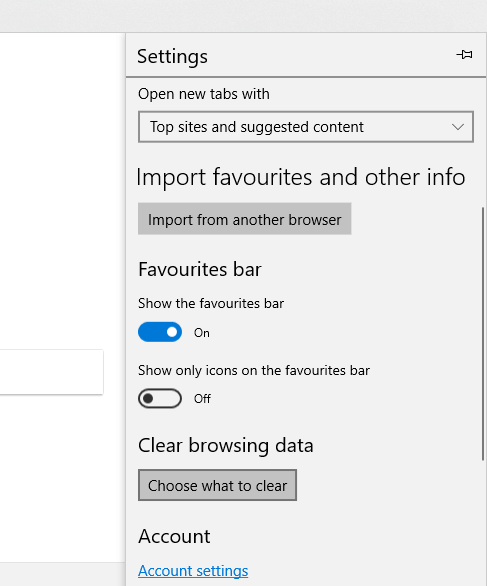
  • Click Settings to open the options in the snapshot below.

  • Then toggle the Show the favorites bar option on.
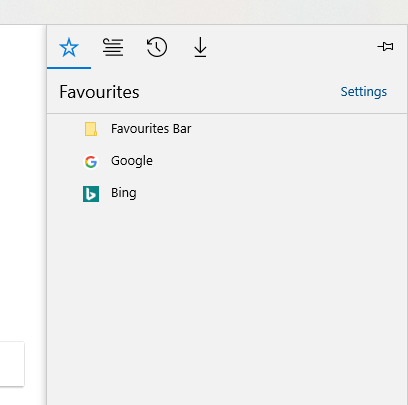
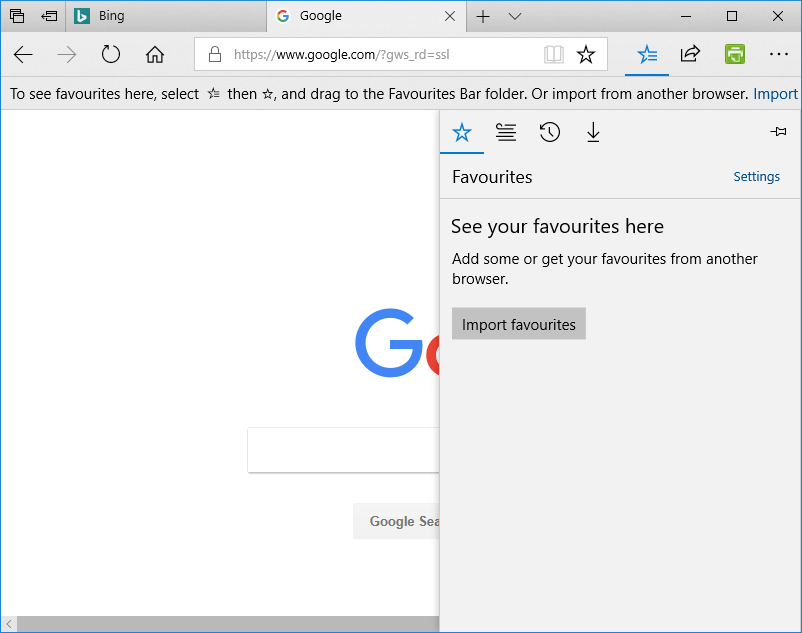
  • The Favorites bar will not include any webpage shortcuts if there’s nothing in the Favorites Bar folder. If there are no page shortcuts on the bar, press the Hub button to open the Hub as below.

  • Click the Favorites button to open a list of bookmarked sites.

  • Now drag the listed page bookmarks into the Favorites Bar folder by holding the left mouse button and moving them. The bookmarks will then appear on the bar as in the shot below.

Remove Text From the Favorites Toolbar

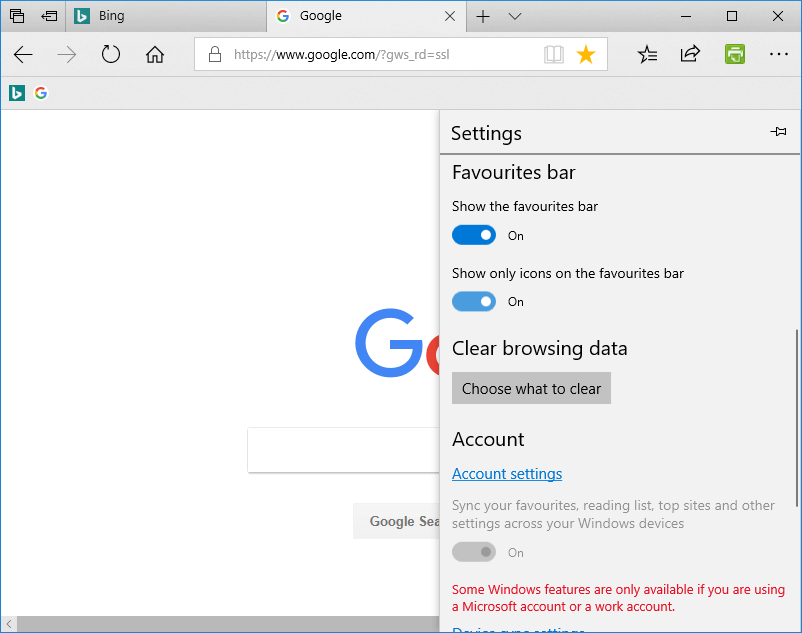
Bookmarked pages on the Favorites bar include the website titles. You can remove the text from the bookmarks to free up some space on the bar. This is how you can remove the text on the bar so that it includes just page icons.

  • Click the Settings and more button.
  • Select Settings on the menu to open further options.
  • Then select the Show only icons on the favorites bar option to remove the text from the bar as shown below.

  • Note that you can also select a Show icons only option by right-clicking a page shortcut on the Favorites bar and selecting Show icons only.

Add Folders to the Favorites bar

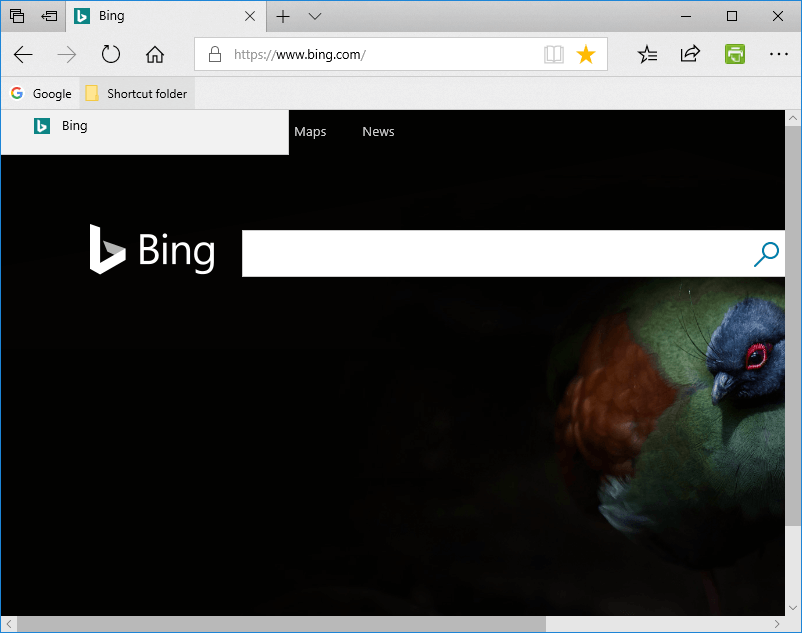
You can also add folders to Edge’s Favorites bar. Then you can drag page shortcuts into the folders, but still open them from the Favorites bar. To add a new folder, right-click the Favorites bar and select Create new folder. Enter a title for the folder, and then drag some page shortcuts into it. You can open the shortcuts by clicking a folder on the Favorites bar and selecting a page to open.

Import Bookmarks to Your Favorites Toolbar

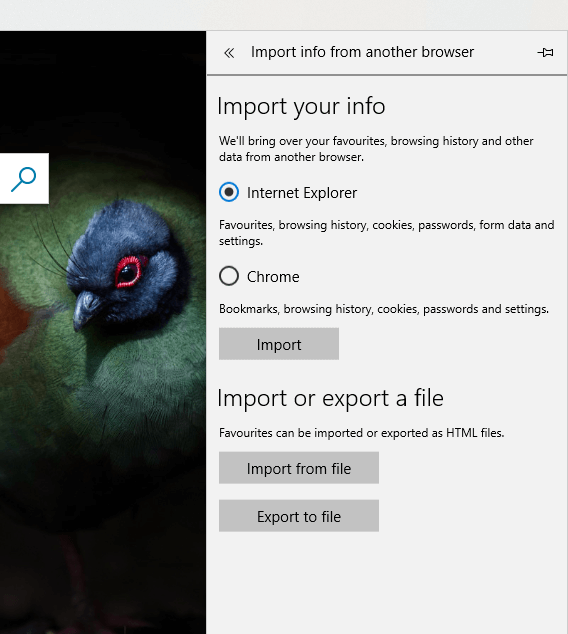
Like most browsers, Edge also includes an option to import bookmarks from other browsers. Then you can move those page bookmarks onto the Favorites bar. You can import bookmarks from Chrome and Internet Explorer to Edge as follows.

  • Press the Settings and more button to open Edge’s menu.
  • Select the Settings option, and press the Import from another browser button.

  • Then you can select to import bookmarks by selecting the Chrome or Internet Explorer options.
  • If you’ve exported bookmarks as HTML, press the Import from file button, select file and click Open.

FAQ

How do I show the favorites bar in Microsoft Edge?

Open Edge, click the three dot menu, choose Settings, select Appearance, and turn on the Show favorites bar option.

Can I make the favorites bar appear only on new tabs?

Yes. In the Show favorites bar dropdown, pick Only on new tabs to keep it hidden while browsing other pages.

Why is my favorites bar not showing even after I enable it?

You may be in full screen mode. Press F11 to exit it, then check the Appearance settings again.

Can I customize what appears on the favorites bar?

Yes. You can drag bookmarks to reorder them or right click any item to rename, delete, or add folders for better organization.

You can also restore missing favorites when Edge fails to show them by using this guide on how to recover lost favorites in Microsoft Edge.

Now that you’ve got the Favorites bar up in Edge, you can open sites more directly from there instead of opening favorite websites via the Hub. As you can expand the Favorites bar with additional folder menus, it’s probably a better alternative to the Favorites sidebar on the Hub.

Power users who want to tweak hidden features can follow this guide on how to enable Edge flags and unlock extra customization options in Microsoft Edge.

To learn more about bookmarks, we have a great guide on how to find Microsoft Edge bookmarks location, so don’t miss it for more information.

How to print webpages with Edge’s new Clutter-free printing option

The Spring Creators Update (or Redstone 4) is the latest update for Windows 10 that is rolling out from April 2018. The update revamps Edge in various ways. One of the new options the updated Edge includes is Clutter-free printing. That enables users to print out website pages without any ads included.

A Clutter-free printing option is something all browsers should include. Some webpages are full of superfluous ads and images that waste lots of printer ink. Consequently, there are numerous extensions for Chrome and Firefox that enable users to strip down page content. With those extensions, you can edit pages before printing them out.

Edge users will not need any extension to remove ads from pages after the Spring Creators Update. However, you will need the updated Edge to select that option. As the Redstone 4 update has only just started rolling out, few Edge users will find a Clutter-free printing option in the browser at the moment. However, those users registered on the Windows Insider Program can now select the browser’s Clutter-free printing option.

How to enable clutter free printing in Edge

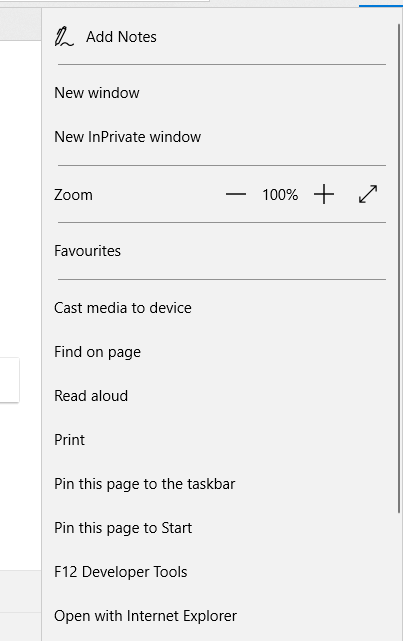
To select the Clutter-free printing option, open a page in Edge to print. Click the Settings and more button to open the browser’s menu. Then click Print to open the window below, which includes a page preview.

The latest Edge version includes a Clutter-free printing option directly under the Headings and footer setting. You can select On from the Clutter-free printing drop-down menu. Edge provides a preview of the stripped down website page within the preview window. Then you can press Print to print out the page without ads in it.

If you can’t wait for the Spring Creators Update, add the PrintFriendly and PDF extension to Edge. That’s an extension that you can delete page content with before printing. Press the Get the app button on this webpage to add PrintFriendly and PDF to Edge.

Then you can press a PrintFriendly and PDF button on Edge’s toolbar. Open a page to edit in the browser, and press the PrintFriendly and PDF button to open the editor shown in the snapshot directly below. Hover the cursor over ads and images and click the dustbin icon to erase them. After editing the page, you can press the Print button on the editor window.

Clutter-free printing is just one of the handy new options Microsoft has added to its flagship browser with the Redstone 4 update. The new Edge will also include Mute tab and save EPUB book options. For the full lowdown on what is new in the updated Edge, check out this post.

RELATED STORIES TO CHECK OUT:

Windows 10 April 2018 Update could bring along some BSOD errors

Microsoft recently revealed that it delayed the Windows 10 Spring Creators Update release over BSOD errors. This was actually a very wise decision as it allowed Microsoft to avoid a huge public outcry if the BSOD issues had been discovered after launch.

Dona Sarkar explained in an official blog post that a high BSOD occurrence on PC was the main culprit:

As Build 17133 progressed through the rings, we discovered some reliability issues we wanted to fix. In certain cases, these reliability issues could have led to a higher percentage of (BSOD) on PCs for example

Microsoft quickly rolled out a hotfix to Fast Ring Insiders to check if the OS is stable enough for public release. It is still unclear whether the Redmond giant will follow the usual path and push Windows 10 build 17134 to Slow Ring  and Release Preview Insiders or will simply roll it out to the general public as soon as Fast Ring Insiders have give it the green light.

Dona Sarkar’s team are now under huge pressure to make Windows 10 version 1803 as stable as possible in the shortest amount of time. If Microsoft skips the usual build release path and pushes the new Windows 10 version to the general public without first testing it on all the Insider Rings, chances are that some BSOD errors might go unnoticed.

Of course, BSOD errors can’t be completely avoided. Every single Windows OS version is affected by Blue Screen of Death issues and we’re sure Windows 10 version 1803 is no exception. The only question is how frequent will BSOD errors be on the Windows 10 April 2018 Update? Will users experience more BSOD issues compared to previous OS versions?

Of course, there’s no exact telling at this moment. However, taken into account the recent BSOD issues, maybe it’s best to skip upgrading to the latest Windows 10 version for a few days after release, especially if you use your computer for work. Should the OS be affected by severe technical issues, we’re sure Microsoft will fix them as soon as possible and you’ll be able to install a stable and reliable OS version.

Needless to say, BSOD errors are among the most common issue affecting Windows 10 shortly after launch. In a way, they’re inherent to Windows. However, taken the frequent BSOD error occurrence in the latest Windows 10 builds, it’s safer to wait for a few days before hitting the ‘Check for updates’ button.

RELATED STORIES TO CHECK OUT:

Here’s how to move your OneNote 2016 local notebooks to OneDrive, a new feature

If you still prefer to use OneNote 2016 over the new OneNote UWP app, Microsoft announced some bad news yesterday. Later this year, OneNote for Windows 10 will replace OneNote desktop in Office 2019 and become the most up-to-date version of OneNote.

OneNote 2016 will remain available and be supported through October 2025, but it will no longer receive new features going forward. However, you may continue to use the legacy app if you still need some of its features, such as the ability to store notebooks on your local hard drive instead of the cloud.

If you do use local notebooks and want to make the transition from OneNote 2016 to OneNote for Windows 10 though, the process isn’t exactly intuitive. OneNote for Windows 10 only supports notebooks that are stored on OneDrive, OneDrive for Business or SharePoint, and you can’t use it to open local notebooks. But as noted by OneNote MVP Marjolein Hoekstra (who is behind the OneNote Central Twitter account), OneNote for Windows 10 can now move local notebooks to OneDrive for you. This is apparently a new feature that quietly rolled out last week:

Microsoft explained how it works on a support page. From OneNote for Windows 10, you can see local notebooks by clicking the Show Notebooks button, and then clicking on More Notebooks. After selecting the notebooks you want to open, a Save to OneDrive window will appear and you’ll have to choose the Microsoft account you want to use for the transition.

Once you’re done, your local OneNote notebooks will be uploaded to the OneDrive account of your choice, and your transition to OneNote for Windows 10 will be complete. Be aware you can still open these online notebooks in OneNote 2016, and everything you do is the legacy app will be synced with the Windows 10 app. Yesterday, the company announced that it has been working hard to make its sync engine faster and more reliable on OneNote for Windows 10, as well as on Mac, iOS, Android, and web, and you can see the impressive results in the video below:

Do you still use local notebooks with OneNote 2016? If so, do you plan to continue or will you make the switch to the cloud at some point? Sound off in the comments below.

Microsoft Teams posts developer changelog, vows to keep it up to date

Since Microsoft launched the Microsoft Teams Developer Preview back in November 2016, the company has invited developers to build apps for its new team collaboration platform. Microsoft has made it easy for developers to integrate their own services with Teams, and there is now a healthy number of apps in the dedicated Store.

The Redmond giant is regularly adding new developer features to the Microsoft Teams platform, and the company has acknowledged that it’s not exactly easy to keep track of what’s new. Bill Bliss, Platform Architect and Head of Developer Ecosystem for Microsoft Teams announced this week the creation of a new webpage where devs can find the latest info about the platform:

Bliss promised that he and his team will keep this page up to date, so you might want to add it to your bookmarks. If you want keep track of what’s new in Microsoft Teams for desktop, web and mobile devices, you can also check this support page where you can find detailed changelogs for every new release.

Time magazine lists Satya Nadella as one of the top 100 most influential people

Microsoft CEO Satya Nadella has made it to the Time 100 list. First published in 1999, the annual list of the 100 most influential people in the world is assembled by the American news magazine Time.

In his profile penned by Walter Isaacson, a professor of history at Tulane University and a former managing editor of TIME, the magazine notes that in the four years since he inherited a sticky wicket, Microsoft’s market value has increased 130%. More important, the company is now making products that feel more user-friendly, empathetic, and collaborative.

Since becoming CEO of Microsoft in 2014, Nadella has used those principles to restore the company’s spirit of innovation. Consider its new product strategy, which emphasizes cloud computing and allowing people to collaborate across platforms. Nadella also preaches the importance of empathy and making products that work reliably, traits that deepened in him when his first child was born with brain damage and his son’s life depended on linked machines running Microsoft systems.

Last year, Satya Nadella wrote ‘Hit Refresh: The Quest to Rediscover Microsoft’s Soul and Imagine a Better Future for Everyone‘, a book about individual change, about the transformation happening inside of Microsoft, and the technology that will soon impact all of our lives.

In the book, Satya traced his journey from India to the US, told the inside story of Microsoft’s revival, and shared his vision of the most exciting and disruptive wave of technology – artificial intelligence, mixed reality, and quantum computing. Satya also explored the potential impact of the technology on society and delivered a call to action for world leaders.

Sidenote: Bill Gates also make an appearance on the list but as the writer of tennis great Roger Federer’s profile. ?

Windows Maps lets you share your collections, save searched places with latest Insider update

Microsoft’s Windows Maps app has just picked up two new features with a fresh new update for Fast Ring and Skip Ahead Insiders (via Aggiornamenti Lumia). In the version 5.1804.1021.0 of the app, which is currently only available on PC, you can now share your collections of places with your contacts, or a selection of UWP apps such as Mail or OneNote.

Unfortunately, this new sharing feature doesn’t play well with Windows Sets on the latest Redstone 5 builds. When trying to share a collection with an app, Windows Maps will open a new window instead of a new tab within the existing app window.

Additionally, Microsoft has also updated the search box to add new shortcuts for saving searched places or find nearby points of interests. The app uses data from Yelp and TripAdvisor for suggestions, and you can also read reviews posted in these services right within the app. It’s been quite some time since Windows Maps received new features and we hope these latest additions will roll out to Windows 10 Mobile soon.

How to disable “Do you want Google Chrome to save your password?”

In the era where the general population favors privacy more and more, password managers are a must. Chrome offers its native Smart Lock for storing and managing passwords, but some users find it unfitting for the job. However, like it or not, Chrome will prompt you to save credentials every time you log in.

Today, we’ll instruct you how to do it in a few simple steps. If you’re in a hurry, the step-by-step instructions are to be found below.

How to turn off Chrome Smart Lock

Google Chrome is, to date, the undisputed leader of the browser market with circa 58% of the market share. And for a good reason. Google utilizes this multiplatform browser fully, allowing users to sync between multiple devices, including passwords. Besides that, it has an abundance of extensions and packs a well-recognized and fairly customizable user interface.

Now, even though Chrome offers Smart Lock (you’ll need a Gmail account for that), the built-in password manager, a lot of users don’t want to use it. Some of them don’t need their passwords saved while others use a third-party password manager (like LastPass). Either way, every Chrome users will, by default, get prompts whenever a password field pops-out. The “Do you want Google Chrome to save your password?” prompt can be an annoyance for uninterested users.

In addition, Chrome’s Smart Lock is fairly reliable as it stores your passwords, bookmarks, and browsing history on the cloud storage. However, there are plenty disadvantages and advantages you must count on if you eventually decide to use this built-in password manager. Finally, if you’re certain you’ll do better without it and those frequent prompts, here’s how to disable it for good:

  1. Click on the 3-dot menu in the top right corner and open Settings.do you want google chrome to save your password disable
  2. Click on the 3-line menu in the top left corner and expand Advanced settings.do you want google chrome to save your password disable
  3. Choose Passwords and forms.do you want google chrome to save your password disable
  4. Select Manage passwords.do you want google chrome to save your password disable
  5. Disable Password Management and confirm changes.do you want google chrome to save your password disable
  6. If you want to disable it for all devices, navigate to passwords.google.com and disable Smart Lock there.

Also, here you can delete the previously saved passwords.

That should do it. Hopefully, this was good enough to relieve you of the annoying prompt. In case you have any questions or suggestions, do tell us in the comments section below.

RELATED STORIES YOU SHOULD CHECK OUT:

Fix: Skype latest version is not working on Windows 10/11

When someone mentions “VoIP” and “Windows” in the same sentence, you can be almost certain it refers to Skype. Microsoft’s VoIP and messaging application is there for ages and it’ll be there for days to come. However, the imposing of the Skype app (UWP version) for Windows 10 made a lot of folks mad. Namely, this Skype version is lackluster on its own and the frequent updates which “fix one and break three things in the process”.

Users reported a whole palette of emerging issues after an update. Starting with the messaging features and reaching to audio/video issues, failed subscriptions, missing contacts, and overall downgrades in performance. For that purpose, we enlisted the most common solutions which should tackle most of the issues which affect you. Make sure to check them out below.

How to fix the Skype issues brought by the latest update

  1. Reset app
  2. Run Troubleshooter and sign out/sign in again
  3. Check for possible connection and hardware issues
  4. Update Skype again
  5. Reinstall Skype
  6. Just stick with the classic Skype for the time being

1: Reset the app

Let’s get one thing out of the table before we move to the troubleshooting steps. The UWP Skype app is, in our humble opinion, a poorly designed and even poorer optimized nonsense. Turning the globally-acclaimed VoIP service into an unreliable instant messenger clone is one of those risky changes basically no one ever wanted. Of course, we refer to its current state. Maybe they make it work eventually, even though it’s there for more than a year. So, make your own conclusions. With that said, let’s start with the troubleshooting.

After an update rendered your Skype partially or completely unusable, the best bet to resolve it is to reset it to default settings. The pilled up cache can be the cause of the issue at hand. This can be done by following these instructions:

  1. Press Windows key + I to open the Settings app.
  2. Choose Apps.skype latest version is not working
  3. Under the Apps & features, search for Skype.
  4. Expand Skype and click on Advanced options.skype latest version is not working
  5. Click on the “Reset” button.skype latest version is not working
  6. Start Skype and sign in again.

2: Run Troubleshooter and sign out/sign in again

Windows 10 brought the unified Troubleshooting menu to ease the problem-addressing procedure for even the inexperienced users. Even though we have our reasons to doubt its functionality and overall success rate when it comes to issue-resolving, you can always give it a try. It’ll take less than a minute and it might help determine the cause of the Skype’s temporary malfunctioning.

Follow these steps to run the dedicated “Windows Store apps” troubleshooter in Windows 10:

  1. In the Windows Search bar, type fix and open Troubleshoot from the list of the results.skype latest version is not working
  2. Scroll to the bottom and expand Windows Store apps troubleshooter.
  3. Click on the “Run the troubleshooter” button and follow the instructions.skype latest version is not working

Also, we recommend signing out and signing in again. It helped some affected users so it’s worth a shot.

3: Check for possible connection and hardware issues

Now, even though this is rarely the case, the connectivity issues can affect the Skype performance. We’re aware that chances are everything is fine in regards to your bandwidth, but for the sake of meticulous approach, make sure that there are not any connection-related halts.

  • READ ALSO: Skype Credit and subscriptions are unavailable for some, fix incoming

For that purpose, follow the steps we provided below to confirm everything is fine on your side:

  • Maybe Skype servers are down. Check the dedicated servers status, here.
  • Restart your router.
  • Use LAN instead of the Wi-Fi connection.
  • Disable VPN, proxy or DNS tweaks.
  • Test your speed and latency.
  • Disable bandwidth-hogging background applications and look for changes.

4: Update Skype again

Even though minor bugs (those can have a debilitating effect on the Skype performance, as well) are hardly noted, the responsible development team at least deals with the major bugs. Thus, you can expect the patched update to come soon. So, it’s worth checking for a newly appointed update and maybe (big maybe), the problem will be properly addressed.

The updates are mostly automatically distributed but it’s a simple task to check for those on your own. Here’s how to do it:

  1. Open Microsoft Store.
  2. Click on the 3-dot menu and then choose Downloads & updates.skype latest version is not working
  3. Click on the “Get updates” button.skype latest version is not working

5: Reinstall Skype

Another viable solution for the problem at hand is to reinstall the Skype completely and start from a scratch. The application itself might have been falsely configured and the blank slate is the best way to make it work again. The reinstallation procedure is rather simple and it won’t take you too much time and effort.

Follow these instructions to reinstall Skype on Windows 10:

  1. Press Windows key + I to open the Settings app.
  2. Choose Apps.skype latest version is not working
  3. Under the Apps & features, search for Skype.
  4. Uninstall Skype.
  5. Restart your PC.
  6. Open Microsoft Store and search for Skype.skype latest version is not working
  7. Install Skype, sign in, and look for changes.

6: Just stick with the classic Skype for the time being

And, finally, we reached the workaround which should resolve all your problems. The good old classic Skype for desktop is, at the present time, much better choice than the UWP app. It doesn’t look like a flashy contemporary instant messenger, but functionality-wise, it’s as reliable as a Swiss clock.

Have in mind that you can use only one Skype version at a time, so we recommend uninstalling the app and installing the classic Skype for Windows. Here’s how to do it in a few simple steps:

  1. Remove Skype app from your system and navigate to the official download site.
  2. Download old, standard desktop version and uninstall the UWP app.
  3. Install it in a standard manner and sign in.
  4. Look for improvements.

That should do it. In case you’re aware of some alternative troubleshooting steps, feel free to share them with us in the comments section below.

RELATED STORIES YOU SHOULD CHECK OUT:

VR Software for PC: 4 Bes to Use in 2026

Virtual Reality has been on the rise since the turn of the century with different applications of this technology. VR entails computer-generated scenarios that simulate real-life experiences. This innovation has changed the landscape as architects, game developers and graphic designers rely on VR to generate mind-blowing content. To harness the power of VR, virtual reality software is needed. Windows Report has compiled this list of the best Virtual Reality software solutions available for PC in terms of functionality and features.

Use these virtual reality tools to create VR content on PC

Unreal Engine


virtual reality softwareUnreal Engine is quite popular in the gaming industry. The software offers many interesting features, having versatility in creating various games. Unreal Engine allows the creation of games from simple 2D hand drawn platforms to realistic cinematic movie gaming experiences.

The tools has a custom built-in marketplace where users can discover and buy assets and tools to enhance their projects. Also, Unreal Engine has a large follower base with a large community sharing information, tutorials and the latest trends.

Furthermore, Unreal Engine is free to download. You can download the software and begin to create virtual reality experiences and models at no extra costs.

Download Unreal Engine


Unity 3D

unity VR gaming

Unity 3D is one of the front-runners in Virtual Reality software technology, with the software having grown from a little startup  to one of the best solutions available on the market.

In addition, Unity 3D has a flexible game engine which is super good and works well for solo developers and small developer teams. The software is known for being user-friendly compared to other rivals with cool advanced features.

Furthermore, this software recently launched its VR headset which maximizes the full power of the software — this has earned the software rave reviews. There is also an asset store which helps in saving time on projects with good tutorials and tips about the software.

Unity 3D can be downloaded for free. You can start creating VR without any costs.

Download Unity 3D

Lumberyard


virtual reality softwareLumberyard is a virtual reality game engine recently revealed by Amazon based on the CryEngine software with some few tweaks.

As Lumberyard visual graphics is based on CryEngine, it has awesome an 3D environment and lots of real-time effects to enhance your projects. The unique editor consists of weather effects, camera frameworks, cloth physics, character and animation editors, particle editors, and more.

Lumberyard is free to use with no royalty charges and users have free development license which includes source code for engine editor and every tool in the software.

Download Lumberyard


IrisVR

irisvr

This Virtual Reality software is produced by a team of developers from Vermont. IrisVR is unique in its simplicity and comes with a drag and drop launcher.

The software gives an excellent rendering of VR models and is available for both Mac and Windows. In addition, IrisVR supports SketchUp files, Revit, 3DS Max, IFC Files, Blender and Archicad.

This software has a key feature where users can easily add true scaling to projects within the app. This can culminate in change of scenery and make objects feel more realistic. IrisVR is perfect for professionals working in the building industry.

Download IrisVR

Which of these virtual reality software are you ready to get? Share your favorite in the comments section below.

RELATED STORIES TO CHECK OUT:

Stuck on older Windows 10 Insider builds? Fix incoming

Microsoft wants to offer enhanced support for its Windows Insiders because they are doing a critical job for its OS, so they have to receive more attention.

Windows Insiders’ job is to install new builds to try out the latest Windows 10 features, but sometimes they can’t avoid getting greeted by all kinds of bugs that are lurking in Windows Update.

Some of them can lead to getting stuck in a particular build and being unable to download new ones.

Got stuck on older Windows 10 builds?

Microsoft tweeted the long-awaited announcement, saying that:

We know there are some #WindowsInsiders who are “stuck” on older preview builds.  We’re working on a program to help pull some of your PCs onto newer builds.  Check this forum post for a quick highlight and stay tuned for more details!  https://aka.ms/wipcatchup.

Jason Howard, Senior Program Manager of the Windows Insider Team also posted on a blog to announce the happy news. He raised more awareness over the fact that Windows Insiders’ inability to install new builds because they are stuck on older ones is an issue that definitely deserves increased attention.

A program will fix this issue

Howard explained that the program that’s designed to come to the rescue is a simple one that will help Insiders get their systems unstuck and able to receive new builds.

He didn’t say when is the exact moment that this Insider saving program will get released by he did urge Windows Insiders to stay tuned because future announcements will reach them shortly. He also told them that using ISO file is a useful solution for whenever they get stuck on older builds. The only downside of this potential solution is that it’s only useful to those who already have experience with the whole process.

So, Windows Insiders stuck on older builds, stay put because Microsoft is on its way with a helping hand any day now. Meanwhile, you can read Microsoft’s blog post.

RELATED STORIES TO CHECK OUT:

How to download Microsoft Cruel Solitaire

Microsoft Cruel Solitaire was the part of Windows for more than a decade. Solitaire games are the most popular Windows games ever and the irreplaceable part of the Windows platform. Until, Microsoft decided not to incorporate Cruel into their Solitaire collection. Yes, the one residing in Microsoft Store — the UWP revamp of Solitaire golden classics dating to ancient Microsoft Entertainment Pack.

Why Microsoft is killing off solitaire classics — we can’t be certain. Luckily, there are ways to play Cruel Solitaire on your Windows 10 PC. Check them out below.

Download and install Microsoft Cruel Solitaire on Windows 10

Microsoft Cruel Solitaire was the part of the renowned Microsoft Entertainment Pack, firstly introduced in 1990, 28 years ago. This game is the variation of the standard solitaire, with standard one 52-card deck. The main difference in comparison to other Solitaire games: the tableau consists of 5 aces as the foundation and 12 piles of remaining randomly-shuffled cards.

Now, over time, this card game get various revamps and releases by several third-party sides, but for some reason, Microsoft stopped incorporating it back in the 90’s. For the seasoned Windows users and enthusiasts, this classic was a pure joy and they want it back. Of course, the game was a 16-bit which renders it unplayable on 64-bit systems. But can you run it on Windows 10? The answer is both yes and no.

Due to compatibility reasons, you can’t run the Microsoft Entertainment Pack in Windows 10 without a virtual Windows XP system. This can be an issue and you’ll need an extra mile to get it to work. However, there are some Solitaire packs which incorporate Cruel Solitaire and are obtainable through Microsoft Store. Also, you can download modern 3rd-party remakes of the game.

Third-party online: Novel Games Cruel Solitairedownload microsoft cruel solitaire

Microsoft Store: Solitaire-HD ($4.99)download microsoft cruel solitaire

We can only hope that some of the future iterations of Microsoft Solitaire Collection will include Cruel Solitaire as well. For the time being, you can try the aforementioned sources and enjoy your favorite solitaire variation.

If you’re aware of another way to play the game on Windows 10, make sure to tell us in the comments below.

RELATED STORIES YOU SHOULD CHECK OUT:

Microsoft’s Azure Sphere is a new security platform for IoT devices

Microsoft announced an OS custom built for IoT security and an important cloud security service that will guard every device. Azure Sphere is a new security platform that enables highly secured and connected MCU devices. These are an innovative class of devices connected to the web, and they rely on a small chip called microcontroller unit aka MCU. These include industrial connected equipment, connected appliances, toys and more. Microsoft’s security platform is set to enhance the security of these IoT devices.

Microsoft teams up with more companies

Microsoft is working with its partners to bring Azure Sphere based chipsets, and it’s estimated that a chipset will not be priced above $10. The very first ship will make its debut under the name MediaTek MT3620, and it’s scheduled to hit the market later this year. Azure Sphere is currently in private preview, and Microsoft is working hard with its partners to build products that will be powered by it. Azure Sphere consists of three elements.

Azure Sphere MCUs

MCUs mix real-time and application processors with built-in Microsoft security tech and connectivity. The chips include custom silicon security tech from Microsoft to provide the maximum level of security.

Azure Sphere OS

The operating system combines the security features flaunted by Windows, a security monitor, and a custom Linux kernel to high-security software environment and platform for brand new IoT experiences.

Azure Sphere Security Service

This is a cloud service and a key element that will guard every device. It will feature device-to-device and device-to-cloud communication via certificate-based authentication. It’s also set to detect emerging threats across the whole Azure Sphere ecosystem via online failure reporting and renewing security all the time via software updates.

You can read all the exciting details on Microsoft Azure Sphere and on securing and powering the intelligent edge on the official website.

RELATED STORIES TO CHECK OUT:

Microsoft releases Windows Template Studio 2.0, complete with new interface tweaks

Microsoft announced today they have released Windows Template Studio 2.0, with the primary goal of helping developers build their Windows 10 apps faster. The company has already steadily improved the open source tool, and this latest release does not come with many new features, but just a few under the hood changes.

The lone change in this release is an improved user interface which comes thanks to a partnership with the Visual Studio team. Indeed, developers should now find that the Windows Template Studio interface is even faster. “We feel the new interface is faster and more approachable. We’ve improved our template updating experience, our actual templates and much more. Our wizard also now detects dark, light and high contrast modes of Visual Studio,” explained Microsoft’s Senior Technical Product Manager Clint Rutkas.

A full list of the new changes in this latest release on docs.microsoft.com, which will be the new home for Windows Template Studio documentation and templates. Microsoft, though, does say that GitHub will still host docs about modifying the engine or creating a template for the wizard.

There is more on the road ahead for developers, and Microsoft also says that they will continue to add new features and templates over time. If you’ve already installed Windows Template Studio, you can get this update by Tools->Extensions and Updates. Those just installing can head here and click on download, and then double-click the VSIX installer.  Also feel free to submit your feedback to Microsoft on GitHub.

Win tickets to Xbox FanFest at E3 starting today

The Xbox team has shared more details about Microsoft’s E3 2018 presence today, including the Xbox FanFest that will kick off on June 10 in L.A. This year, Microsoft has shifted the ticketing process to an online random drawing, and those of you who want a chance to win tickets will have to visit the Xbox E3 Fan Event Submission site that will launch today at 12 p.m. PDT.

By entering the random drawing, you can either win one of the 400 FanFest tickets ($45) or one of the 1,000 free Xbox Briefing-only tickets. Here’s what the lucky winners of the Xbox FanFest tickets can expect:

  • Early Check-in: Private check-in and admission to a Fan Rally prior to the Xbox E3 Briefing on Sunday morning.
  • Briefing Access: Experience the Xbox E3 Briefing in-person.
  • Epic Moments: A “can’t miss” Xbox community event Sunday afternoon.
  • Exclusivity: Early access to Xbox’s hottest exclusives and biggest blockbuster games.
  • Meet Xbox: Meet and talk with some of gaming’s top developers, leaders and influencers.
  • Our Secret Gear Backpack: Full of amazing surprises.
  • A Custom Jersey: Since Xbox fans deserve the best apparel to show off their fandom!

In addition to the Xbox FanFest activities, the Xbox team announced today that Microsoft’s E3 briefing on June 10 will be live-streamed on the official Xbox Mixer channel as well as other streaming services that have yet to be announced. Microsoft is also planning an Inside Xbox live stream with “exclusive announcements” on June 11 at 3PM PDT.

Halo: The Master Chief Collection to get Xbox One X enhancements and more this summer

343 Industries recently opened the doors to the Halo: The Master Chief Collection Insiders Program, promising fans to ship the first beta update this Spring. The developer is currently working on several updates for the Xbox One anthology including visual enhancements for the Xbox One X, UI and UX improvements and more.

In the latest MCC development update published yesterday, 343 Industries said that the first beta build should be available for select Insiders “within the next few weeks.” Moreover, the first retail update should roll out to everyone this summer with the following improvements:

  • Intelligent Install
  • Xbox One X Visual Enhancements
  • HDR/SDR Calibration Settings
  • Networking and Matchmaking Improvements (Continuous Matchmaking, Network/Multiplayer API updates)
  • Bug Fixes
  • LAN Support
  • UI & UX Updates (Main Menu, Title Screen Video, Button States/Highlight States)
343 Industries will tweak the main menu of Halo: MCC.

If you’re interested in helping 343 Industries fix the Xbox One Anthology, you can still sign up for the MCC Insider Program. For the first public flight, the team said that it will select a small pool of Insiders who’ve played at least 20 MCC multiplayer sessions in the last six months, so check your inbox in the coming weeks to see if you’ve been selected.

Star Wars Battlefront II’s Ewok update is rolling out now to Xbox One consoles

The highly anticipated Night on Endor update for Star Wars Battlefront II is finally rolling out to all Xbox One players in the next hour or so.

This latest update brings a new game mode called, Ewok Hunt, to Star Wars Battlefront II that pits Stormtroopers against Ewoks on the Forest Moon of Endor. As Stormtroopers are defeated, they respawn as Ewoks and assist in taking out the remainder of their former allies. The play style itself is rather unique to Battlefront II but the chance to play as an Ewok also has many players excited on social media.

Also in this update is the long overdue addition of Appearances for troops and heroes. This will allow players to customize the look of playable characters in-game. These character skins can be purchased with credits, which can be earned by playing the game, or crystals which can be bought with real-world money.

Star Wars Battlefront II had a similar micro transaction system before that involved buying randomly generated loot boxes. After a lot of negative feedback from players and press that accused the system of making the game pay-to-win (i.e. it would allow for players to pay money to become stronger), the developers removed it just before launch. The option to pay for visual customizations is a fair compromise on the issue as it allows for those involved in the game’s creation to earn additional revenue from players post-launch while not giving players an unfair advantage over one another by throwing money at their TV screen.

In addition to the Appearances and Night on Endor mode, this update also comes with a huge list of fixes and adjustments both to the game itself and the numerous playable characters. You can read the full, detailed notes here.

Are you more excited to play as an Ewok or customize your troops and heroes? Share your thoughts with the community in the comments below and make sure to like us on Twitter for more Xbox One news.

Images of new Xbox Avatars leaked online, UI revealed

An ex-Microsoft contractor, who had been hired to work on the company’s new Xbox Avatar system, apparently published video and screenshots of his work on his own resume giving the public a fresh look at how the new digital avatars will work and also what the character creator/editor program will look like.

The video and images were quickly removed, presumably after he realized he had leaked information that wasn’t yet made public, but several websites and forum users saved copies of the images for everyone to enjoy.

Xbox Avatars on Xbox One and Windows 10

These images provide a good look at the variety of hair styles and clothes available and while many of the options appear to be heavily inspired by the current Xbox Avatar system, the end results here look significantly more detailed than what’s on offer right now.

The Xbox Avatar creation app is shown running on a computer, as can be seen by the mouse pointer, and is using the new Windows 10 design aesthetic that’s becoming more and more common with Windows 10 app updates (i.e. the font, color, and button styles). Also of note is the apparent mixing of gendered clothing which will allow male Xbox Avatars to wear traditionally female clothing and vice versa.

Xbox Avatars on Xbox One and Windows 10

The new Avatar system was initially expected to launch in 2017 but was delayed for unknown reasons. It’s expected to arrive very soon though as some Microsoft employees such as Mike Ybarra have recently been shown experimenting with it on their Xbox profiles.

Are you looking forward to the new Xbox Avatars or do you prefer the current system? Let us know in the comments below and make sure to follow us on Pinterest for more Xbox One and Windows 10 content.

Windows 10 has a new name scheme: Meet the April 2018 Update

Earlier this week we asked ‘How will Microsoft name the next big Windows 10 update?‘ Well, we didn’t have to wait for too long to get an answer. Reliable reports suggest that the upcoming Spring Creators Update, aka Windows 10 v1803, aka Redstone 4 just got a brand-new name — Windows 10 April 2018 Update.

It seems that Microsoft finally realized its Windows 10 naming scheme is a bit awkward and confusing and decided to change it. Windows 10 is now a service instead of a series of major updates and the Redmond giant deploys new general updates twice a year: one in April, and the other in September. Using ambiguous names such as ‘Creators Update‘, ‘Fall Creators Update‘ and other similar names makes it pretty difficult for system administrators to actually keep track of all the updates they installed.

On the other hand, using more specific names such as ‘Windows 10 April 2018 Update’ or ‘Windows 10 September 2018 Update’ allows administrators to quickly identify the updates that need to be installed and makes patching less chaotic.

windows 10 april 2018 update

Keep in mind that in some parts of the world, such as Australia, autumn is defined as grouping the months of March, April and May. So, what Microsoft calls the Spring Creators Update should actually be called the Fall Creators Update in other parts of the world.

The Windows 10 April 2018 Update is expected to land sometime next week or in two weeks’ time — in the worst case scenario. Microsoft is currently testing a hotfix to patch the BSOD errors that initially delayed the release. So, hopefully, if everything goes according to plan, the general public should be able to test the new Windows 10 version in a few days’ time.

RELATED STORIES TO CHECK OUT:

Microsoft officially acknowledges KB4093112 pen issues

If you run the Windows 10 Fall Creators Update on your computer and you use the pen on a daily basis, you should actually refrain from installing KB4093112. As we reported in a previous post, many Windows 10 users said that the latest patch caused various pen issues especially on Surface devices running Photoshop. More specifically, when users work in Photoshop, instead of drawing, the pen drags the screen up and down, and only occasionally draws.

Following numerous user complaints, the Redmond giant finally acknowledged this problem. Microsoft updated KB4093112’s official support page adding a new known issue on the list:
After applying KB4093112, some users may experience unexpected panning or scrolling in certain apps while using the pen.

At the same time, the company also offered users a quick workaround to use until a hotfix is deployed. Here are the steps to follow to fix various pen issues on Windows 10 version 1709:

  1. Go to  Start > cmd > right-click on Command Prompt in the search results > select Run as administrator
  2. Copy/paste the following command:
    reg add HKEY_CURRENT_USER\Software\Microsoft\Windows\CurrentVersion\Pen /v LegacyPenInteractionModel /t REG_DWORD /d 1 /f
  3. Hit Enter > check your pen. The issue with panning and scrolling should no longer occur.

The good news is that Microsoft is working on a permanent fix which will probably be deployed on Patch Tuesday. So, until then, you can follow the troubleshooting steps listed above.

Unfortunately, this is not the only bug affecting the latest Windows 10 Fall Creators Update patch. KB4093112 is also affected by install issues, unresponsive USB ports, high CPU usage, restart loops and more.

For more information on how to fix some of the issues listed above, check out the following troubleshooting guides:

Microsoft Edge Beta on iOS updated to support Windows Timeline

Microsoft has just released a new beta update for their Edge browser on iOS, and with it comes one significant new feature. After installing this latest version 41.14 update, users should see that their mobile browsing history will now populate Windows Timeline on any PCs running Redstone 4 or higher.

To get this feature working, one needs to head into the Microsoft Edge on iOS settings and tinker with a few options. We initially had some trouble getting our browsing history to sync from our iPhone to Windows Timeline, but Marc Wautier, Principal PM Lead for the Microsoft Edge browser on iOS and Android explained to me how one can get the feature working. You’ll actually need to head to Settings > Privacy, and then toggle the “Share your browsing history” to upload your history to Timeline to get it to work.

How to toggle Windows Timeline Sync On

Also new with this update is the ability to rename and move favorites via a new “edit” button when left swiping on a bookmark. Microsoft has definitely picked up the pace of development of Edge on iOS and Android, as it last received iPad and Android tablet support just a few weeks ago. As usual, we’re hoping these same features will get to Android soon, but for now, only Beta testers on iOS can try out the Windows Timeline support. Everyone else will have to wait a few weeks for a more general rollout.

Chrome enhances browsing privacy via new cookies handling process

Google is currently working on higher protection for Chrome’s users against cyber attacks. It looks like Google Chrome fans will be able to enjoy increased security and privacy and here’s how Google plans to materialize the idea. The company is planning to reduce the lifespan of cookies that are delivered via HTTP connections.

The move seems to be targeted mostly at website developers and advertisers, and Google hopes that they will send cookies via HTTPS because this step would offer increased confidentiality protection against cyber attacks. Mozilla also experienced with this feature, but it never reached Firefox.

Sending cookies via plaintext HTTPs is a major privacy and security risk

The cookies might be intercepted and even modified by an attacker. The ban over sending cookies via HTTP is not a viable option for the moment, and Chrome engineers are hoping that by limiting cookies’ lifespan, they would also prevent massive troves of user data from collecting inside cookies. This would also prevent advertisers using the same cookie to track users across various sites.

HTTP cookie lifespan capping is targeted at Chrome 70

Chrome engineers plan to limit HTTP cookies lifetime to an initial maximum value of a single year, and this duration is set to reach a few days only in the future.

The capping process is scheduled for Chrome 70 which will be released in October. For the moment, a large number of HTTP-transmitted cookies have a lifespan that goes past one year.

The process won’t affect you in an obvious way

Mike West, Google engineer stated that cookie are fragile and they can get evicted all the time for various reasons outside the limits of developers’ control. There won’t be involved a high compatibility cost, and users won’t even fell the difference.

But, the ones who will feel the difference are services that use non-secure cookies, and this is a good thing. Sending cookies over non-secure channels especially when it’s done at a higher scale as part of an advertising network triggers specific risks.

Google’s decision will not stop user tracking online, but the move will increase security and prevent third-parties without authorization from getting access to the data by observing cookie flow via the network’s traffic.

Speaking of stopping third-parties from tracking your online activities, here are some suggestions on how to do that:

Windows Hello adds FIDO2 security key authentication

Windows Hello is an excellent and secure way to log into your Windows 10 PC, and it is about to get more secure for some newer scenarios. The reason why? Microsoft just announced that they have added support for FIDO2 security key authentication to Windows Hello.

The Redmond giant now says they’re “working to enable” the FIDO2 authentication keys with Windows Hello to allow for easy and secure authentication on shared devices. This is particularly useful in helpdesk scenarios, where a user can log in using the Windows Hello FIDO2 key, instead of a username and password. According to Microsoft:

Security keys allow you to carry your credential with you and safely authenticate to an Azure AD joined Windows 10 PC. A user can walk up to any device belonging to the organization and authenticate in a secure way – no need to enter a username and password or set-up Windows Hello beforehand. Unlike traditional passwords, these keys rely on high-security, public-key cryptography to provide strong authentication. These keys have all the benefits of a Trusted Platform Module (TPM) while also being portable enabling the increasing number of mobile workers.

There are a variety of security key form factors, including USB Security keys, and NFC enabled smart cards and examples include the Yubico security key, and HID security key. Windows Hello FIDO2 Security Key is currently in limited preview, and you can sign up here to join the waitlist.

Second Xbox One 1805 build is now available for Preview Alpha Insiders

Even though the Xbox One Spring update (1804) has yet to roll out all Xbox One owners, the Xbox team has already started to release the first 1805 builds to Preview Alpha Insiders. A first preview build was made available last Friday, and the second one (1805.180413-1509) was released just yesterday.

This latest preview build brings no new features, but the Xbox team notes that it should improve system reliability. It also bring some fixes for Game Hubs, Mixer, the Settings app, as well as the Spotify and Twitch apps. The full release notes can be found below:

Fixes:

  • Game Hubs: Fixed a problem in which some users receives a black screen when launching full screen Game Hubs.
  • Mixer: Fixed a problem in which some users would lose Interactive channels lose functionality.
  • Settings: Fixed a problem in which some users were unable to enter a user name or credit card number using the virtual keyboard when adding a new payment option.
  • Spotify: The Spotify app search function has been updated in the app and in the console platform.
  • System Reliability: Resolved a system stability issue that could result in the console crashing when the console was in Instant on mode.
  • Twitch: Fixed an issue in which users when Selecting the (B) button within settings will unsnap the app instead of displaying the Broadcast and chat section.

Known Issues:

  • Audio: Some users may experience intermittent loss of Audio with certain configurations of AV receivers with ATMOS or with changing audio configurations during console use.
  • Pi-hole: Pi-hole users may encounter issues signing in, creating, or recovering accounts upon downloading the 1804 update. This is due to a new configuration file which is downloaded from a URL Pi-hole blocks by default.
  • Workaround: Add clientconfig.passport.net to the Pi-hole allowed IP address list.
  • Profile Color: Sometimes users may encounter an incorrect Profile color when powering on the console.

The Xbox team said that it will announce “great new features” over the coming weeks, and hopefully this includes the redesigned Xbox Live avatars that we first saw last year at E3 2017. If you want to join the Preview Alpha ring and get these 1805 builds before everyone else, be aware that this ring is still invite-only and reserved for Insiders that provide the best feedback.

US Supreme Court dismisses Microsoft email privacy lawsuit

For the past few years, Microsoft has been in a lengthy battle with the US Government over emails held on an overseas server in Ireland from someone who was believed to be part of the Silk Road. There have been many high points and low points in the entire saga, but today the case is officially over. Indeed, Reuters is reporting that the US Supreme court has dismissed Microsoft’s email privacy lawsuit.

The dismissal primarily comes because Congress passed the CLOUD Act a few weeks ago, which states that the US Government can only access data or use warrants on content stored foreign foresign servers if acting through mutual legal assitance between two countries involved in any disputes. This legislation was signed by US President Donald Trump on March 22 and made Microsoft’s case pointless, since the CLOUD act addressed most privacy concerns Microsoft originally raised.

Microsoft President Brad Smith also issued the following statement today about the dismissal.

“We welcome the Supreme Court’s ruling ending our case in light of the CLOUD Act being signed into to law. Our goal has always been a new law and international agreements with strong privacy protections that govern how law enforcement gathers digital evidence across borders. As the governments of the UK and Australia have recognized, the CLOUD Act encourages these types of agreements, and we urge the US government to move quickly to negotiate them.”

The final decision in the case can be read here in full detail.

Update: We’ve updated this article with a statement from Microsoft President Brad Smith.

Intel’s Accelerated Memory Scanning will use GPUs to make virus scans more efficient on Windows PCs

Virus scanning, especially with third-party programs, is a processor-intensive task and can sometimes take a toll on the proficiency on a Windows PC. Well, Intel is now saying it has plans to allow anti-virus programs to use integrated graphics systems (instead of the CPU) for increased battery life and performance when running scans for viruses and other malicious content (via The Verge).

Known as Accelerated Memory Scanning, the chip maker says its new tech leverages the power of the GPU to reduce CPU utilization from 20 percent to as little as 2 percent during virus scans. “Current scanning technologies can detect system memory-based cyberattacks, but at the cost of CPU performance. With Accelerated Memory Scanning, the scanning is handled by Intel’s integrated graphics processor, enabling more scanning, while reducing the impact on performance,” explained Rick Echevarria, VP of Intel’s platform security division.

Intel mentioned it will be partnering with Microsoft to support Accelerated Memory Scanning, with it coming to the Windows Defender Advanced Threat Protection later this month. However, it only will be available on modern chipsets, including the  6th, 7th, and 8th generation Intel processors. Intel also noted that they will also work with other third-party vendors to support the new type of scans.

Intel has faced heavy scrutiny in the tech media following the fallout from the Spectre vulnerability found in the company’s chipsets. The chipmaker, though now says its 8th gen chips have built-in protections against Meltdown and Spectre thanks to Intel’s Security Essentials technology. “Intel Security Essentials will ensure a consistent set of critical root-of-trust hardware security capabilities across Intel Core, Intel Xeon and Intel Atom processors,” explained Echevarria.

Microsoft announces new Windows Community Standup on April 18

Microsoft has announced a new Windows Community Standup for 10 AM PST on April 18, which is tomorrow. The webcast will feature the head of the Windows Developer Platform Kevin Gallo, and also Tara Raj, who works on the Windows System for Linux team at Microsoft. The two are expected to discuss the latest improvements for Web and Backend developers in the next Windows 10 update, as well as the Windows Subsystem for Linux, and Virtualization on Windows with Hyper-V.

As usual, you will be able to watch this latest webcast on Microsoft’s Channel 9, and you’ll also have the chance to ask both Kevin Gallo and Tara Raj questions. Microsoft uses the Windows Community Standup as a monthly online broadcast to provide transparency on what the company is building, and why they are excited about it. All previous Community Standup events are available on demand here, so feel free to catch up before the next one starts tomorrow.